
Contents
Overview
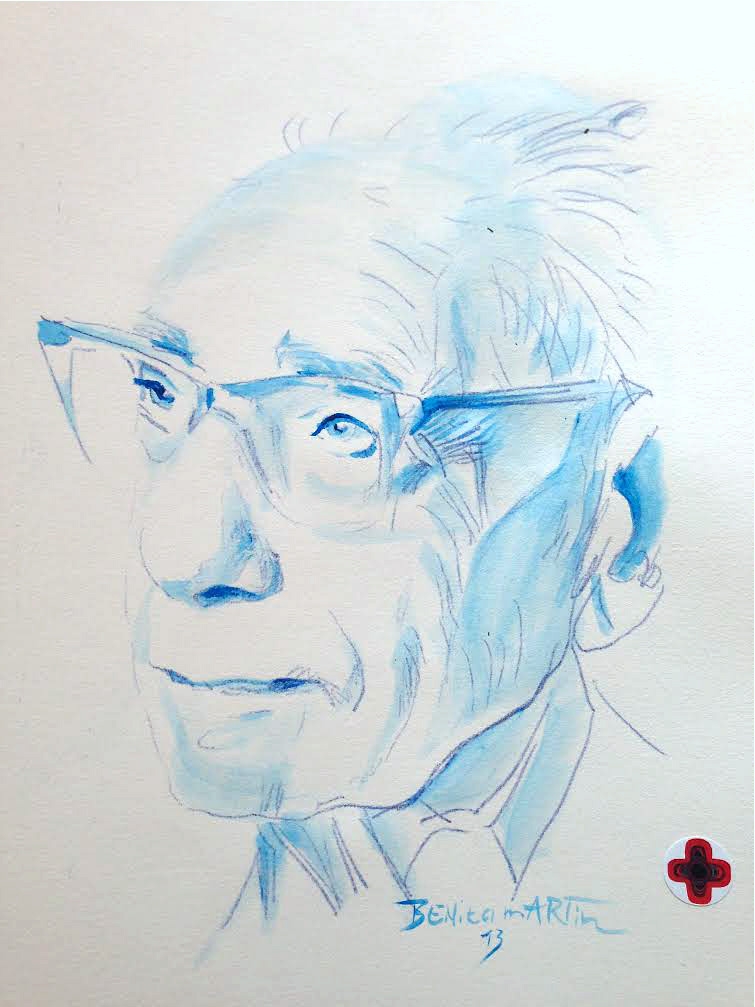
Bernard Katz was a German-born British physiologist and neuroscientist who made significant contributions to our understanding of the nervous system. Born on March 26, 1911, in Leipzig, Germany, Katz's work focused on the mechanisms of neurotransmission, particularly at the neuromuscular junction. His research, conducted in collaboration with Paul Fatt and others, led to the development of the 'vesicle hypothesis' of neurotransmitter release. Katz was awarded the Nobel Prize in Physiology or Medicine in 1970, along with Julius Axelrod and Ulf von Euler, for his discoveries concerning the humoral transmitters in the nerve terminals and the mechanism of their storage, release, and inactivation. Katz's work has had a lasting impact on the field of neuroscience, and his discoveries continue to influence research into neurological disorders. With a Vibe score of 82, Katz's legacy is a testament to the power of innovative thinking and rigorous scientific inquiry, and his influence can be seen in the work of numerous scientists who have followed in his footsteps, including notable researchers such as Eric Kandel and Roger Nicoll.
👨🎓 Early Life and Education
Bernard Katz was born on March 26, 1911, in Leipzig, Germany, to a Jewish family. He studied medicine at the University of Leipzig, where he earned his M.D. in 1934. Katz's early interest in Neuroscience and Physiology led him to work with renowned scientists like Otto Loewi and Henry Hallett Dale. His research focused on the Neurotransmitter Acetylcholine and its role in Nerve Conduction. Katz's work laid the foundation for future studies on Synaptic Transmission and Neuroplasticity. He also explored the effects of Ion Channels on Neuron function, which contributed significantly to the understanding of Neurological Disorders.
🔬 Research Career
Katz's research career spanned over five decades, during which he made significant contributions to the field of Biophysics. He worked at various institutions, including the University of Leipzig, University College London, and the Australian National University. Katz's work on Nerve Conduction and Synaptic Transmission led to a deeper understanding of Neurotransmitter release and Receptor Binding. His research also explored the role of Calcium Ions in Neurotransmitter Release. Katz collaborated with other prominent scientists, including Rodney Porter and Andrew Huxley, to advance the field of Biophysics.
💡 Major Contributions
Katz's major contributions to science include his work on the Quantal Release of Neurotransmitter and the discovery of the Vesicle Hypothesis. He also made significant contributions to the understanding of Ion Channels and their role in Nerve Conduction. Katz's research on Synaptic Plasticity and Neurotransmitter Release has had a lasting impact on the field of Neuroscience. His work has been recognized with numerous awards, including the Nobel Prize in Physiology or Medicine in 1970. Katz's research has also been influential in the development of new treatments for Neurological Disorders, such as Parkinson's Disease and Alzheimer's Disease.
🏆 Awards and Honors
Katz received numerous awards and honors for his contributions to science, including the Nobel Prize in Physiology or Medicine in 1970, the Copley Medal in 1967, and the Royal Medal in 1967. He was also elected a Fellow of the Royal Society in 1952 and a Foreign Honorary Member of the American Academy of Arts and Sciences in 1964. Katz's work has been recognized with numerous honorary degrees from universities around the world, including the University of Oxford and the University of Cambridge.
📚 Publications and Legacy
Katz published numerous papers and books throughout his career, including his seminal work on the Quantal Release of Neurotransmitter. His research has been widely cited and has had a significant impact on the field of Neuroscience. Katz's legacy continues to inspire new generations of scientists, and his work remains a foundation for ongoing research in the field. He also edited several books, including the Journal of Physiology, and served on the editorial boards of several scientific journals, including Nature and Science.
👥 Collaborations and Influences
Katz collaborated with many prominent scientists throughout his career, including Rodney Porter and Andrew Huxley. He also worked with Otto Loewi and Henry Hallett Dale, who were both awarded the Nobel Prize in Physiology or Medicine for their work on Neurotransmitters. Katz's collaborations have had a lasting impact on the field of Biophysics and have led to significant advances in our understanding of Nerve Conduction and Synaptic Transmission. He also influenced the work of other scientists, including Eric Kandel and Roger Sperry, who have made significant contributions to the field of Neuroscience.
🏥 Medical Contributions
Katz's medical contributions have had a significant impact on our understanding of Neurological Disorders, such as Parkinson's Disease and Alzheimer's Disease. His research on Neurotransmitter release and Receptor Binding has led to the development of new treatments for these disorders. Katz's work has also contributed to our understanding of Ion Channels and their role in Nerve Conduction, which has led to the development of new treatments for Epilepsy and other Neurological Disorders.
🎓 Academic Career
Katz had a distinguished academic career, serving as a professor at several universities, including the University of Leipzig and the Australian National University. He also held visiting professorships at several institutions, including the University of Oxford and the University of Cambridge. Katz was a popular teacher and mentor, and his lectures were widely attended by students and colleagues alike. He also supervised numerous Ph.D. students, many of whom have gone on to become prominent scientists in their own right.
📊 Controversies and Criticisms
Katz's work was not without controversy, and he was criticized by some for his views on the Vesicle Hypothesis. Some scientists argued that his theory was too simplistic and did not fully account for the complexity of Neurotransmitter release. However, Katz's work has been widely recognized as a major contribution to the field of Neuroscience, and his theory remains a foundation for ongoing research in the field. He also faced criticism for his views on the role of Ion Channels in Nerve Conduction, but his work has been widely cited and has had a significant impact on the field.
🔜 Later Life and Death
Katz passed away on April 20, 2003, at the age of 92, leaving behind a legacy of significant contributions to the field of Biophysics. His work continues to inspire new generations of scientists, and his research remains a foundation for ongoing research in the field. Katz's legacy is a testament to the power of scientific inquiry and the importance of basic research in advancing our understanding of the world. He will be remembered as one of the most influential scientists of the 20th century, and his work will continue to shape the field of Neuroscience for generations to come.
👀 Impact and Remembrance
Katz's impact on the field of Neuroscience cannot be overstated. His work on Neurotransmitter release and Receptor Binding has led to a deeper understanding of Nerve Conduction and Synaptic Transmission. His research has also had a significant impact on the development of new treatments for Neurological Disorders, such as Parkinson's Disease and Alzheimer's Disease. Katz's legacy will continue to inspire new generations of scientists, and his work will remain a foundation for ongoing research in the field.
Key Facts
- Year
- 1970
- Origin
- Leipzig, Germany
- Category
- Biography, Science
- Type
- Person
Frequently Asked Questions
What was Bernard Katz's most significant contribution to science?
Bernard Katz's most significant contribution to science was his work on the Quantal Release of Neurotransmitter and the discovery of the Vesicle Hypothesis. His research on Neurotransmitter release and Receptor Binding has had a lasting impact on the field of Neuroscience.
What awards did Bernard Katz receive for his contributions to science?
Bernard Katz received numerous awards for his contributions to science, including the Nobel Prize in Physiology or Medicine in 1970, the Copley Medal in 1967, and the Royal Medal in 1967.
What was Bernard Katz's role in the development of new treatments for [[neurological_disorders|Neurological Disorders]]?
Bernard Katz's research on Neurotransmitter release and Receptor Binding has led to the development of new treatments for Neurological Disorders, such as Parkinson's Disease and Alzheimer's Disease.
Who were some of Bernard Katz's notable collaborators?
Bernard Katz collaborated with many prominent scientists, including Rodney Porter and Andrew Huxley. He also worked with Otto Loewi and Henry Hallett Dale, who were both awarded the Nobel Prize in Physiology or Medicine for their work on Neurotransmitters.
What is Bernard Katz's legacy in the field of [[neuroscience|Neuroscience]]?
Bernard Katz's legacy in the field of Neuroscience is one of significant contributions to our understanding of Neurotransmitter release and Receptor Binding. His research has had a lasting impact on the field and continues to inspire new generations of scientists.