
Contents
- 🔍 Introduction to Ion Channels
- 🧬 Structure and Function of Ion Channels
- 📈 Ion Channel Classification and Types
- 🔋 Ion Channel Physiology and Biophysics
- 👥 Ion Channels in Cellular Signaling and Communication
- 🚫 Ion Channel Dysfunction and Disease
- 🔬 Ion Channel Research and Experimental Techniques
- 📊 Ion Channel Modeling and Simulation
- 👨🔬 Ion Channel Researchers and Their Contributions
- 📚 Ion Channel-Related Resources and Further Reading
- Frequently Asked Questions
- Related Topics
Overview
Ion channels are a class of membrane proteins that play a crucial role in regulating the flow of ions across cellular membranes, influencing various physiological processes such as nerve impulse transmission, muscle contraction, and cell signaling. With over 400 known ion channel subunits, these proteins have been implicated in numerous diseases, including epilepsy, arrhythmias, and neurodegenerative disorders. The study of ion channels has led to the development of several drugs, including anesthetics, anti-arrhythmics, and anticonvulsants. However, the complexity of ion channel function and regulation has also sparked controversy, with debates surrounding the role of ion channels in disease pathogenesis and the efficacy of ion channel-targeting therapies. Recent advances in structural biology and single-molecule techniques have provided new insights into ion channel function, with a notable example being the determination of the high-resolution structure of the TRPV1 channel, which has a vibe score of 80. The influence of ion channels on cellular signaling has been shaped by key researchers, including Erwin Neher and Bert Sakmann, who were awarded the Nobel Prize in Physiology or Medicine in 1991 for their discovery of ion channels. As research continues to uncover the intricacies of ion channel function, it is likely that new therapies will emerge, targeting these critical proteins to treat a range of diseases.
🔍 Introduction to Ion Channels
Ion channels are a crucial class of proteins that play a central role in various cellular processes, including cell signaling and neurotransmission. These pore-forming membrane proteins allow ions to pass through the channel pore, thereby regulating the flow of ions across the cell membrane. Ion channels are essential for establishing a resting membrane potential, shaping action potentials and other electrical signals, and controlling the flow of ions across secretory cells and epithelial cells. As one of the two classes of ionophoric proteins, ion channels are distinct from ion transporters in their mechanism of action.
🧬 Structure and Function of Ion Channels
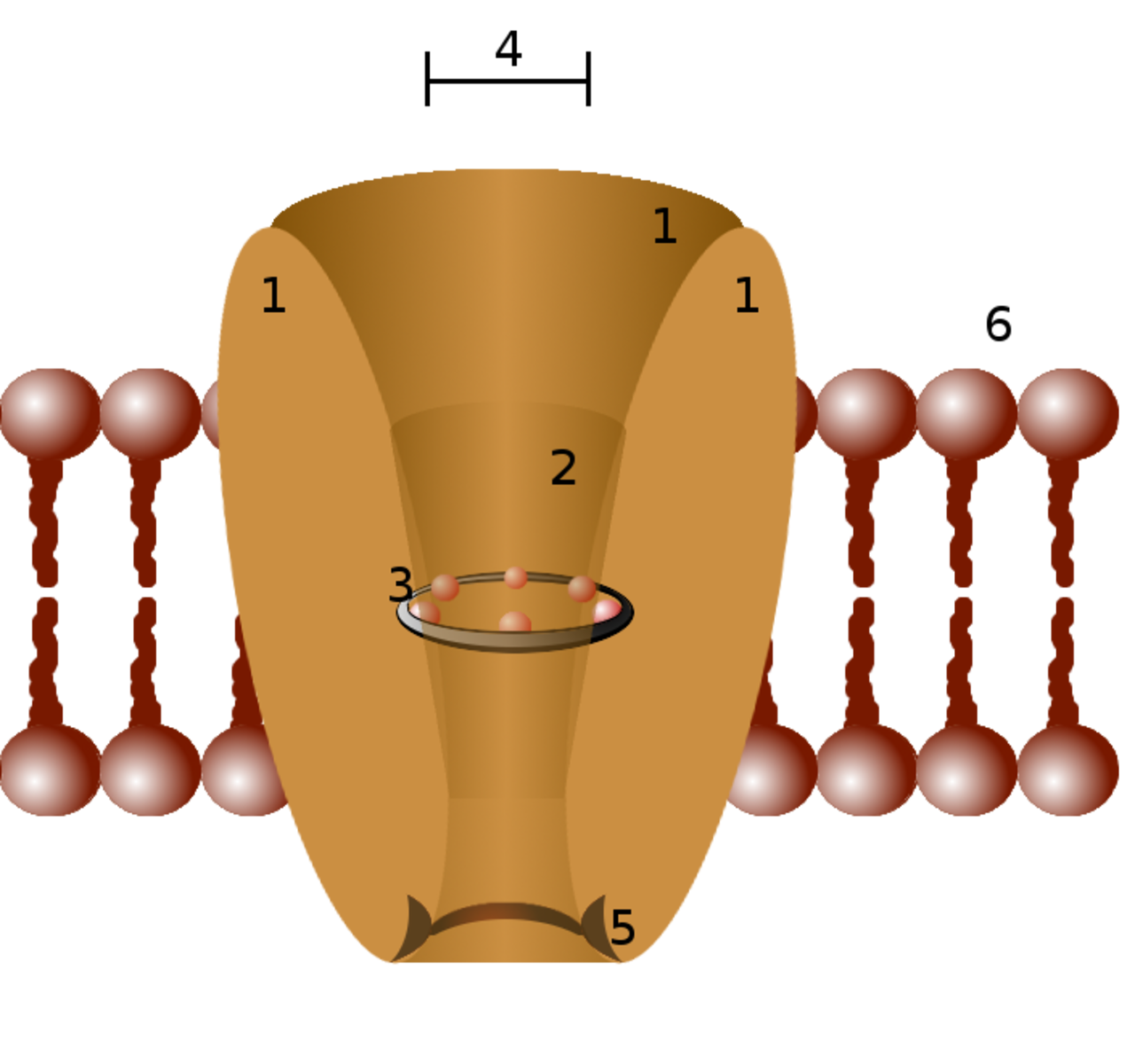
The structure and function of ion channels are intimately linked, with the channel's protein structure determining its ability to regulate ion flow. Ion channels are typically composed of multiple protein subunits that assemble to form a pore-like structure. The channel pore is lined with amino acid residues that interact with ions and other molecules, allowing or blocking their passage. The function of ion channels can be modulated by various factors, including ligand binding, voltage gating, and post-translational modification. For example, acetylcholine receptors are a type of ion channel that plays a key role in muscle contraction and neurotransmission.
📈 Ion Channel Classification and Types
Ion channels can be classified into different types based on their ion selectivity, gating mechanism, and pharmacological properties. For instance, voltage-gated ion channels are activated by changes in membrane potential, while ligand-gated ion channels are activated by the binding of specific molecules. Other types of ion channels include mechanically gated ion channels and ionotropic receptors. Each type of ion channel has distinct properties and functions, and they play critical roles in various cellular processes, including cell signaling and neurotransmission.
🔋 Ion Channel Physiology and Biophysics
The physiology and biophysics of ion channels are complex and multifaceted, involving the regulation of ion flow across the cell membrane. Ion channels play a crucial role in establishing and maintaining the resting membrane potential, which is essential for proper cellular function. They also contribute to the generation and propagation of action potentials, which are critical for neurotransmission and muscle contraction. Additionally, ion channels are involved in the regulation of cell volume and the control of ion homeostasis. For example, potassium channels play a key role in maintaining the resting membrane potential by allowing potassium ions to leave the cell.
👥 Ion Channels in Cellular Signaling and Communication
Ion channels are essential for cellular signaling and communication, allowing cells to respond to various stimuli and interact with their environment. They play a critical role in the transmission of neurotransmitters and the regulation of synaptic plasticity. Ion channels are also involved in the control of cell migration and the regulation of cell proliferation. Furthermore, ion channels contribute to the maintenance of tissue homeostasis and the regulation of organ function. For instance, calcium channels play a key role in muscle contraction and neurotransmission.
🚫 Ion Channel Dysfunction and Disease
Dysfunction of ion channels can lead to various diseases and disorders, including neurological disorders and cardiovascular diseases. For example, mutations in ion channel genes can lead to channelopathies, which are a class of diseases caused by defects in ion channel function. Additionally, ion channel dysfunction can contribute to the development of cancer and other diseases. Therefore, understanding the structure, function, and regulation of ion channels is essential for the development of effective treatments for these diseases. For instance, ion channel blockers can be used to treat arrhythmias and other cardiovascular diseases.
🔬 Ion Channel Research and Experimental Techniques
Ion channel research has led to the development of various experimental techniques, including patch clamp technique and single channel recording. These techniques allow researchers to study the properties and functions of ion channels in detail, providing valuable insights into their role in cellular signaling and disease. Additionally, the development of ion channel models and simulation tools has enabled researchers to simulate and predict the behavior of ion channels, which is essential for understanding their complex functions. For example, molecular dynamics simulations can be used to study the protein structure and ion channel function of ion channels.
📊 Ion Channel Modeling and Simulation
Ion channel modeling and simulation have become essential tools for understanding the complex functions of ion channels. These models and simulations can be used to predict the behavior of ion channels under various conditions, including voltage gating and ligand binding. Additionally, they can be used to study the effects of mutations and post-translational modification on ion channel function. For instance, Markov chain models can be used to simulate the gating kinetics of ion channels. The development of these models and simulations has greatly advanced our understanding of ion channels and their role in cellular signaling and disease.
👨🔬 Ion Channel Researchers and Their Contributions
Many researchers have made significant contributions to our understanding of ion channels, including Erwin Neher and Bert Sakmann, who were awarded the Nobel Prize in Physiology or Medicine for their discovery of the patch clamp technique. Other notable researchers include Roderick MacKinnon, who was awarded the Nobel Prize in Chemistry for his work on the structure and function of potassium channels. These researchers, along with many others, have greatly advanced our understanding of ion channels and their role in cellular signaling and disease.
Key Facts
- Year
- 1991
- Origin
- Cell Membrane
- Category
- Biophysics and Neuroscience
- Type
- Biological Process
Frequently Asked Questions
What are ion channels and what do they do?
Ion channels are pore-forming membrane proteins that allow ions to pass through the channel pore, regulating the flow of ions across the cell membrane. They play a crucial role in various cellular processes, including cell signaling, neurotransmission, and muscle contraction.
How are ion channels classified?
Ion channels can be classified into different types based on their ion selectivity, gating mechanism, and pharmacological properties. For example, voltage-gated ion channels are activated by changes in membrane potential, while ligand-gated ion channels are activated by the binding of specific molecules.
What is the role of ion channels in disease?
Dysfunction of ion channels can lead to various diseases and disorders, including neurological disorders and cardiovascular diseases. For example, mutations in ion channel genes can lead to channelopathies, which are a class of diseases caused by defects in ion channel function.
How are ion channels studied?
Ion channels can be studied using various experimental techniques, including patch clamp technique and single channel recording. Additionally, the development of ion channel models and simulation tools has enabled researchers to simulate and predict the behavior of ion channels.
Who are some notable researchers in the field of ion channels?
Many researchers have made significant contributions to our understanding of ion channels, including Erwin Neher and Bert Sakmann, who were awarded the Nobel Prize in Physiology or Medicine for their discovery of the patch clamp technique. Other notable researchers include Roderick MacKinnon, who was awarded the Nobel Prize in Chemistry for his work on the structure and function of potassium channels.
What are some resources for learning more about ion channels?
For further reading on ion channels, see the ion channel Wikipedia page or the ion channel research article on PubMed. Additionally, the ion channel database provides a comprehensive list of ion channels and their properties. The ion channel community is also a valuable resource for researchers and students interested in learning more about ion channels.
What is the current state of ion channel research?
Ion channel research is a rapidly evolving field, with new discoveries and advances being made regularly. The development of new experimental techniques and simulation tools has enabled researchers to study ion channels in greater detail than ever before, and has led to a greater understanding of their role in cellular signaling and disease.