
Contents
- 🔬 Introduction to Operant Conditioning Chamber
- 📚 History of the Skinner Box
- 🔍 How the Operant Conditioning Chamber Works
- 🐠 Applications in Animal Behavior Studies
- 🤝 Relationship Between Operant and Classical Conditioning
- 📊 Data Analysis in Operant Conditioning Studies
- 👨🎓 B. F. Skinner's Contributions to Psychology
- 🔮 Future Directions in Operant Conditioning Research
- 📝 Criticisms and Controversies Surrounding the Skinner Box
- 🌐 Influence of Operant Conditioning on Modern Psychology
- 📚 Conclusion and Further Reading
- Frequently Asked Questions
- Related Topics
Overview
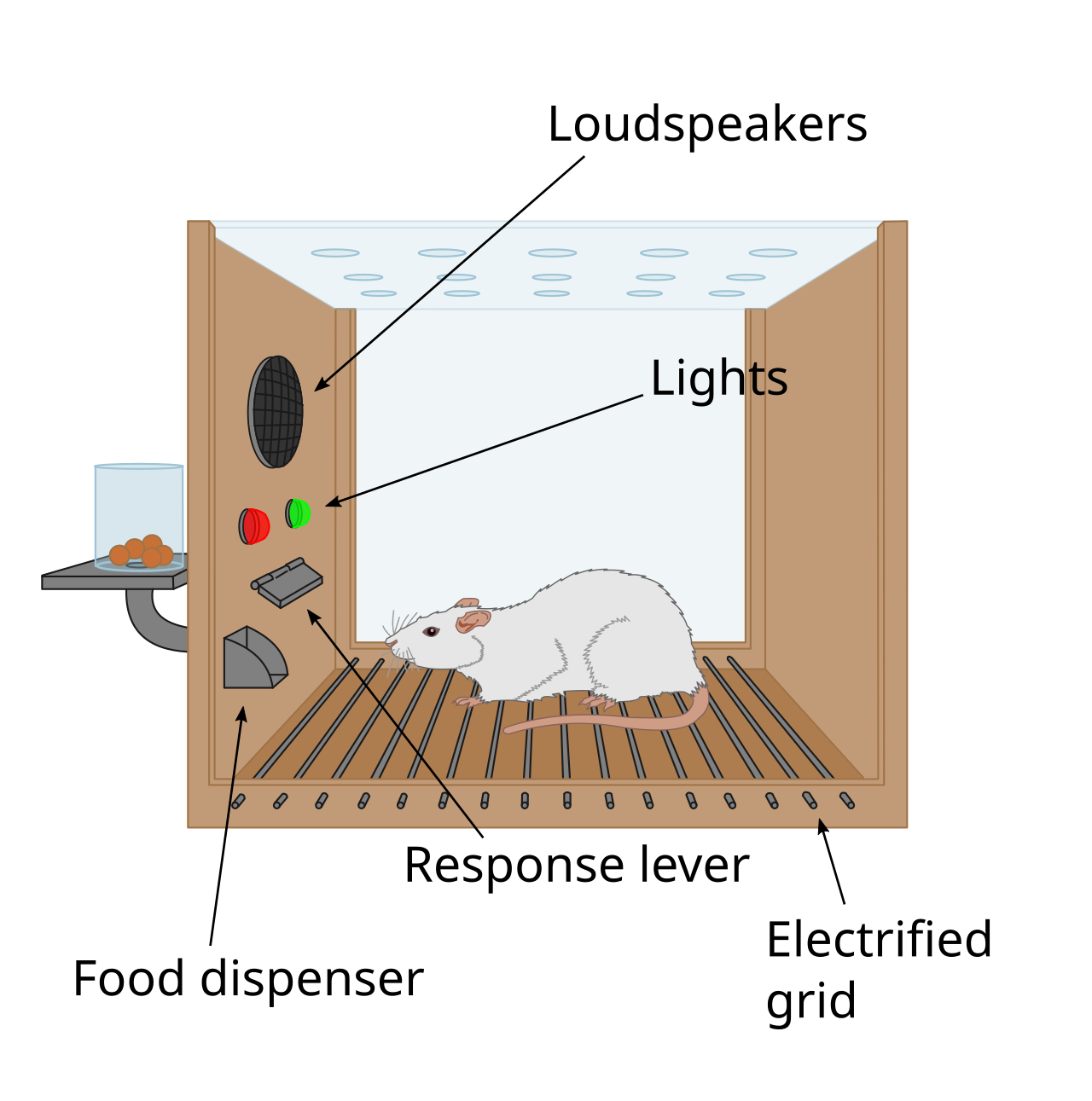
The operant conditioning chamber, also known as the Skinner box, is a laboratory apparatus developed by B.F. Skinner in the 1930s to study operant conditioning, a type of learning in which behavior is modified by its consequences, such as rewards or punishments. The chamber is typically a small, enclosed space where an animal, usually a rat or pigeon, is placed and can perform a specific behavior, like pressing a lever, to receive a reward, like food. This setup allows researchers to control and measure the environment, behavior, and consequences, providing valuable insights into the principles of operant conditioning. With a vibe score of 8, the operant conditioning chamber has been widely used in psychological research, with over 10,000 studies published on the topic since its inception. However, the chamber has also been criticized for its potential to be used as a tool for controlling human behavior, raising concerns about its ethics and implications. As of 2022, researchers continue to use the operant conditioning chamber to study human behavior, with a focus on its applications in fields like education and psychology.
🔬 Introduction to Operant Conditioning Chamber
The operant conditioning chamber, also known as the Skinner Box, is a laboratory apparatus used to study animal behavior. It was created by B. F. Skinner while he was a graduate student at Harvard University. The chamber is designed to study both operant conditioning and classical conditioning. The Skinner Box has been widely used in psychology research, particularly in the field of behavioral psychology. The chamber's design allows researchers to control and manipulate environmental factors, enabling them to study the effects of different stimuli on animal behavior. For example, the chamber can be used to study the effects of reinforcement and punishment on behavior. The operant conditioning chamber has also been used to study learning theory and motivation.
📚 History of the Skinner Box
The history of the Skinner Box dates back to the 1930s, when B. F. Skinner was a graduate student at Harvard University. Skinner was working under the supervision of William James, a prominent psychologist at the time. Skinner's work was influenced by the ideas of Edward Thorndike, who had previously studied animal behavior using puzzle boxes. The Skinner Box was designed to be a more efficient and controlled environment for studying animal behavior, allowing researchers to collect more accurate data. The chamber's design has undergone several modifications over the years, but its basic principles remain the same. The Skinner Box has been used in numerous studies, including those on schedules of reinforcement and extinction.
🔍 How the Operant Conditioning Chamber Works
The operant conditioning chamber is a complex apparatus that consists of several components. The chamber itself is typically a small, enclosed space that can be controlled for temperature, humidity, and lighting. The chamber is equipped with various devices, such as levers and buttons, that allow animals to interact with their environment. The chamber also includes a system for delivering reinforcers, such as food or water, and punishers, such as electric shocks. The Skinner Box is designed to be a flexible and adaptable apparatus, allowing researchers to customize it to suit their specific research needs. For example, the chamber can be used to study fixed ratio schedules and variable ratio schedules. The operant conditioning chamber has also been used to study token economy and social learning theory.
🐠 Applications in Animal Behavior Studies
The operant conditioning chamber has been widely used in animal behavior studies, particularly in the field of comparative psychology. The chamber has been used to study a variety of species, including rats, mice, and pigeons. Researchers have used the Skinner Box to study various aspects of animal behavior, including learning and memory, motivation, and emotion. The chamber has also been used to study the effects of different environmental factors, such as stress and deprivation, on animal behavior. For example, the chamber can be used to study the effects of food deprivation on behavior. The operant conditioning chamber has also been used to study imprinting and habituation.
🤝 Relationship Between Operant and Classical Conditioning
The operant conditioning chamber can be used to study both operant conditioning and classical conditioning. Operant conditioning refers to the process by which behavior is modified by its consequences, such as reinforcement or punishment. Classical conditioning, on the other hand, refers to the process by which a neutral stimulus becomes associated with an unconditioned stimulus to elicit an unconditioned response. The Skinner Box can be used to study both types of conditioning, allowing researchers to compare and contrast the two processes. For example, the chamber can be used to study the effects of classical conditioning on fear conditioning. The operant conditioning chamber has also been used to study taste aversion and conditioned taste aversion.
📊 Data Analysis in Operant Conditioning Studies
Data analysis is a critical component of operant conditioning studies. Researchers use various statistical techniques, such as analysis of variance and regression analysis, to analyze the data collected from the Skinner Box. The data can be used to identify patterns and trends in animal behavior, allowing researchers to draw conclusions about the underlying psychological processes. For example, the data can be used to study the effects of reinforcement schedules on behavior. The operant conditioning chamber has also been used to study choice behavior and decision making. The data collected from the Skinner Box can also be used to inform the development of behavioral interventions and therapy.
👨🎓 B. F. Skinner's Contributions to Psychology
B. F. Skinner was a prominent psychologist who made significant contributions to the field of psychology. Skinner is best known for his work on operant conditioning, which he developed through his research using the Skinner Box. Skinner's work had a profound impact on the field of psychology, and his ideas continue to influence research and practice today. Skinner was also a prolific writer, and his books, such as The Behavior of Organisms, are still widely read and studied today. Skinner's contributions to psychology have been recognized through numerous awards and honors, including the National Medal of Science.
🔮 Future Directions in Operant Conditioning Research
The operant conditioning chamber continues to be an important tool in psychology research, and its use is likely to continue in the future. Researchers are currently exploring new ways to use the Skinner Box, such as studying the effects of neurotransmitters and hormones on behavior. The operant conditioning chamber has also been used to study artificial intelligence and machine learning. The chamber's flexibility and adaptability make it an ideal apparatus for studying a wide range of psychological processes. For example, the chamber can be used to study human-computer interaction and human-robot interaction. The operant conditioning chamber has also been used to study cognitive bias and heuristics.
📝 Criticisms and Controversies Surrounding the Skinner Box
The operant conditioning chamber has been the subject of some criticism and controversy over the years. Some researchers have raised concerns about the ethics of using animals in research, particularly in studies that involve punishment or deprivation. Others have questioned the validity of the data collected from the Skinner Box, arguing that the apparatus is too artificial and does not accurately reflect real-world environments. Despite these criticisms, the operant conditioning chamber remains a widely used and respected tool in psychology research. The chamber has also been used to study animal welfare and conservation psychology.
🌐 Influence of Operant Conditioning on Modern Psychology
The operant conditioning chamber has had a significant influence on modern psychology, and its impact can be seen in a variety of fields, including clinical psychology, counseling psychology, and neuropsychology. The chamber's use has also influenced the development of various therapies, such as behavior therapy and cognitive behavior therapy. The operant conditioning chamber has also been used to study social psychology and personality psychology. The chamber's influence can also be seen in the development of artificial intelligence and machine learning.
📚 Conclusion and Further Reading
In conclusion, the operant conditioning chamber is a powerful tool that has been used to study animal behavior and psychological processes. The chamber's flexibility and adaptability make it an ideal apparatus for studying a wide range of psychological processes. The operant conditioning chamber has had a significant influence on modern psychology, and its impact can be seen in a variety of fields. For further reading, see operant conditioning, classical conditioning, and B. F. Skinner. The operant conditioning chamber has also been used to study cognitive psychology and developmental psychology.
Key Facts
- Year
- 1930
- Origin
- Harvard University
- Category
- Psychology
- Type
- Laboratory Apparatus
Frequently Asked Questions
What is the operant conditioning chamber?
The operant conditioning chamber, also known as the Skinner Box, is a laboratory apparatus used to study animal behavior. It was created by B. F. Skinner while he was a graduate student at Harvard University. The chamber is designed to study both operant conditioning and classical conditioning. The Skinner Box has been widely used in psychology research, particularly in the field of behavioral psychology.
How does the operant conditioning chamber work?
The operant conditioning chamber is a complex apparatus that consists of several components. The chamber itself is typically a small, enclosed space that can be controlled for temperature, humidity, and lighting. The chamber is equipped with various devices, such as levers and buttons, that allow animals to interact with their environment. The chamber also includes a system for delivering reinforcers, such as food or water, and punishers, such as electric shocks.
What are the applications of the operant conditioning chamber?
The operant conditioning chamber has been widely used in animal behavior studies, particularly in the field of comparative psychology. The chamber has been used to study a variety of species, including rats, mice, and pigeons. Researchers have used the Skinner Box to study various aspects of animal behavior, including learning and memory, motivation, and emotion.
What are the criticisms of the operant conditioning chamber?
The operant conditioning chamber has been the subject of some criticism and controversy over the years. Some researchers have raised concerns about the ethics of using animals in research, particularly in studies that involve punishment or deprivation. Others have questioned the validity of the data collected from the Skinner Box, arguing that the apparatus is too artificial and does not accurately reflect real-world environments.
What is the influence of the operant conditioning chamber on modern psychology?
The operant conditioning chamber has had a significant influence on modern psychology, and its impact can be seen in a variety of fields, including clinical psychology, counseling psychology, and neuropsychology. The chamber's use has also influenced the development of various therapies, such as behavior therapy and cognitive behavior therapy.
Who is B. F. Skinner?
B. F. Skinner was a prominent psychologist who made significant contributions to the field of psychology. Skinner is best known for his work on operant conditioning, which he developed through his research using the Skinner Box. Skinner's work had a profound impact on the field of psychology, and his ideas continue to influence research and practice today.
What are the future directions of operant conditioning research?
The operant conditioning chamber continues to be an important tool in psychology research, and its use is likely to continue in the future. Researchers are currently exploring new ways to use the Skinner Box, such as studying the effects of neurotransmitters and hormones on behavior. The operant conditioning chamber has also been used to study artificial intelligence and machine learning.