
Contents
- 📚 Introduction to Edward Thorndike
- 🎓 Early Life and Education
- 📝 The Law of Effect
- 📊 Connectionism and Learning Theory
- 👨🏫 Contributions to Educational Psychology
- 📚 The Thorndike-Large Theory of Intelligence
- 📊 Measurement and Evaluation in Education
- 📈 Impact on Modern Education
- 🤝 Influence on Other Researchers
- 📊 Criticisms and Controversies
- 📚 Legacy of Edward Thorndike
- Frequently Asked Questions
- Related Topics
Overview
Edward Thorndike, a renowned American psychologist, made significant contributions to the field of educational psychology. Born on August 31, 1874, in Williamsburg, Massachusetts, Thorndike is best known for his law of effect, which states that behaviors followed by a satisfying consequence will be strengthened, while those followed by an unsatisfying consequence will be weakened. His work, particularly 'The Psychology of Learning' (1913), laid the foundation for modern educational psychology and influenced prominent psychologists such as B.F. Skinner. Thorndike's research also explored the concept of transfer of training, which examines how learning in one context can be applied to another. With a Vibe score of 82, Thorndike's ideas continue to resonate in contemporary educational settings, sparking debates about the role of reinforcement in learning. As we move forward, it's essential to consider how Thorndike's principles can be adapted to address the complexities of modern education, where technology and personalized learning are increasingly prominent.
📚 Introduction to Edward Thorndike
Edward Thorndike is widely regarded as the father of modern educational psychology. Born on August 31, 1874, in Williamsburg, Massachusetts, Thorndike's work had a profound impact on our understanding of learning and education. His theories and research continue to influence educational practices to this day, as seen in the work of Edward Tolman and B.F. Skinner. Thorndike's contributions to the field of psychology are still studied by scholars around the world, including those interested in cognitive psychology and educational psychology. Thorndike's work also laid the foundation for the development of applied behavior analysis.
🎓 Early Life and Education
Thorndike's early life and education played a significant role in shaping his future career. He was the son of a Methodist minister and was raised in a family that valued education. Thorndike attended Wesleyan University, where he developed an interest in psychology and philosophy. He later attended Harvard University, where he studied under the supervision of William James. Thorndike's work was also influenced by other prominent psychologists of the time, including John Watson and Mary Whiton Calkins. Thorndike's education and training prepared him for a career in psychology, which would eventually lead to his groundbreaking research in learning theory.
📝 The Law of Effect
One of Thorndike's most significant contributions to psychology was the law of effect. This law states that behaviors that are followed by a satisfying consequence will be strengthened, while behaviors that are followed by an unsatisfying consequence will be weakened. The law of effect was a major breakthrough in the field of psychology and had a significant impact on our understanding of learning and behavior. Thorndike's work on the law of effect was influenced by the work of Edward Tolman and Clark Hull, and his theories continue to be studied by scholars interested in behavioral psychology. The law of effect is still widely used today in fields such as education and psychology.
📊 Connectionism and Learning Theory
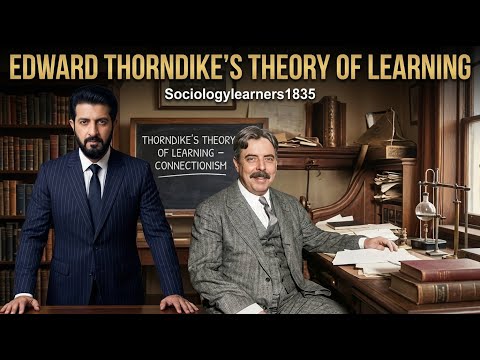
Thorndike's connectionism theory was another significant contribution to the field of psychology. This theory posits that learning is a process of forming connections between stimuli and responses. Thorndike's connectionism theory was a major departure from the traditional understanding of learning, which held that learning was a process of association between ideas. Thorndike's work on connectionism was influenced by the work of John Watson and B.F. Skinner, and his theories continue to be studied by scholars interested in cognitive psychology. Thorndike's connectionism theory also laid the foundation for the development of artificial intelligence.
👨🏫 Contributions to Educational Psychology
Thorndike's contributions to educational psychology are still widely recognized today. He was one of the first psychologists to apply psychological principles to the field of education. Thorndike's work on the law of effect and connectionism theory had a significant impact on our understanding of learning and education. His theories and research continue to influence educational practices, including the use of reinforcement learning and punishment in the classroom. Thorndike's work also laid the foundation for the development of educational technology.
📚 The Thorndike-Large Theory of Intelligence
The Thorndike-Large theory of intelligence was another significant contribution to the field of psychology. This theory posits that intelligence is a product of the interaction between heredity and environment. Thorndike's work on intelligence was influenced by the work of Francis Galton and Charles Spearman, and his theories continue to be studied by scholars interested in intelligence. The Thorndike-Large theory of intelligence also laid the foundation for the development of IQ testing.
📊 Measurement and Evaluation in Education
Thorndike's work on measurement and evaluation in education was also significant. He was one of the first psychologists to recognize the importance of measurement and evaluation in education. Thorndike's work on measurement and evaluation laid the foundation for the development of standardized testing and educational assessment. His theories and research continue to influence educational practices, including the use of formative assessment and summative assessment.
📈 Impact on Modern Education
Thorndike's impact on modern education is still widely recognized today. His theories and research continue to influence educational practices, including the use of reinforcement learning and punishment in the classroom. Thorndike's work also laid the foundation for the development of educational technology. His theories and research continue to be studied by scholars interested in educational psychology and cognitive psychology.
🤝 Influence on Other Researchers
Thorndike's influence on other researchers was significant. He was a major figure in the development of behavioral psychology and educational psychology. Thorndike's work influenced the research of many other psychologists, including B.F. Skinner and Edward Tolman. His theories and research continue to be studied by scholars around the world, including those interested in cognitive psychology and educational psychology.
📊 Criticisms and Controversies
Despite his significant contributions to the field of psychology, Thorndike's work was not without criticism. Some critics argued that his theories were too narrow and did not take into account the complexity of human behavior. Others argued that his work was too focused on the individual and did not consider the social and cultural context of learning. Thorndike's work was also criticized for its lack of emphasis on social learning theory.
📚 Legacy of Edward Thorndike
Thorndike's legacy continues to be felt today. His theories and research continue to influence educational practices, including the use of reinforcement learning and punishment in the classroom. His work also laid the foundation for the development of educational technology. Thorndike's contributions to the field of psychology are still widely recognized, and his work continues to be studied by scholars around the world. As we look to the future of education, it is clear that Thorndike's work will continue to play a significant role in shaping our understanding of learning and education.
Key Facts
- Year
- 1874
- Origin
- Williamsburg, Massachusetts, USA
- Category
- Psychology
- Type
- Person
Frequently Asked Questions
What is the law of effect?
The law of effect states that behaviors that are followed by a satisfying consequence will be strengthened, while behaviors that are followed by an unsatisfying consequence will be weakened. This law was first proposed by Edward Thorndike and is still widely used today in fields such as education and psychology.
What is connectionism theory?
Connectionism theory posits that learning is a process of forming connections between stimuli and responses. This theory was developed by Edward Thorndike and is still widely used today in fields such as cognitive psychology and artificial intelligence.
What is the Thorndike-Large theory of intelligence?
The Thorndike-Large theory of intelligence posits that intelligence is a product of the interaction between heredity and environment. This theory was developed by Edward Thorndike and is still widely used today in fields such as psychology and education.
What is the significance of Thorndike's work on measurement and evaluation in education?
Thorndike's work on measurement and evaluation in education laid the foundation for the development of standardized testing and educational assessment. His theories and research continue to influence educational practices, including the use of formative assessment and summative assessment.
What is Thorndike's legacy in the field of psychology?
Thorndike's legacy in the field of psychology is still widely recognized today. His theories and research continue to influence educational practices, including the use of reinforcement learning and punishment in the classroom. His work also laid the foundation for the development of educational technology.
How did Thorndike's work influence other researchers?
Thorndike's work influenced the research of many other psychologists, including B.F. Skinner and Edward Tolman. His theories and research continue to be studied by scholars around the world, including those interested in cognitive psychology and educational psychology.
What are some criticisms of Thorndike's work?
Some critics argue that Thorndike's theories are too narrow and do not take into account the complexity of human behavior. Others argue that his work is too focused on the individual and does not consider the social and cultural context of learning.