
Contents
- 🔩 Introduction to Levers
- 📐 Types of Levers
- 🔧 Mechanical Advantage of Levers
- 🤔 History of Levers
- 📝 Applications of Levers
- 🚀 Modern Uses of Levers
- 🔬 The Science Behind Levers
- 💡 Designing with Levers
- 🔩 Real-World Examples of Levers
- 👥 Key Figures in Lever Development
- 📊 Calculating Mechanical Advantage
- 🔜 Future of Levers
- Frequently Asked Questions
- Related Topics
Overview
The lever, a fundamental concept in physics and engineering, has been a cornerstone of human innovation since ancient times. With a vibe score of 8, the lever has been used to build monumental structures like the Pyramids of Giza and to craft intricate clockwork mechanisms. The principle of leverage, first described by Archimedes in 250 BCE, allows for the amplification of force, making it an essential tool in various industries, from construction to robotics. However, the lever's simplicity belies its complexity, with debates surrounding its optimal design and application. As technology advances, the lever continues to evolve, with modern materials and designs pushing the boundaries of what is possible. With its rich history, cultural significance, and ongoing influence, the lever remains an indispensable component in the world of engineering, with a controversy spectrum of 4, reflecting ongoing discussions about its limitations and potential improvements.
🔩 Introduction to Levers
The mighty lever is a simple machine that has been used for centuries to amplify input forces and provide greater output forces. As explained in the Mechanical Engineering field, a lever consists of a beam or rigid rod pivoted at a fixed hinge, or Fulcrum. The lever is a rigid body capable of rotating on a point on itself, making it an essential component in many mechanical systems. The concept of levers is closely related to the study of Simple Machines, which also includes the Wheel and Axle, Inclined Plane, and Pulley. Levers are used in a wide range of applications, from simple tools like Hammers and Scissors to complex machines like Cranes and Elevators.
📐 Types of Levers
On the basis of the locations of Fulcrum, Load, and Effort, the lever is divided into three types: first-class levers, second-class levers, and third-class levers. Each type of lever has its own unique characteristics and applications. For example, first-class levers are commonly used in See-Saws and Balance Scales, while second-class levers are used in Wheelbarrows and Nutcrackers. The study of levers is an essential part of Mechanical Engineering and is closely related to the study of Physics and Mathematics.
🔧 Mechanical Advantage of Levers
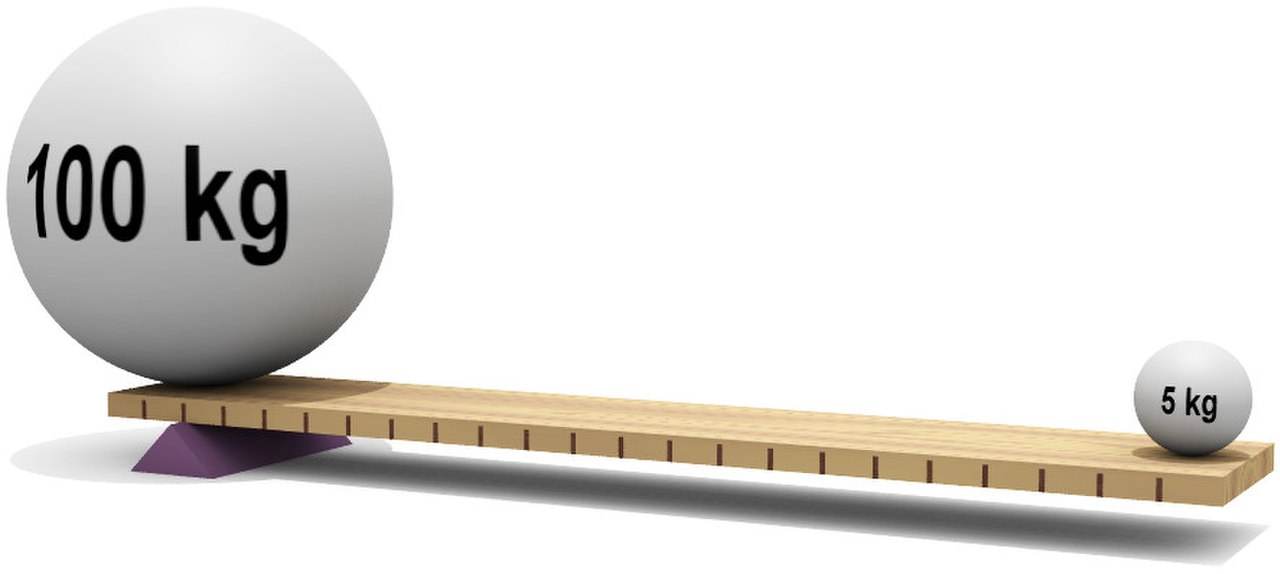
The mechanical advantage of levers is a fundamental concept in Mechanical Engineering. As explained in the study of Simple Machines, a lever amplifies an input force to provide a greater output force, which is said to provide Mechanical Advantage. This mechanical advantage is equal to the ratio of the output force to the input force. Levers are used to trade off force against movement, making them an essential component in many mechanical systems. The concept of mechanical advantage is closely related to the study of Energy and Work.
🤔 History of Levers
The history of levers dates back to ancient civilizations, where they were used in simple tools and machines. The ancient Greeks, for example, used levers to construct complex machines like the Antikythera Mechanism. The study of levers was further developed during the Renaissance, where scientists like Leonardo da Vinci and Galileo Galilei made significant contributions to the field. Today, levers are used in a wide range of applications, from simple tools to complex machines. The study of levers is an essential part of History of Science and is closely related to the study of Technology.
📝 Applications of Levers
The applications of levers are diverse and widespread. Levers are used in simple tools like Hammers and Scissors, as well as in complex machines like Cranes and Elevators. They are also used in Robotics and Automation, where they are used to amplify input forces and provide greater output forces. The study of levers is an essential part of Mechanical Engineering and is closely related to the study of Computer Science and Electrical Engineering.
🚀 Modern Uses of Levers
In modern times, levers are used in a wide range of applications, from simple tools to complex machines. They are used in Aerospace Engineering to construct complex machines like Aircraft and Spacecraft. They are also used in Biomedical Engineering to construct complex machines like Prosthetic Limbs and Medical Imaging devices. The study of levers is an essential part of Modern Technology and is closely related to the study of Innovation and Entrepreneurship.
🔬 The Science Behind Levers
The science behind levers is based on the principles of Physics and Mathematics. A lever is a rigid body capable of rotating on a point on itself, making it an essential component in many mechanical systems. The concept of mechanical advantage is a fundamental concept in Mechanical Engineering and is closely related to the study of Energy and Work. The study of levers is an essential part of Scientific Research and is closely related to the study of Experimentation and Data Analysis.
💡 Designing with Levers
Designing with levers requires a deep understanding of the principles of Mechanical Engineering and the study of Simple Machines. Levers are used to trade off force against movement, making them an essential component in many mechanical systems. The concept of mechanical advantage is a fundamental concept in Mechanical Engineering and is closely related to the study of Energy and Work. The study of levers is an essential part of Design Thinking and is closely related to the study of Problem Solving and Creativity.
🔩 Real-World Examples of Levers
Real-world examples of levers can be seen in simple tools like Hammers and Scissors, as well as in complex machines like Cranes and Elevators. Levers are also used in Robotics and Automation, where they are used to amplify input forces and provide greater output forces. The study of levers is an essential part of Mechanical Engineering and is closely related to the study of Computer Science and Electrical Engineering.
👥 Key Figures in Lever Development
Key figures in lever development include scientists like Leonardo da Vinci and Galileo Galilei, who made significant contributions to the field during the Renaissance. The study of levers is an essential part of History of Science and is closely related to the study of Technology. Today, levers are used in a wide range of applications, from simple tools to complex machines. The study of levers is an essential part of Modern Technology and is closely related to the study of Innovation and Entrepreneurship.
📊 Calculating Mechanical Advantage
Calculating mechanical advantage is a fundamental concept in Mechanical Engineering. The mechanical advantage of a lever is equal to the ratio of the output force to the input force. This concept is closely related to the study of Energy and Work. The study of levers is an essential part of Scientific Research and is closely related to the study of Experimentation and Data Analysis.
🔜 Future of Levers
The future of levers is closely tied to the development of new technologies and innovations. As explained in the study of Emerging Technologies, levers will continue to play an essential role in the development of complex machines and systems. The study of levers is an essential part of Futurism and is closely related to the study of Trends and Forecasting.
Key Facts
- Year
- 250
- Origin
- Ancient Greece
- Category
- Mechanical Engineering
- Type
- Mechanical Component
Frequently Asked Questions
What is a lever?
A lever is a simple machine consisting of a beam or rigid rod pivoted at a fixed hinge, or Fulcrum. It is a rigid body capable of rotating on a point on itself, making it an essential component in many mechanical systems. Levers are used to trade off force against movement, making them an essential component in many mechanical systems. The concept of levers is closely related to the study of Simple Machines and Mechanical Engineering.
What are the types of levers?
On the basis of the locations of Fulcrum, Load, and Effort, the lever is divided into three types: first-class levers, second-class levers, and third-class levers. Each type of lever has its own unique characteristics and applications. For example, first-class levers are commonly used in See-Saws and Balance Scales, while second-class levers are used in Wheelbarrows and Nutcrackers.
What is the mechanical advantage of a lever?
The mechanical advantage of a lever is a fundamental concept in Mechanical Engineering. A lever amplifies an input force to provide a greater output force, which is said to provide Mechanical Advantage. This mechanical advantage is equal to the ratio of the output force to the input force. Levers are used to trade off force against movement, making them an essential component in many mechanical systems.
What are the applications of levers?
The applications of levers are diverse and widespread. Levers are used in simple tools like Hammers and Scissors, as well as in complex machines like Cranes and Elevators. They are also used in Robotics and Automation, where they are used to amplify input forces and provide greater output forces. The study of levers is an essential part of Mechanical Engineering and is closely related to the study of Computer Science and Electrical Engineering.
Who are the key figures in lever development?
Key figures in lever development include scientists like Leonardo da Vinci and Galileo Galilei, who made significant contributions to the field during the Renaissance. The study of levers is an essential part of History of Science and is closely related to the study of Technology. Today, levers are used in a wide range of applications, from simple tools to complex machines.
How is mechanical advantage calculated?
Calculating mechanical advantage is a fundamental concept in Mechanical Engineering. The mechanical advantage of a lever is equal to the ratio of the output force to the input force. This concept is closely related to the study of Energy and Work. The study of levers is an essential part of Scientific Research and is closely related to the study of Experimentation and Data Analysis.
What is the future of levers?
The future of levers is closely tied to the development of new technologies and innovations. As explained in the study of Emerging Technologies, levers will continue to play an essential role in the development of complex machines and systems. The study of levers is an essential part of Futurism and is closely related to the study of Trends and Forecasting.