
Contents
- 🔍 Introduction to Reinforcement
- 📚 History of Reinforcement in Psychology
- 🐀 Operant Conditioning: The Power of Consequences
- 📝 Types of Reinforcement: Positive and Negative
- 👨🏫 Reinforcement in Education: A Teacher's Perspective
- 🤖 Reinforcement in Technology: AI and Machine Learning
- 📊 Measuring Reinforcement: Vibe Scores and Cultural Energy
- 🚫 Punishment: The Inverse of Reinforcement
- 🤝 Controversies and Debates in Reinforcement
- 📈 Future of Reinforcement: Trends and Predictions
- 📊 Reinforcement in the Digital Age: Social Media and Online Behavior
- 👥 Conclusion: The Power of Consequences in Shaping Behavior
- Frequently Asked Questions
- Related Topics
Overview
Reinforcement is a fundamental concept in psychology and behavioral science, referring to the process by which a consequence following a behavior alters the probability of that behavior occurring in the future. With a vibe rating of 8, reinforcement has been extensively studied and applied in various fields, including education, psychology, and technology. The concept has been shaped by influential figures such as B.F. Skinner, who pioneered the theory of operant conditioning, and has been further developed through advancements in artificial intelligence and machine learning. Reinforcement learning, a subfield of machine learning, has gained significant attention in recent years, with applications in robotics, game playing, and autonomous vehicles. However, the concept of reinforcement is not without controversy, with some critics arguing that it can be used to manipulate and control behavior, raising important questions about the ethics of behavioral modification. As research and development in this area continue to advance, it is essential to consider the potential implications and consequences of reinforcement on individuals and society, with key events such as the 1950s operant conditioning experiments and the 2010s AI-powered reinforcement learning breakthroughs marking significant milestones in the evolution of this concept.
🔍 Introduction to Reinforcement
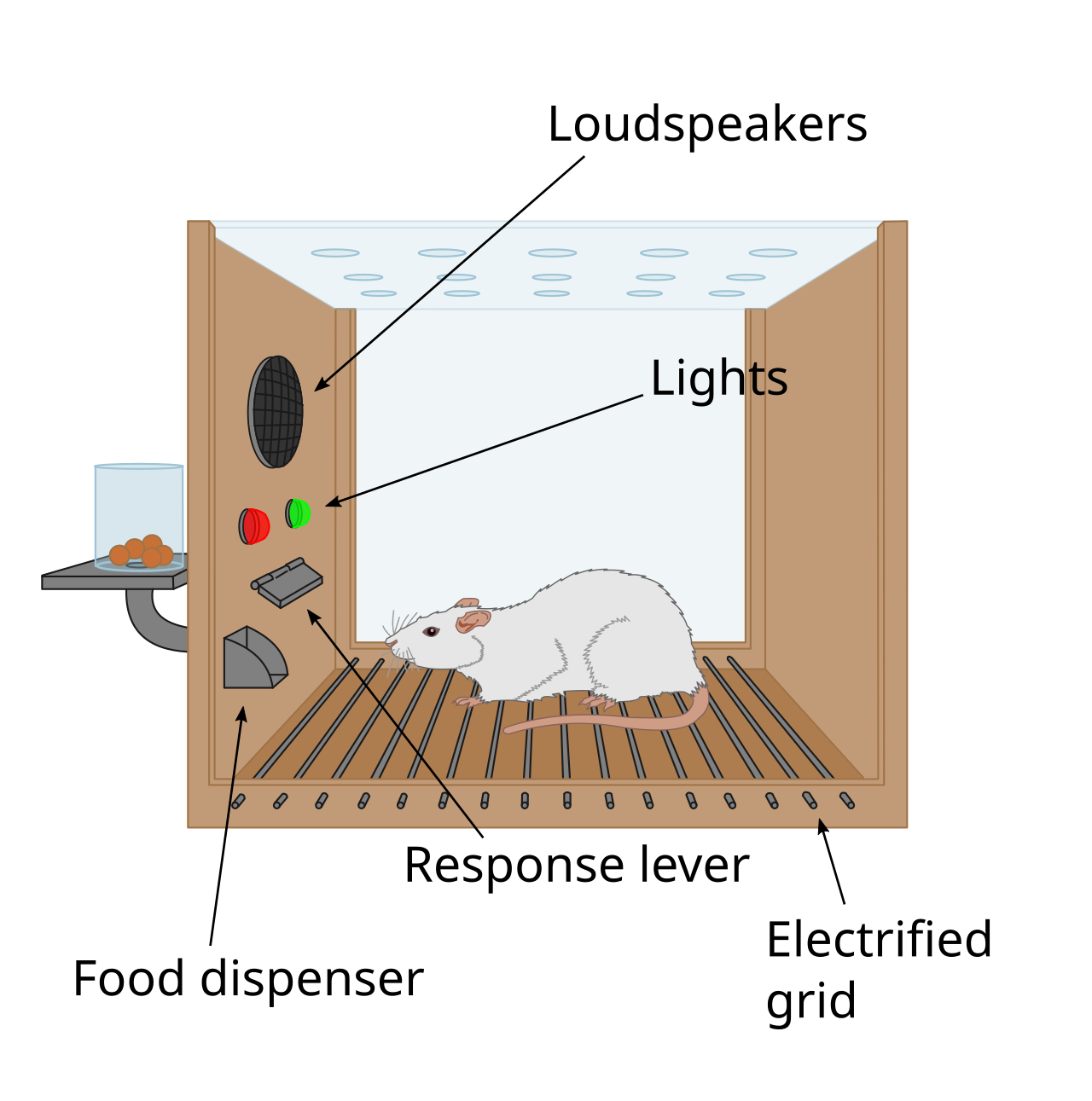
Reinforcement is a fundamental concept in Psychology, referring to the consequences that increase the likelihood of an organism's future behavior. This concept has been extensively studied in the field of Behavioral Psychology, where it is used to understand how behavior is shaped by its consequences. For example, a rat can be trained to push a lever to receive food whenever a light is turned on, illustrating the power of reinforcement in shaping behavior. This concept is also relevant in Education, where teachers use reinforcement to encourage desired behaviors in their students, such as answering questions in class. The use of reinforcement in education is closely tied to the concept of Operant Conditioning, which was developed by B.F. Skinner.
📚 History of Reinforcement in Psychology
The history of reinforcement in psychology dates back to the early 20th century, when B.F. Skinner first introduced the concept of operant conditioning. Skinner's work built on the foundation laid by earlier psychologists, such as Edward Thorndike, who had also explored the role of consequences in shaping behavior. The development of reinforcement theory has been influenced by various fields, including Philosophy and Sociology, and has been applied in a range of contexts, from Education to Business. The concept of reinforcement has also been linked to the idea of Cultural Energy, which refers to the collective enthusiasm and engagement of a group or community. Reinforcement can be used to increase cultural energy, by encouraging and rewarding desired behaviors.
🐀 Operant Conditioning: The Power of Consequences
Operant conditioning is a type of learning in which behavior is modified by its consequences, such as rewards or punishments. This concept is closely tied to the idea of reinforcement, which refers to the consequences that increase the likelihood of an organism's future behavior. In operant conditioning, the antecedent stimulus, such as a light or a teacher's question, sets the stage for the behavior, and the reinforcer, such as food or praise, follows the behavior and increases its likelihood. The use of operant conditioning has been applied in a range of fields, including Psychology, Education, and Business. For example, a company may use operant conditioning to encourage employees to meet sales targets, by offering rewards or bonuses for achieving certain milestones. This approach can be seen as a form of Positive Reinforcement, which focuses on encouraging desired behaviors rather than punishing undesired ones.
📝 Types of Reinforcement: Positive and Negative
There are several types of reinforcement, including positive and negative reinforcement. Positive reinforcement involves the presentation of a pleasing or desirable stimulus, such as food or praise, following a behavior, while negative reinforcement involves the removal of an unpleasant or aversive stimulus, such as a loud noise or a warning. Both types of reinforcement can be effective in increasing the likelihood of a behavior, but they have different effects on the organism. For example, positive reinforcement can increase the frequency and intensity of a behavior, while negative reinforcement can only increase the frequency. The use of reinforcement in Education is a key aspect of Teaching Methods, and can be used to encourage students to engage in desired behaviors, such as completing homework or participating in class discussions.
👨🏫 Reinforcement in Education: A Teacher's Perspective
Reinforcement plays a critical role in education, as it can be used to encourage desired behaviors in students, such as answering questions in class or completing homework. Teachers can use various types of reinforcement, including praise, attention, and rewards, to increase the likelihood of desired behaviors. For example, a teacher may use Positive Reinforcement to encourage students to participate in class discussions, by offering praise or rewards for their contributions. The use of reinforcement in education is closely tied to the concept of Learning Theory, which seeks to understand how people learn and how to optimize the learning process. Reinforcement can be used to support the development of Cognitive Skills, such as problem-solving and critical thinking, by encouraging students to engage in activities that promote these skills.
🤖 Reinforcement in Technology: AI and Machine Learning
The concept of reinforcement has also been applied in the field of technology, particularly in the development of Artificial Intelligence and Machine Learning. In these fields, reinforcement is used to train algorithms to perform tasks, such as playing games or recognizing images. The use of reinforcement in technology has led to significant advances in the development of AI and machine learning, and has enabled the creation of sophisticated systems that can learn and adapt to new situations. For example, a company may use Reinforcement Learning to train a robot to navigate a complex environment, by providing rewards or penalties for its actions. This approach can be seen as a form of Operant Conditioning, which seeks to modify behavior through its consequences.
📊 Measuring Reinforcement: Vibe Scores and Cultural Energy
The concept of vibe scores and cultural energy can be used to measure the effectiveness of reinforcement in shaping behavior. Vibe scores refer to the collective enthusiasm and engagement of a group or community, and can be used to evaluate the impact of reinforcement on cultural energy. For example, a company may use vibe scores to measure the effectiveness of its employee recognition program, by tracking the level of engagement and enthusiasm among employees. The use of vibe scores and cultural energy can provide valuable insights into the impact of reinforcement on behavior, and can help organizations to optimize their use of reinforcement to achieve desired outcomes. This approach can be seen as a form of Data-Driven Decision Making, which seeks to use data and analytics to inform decision-making.
🚫 Punishment: The Inverse of Reinforcement
Punishment is the inverse of reinforcement, referring to any behavior that decreases the likelihood that a response will occur. Punishment can take many forms, including physical punishment, such as spanking, or verbal punishment, such as scolding. However, punishment is not always effective in decreasing undesired behavior, and can even have negative consequences, such as increasing aggression or decreasing self-esteem. The use of punishment in Education is a controversial topic, with some arguing that it is necessary to maintain discipline and order, while others argue that it is ineffective and can have negative consequences. For example, a teacher may use Punishment to discourage students from engaging in undesired behaviors, such as talking out of turn or disrupting the class. However, this approach can be seen as a form of Negative Reinforcement, which focuses on punishing undesired behaviors rather than encouraging desired ones.
🤝 Controversies and Debates in Reinforcement
The concept of reinforcement is not without controversy, and there are many debates surrounding its use and effectiveness. Some argue that reinforcement is a powerful tool for shaping behavior, while others argue that it can be manipulative and controlling. For example, some critics argue that the use of reinforcement in education can create a culture of compliance, where students are motivated to behave only to receive rewards or avoid punishment. The use of reinforcement in Business is also a topic of debate, with some arguing that it is necessary to motivate employees and increase productivity, while others argue that it can create a culture of competition and individualism. The concept of reinforcement is closely tied to the idea of Motivation, which seeks to understand what drives human behavior and how to optimize motivation to achieve desired outcomes.
📈 Future of Reinforcement: Trends and Predictions
The future of reinforcement is likely to be shaped by advances in technology, particularly in the fields of Artificial Intelligence and Machine Learning. These advances are likely to enable the development of more sophisticated systems for delivering reinforcement, such as personalized learning platforms and virtual reality training environments. The use of reinforcement in Education is likely to continue to evolve, with a focus on creating more effective and efficient systems for delivering reinforcement. For example, a company may use Reinforcement Learning to develop a personalized learning platform, which can provide tailored reinforcement to individual students based on their needs and abilities. This approach can be seen as a form of Adaptive Learning, which seeks to optimize the learning process by adapting to the needs and abilities of individual learners.
👥 Conclusion: The Power of Consequences in Shaping Behavior
In conclusion, reinforcement is a powerful tool for shaping behavior, with a wide range of applications in fields such as Psychology, Education, and Business. While there are controversies and debates surrounding its use, reinforcement remains a critical component of many systems for modifying behavior. As technology continues to evolve, it is likely that reinforcement will play an increasingly important role in shaping behavior, particularly in the digital age. The concept of reinforcement is closely tied to the idea of Behavioral Change, which seeks to understand how to modify behavior to achieve desired outcomes. By understanding the power of consequences, we can create more effective systems for shaping behavior and achieving our goals.
Key Facts
- Year
- 1950
- Origin
- Harvard University, USA
- Category
- Psychology, Technology, Education
- Type
- Concept
Frequently Asked Questions
What is reinforcement in psychology?
Reinforcement in psychology refers to the consequences that increase the likelihood of an organism's future behavior. This concept is closely tied to the idea of Operant Conditioning, which seeks to modify behavior through its consequences. Reinforcement can take many forms, including positive reinforcement, such as praise or rewards, and negative reinforcement, such as the removal of an unpleasant stimulus.
How is reinforcement used in education?
Reinforcement is used in education to encourage desired behaviors in students, such as answering questions in class or completing homework. Teachers can use various types of reinforcement, including praise, attention, and rewards, to increase the likelihood of desired behaviors. The use of reinforcement in education is closely tied to the concept of Learning Theory, which seeks to understand how people learn and how to optimize the learning process.
What is the difference between positive and negative reinforcement?
Positive reinforcement involves the presentation of a pleasing or desirable stimulus, such as food or praise, following a behavior, while negative reinforcement involves the removal of an unpleasant or aversive stimulus, such as a loud noise or a warning. Both types of reinforcement can be effective in increasing the likelihood of a behavior, but they have different effects on the organism. For example, positive reinforcement can increase the frequency and intensity of a behavior, while negative reinforcement can only increase the frequency.
How is reinforcement used in technology?
Reinforcement is used in technology, particularly in the development of Artificial Intelligence and Machine Learning. In these fields, reinforcement is used to train algorithms to perform tasks, such as playing games or recognizing images. The use of reinforcement in technology has led to significant advances in the development of AI and machine learning, and has enabled the creation of sophisticated systems that can learn and adapt to new situations.
What are the limitations of reinforcement?
Reinforcement is not without limitations, and there are many controversies and debates surrounding its use. For example, reinforcement can be manipulative and controlling, and can create a culture of compliance rather than encouraging genuine engagement and motivation. Additionally, reinforcement can be ineffective in decreasing undesired behavior, and can even have negative consequences, such as increasing aggression or decreasing self-esteem.
How can reinforcement be used to promote behavioral change?
Reinforcement can be used to promote behavioral change by providing consequences that increase the likelihood of desired behaviors. This can be achieved through the use of positive reinforcement, such as praise or rewards, or negative reinforcement, such as the removal of an unpleasant stimulus. The use of reinforcement to promote behavioral change is closely tied to the concept of Behavioral Change, which seeks to understand how to modify behavior to achieve desired outcomes.
What is the role of reinforcement in shaping cultural energy?
Reinforcement plays a critical role in shaping cultural energy, as it can be used to encourage desired behaviors and create a culture of engagement and enthusiasm. The use of reinforcement in this context is closely tied to the concept of Cultural Energy, which refers to the collective enthusiasm and engagement of a group or community. By using reinforcement to encourage desired behaviors, organizations can create a positive and supportive culture that promotes cultural energy and collective enthusiasm.