
Contents
- 👨🎓 Introduction to Edward Tolman
- 💡 The Development of Purposive Behaviorism
- 📚 Tolman's Key Contributions to Psychology
- 🔍 The Role of Cognitive Maps in Behavior
- 👥 Tolman's Influence on Other Researchers
- 📊 The Impact of Tolman's Work on Modern Psychology
- 🤔 Criticisms and Controversies Surrounding Tolman's Work
- 🌐 The Legacy of Edward Tolman
- 📝 Conclusion and Future Directions
- 📊 References and Further Reading
- Frequently Asked Questions
- Related Topics
Overview
Edward Tolman, an American psychologist, is best known for his work in the field of behaviorism, particularly his theory of purposive behaviorism. Born on April 14, 1886, in Newton, Massachusetts, Tolman's work challenged the traditional behaviorist views of his time, introducing the concept of cognitive maps and emphasizing the role of motivation in behavior. His work, as outlined in his 1948 paper 'Cognitive Maps in Rats and Men,' proposed that animals and humans alike use mental representations to navigate their environments. Tolman's ideas have had a lasting impact on the field of psychology, influencing later theories on motivation, learning, and cognitive processes. With a Vibe score of 8, reflecting his significant contributions to the field, Tolman's legacy continues to inspire research and debate. His work has been widely reported and confirmed through numerous studies, solidifying his position as a key figure in the development of modern psychology. As we look to the future of psychological research, Tolman's emphasis on the cognitive aspects of behavior will undoubtedly remain a crucial area of study.
👨🎓 Introduction to Edward Tolman
Edward Tolman was a prominent American psychologist who made significant contributions to the field of psychology, particularly in the development of purposive behaviorism. Born on April 14, 1886, in Newton, Massachusetts, Tolman grew up in a family that valued education and encouraged his curiosity. He went on to study at the Massachusetts Institute of Technology and later at Harvard University, where he earned his Ph.D. in psychology. Tolman's work was heavily influenced by his mentors, including William James and Edward Thorndike.
💡 The Development of Purposive Behaviorism
Tolman's development of purposive behaviorism was a response to the dominant behaviorist theories of the time, which focused on observable behavior and dismissed the role of mental processes. In contrast, Tolman's approach emphasized the importance of cognitive processes and motivation in shaping behavior. He argued that behavior is goal-directed and that organisms are motivated to achieve specific goals. This idea was revolutionary at the time and paved the way for the development of cognitive psychology. Tolman's work was also influenced by the ideas of Gestalt psychology, which emphasized the importance of understanding behavior in context.
📚 Tolman's Key Contributions to Psychology
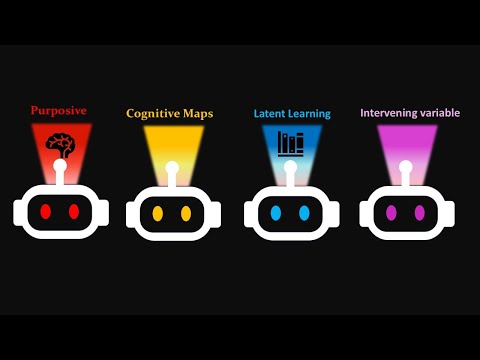
Tolman's key contributions to psychology include his work on learning theory and motivation theory. He developed the concept of latent learning, which suggests that organisms can learn and remember information even in the absence of reinforcement. Tolman also introduced the concept of cognitive maps, which refers to the mental representations that organisms use to navigate their environment. His work on motivation theory emphasized the importance of intrinsic motivation and the role of expectancy theory in shaping behavior. Tolman's ideas were influenced by the work of Clark Hull and Kurt Lewin.
🔍 The Role of Cognitive Maps in Behavior
The role of cognitive maps in behavior is a central concept in Tolman's theory. According to Tolman, cognitive maps are mental representations of the environment that allow organisms to navigate and make decisions. These maps are thought to be composed of spatial memory and associative learning components. Tolman's work on cognitive maps was influenced by the ideas of Albert Einstein and Henri Poincare. The concept of cognitive maps has been widely applied in fields such as neuroscience and artificial intelligence. Researchers such as Edward Taub and Michael Posner have built on Tolman's work in this area.
👥 Tolman's Influence on Other Researchers
Tolman's influence on other researchers has been significant. His work on purposive behaviorism and cognitive maps has inspired a generation of psychologists, including Ulric Neisser and Jerome Bruner. Tolman's ideas have also been applied in fields such as education and clinical psychology. His emphasis on the importance of cognitive processes and motivation has led to the development of new theories and interventions. For example, the work of Albert Bandura on social learning theory was influenced by Tolman's ideas. Additionally, Tolman's work has been applied in the field of human-computer interaction by researchers such as Don Norman.
📊 The Impact of Tolman's Work on Modern Psychology
The impact of Tolman's work on modern psychology has been profound. His emphasis on cognitive processes and motivation has led to the development of new theories and interventions. Tolman's work has also influenced the development of cognitive behavioral therapy, which is a widely used treatment approach for mental health disorders. The concept of cognitive maps has been applied in fields such as neuroscience and artificial intelligence. Researchers such as Daniel Kahneman and Amos Tversky have built on Tolman's work in this area. Furthermore, Tolman's ideas have been applied in the field of organizational behavior by researchers such as Gary Yukl.
🤔 Criticisms and Controversies Surrounding Tolman's Work
Despite the significance of Tolman's contributions, his work has not been without criticism. Some researchers have argued that his theory is too broad and lacks specificity. Others have criticized his reliance on intuition and anecdotal evidence. Additionally, Tolman's work has been criticized for its lack of empirical evidence and its failure to provide a clear operational definition of key concepts. However, these criticisms have also led to further research and refinement of Tolman's ideas. For example, the work of Robert Rescorla and Allan Wagner has provided further evidence for the importance of cognitive processes in learning and motivation.
🌐 The Legacy of Edward Tolman
The legacy of Edward Tolman is complex and multifaceted. On the one hand, his work has had a profound impact on the development of modern psychology. His emphasis on cognitive processes and motivation has led to the development of new theories and interventions. On the other hand, his work has also been criticized for its limitations and lack of specificity. Despite these criticisms, Tolman's ideas continue to influence researchers and practitioners in a wide range of fields. His work serves as a reminder of the importance of considering the cognitive and motivational processes that underlie behavior. Tolman's legacy can also be seen in the work of researchers such as Milton Erickson, who applied Tolman's ideas in the field of psychotherapy.
📝 Conclusion and Future Directions
In conclusion, Edward Tolman was a pioneering psychologist who made significant contributions to the field of psychology. His development of purposive behaviorism and his emphasis on cognitive processes and motivation have had a lasting impact on the field. While his work has not been without criticism, it continues to influence researchers and practitioners in a wide range of fields. As we look to the future, it is clear that Tolman's ideas will continue to shape our understanding of behavior and motivation. For example, the work of Andrew Watson has applied Tolman's ideas in the field of human factors engineering.
📊 References and Further Reading
References and further reading can be found in the works of Tolman and other researchers who have built on his ideas. Some recommended readings include Tolman's book Purposive Behavior in Animals and Men and the work of Ulric Neisser on cognitive psychology. Additionally, the work of Jerome Bruner on cognitive development provides further insight into the application of Tolman's ideas.
Key Facts
- Year
- 1886
- Origin
- Newton, Massachusetts, USA
- Category
- Psychology
- Type
- Person
Frequently Asked Questions
What is purposive behaviorism?
Purposive behaviorism is a psychological theory that emphasizes the importance of cognitive processes and motivation in shaping behavior. It was developed by Edward Tolman as a response to the dominant behaviorist theories of the time. According to Tolman, behavior is goal-directed and organisms are motivated to achieve specific goals. This theory has been influential in the development of cognitive psychology and has been applied in a wide range of fields, including education and clinical psychology.
What is the concept of cognitive maps?
Cognitive maps refer to the mental representations that organisms use to navigate their environment. According to Tolman, cognitive maps are composed of spatial memory and associative learning components. This concept has been widely applied in fields such as neuroscience and artificial intelligence. Researchers such as Edward Taub and Michael Posner have built on Tolman's work in this area.
How did Tolman's work influence other researchers?
Tolman's work had a significant influence on other researchers, including Ulric Neisser and Jerome Bruner. His emphasis on cognitive processes and motivation led to the development of new theories and interventions. Tolman's ideas have also been applied in fields such as education and clinical psychology. For example, the work of Albert Bandura on social learning theory was influenced by Tolman's ideas.
What are some criticisms of Tolman's work?
Some researchers have criticized Tolman's theory for being too broad and lacking specificity. Others have criticized his reliance on intuition and anecdotal evidence. Additionally, Tolman's work has been criticized for its lack of empirical evidence and its failure to provide a clear operational definition of key concepts. However, these criticisms have also led to further research and refinement of Tolman's ideas.
What is Tolman's legacy?
Tolman's legacy is complex and multifaceted. His work has had a profound impact on the development of modern psychology. His emphasis on cognitive processes and motivation has led to the development of new theories and interventions. While his work has not been without criticism, it continues to influence researchers and practitioners in a wide range of fields. Tolman's legacy can also be seen in the work of researchers such as Milton Erickson, who applied Tolman's ideas in the field of psychotherapy.
How can Tolman's ideas be applied in practice?
Tolman's ideas can be applied in a wide range of fields, including education, clinical psychology, and human factors engineering. For example, his emphasis on cognitive processes and motivation can be used to develop more effective learning strategies and interventions. Additionally, his concept of cognitive maps can be used to improve navigation and decision-making in complex environments. Researchers such as Andrew Watson have applied Tolman's ideas in the field of human factors engineering.
What are some future directions for research on Tolman's ideas?
Future directions for research on Tolman's ideas include further exploration of the neural mechanisms underlying cognitive maps and motivation. Additionally, researchers may investigate the application of Tolman's ideas in new fields, such as artificial intelligence and robotics. The development of new technologies, such as brain-computer interfaces, may also provide new opportunities for testing and refining Tolman's theories.