
Contents
- 👨🎓 Introduction to Albert Bandura
- 📚 The Development of Social Learning Theory
- 👥 Bobo Doll Experiment: A Landmark Study
- 💡 Observational Learning and Imitation
- 📝 Aggression and Violence: A Social Learning Perspective
- 🌎 Applications of Social Learning Theory
- 👨👩👧👦 Self-Efficacy and Personal Agency
- 🤝 Criticisms and Controversies
- 📊 Influence and Legacy of Albert Bandura
- 📚 Future Directions in Social Learning Theory
- 👏 Conclusion: The Enduring Impact of Albert Bandura
- Frequently Asked Questions
- Related Topics
Overview
Albert Bandura, a renowned Canadian-American psychologist, revolutionized the field of psychology with his social learning theory, which posits that people learn new behaviors by observing and imitating others. Born on December 4, 1925, in Mundare, Alberta, Canada, Bandura's work challenged the traditional behaviorist approach, introducing the concept of self-efficacy and highlighting the role of observation, imitation, and reinforcement in shaping behavior. His famous Bobo doll experiment in 1961 demonstrated the power of observational learning, where children learned aggressive behavior by watching adults model it. With a Vibe score of 8, Bandura's influence extends beyond psychology, impacting fields like education, sociology, and philosophy. As a pioneer in his field, Bandura's work continues to inspire new generations of researchers and practitioners, with over 200,000 citations of his work. The controversy surrounding his theories, particularly the criticism of his Bobo doll experiment, has sparked ongoing debates about the nature of human behavior and learning.
👨🎓 Introduction to Albert Bandura
Albert Bandura is widely regarded as one of the most influential psychologists of the 20th century, and his work on Social Learning Theory has had a profound impact on our understanding of human behavior. Born on December 4, 1925, in Mundare, Alberta, Canada, Bandura grew up in a family of modest means and was raised by his parents, who valued education and encouraged his curiosity. He went on to study psychology at the University of British Columbia and later earned his Ph.D. in clinical psychology from the University of Iowa. Bandura's work has been recognized with numerous awards, including the American Psychological Association's Distinguished Scientific Contributions to Psychology Award.
👥 Bobo Doll Experiment: A Landmark Study
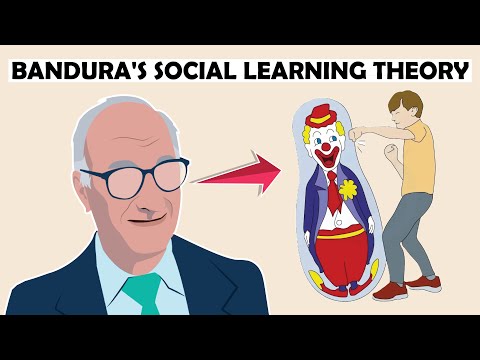
The Bobo Doll Experiment is one of the most famous studies in the history of psychology, and it provides a powerful illustration of the principles of Social Learning Theory. In the study, children were shown a video of an adult model behaving aggressively towards a Bobo doll, and then they were given the opportunity to play with the doll themselves. The results showed that children who observed the aggressive model were more likely to exhibit aggressive behavior towards the doll, demonstrating the power of observation in shaping behavior. The study has been widely cited and has had a significant impact on our understanding of Aggression and Violence. Bandura's work on the Bobo Doll Experiment has been recognized with numerous awards, including the National Medal of Science.
💡 Observational Learning and Imitation
Observational Learning is a key component of Social Learning Theory, and it refers to the process of learning by observing others. Bandura's work on observational learning has shown that people can learn new behaviors by observing others, even if they do not receive any reinforcement for their behavior. This has important implications for our understanding of Learning and Behavior, and it highlights the importance of Role Models in shaping behavior. Bandura's theory also emphasizes the importance of Self-Efficacy in learning, which refers to an individual's confidence in their ability to perform a particular behavior.
👨👩👧👦 Self-Efficacy and Personal Agency
Self-Efficacy is a key concept in Social Learning Theory, and it refers to an individual's confidence in their ability to perform a particular behavior. Bandura's work on self-efficacy has shown that it is a critical factor in determining behavior, and it can be influenced by a range of factors, including Past Experiences and Social Support. According to Bandura, self-efficacy is not a fixed trait, but rather a dynamic and context-dependent construct that can be developed and strengthened through experience and learning. Bandura's theory also emphasizes the importance of Personal Agency in shaping behavior, which refers to an individual's ability to exert control over their environment and make choices that affect their lives.
🤝 Criticisms and Controversies
Despite its influence and popularity, Social Learning Theory has been subject to various criticisms and controversies. Some critics have argued that the theory is too broad and does not provide a clear explanation of the mechanisms underlying learning and behavior. Others have argued that the theory places too much emphasis on Environmental Factors and neglects the role of Genetic Factors in shaping behavior. Bandura has responded to these criticisms by acknowledging the complexity of human behavior and the need for a more nuanced and multifaceted approach to understanding learning and behavior.
📊 Influence and Legacy of Albert Bandura
Albert Bandura's influence and legacy extend far beyond the field of psychology, and his work has had a profound impact on our understanding of Human Behavior. His theory has been widely applied in a range of fields, including Education, Healthcare, and Business. Bandura's work has also been recognized with numerous awards, including the National Medal of Science and the American Psychological Association's Distinguished Scientific Contributions to Psychology Award. According to Stanford University, where Bandura is a professor emeritus, his work has been cited over 100,000 times, making him one of the most cited psychologists of all time.
👏 Conclusion: The Enduring Impact of Albert Bandura
In conclusion, Albert Bandura's work on Social Learning Theory has had a profound impact on our understanding of Human Behavior, and it continues to influence research and practice in a range of fields. His theory provides a valuable framework for understanding the causes of Aggression and Violence, and it highlights the importance of Environmental Factors in shaping behavior. As we look to the future, it is clear that Bandura's work will continue to shape our understanding of human behavior and inform the development of new technologies and interventions.
Key Facts
- Year
- 1925
- Origin
- Mundare, Alberta, Canada
- Category
- Psychology
- Type
- Person
Frequently Asked Questions
What is Social Learning Theory?
Social Learning Theory is a psychological theory that explains how people learn new behaviors by observing others. The theory was developed by Albert Bandura and emphasizes the importance of environmental factors, cognitive processes, and self-efficacy in shaping behavior. According to Bandura, people can learn new behaviors by observing others, even if they do not receive any reinforcement for their behavior. The theory has been widely applied in a range of fields, including education, healthcare, and business.
What is the Bobo Doll Experiment?
The Bobo Doll Experiment is a famous study in the field of psychology that demonstrates the power of observation in shaping behavior. In the study, children were shown a video of an adult model behaving aggressively towards a Bobo doll, and then they were given the opportunity to play with the doll themselves. The results showed that children who observed the aggressive model were more likely to exhibit aggressive behavior towards the doll, demonstrating the power of observation in shaping behavior.
What is Self-Efficacy?
Self-Efficacy is a key concept in Social Learning Theory that refers to an individual's confidence in their ability to perform a particular behavior. According to Bandura, self-efficacy is a critical factor in determining behavior, and it can be influenced by a range of factors, including past experiences and social support. Self-efficacy is not a fixed trait, but rather a dynamic and context-dependent construct that can be developed and strengthened through experience and learning.
What are the applications of Social Learning Theory?
The applications of Social Learning Theory are diverse and far-reaching, and they include fields such as education, psychology, and sociology. The theory has been used to develop interventions for a range of problems, including aggression, violence, and substance abuse. It has also been used to inform policies and programs aimed at promoting health and wellbeing.
What is the significance of Albert Bandura's work?
Albert Bandura's work on Social Learning Theory has had a profound impact on our understanding of human behavior, and it continues to influence research and practice in a range of fields. His theory provides a valuable framework for understanding the causes of aggression and violence, and it highlights the importance of environmental factors in shaping behavior. Bandura's work has been recognized with numerous awards, including the National Medal of Science and the American Psychological Association's Distinguished Scientific Contributions to Psychology Award.