
Contents
- 🌐 Introduction to Spatial Omics
- 🔬 The Technology Behind Spatial Omics
- 📈 Applications of Spatial Omics
- 🔍 Single-Cell Analysis in Spatial Omics
- 📊 Data Analysis and Integration in Spatial Omics
- 👥 Collaborations and Funding in Spatial Omics
- 🚀 Future Directions in Spatial Omics
- 🔮 Challenges and Limitations in Spatial Omics
- 📚 Education and Training in Spatial Omics
- 📰 Recent Breakthroughs in Spatial Omics
- 👀 Societal Impact of Spatial Omics
- Frequently Asked Questions
- Related Topics
Overview
Spatial omics, a rapidly emerging field, combines cutting-edge technologies like single-cell sequencing, imaging, and machine learning to map the intricate relationships between cells, tissues, and their microenvironments. This multidisciplinary approach has far-reaching implications for our understanding of development, disease, and therapy. By integrating data from various omics disciplines, researchers can now visualize and analyze complex biological processes in unprecedented detail. For instance, a study published in Nature in 2020 used spatial transcriptomics to identify novel cell types in the human brain, shedding new light on the neural circuits underlying cognitive function. As spatial omics continues to advance, we can expect significant breakthroughs in fields like cancer research, regenerative medicine, and synthetic biology. With its potential to transform our understanding of biological systems, spatial omics is poised to become a major driver of innovation in the life sciences, with a projected market size of $1.4 billion by 2025, according to a report by MarketsandMarkets.
🌐 Introduction to Spatial Omics
Spatial omics is a rapidly emerging field that combines spatial analysis and omics to study the distribution and interaction of molecules in biological systems. This field has the potential to revolutionize our understanding of cell biology and tissue biology. By mapping the spatial organization of molecules, researchers can gain insights into the mechanisms of disease pathogenesis and develop new therapeutic strategies. For example, single-cell analysis has been used to study the tumor microenvironment and identify new targets for cancer therapy. The development of spatial omics has been driven by advances in microscopy and image analysis technologies, which have enabled researchers to visualize and quantify molecular distributions at high resolution.
🔬 The Technology Behind Spatial Omics
The technology behind spatial omics is based on the integration of microscopy, spectroscopy, and computational biology techniques. For example, mass spectrometry can be used to analyze the spatial distribution of metabolites and proteins in tissues. Additionally, single molecule localization microscopy can be used to visualize the spatial organization of individual molecules. The development of new technologies, such as artificial intelligence-based image analysis algorithms, is expected to further enhance the capabilities of spatial omics. Researchers are also exploring the use of machine learning and deep learning to analyze spatial omics data and identify patterns that are not apparent through traditional analysis methods. Furthermore, the integration of spatial omics with other omics fields, such as genomics and transcriptomics, is expected to provide a more comprehensive understanding of biological systems.
📈 Applications of Spatial Omics
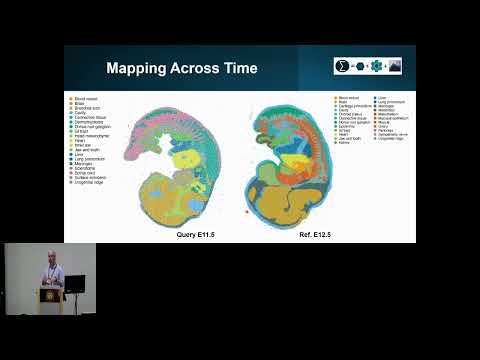
The applications of spatial omics are diverse and include the study of developmental biology, cancer biology, and neurobiology. For example, spatial omics has been used to study the developmental patterning of embryos and the tumor microenvironment of cancers. Additionally, spatial omics has been used to study the neural circuitry of the brain and the synaptic plasticity of neurons. The use of spatial omics in personalized medicine is also being explored, where it could be used to develop tailored therapeutic strategies for individual patients. Moreover, spatial omics has the potential to revolutionize our understanding of ecosystem biology and the microbiome. For instance, spatial omics can be used to study the spatial distribution of microorganisms in ecosystems and their interactions with the environment.
🔍 Single-Cell Analysis in Spatial Omics
Single-cell analysis is a critical component of spatial omics, as it allows researchers to study the heterogeneity of cell populations and the spatial organization of molecules within individual cells. For example, single-cell RNA sequencing can be used to analyze the transcriptome of individual cells and identify cell-specific gene expression patterns. Additionally, single molecule localization microscopy can be used to visualize the spatial organization of individual molecules within cells. The integration of single-cell analysis with spatial omics is expected to provide new insights into the mechanisms of cell signaling and cell behavior. Furthermore, the use of single-cell analysis in spatial omics can help researchers understand the role of cell heterogeneity in disease pathogenesis. For example, single-cell analysis can be used to study the heterogeneity of cancer cells and identify new targets for cancer therapy.
📊 Data Analysis and Integration in Spatial Omics
Data analysis and integration are critical components of spatial omics, as they enable researchers to extract meaningful information from large datasets and integrate data from multiple sources. For example, image analysis algorithms can be used to segment and quantify molecular distributions in images. Additionally, machine learning and deep learning can be used to identify patterns in spatial omics data and predict biological outcomes. The development of new data analysis and integration tools is expected to further enhance the capabilities of spatial omics. Moreover, the integration of spatial omics data with other omics data, such as genomics and proteomics, is expected to provide a more comprehensive understanding of biological systems. For instance, the integration of spatial omics data with genomics data can help researchers understand the relationship between genetic variants and disease pathogenesis.
👥 Collaborations and Funding in Spatial Omics
Collaborations and funding are essential for the development and application of spatial omics. For example, the National Institutes of Health has established the Spatial Omics Funding Initiative to support research in this area. Additionally, collaborations between researchers from different disciplines, such as biology, physics, and computer science, are critical for the development of new spatial omics technologies and methods. The integration of spatial omics with other omics fields, such as genomics and proteomics, is also expected to enhance the capabilities of spatial omics. Furthermore, the development of new data analysis and data integration tools is expected to further enhance the capabilities of spatial omics. For instance, the development of cloud computing-based platforms for spatial omics data analysis can facilitate the sharing and analysis of large datasets.
🚀 Future Directions in Spatial Omics
The future directions of spatial omics are diverse and include the development of new technologies, such as artificial intelligence-based image analysis algorithms, and the application of spatial omics to new fields, such as ecosystem biology and synthetic biology. For example, the use of spatial omics in personalized medicine is expected to become more prevalent, where it could be used to develop tailored therapeutic strategies for individual patients. Additionally, the integration of spatial omics with other omics fields, such as genomics and proteomics, is expected to provide a more comprehensive understanding of biological systems. Moreover, the development of new data analysis and data integration tools is expected to further enhance the capabilities of spatial omics. For instance, the development of machine learning-based methods for spatial omics data analysis can help researchers identify patterns in large datasets.
🔮 Challenges and Limitations in Spatial Omics
The challenges and limitations of spatial omics include the need for high-resolution imaging and spectroscopy technologies, the complexity of data analysis and data integration, and the need for standardization of methods and protocols. For example, the development of new image analysis algorithms is critical for the extraction of meaningful information from spatial omics data. Additionally, the integration of spatial omics with other omics fields, such as genomics and proteomics, is expected to enhance the capabilities of spatial omics. Furthermore, the development of new technologies, such as artificial intelligence-based image analysis algorithms, is expected to further enhance the capabilities of spatial omics. For instance, the use of machine learning-based methods for spatial omics data analysis can help researchers identify patterns in large datasets.
📚 Education and Training in Spatial Omics
Education and training are essential for the development and application of spatial omics. For example, the National Institutes of Health has established the Spatial Omics Training Program to provide training and education in this area. Additionally, collaborations between researchers from different disciplines, such as biology, physics, and computer science, are critical for the development of new spatial omics technologies and methods. The integration of spatial omics with other omics fields, such as genomics and proteomics, is also expected to enhance the capabilities of spatial omics. Moreover, the development of new data analysis and data integration tools is expected to further enhance the capabilities of spatial omics. For instance, the development of cloud computing-based platforms for spatial omics data analysis can facilitate the sharing and analysis of large datasets.
📰 Recent Breakthroughs in Spatial Omics
Recent breakthroughs in spatial omics include the development of new imaging and spectroscopy technologies, such as single molecule localization microscopy and mass spectrometry. For example, these technologies have been used to study the tumor microenvironment and identify new targets for cancer therapy. Additionally, the integration of spatial omics with other omics fields, such as genomics and proteomics, is expected to provide a more comprehensive understanding of biological systems. Furthermore, the use of machine learning-based methods for spatial omics data analysis is expected to help researchers identify patterns in large datasets. For instance, the use of deep learning-based methods for spatial omics data analysis can help researchers predict biological outcomes based on spatial omics data.
👀 Societal Impact of Spatial Omics
The societal impact of spatial omics is significant, as it has the potential to revolutionize our understanding of disease pathogenesis and develop new therapeutic strategies. For example, spatial omics has been used to study the tumor microenvironment and identify new targets for cancer therapy. Additionally, the integration of spatial omics with other omics fields, such as genomics and proteomics, is expected to provide a more comprehensive understanding of biological systems. Moreover, the development of new technologies, such as artificial intelligence-based image analysis algorithms, is expected to further enhance the capabilities of spatial omics. For instance, the use of machine learning-based methods for spatial omics data analysis can help researchers identify patterns in large datasets.
Key Facts
- Year
- 2019
- Origin
- Stanford University, USA
- Category
- Biotechnology
- Type
- Scientific Field
Frequently Asked Questions
What is spatial omics?
Spatial omics is a rapidly emerging field that combines spatial analysis and omics to study the distribution and interaction of molecules in biological systems. This field has the potential to revolutionize our understanding of cell biology and tissue biology. For example, single-cell analysis has been used to study the tumor microenvironment and identify new targets for cancer therapy.
What are the applications of spatial omics?
The applications of spatial omics are diverse and include the study of developmental biology, cancer biology, and neurobiology. For example, spatial omics has been used to study the developmental patterning of embryos and the tumor microenvironment of cancers. Additionally, spatial omics has been used to study the neural circuitry of the brain and the synaptic plasticity of neurons.
What are the challenges and limitations of spatial omics?
The challenges and limitations of spatial omics include the need for high-resolution imaging and spectroscopy technologies, the complexity of data analysis and data integration, and the need for standardization of methods and protocols. For example, the development of new image analysis algorithms is critical for the extraction of meaningful information from spatial omics data.
What is the future of spatial omics?
The future of spatial omics is diverse and includes the development of new technologies, such as artificial intelligence-based image analysis algorithms, and the application of spatial omics to new fields, such as ecosystem biology and synthetic biology. For example, the use of spatial omics in personalized medicine is expected to become more prevalent, where it could be used to develop tailored therapeutic strategies for individual patients.
How does spatial omics impact our understanding of disease?
Spatial omics has the potential to revolutionize our understanding of disease pathogenesis and develop new therapeutic strategies. For example, spatial omics has been used to study the tumor microenvironment and identify new targets for cancer therapy. Additionally, the integration of spatial omics with other omics fields, such as genomics and proteomics, is expected to provide a more comprehensive understanding of biological systems.