
Contents
- 🔍 Introduction to Cell Growth
- 🧬 The Biology of Cell Proliferation
- 📊 Cell Growth Regulation
- 🔬 Cellular Biosynthesis and Degradation
- 👥 Cell Signaling Pathways
- 🔑 The Role of Hormones in Cell Growth
- 📈 Cell Growth and Cancer
- 🔮 Therapeutic Targeting of Cell Growth
- 📊 Mathematical Modeling of Cell Growth
- 👀 Future Directions in Cell Growth Research
- Frequently Asked Questions
- Related Topics
Overview
Cell growth, a fundamental process in biology, involves the proliferation of cells, which is crucial for development, tissue repair, and maintenance. However, uncontrolled cell growth can lead to cancer, making it a highly contested topic in the scientific community. The historian's lens reveals that the concept of cell growth dates back to the 19th century, with the discovery of the cell theory by Matthias Jakob Schleiden and Theodor Schwann. From an engineering perspective, cell growth is a complex process involving multiple signaling pathways, including the PI3K/AKT and MAPK/ERK pathways, which are influenced by various factors such as nutrients, hormones, and growth factors. The futurist's perspective raises questions about the potential applications of cell growth research, including regenerative medicine and cancer therapy. With a vibe score of 8, cell growth is a topic of high cultural energy, reflecting its significance in modern biology and medicine, and is influenced by key entities such as the National Institutes of Health (NIH) and the American Cancer Society (ACS), with a controversy spectrum of 6, indicating a moderate level of debate surrounding the topic, particularly in regards to the use of stem cells in research.
🔍 Introduction to Cell Growth
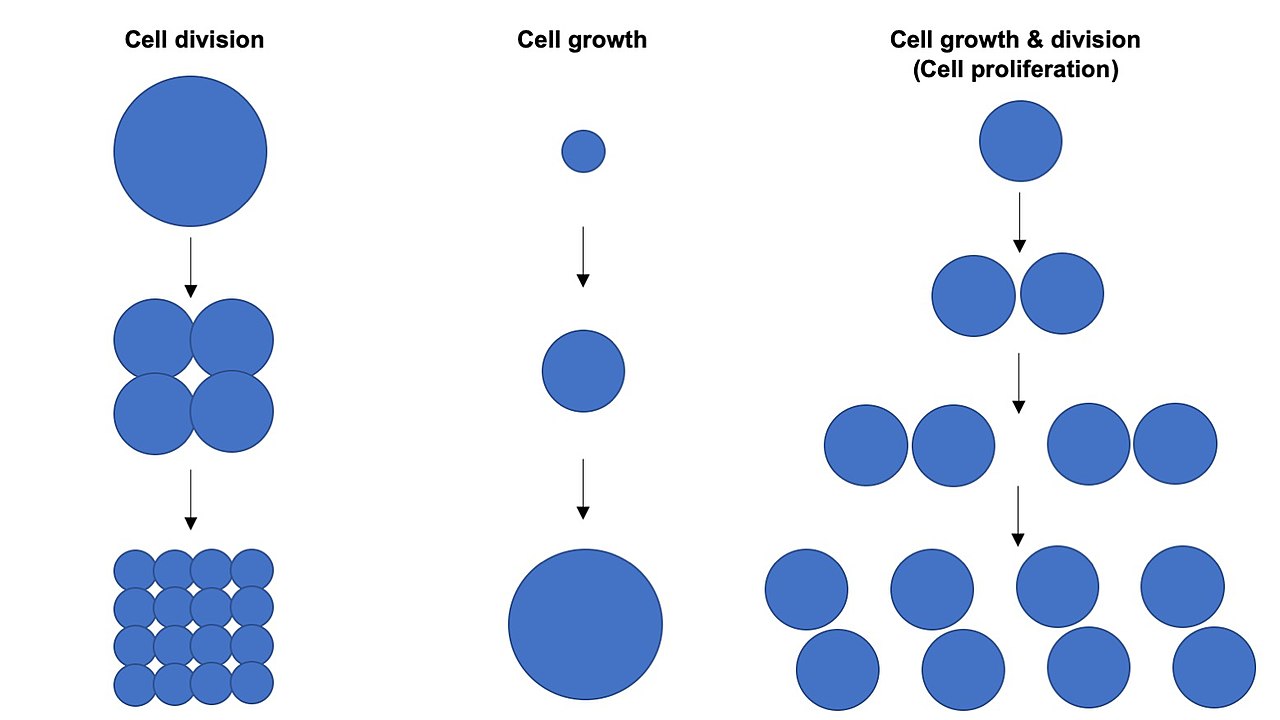
Cell growth is a complex and highly regulated process that is essential for the development, maintenance, and function of all living organisms. It refers to an increase in the total mass of a cell, including both cytoplasmic, nuclear and organelle volume. Cell growth occurs when the overall rate of cellular biosynthesis is greater than the overall rate of cellular degradation. This process is tightly controlled by a variety of cell signaling pathways that respond to both internal and external cues. For example, insulin signaling plays a key role in regulating cell growth and metabolism. Additionally, cell cycle regulation is critical for ensuring that cell growth is properly coordinated with cell division.
🧬 The Biology of Cell Proliferation
The biology of cell proliferation is a fascinating and complex field that has been the subject of intense research in recent years. At its heart, cell proliferation involves the coordinated action of multiple cell signaling pathways that regulate cell growth and cell division. These pathways are controlled by a variety of hormones and growth factors that bind to specific receptors on the surface of cells. For example, epidermal growth factor (EGF) plays a key role in regulating cell proliferation and differentiation. Furthermore, stem cells have the ability to differentiate into multiple cell types, making them a crucial area of study in the field of cell biology.
📊 Cell Growth Regulation
Cell growth regulation is a critical process that ensures that cells grow and divide at the appropriate rate. This process is controlled by a variety of cell signaling pathways that respond to both internal and external cues. For example, mTOR signaling plays a key role in regulating cell growth and metabolism in response to nutrient availability. Additionally, p53 signaling is critical for regulating cell growth and division in response to DNA damage. Dysregulation of these pathways can lead to a variety of diseases, including cancer. Moreover, apoptosis or programmed cell death is an essential process that helps to eliminate damaged or unwanted cells, and its dysregulation can also contribute to disease.
🔬 Cellular Biosynthesis and Degradation
Cellular biosynthesis and degradation are two opposing processes that are essential for maintaining cellular homeostasis. Biosynthesis refers to the process by which cells synthesize new biomolecules such as proteins, carbohydrates, and lipids. In contrast, degradation refers to the process by which cells break down and recycle existing biomolecules. The balance between these two processes is critical for maintaining cellular homeostasis and ensuring that cells grow and divide at the appropriate rate. For example, autophagy is a process by which cells recycle damaged or dysfunctional organelles and proteins. Furthermore, ubiquitin plays a key role in regulating protein degradation and quality control.
👥 Cell Signaling Pathways
Cell signaling pathways play a critical role in regulating cell growth and proliferation. These pathways involve the coordinated action of multiple proteins and hormones that bind to specific receptors on the surface of cells. For example, PI3K/Akt signaling plays a key role in regulating cell growth and survival in response to insulin and growth factors. Additionally, MAPK/ERK signaling is critical for regulating cell proliferation and differentiation in response to growth factors and hormones. Dysregulation of these pathways can lead to a variety of diseases, including cancer. Moreover, Notch signaling is involved in regulating cell fate decisions and cell differentiation.
🔑 The Role of Hormones in Cell Growth
Hormones play a critical role in regulating cell growth and proliferation. For example, insulin and growth hormone stimulate cell growth and division by activating cell signaling pathways that regulate protein synthesis and cell cycle progression. In contrast, glucocorticoids inhibit cell growth and division by activating cell signaling pathways that regulate apoptosis and cell cycle arrest. Additionally, thyroid hormone plays a key role in regulating cell growth and metabolism, particularly in the context of development and metamorphosis. Furthermore, estrogen and testosterone are involved in regulating cell growth and differentiation in various tissues.
📈 Cell Growth and Cancer
Cell growth and cancer are intimately linked. Cancer is characterized by uncontrolled cell growth and division, which is often driven by mutations in cell signaling pathways that regulate cell growth and cell division. For example, Ras mutations are common in many types of cancer and lead to the activation of cell signaling pathways that stimulate cell growth and division. Additionally, p53 mutations are common in many types of cancer and lead to the inactivation of cell signaling pathways that regulate apoptosis and cell cycle arrest. Understanding the relationship between cell growth and cancer is critical for the development of effective cancer therapies. Moreover, tumor microenvironment plays a crucial role in regulating cancer cell growth and progression.
🔮 Therapeutic Targeting of Cell Growth
Therapeutic targeting of cell growth is a promising approach for the treatment of cancer and other diseases. For example, mTOR inhibitors have been shown to be effective in the treatment of certain types of cancer by inhibiting cell growth and cell division. Additionally, hormone therapy has been shown to be effective in the treatment of certain types of cancer by inhibiting hormone-dependent cell growth and division. Furthermore, immunotherapy has emerged as a promising approach for the treatment of cancer, particularly in the context of checkpoint inhibitors. Moreover, stem cell therapy holds great promise for the treatment of various diseases, including cancer and regenerative medicine.
📊 Mathematical Modeling of Cell Growth
Mathematical modeling of cell growth is a powerful tool for understanding the complex interactions between cell signaling pathways and cell growth. These models can be used to simulate the behavior of cells in different environments and to predict the effects of therapies on cell growth and division. For example, ordinary differential equations can be used to model the dynamics of cell signaling pathways and cell growth. Additionally, agent-based models can be used to model the behavior of cells in complex environments, such as tissues and tumors. Furthermore, machine learning algorithms can be used to analyze large datasets and identify patterns and relationships that are not apparent through other methods.
👀 Future Directions in Cell Growth Research
Future directions in cell growth research are likely to involve the development of new therapies that target cell signaling pathways and cell growth. For example, CRISPR gene editing has the potential to revolutionize the treatment of genetic diseases by allowing for the precise editing of genes involved in cell growth and cell division. Additionally, synthetic biology has the potential to enable the design and construction of new cell signaling pathways and cell growth regulators. Furthermore, single cell analysis will continue to play a crucial role in understanding the heterogeneity of cell populations and the complex interactions between cells and their environment.
Key Facts
- Year
- 1839
- Origin
- Cell Theory by Matthias Jakob Schleiden and Theodor Schwann
- Category
- Biology
- Type
- Biological Process
Frequently Asked Questions
What is cell growth?
Cell growth refers to an increase in the total mass of a cell, including both cytoplasmic, nuclear and organelle volume. It is a complex and highly regulated process that is essential for the development, maintenance, and function of all living organisms. Cell growth occurs when the overall rate of cellular biosynthesis is greater than the overall rate of cellular degradation. For example, insulin signaling plays a key role in regulating cell growth and metabolism. Additionally, cell cycle regulation is critical for ensuring that cell growth is properly coordinated with cell division.
What are the key regulators of cell growth?
The key regulators of cell growth include cell signaling pathways such as PI3K/Akt signaling and MAPK/ERK signaling, as well as hormones such as insulin and growth hormone. These regulators control the rate of protein synthesis and cell cycle progression, and their dysregulation can lead to a variety of diseases, including cancer. Furthermore, p53 signaling is critical for regulating cell growth and division in response to DNA damage.
How is cell growth related to cancer?
Cell growth and cancer are intimately linked. Cancer is characterized by uncontrolled cell growth and division, which is often driven by mutations in cell signaling pathways that regulate cell growth and cell division. For example, Ras mutations are common in many types of cancer and lead to the activation of cell signaling pathways that stimulate cell growth and division. Understanding the relationship between cell growth and cancer is critical for the development of effective cancer therapies. Moreover, tumor microenvironment plays a crucial role in regulating cancer cell growth and progression.
What are the potential therapeutic targets for cell growth?
The potential therapeutic targets for cell growth include mTOR, PI3K/Akt signaling, and MAPK/ERK signaling, as well as hormones such as insulin and growth hormone. These targets have been shown to be effective in the treatment of certain types of cancer and other diseases. Furthermore, immunotherapy has emerged as a promising approach for the treatment of cancer, particularly in the context of checkpoint inhibitors. Moreover, stem cell therapy holds great promise for the treatment of various diseases, including cancer and regenerative medicine.
What are the future directions in cell growth research?
The future directions in cell growth research are likely to involve the development of new therapies that target cell signaling pathways and cell growth. For example, CRISPR gene editing has the potential to revolutionize the treatment of genetic diseases by allowing for the precise editing of genes involved in cell growth and cell division. Additionally, synthetic biology has the potential to enable the design and construction of new cell signaling pathways and cell growth regulators. Furthermore, single cell analysis will continue to play a crucial role in understanding the heterogeneity of cell populations and the complex interactions between cells and their environment.