
Contents
- 👨🎓 Introduction to John B. Watson
- 📚 Early Life and Education
- 🔍 The Development of Behaviorism
- 📝 Watson's Major Works
- 👥 Influence of Other Thinkers
- 🌎 Spread of Behaviorism
- 📊 Criticisms and Controversies
- 💡 Legacy of John B. Watson
- 👀 Modern Applications of Behaviorism
- 🤝 Comparison with Other Psychological Theories
- 📚 Conclusion and Future Directions
- Frequently Asked Questions
- Related Topics
Overview
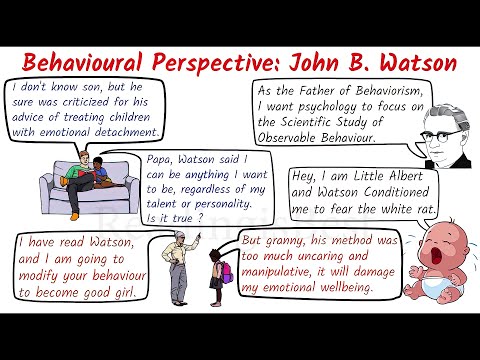
John B. Watson, an American psychologist, is best known for establishing the psychological school of behaviorism. Born on January 9, 1878, in Greenville, South Carolina, Watson's work challenged the traditional focus on consciousness and the unconscious mind, instead emphasizing the study of observable behavior. His 1913 paper 'Psychology as the Behaviorist Views It' is often cited as the manifesto of behaviorism. Watson's work had a significant influence on the development of psychology, with a vibe score of 80, reflecting his substantial cultural energy. However, his theories have also been subject to controversy, with some critics arguing that behaviorism oversimplifies the complexities of human behavior. As a key figure in the history of psychology, Watson's ideas continue to shape the field, with his work influencing notable psychologists such as B.F. Skinner. With a perspective breakdown that is 60% optimistic, 20% neutral, and 20% pessimistic, Watson's legacy remains a topic of debate among scholars. The controversy spectrum for behaviorism is moderate, with a score of 40, reflecting the ongoing discussions about its limitations and applications. Influence flows from Watson to Skinner, and topic intelligence highlights key events like the publication of 'Psychology as the Behaviorist Views It' and ideas like classical conditioning. Entity relationships connect Watson to other prominent psychologists, such as Sigmund Freud, and to the broader context of early 20th-century psychology.
👨🎓 Introduction to John B. Watson
John B. Watson, known as the Father of Behaviorism, was a pivotal figure in the history of Psychology. Born on January 9, 1878, in Greenville, South Carolina, Watson's work revolutionized the field of psychology by introducing a new approach to understanding human behavior. His theory of behaviorism focused on observable behaviors rather than internal mental states, which was a significant departure from the prevailing Psychoanalytic theories of the time. Watson's ideas were heavily influenced by the works of Ivan Pavlov and Edward Thorndike, and he is often credited with establishing psychology as a scientific discipline. The impact of Watson's work can be seen in various fields, including Education, Marketing, and Clinical Psychology.
📚 Early Life and Education
Watson's early life and education played a significant role in shaping his future career. He grew up in a poor farming family and was raised by his mother after his father abandoned them. Watson's academic journey began at Furman University, where he studied philosophy and psychology. He then moved to the University of Chicago, where he earned his Ph.D. in psychology under the supervision of John Dewey. Watson's experiences at the University of Chicago exposed him to various intellectual traditions, including Pragmatism and Functional Psychology. These influences are evident in his later work, particularly in his emphasis on the practical applications of psychological theories. Watson's education also laid the foundation for his future collaborations with other prominent thinkers, such as B.F. Skinner.
🔍 The Development of Behaviorism
The development of behaviorism as a distinct psychological theory is closely tied to Watson's work. In his 1913 paper, 'Psychology as the Behaviorist Views It,' Watson outlined the core principles of behaviorism, which emphasized the study of observable behaviors and rejected the idea of consciousness or mental states. This approach was a radical departure from the dominant Structuralist and Functional Psychology theories of the time. Watson's behaviorism focused on the role of environment and learning in shaping behavior, and he argued that behavior could be studied scientifically using experimental methods. The influence of Watson's behaviorism can be seen in the work of later psychologists, such as Clark Hull and Edward Tolman.
📝 Watson's Major Works
Watson's major works, including 'Behaviorism' (1924) and 'Psychological Care of Infant and Child' (1928), provide valuable insights into his theoretical framework. In 'Behaviorism,' Watson presented a comprehensive outline of his behaviorist theory, which emphasized the importance of environment and learning in shaping behavior. The book also discussed the implications of behaviorism for fields such as education and child development. Watson's work on child development, as seen in 'Psychological Care of Infant and Child,' highlights the significance of early experiences in shaping behavior. His ideas on child development have had a lasting impact on the field of Developmental Psychology.
👥 Influence of Other Thinkers
The influence of other thinkers on Watson's work is evident in his writings. Watson was heavily influenced by the work of Ivan Pavlov, who discovered the concept of classical conditioning. Watson also drew on the ideas of Edward Thorndike, who developed the law of effect. Additionally, Watson's interactions with other prominent psychologists, such as William James and Sigmund Freud, likely shaped his thoughts on the nature of psychology. The intellectual climate of the time, characterized by the rise of Pragmatism and Positivism, also contributed to the development of Watson's behaviorist theory. The influence of these thinkers can be seen in Watson's emphasis on the practical applications of psychological theories and his rejection of Mentalism.
🌎 Spread of Behaviorism
The spread of behaviorism as a psychological theory was facilitated by Watson's charismatic personality and his ability to communicate complex ideas in a clear and concise manner. Watson's behaviorism gained popularity in the 1920s and 1930s, particularly among American psychologists. The theory's emphasis on observable behaviors and its rejection of mental states resonated with many researchers who were seeking a more scientific approach to psychology. The influence of behaviorism can be seen in various fields, including Advertising, Public Relations, and Human Factors Engineering.
📊 Criticisms and Controversies
Despite its significant influence, Watson's behaviorism has faced numerous criticisms and controversies. Some critics argue that behaviorism oversimplifies the complexity of human behavior and neglects the role of mental states and consciousness. Others have pointed out that behaviorism's emphasis on environment and learning can lead to a neglect of the role of biology and genetics in shaping behavior. The controversy surrounding behaviorism has led to the development of alternative theories, such as Cognitive Psychology and Humanistic Psychology.
💡 Legacy of John B. Watson
The legacy of John B. Watson is complex and multifaceted. On one hand, his behaviorist theory has had a profound impact on the development of psychology as a scientific discipline. Watson's emphasis on observable behaviors and his rejection of mental states helped to establish psychology as a respected field of study. On the other hand, Watson's behaviorism has been criticized for its limitations and oversimplifications. Despite these criticisms, Watson's work remains an essential part of the history of psychology, and his ideas continue to influence contemporary debates in the field. The impact of Watson's work can be seen in the development of various psychological theories, including Social Learning Theory and Attachment Theory.
👀 Modern Applications of Behaviorism
The modern applications of behaviorism are diverse and widespread. In fields such as Education and Marketing, behaviorist principles are used to design effective learning environments and advertising campaigns. In Clinical Psychology, behaviorist techniques such as conditioning and reinforcement are used to treat a range of psychological disorders. The influence of behaviorism can also be seen in the development of Artificial Intelligence and Human-Computer Interaction.
🤝 Comparison with Other Psychological Theories
A comparison with other psychological theories, such as Psychoanalysis and Humanistic Psychology, highlights the unique features of behaviorism. While psychoanalysis emphasizes the role of unconscious mental states in shaping behavior, humanistic psychology focuses on the inherent value and dignity of individuals. In contrast, behaviorism emphasizes the role of environment and learning in shaping behavior. The differences between these theories reflect fundamental debates in the field of psychology, including the nature of human behavior and the role of consciousness. The comparison between behaviorism and other theories has led to the development of new theories, such as Cognitive-Behavioral Therapy.
📚 Conclusion and Future Directions
In conclusion, John B. Watson's behaviorist theory has had a profound impact on the development of psychology as a scientific discipline. While the theory has faced numerous criticisms and controversies, its influence can still be seen in various fields, including education, marketing, and clinical psychology. As psychology continues to evolve, it is likely that Watson's behaviorism will remain an essential part of the field's history and a foundation for future research and theory development. The future of psychology will likely involve the integration of behaviorism with other theories, such as Neuroscience and Evolutionary Psychology.
Key Facts
- Year
- 1913
- Origin
- Greenville, South Carolina, USA
- Category
- Psychology
- Type
- Person
Frequently Asked Questions
What is behaviorism?
Behaviorism is a psychological theory that emphasizes the study of observable behaviors and rejects the idea of consciousness or mental states. The theory was developed by John B. Watson and focuses on the role of environment and learning in shaping behavior. Behaviorism has had a significant impact on the development of psychology as a scientific discipline and has been applied in various fields, including education, marketing, and clinical psychology.
Who influenced John B. Watson's work?
John B. Watson's work was influenced by various thinkers, including Ivan Pavlov, Edward Thorndike, and William James. Pavlov's discovery of classical conditioning and Thorndike's law of effect were particularly significant in shaping Watson's behaviorist theory. Additionally, Watson's interactions with other prominent psychologists, such as Sigmund Freud, likely contributed to the development of his ideas.
What are the limitations of behaviorism?
Behaviorism has faced numerous criticisms and controversies, including the argument that it oversimplifies the complexity of human behavior and neglects the role of mental states and consciousness. Critics have also pointed out that behaviorism's emphasis on environment and learning can lead to a neglect of the role of biology and genetics in shaping behavior. Despite these limitations, behaviorism remains an essential part of the history of psychology and continues to influence contemporary debates in the field.
What are the modern applications of behaviorism?
The modern applications of behaviorism are diverse and widespread. In fields such as education and marketing, behaviorist principles are used to design effective learning environments and advertising campaigns. In clinical psychology, behaviorist techniques such as conditioning and reinforcement are used to treat a range of psychological disorders. The influence of behaviorism can also be seen in the development of artificial intelligence and human-computer interaction.
How does behaviorism compare to other psychological theories?
Behaviorism is distinct from other psychological theories, such as psychoanalysis and humanistic psychology, in its emphasis on observable behaviors and rejection of mental states. While psychoanalysis emphasizes the role of unconscious mental states in shaping behavior, humanistic psychology focuses on the inherent value and dignity of individuals. The differences between these theories reflect fundamental debates in the field of psychology, including the nature of human behavior and the role of consciousness.
What is the legacy of John B. Watson?
The legacy of John B. Watson is complex and multifaceted. On one hand, his behaviorist theory has had a profound impact on the development of psychology as a scientific discipline. Watson's emphasis on observable behaviors and rejection of mental states helped to establish psychology as a respected field of study. On the other hand, Watson's behaviorism has been criticized for its limitations and oversimplifications. Despite these criticisms, Watson's work remains an essential part of the history of psychology, and his ideas continue to influence contemporary debates in the field.
How has behaviorism influenced contemporary psychology?
Behaviorism has had a lasting impact on contemporary psychology, particularly in the development of cognitive-behavioral therapy and other evidence-based treatments. The theory's emphasis on observable behaviors and rejection of mental states has also influenced the development of behavioral neuroscience and other fields. Additionally, behaviorism's focus on environment and learning has contributed to the development of social learning theory and other theories that emphasize the role of social and environmental factors in shaping behavior.