
Contents
- 🎯 Introduction to Nerve Conduction
- ⚙️ The Mechanism of Action Potentials
- 📊 Key Facts and Statistics
- 👥 Key Researchers and Organizations
- 🌍 Cultural Impact and Influence
- ⚡ Current State and Latest Developments
- 🤔 Controversies and Debates
- 🔮 Future Outlook and Predictions
- 💡 Practical Applications
- 📚 Related Topics and Deeper Reading
- Frequently Asked Questions
- References
- Related Topics
Overview
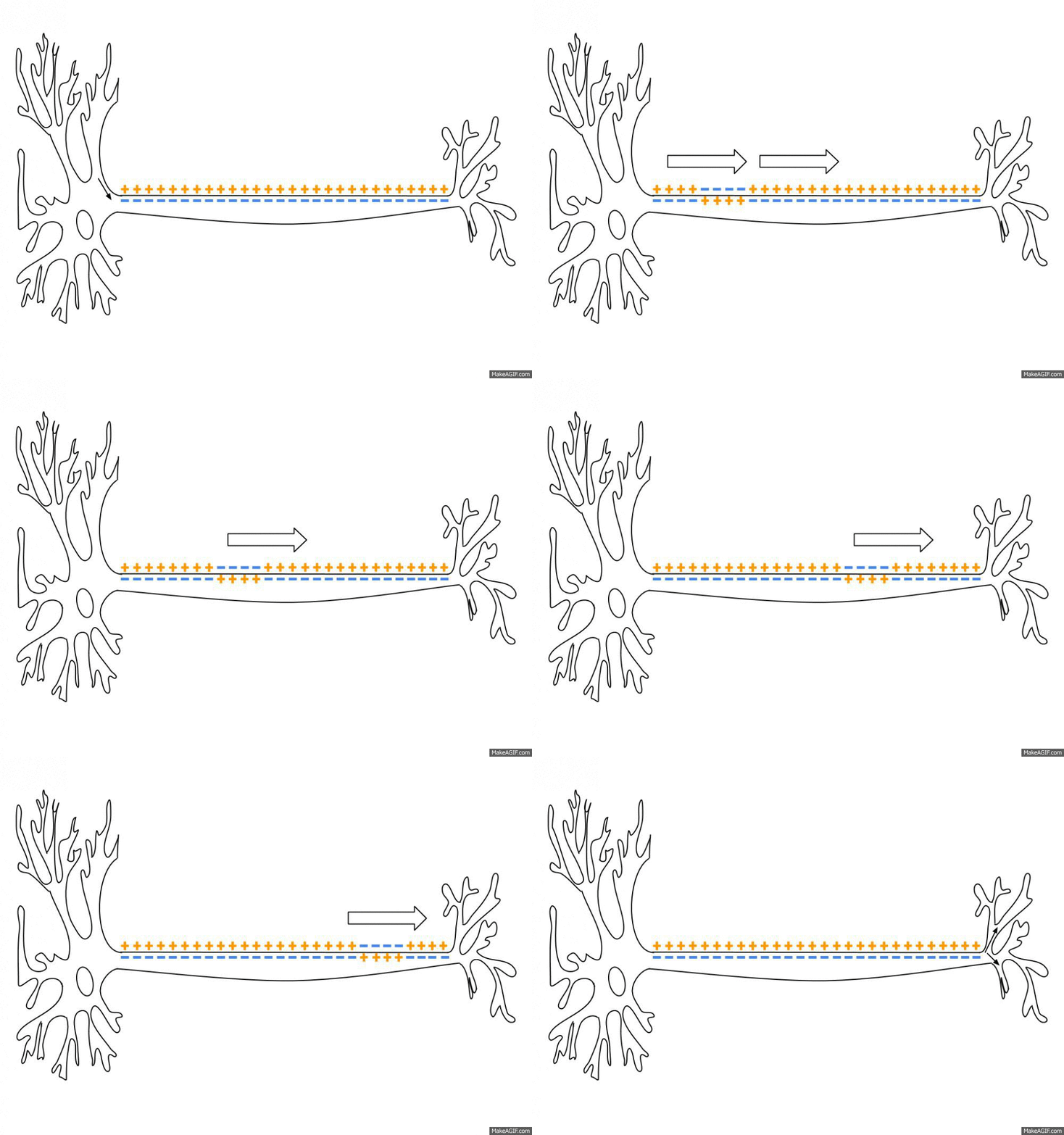
Nerve conduction refers to the process by which electrical signals are transmitted through the nervous system, enabling communication between neurons, muscles, and other cells. This complex process involves the generation and propagation of action potentials, which are series of rapid changes in voltage across cell membranes. Nerve conduction plays a crucial role in various physiological functions, including movement, sensation, and cognition. With a conduction velocity of up to 120 meters per second, nerve conduction is a remarkably efficient process that underlies many aspects of human physiology. According to the National Institute of Neurological Disorders and Stroke (NINDS), nerve conduction studies are a valuable diagnostic tool for detecting and monitoring neurological disorders such as multiple sclerosis and peripheral neuropathy. The American Academy of Neurology (AAN) estimates that over 20 million people in the United States suffer from some form of peripheral neuropathy, highlighting the importance of understanding nerve conduction and its related disorders.
🎯 Introduction to Nerve Conduction
Nerve conduction has a rich history, dating back to the early 20th century when Alan Lloyd Hodgkin and Andrew Huxley first described the ionic mechanisms underlying action potentials. Their groundbreaking work, published in the Nature journal, laid the foundation for our modern understanding of nerve conduction. Today, researchers like Eric Kandel and Robert Galambos continue to advance our knowledge of neural signaling and its role in various neurological disorders.
⚙️ The Mechanism of Action Potentials
The mechanism of action potentials is a complex process involving the rapid depolarization of cell membranes, followed by repolarization and hyperpolarization. This process is mediated by the coordinated opening and closing of voltage-gated ion channels, including sodium channels and potassium channels. As described by Bernd Katz, the Nobel laureate who first discovered the quantal nature of neurotransmitter release, the precise regulation of ion channels is crucial for maintaining proper nerve conduction.
📊 Key Facts and Statistics
Key facts and statistics about nerve conduction include the conduction velocity of up to 120 meters per second, the average diameter of nerve fibers, and the estimated 100 billion neurons in the human brain. According to the World Health Organization (WHO), neurological disorders such as stroke, Alzheimer's disease, and Parkinson's disease affect millions of people worldwide, highlighting the importance of understanding nerve conduction and its related disorders. The National Institutes of Health (NIH) provides funding for research into nerve conduction and its role in various neurological disorders.
👥 Key Researchers and Organizations
Key researchers and organizations involved in the study of nerve conduction include the National Institute of Neurological Disorders and Stroke (NINDS), the American Academy of Neurology (AAN), and the International Brain Research Organization (IBRO). These organizations, along with individual researchers like David Julius and Linda Watkins, are working to advance our understanding of nerve conduction and its role in various neurological disorders.
🌍 Cultural Impact and Influence
Nerve conduction has had a significant cultural impact, influencing fields such as neuroscience, psychology, and philosophy. The concept of nerve conduction has been explored in various works of science fiction, including the Star Trek franchise and the Matrix movie. The MIT Press has published numerous books on the topic, including The Nerve by Lisa Feldman Barrett.
⚡ Current State and Latest Developments
The current state of nerve conduction research is rapidly evolving, with new technologies and techniques being developed to study neural signaling. Recent advances in optogenetics and CRISPR gene editing have enabled researchers to manipulate nerve conduction with unprecedented precision. The Allen Institute for Brain Science is at the forefront of this research, providing valuable resources and data for the scientific community.
🤔 Controversies and Debates
Controversies and debates surrounding nerve conduction include the role of glial cells in neural signaling and the potential therapeutic applications of nerve stimulation. Researchers like Ben Barres and David Hasselmo are working to resolve these debates and advance our understanding of nerve conduction. The Society for Neuroscience provides a platform for researchers to discuss and debate these topics.
🔮 Future Outlook and Predictions
The future outlook for nerve conduction research is promising, with potential applications in the treatment of neurological disorders such as multiple sclerosis and Parkinson's disease. According to the Michael J. Fox Foundation, researchers are making rapid progress in understanding the underlying mechanisms of nerve conduction and developing new therapies to target these mechanisms.
💡 Practical Applications
Practical applications of nerve conduction research include the development of brain-computer interfaces and neuroprosthetics. Companies like Neuralink and Kernel are working to develop these technologies, which have the potential to revolutionize the treatment of neurological disorders. The Defense Advanced Research Projects Agency (DARPA) is providing funding for research into these areas.
Key Facts
- Year
- 1952
- Origin
- United Kingdom
- Category
- chronic-conditions
- Type
- concept
Frequently Asked Questions
What is the conduction velocity of nerve fibers?
The conduction velocity of nerve fibers can range from 1-120 meters per second, depending on the type of fiber and the presence of myelination. According to the National Institutes of Health (NIH), the conduction velocity of nerve fibers is an important factor in determining the speed of neural signaling.
What is the role of glial cells in nerve conduction?
Glial cells, such as astrocytes and oligodendrocytes, play a crucial role in maintaining the health and function of neurons, including the regulation of ion channels and the provision of nutrients and oxygen. Researchers like Ben Barres are working to understand the role of glial cells in nerve conduction and its related disorders.
What are the potential therapeutic applications of nerve stimulation?
Nerve stimulation has been shown to have potential therapeutic applications in the treatment of various neurological disorders, including multiple sclerosis and Parkinson's disease. According to the Michael J. Fox Foundation, researchers are making rapid progress in developing new therapies that target the underlying mechanisms of nerve conduction.
How does nerve conduction relate to synaptic plasticity?
Nerve conduction plays a crucial role in synaptic plasticity, which is the ability of synapses to change and adapt in response to experience. Researchers like Eric Kandel and Robert Malenka are working to understand the relationship between nerve conduction and synaptic plasticity, and how it relates to learning and memory.
What are the current challenges and limitations in the field of nerve conduction research?
The current challenges and limitations in the field of nerve conduction research include the need for more precise and efficient methods for manipulating nerve conduction, as well as a deeper understanding of the underlying mechanisms of neural signaling. According to the National Institutes of Health (NIH), researchers are working to address these challenges and develop new therapies that target the underlying mechanisms of nerve conduction.
How does nerve conduction relate to neurodegeneration?
Nerve conduction plays a crucial role in neurodegeneration, which is the progressive loss of structure and function of neurons. Researchers like David Hasselmo are working to understand the relationship between nerve conduction and neurodegeneration, and how it relates to various neurological disorders.
What are the potential applications of brain-computer interfaces in the treatment of neurological disorders?
Brain-computer interfaces have the potential to revolutionize the treatment of neurological disorders, including multiple sclerosis and Parkinson's disease. According to the Defense Advanced Research Projects Agency (DARPA), researchers are making rapid progress in developing new therapies that target the underlying mechanisms of nerve conduction.