
Contents
- 🔍 Introduction to Ligand-Gated Ion Channels
- 🧬 Molecular Structure and Function
- 📝 Classification and Types of Ligand-Gated Ion Channels
- 👥 Role in the Nervous System
- 💡 Mechanism of Action
- 🔬 Experimental Techniques for Studying LICs
- 📊 Physiological and Pathological Implications
- 🔑 Therapeutic Targets and Drug Development
- 🤝 Interactions with Other Ion Channels and Receptors
- 📈 Future Directions and Emerging Trends
- Frequently Asked Questions
- Related Topics
Overview
Ligand-gated ion channels (LGICs) are a class of ion channels that play a crucial role in neurotransmission, allowing for the rapid exchange of ions across cell membranes in response to specific ligands. With over 100 known subunits, LGICs exhibit a high degree of diversity, enabling them to respond to a wide range of neurotransmitters, including acetylcholine, GABA, and glutamate. Research has shown that LGICs are involved in various neurological disorders, such as epilepsy, anxiety, and Alzheimer's disease, making them a key target for therapeutic interventions. The study of LGICs has also led to the development of several drugs, including anesthetics and muscle relaxants, which work by modulating the activity of these channels. Despite significant advances, the precise mechanisms underlying LGIC function and regulation remain poorly understood, and ongoing research aims to elucidate the complex interplay between LGICs, neurotransmitters, and other signaling molecules. As our understanding of LGICs continues to evolve, it is likely that new therapeutic strategies will emerge, offering novel treatments for a range of neurological and psychiatric disorders.
🔍 Introduction to Ligand-Gated Ion Channels
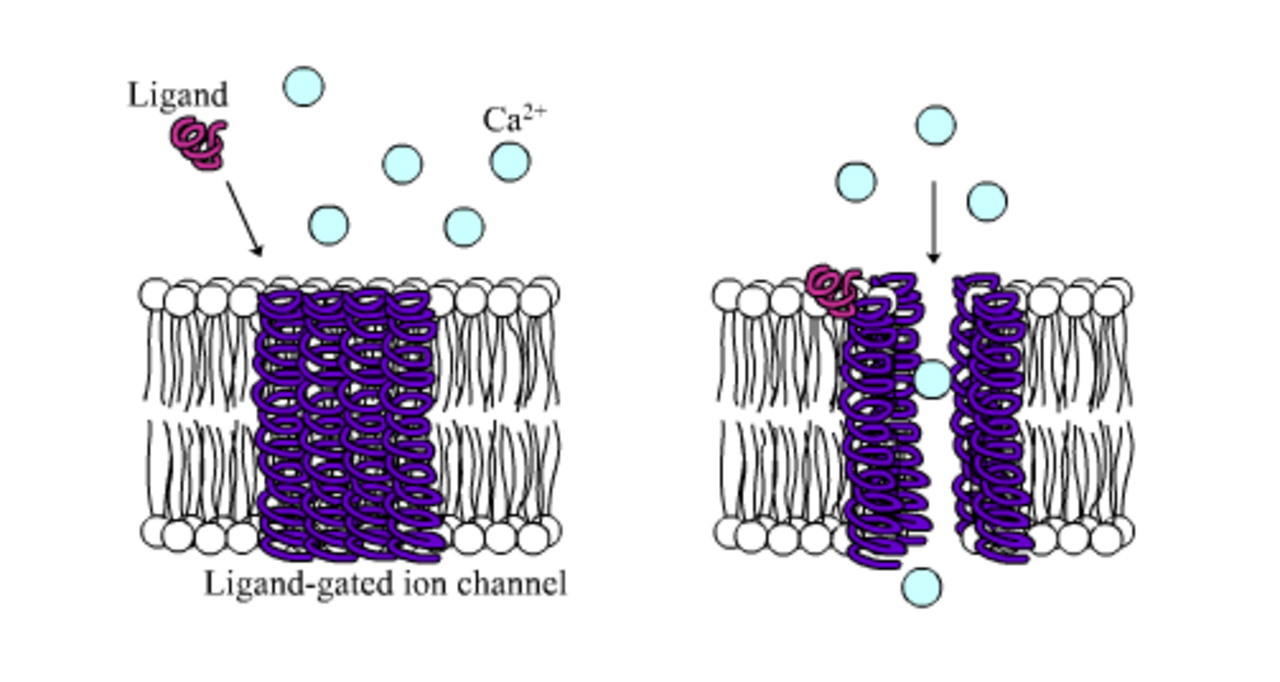
Ligand-gated ion channels (LICs) are a crucial group of transmembrane proteins that play a central role in the functioning of the nervous system. As explained in the Neurotransmission process, LICs are responsible for allowing ions such as Na+, K+, Ca2+, and/or Cl− to pass through the membrane in response to the binding of a chemical messenger, such as a Neurotransmitter. This process is essential for the generation of electrical signals in neurons, which enables communication between different parts of the nervous system. The study of LICs has been facilitated by advances in Molecular Biology and Biochemistry, allowing researchers to understand the molecular mechanisms underlying their function. For instance, the Nicotinic Acetylcholine Receptor is a well-studied example of a LIC that plays a critical role in muscle contraction and neurotransmission.
🧬 Molecular Structure and Function
The molecular structure of LICs is characterized by the presence of multiple subunits, each with a distinct role in the functioning of the channel. As discussed in the Protein Structure section, the arrangement of these subunits determines the overall structure and function of the channel. The binding of a ligand to the channel triggers a conformational change that opens the channel, allowing ions to flow through. This process is influenced by the Lipid Bilayer in which the channel is embedded, as well as the presence of other proteins and molecules that can modulate channel function. The GABA Receptor is an example of a LIC that is modulated by the presence of other proteins, such as the Gephyrin protein.
📝 Classification and Types of Ligand-Gated Ion Channels
LICs can be classified into several distinct types based on their structure, function, and ligand specificity. The Cys-Loop Receptor family, for example, includes channels such as the Nicotinic Acetylcholine Receptor and the GABA Receptor, which are both involved in neurotransmission. Other types of LICs include the Glutamate Receptor family, which plays a critical role in excitatory neurotransmission, and the Purinergic Receptor family, which is involved in a variety of physiological processes. The study of these different types of LICs has been facilitated by advances in Genomics and Proteomics, allowing researchers to understand the complex relationships between different LICs and their roles in the nervous system.
👥 Role in the Nervous System
LICs play a critical role in the functioning of the nervous system, where they are involved in a variety of physiological processes, including neurotransmission, muscle contraction, and sensory perception. As discussed in the Synaptic Plasticity section, LICs are essential for the regulation of synaptic strength and the formation of memories. The dysfunction of LICs has been implicated in a range of neurological and psychiatric disorders, including Alzheimer's Disease, Parkinson's Disease, and Schizophrenia. The study of LICs in these disorders has been facilitated by advances in Neuroimaging and Neurophysiology, allowing researchers to understand the complex relationships between LICs and disease.
💡 Mechanism of Action
The mechanism of action of LICs involves the binding of a ligand to the channel, which triggers a conformational change that opens the channel. As explained in the Ion Channel Function section, this process is influenced by the presence of other proteins and molecules that can modulate channel function. The binding of a ligand to the channel can also trigger the activation of downstream signaling pathways, which can have a range of physiological effects. The study of these signaling pathways has been facilitated by advances in Signal Transduction and Cell Signaling, allowing researchers to understand the complex relationships between LICs and downstream effectors.
🔬 Experimental Techniques for Studying LICs
A range of experimental techniques are available for studying LICs, including Patch Clamp Technique, Single Channel Recording, and Fluorescence Microscopy. These techniques allow researchers to study the biophysical properties of LICs, including their conductance, kinetics, and pharmacology. The study of LICs has also been facilitated by advances in Computational Modeling and Simulations, allowing researchers to understand the complex relationships between LICs and their environment.
📊 Physiological and Pathological Implications
The physiological and pathological implications of LICs are diverse and far-reaching. As discussed in the Neurological Disorders section, the dysfunction of LICs has been implicated in a range of neurological and psychiatric disorders, including Epilepsy, Multiple Sclerosis, and Bipolar Disorder. The study of LICs in these disorders has been facilitated by advances in Genetics and Epigenetics, allowing researchers to understand the complex relationships between LICs and disease. The development of therapeutic strategies targeting LICs has the potential to revolutionize the treatment of these disorders.
🔑 Therapeutic Targets and Drug Development
LICs are attractive targets for the development of therapeutic agents, including drugs and biologics. As explained in the Drug Development section, the development of therapeutic strategies targeting LICs requires a deep understanding of their structure, function, and pharmacology. The study of LICs has been facilitated by advances in High Throughput Screening and Structure-Based Drug Design, allowing researchers to identify and optimize lead compounds. The development of therapeutic agents targeting LICs has the potential to revolutionize the treatment of a range of neurological and psychiatric disorders.
🤝 Interactions with Other Ion Channels and Receptors
LICs interact with a range of other ion channels and receptors, including Voltage-Gated Ion Channels and G Protein-Coupled Receptors. As discussed in the Neurotransmitter Release section, these interactions can have a range of physiological effects, including the regulation of synaptic strength and the formation of memories. The study of these interactions has been facilitated by advances in Neurophysiology and Neuropharmacology, allowing researchers to understand the complex relationships between LICs and other ion channels and receptors.
📈 Future Directions and Emerging Trends
The study of LICs is a rapidly evolving field, with new discoveries and advances in technology continually expanding our understanding of these complex molecules. As explained in the Neuroscience section, the development of new therapeutic strategies targeting LICs has the potential to revolutionize the treatment of a range of neurological and psychiatric disorders. The study of LICs has been facilitated by advances in Artificial Intelligence and Machine Learning, allowing researchers to analyze and integrate large datasets and identify new patterns and relationships.
Key Facts
- Year
- 2022
- Origin
- Vibepedia.wiki
- Category
- Neuroscience
- Type
- Biological Process
Frequently Asked Questions
What are ligand-gated ion channels?
Ligand-gated ion channels (LICs) are a group of transmembrane ion-channel proteins that open to allow ions such as Na+, K+, Ca2+, and/or Cl− to pass through the membrane in response to the binding of a chemical messenger, such as a neurotransmitter. They play a critical role in the functioning of the nervous system, where they are involved in a variety of physiological processes, including neurotransmission, muscle contraction, and sensory perception. The study of LICs has been facilitated by advances in Molecular Biology and Biochemistry, allowing researchers to understand the molecular mechanisms underlying their function.
How do ligand-gated ion channels work?
The mechanism of action of LICs involves the binding of a ligand to the channel, which triggers a conformational change that opens the channel. This process is influenced by the presence of other proteins and molecules that can modulate channel function. The binding of a ligand to the channel can also trigger the activation of downstream signaling pathways, which can have a range of physiological effects. The study of these signaling pathways has been facilitated by advances in Signal Transduction and Cell Signaling, allowing researchers to understand the complex relationships between LICs and downstream effectors.
What are the physiological implications of ligand-gated ion channels?
The physiological implications of LICs are diverse and far-reaching. They play a critical role in the functioning of the nervous system, where they are involved in a variety of physiological processes, including neurotransmission, muscle contraction, and sensory perception. The dysfunction of LICs has been implicated in a range of neurological and psychiatric disorders, including Alzheimer's Disease, Parkinson's Disease, and Schizophrenia. The study of LICs in these disorders has been facilitated by advances in Genomics and Proteomics, allowing researchers to understand the complex relationships between LICs and disease.
What are the therapeutic targets for ligand-gated ion channels?
LICs are attractive targets for the development of therapeutic agents, including drugs and biologics. The development of therapeutic strategies targeting LICs requires a deep understanding of their structure, function, and pharmacology. The study of LICs has been facilitated by advances in High Throughput Screening and Structure-Based Drug Design, allowing researchers to identify and optimize lead compounds. The development of therapeutic agents targeting LICs has the potential to revolutionize the treatment of a range of neurological and psychiatric disorders.
How do ligand-gated ion channels interact with other ion channels and receptors?
LICs interact with a range of other ion channels and receptors, including Voltage-Gated Ion Channels and G Protein-Coupled Receptors. These interactions can have a range of physiological effects, including the regulation of synaptic strength and the formation of memories. The study of these interactions has been facilitated by advances in Neurophysiology and Neuropharmacology, allowing researchers to understand the complex relationships between LICs and other ion channels and receptors.
What is the future of ligand-gated ion channel research?
The study of LICs is a rapidly evolving field, with new discoveries and advances in technology continually expanding our understanding of these complex molecules. The development of new therapeutic strategies targeting LICs has the potential to revolutionize the treatment of a range of neurological and psychiatric disorders. The study of LICs has been facilitated by advances in Artificial Intelligence and Machine Learning, allowing researchers to analyze and integrate large datasets and identify new patterns and relationships.
What are the challenges in studying ligand-gated ion channels?
The study of LICs is challenging due to their complex structure and function, as well as the difficulty in studying their behavior in real-time. However, advances in Single Molecule Techniques and Super-Resolution Microscopy have allowed researchers to study LICs at the single molecule level, providing new insights into their behavior and function. The study of LICs has also been facilitated by advances in Computational Modeling and Simulations, allowing researchers to understand the complex relationships between LICs and their environment.