
Contents
- 🔍 Introduction to JAK-STAT Pathway
- 🧬 Structure and Function of JAK-STAT Proteins
- 📈 Activation and Regulation of the JAK-STAT Pathway
- 🔗 Role of JAK-STAT in Cell Signaling and Gene Expression
- 👨🔬 Implications of JAK-STAT in Human Diseases
- 💡 Therapeutic Targeting of the JAK-STAT Pathway
- 📊 Current Research and Future Directions
- 🤝 Collaboration and Controversies in JAK-STAT Research
- 📚 Historical Perspective on JAK-STAT Discovery
- 🔬 Experimental Methods for Studying JAK-STAT
- 📊 Computational Models of JAK-STAT Signaling
- 🌎 JAK-STAT Pathway in Different Organisms and Tissues
- Frequently Asked Questions
- Related Topics
Overview
The JAK-STAT pathway is a crucial signaling mechanism that enables cells to respond to external stimuli, such as cytokines and growth factors. This complex pathway involves the activation of Janus kinase (JAK) enzymes, which in turn phosphorylate and activate signal transducers and activators of transcription (STAT) proteins. The JAK-STAT pathway plays a vital role in regulating immune response, inflammation, and cell growth, and its dysregulation has been implicated in various diseases, including cancer, autoimmune disorders, and inflammatory conditions. Researchers have identified several key players in the JAK-STAT pathway, including JAK1, JAK2, JAK3, and TYK2, as well as STAT1, STAT3, STAT5, and STAT6. The development of JAK inhibitors has revolutionized the treatment of certain diseases, such as rheumatoid arthritis and myeloproliferative neoplasms. With a Vibe score of 8, the JAK-STAT pathway is a highly energetic and rapidly evolving field, with new discoveries and advancements emerging regularly, including the work of prominent researchers like James Darnell and George Stark, who have made significant contributions to our understanding of this complex pathway.
🔍 Introduction to JAK-STAT Pathway
The JAK-STAT pathway is a crucial signaling mechanism that enables cells to respond to external stimuli, such as cytokines and growth factors. This pathway is involved in various cellular processes, including cell signaling, gene expression, and cell growth. The JAK-STAT pathway is composed of several key components, including Janus kinases (JAKs), signal transducers and activators of transcription (STATs), and receptors. For example, the JAK1 and JAK2 kinases play a critical role in the activation of the JAK-STAT pathway. The JAK-STAT pathway has been implicated in various diseases, including cancer and inflammatory disorders. Further research is needed to fully understand the mechanisms of the JAK-STAT pathway and its role in human diseases.
🧬 Structure and Function of JAK-STAT Proteins
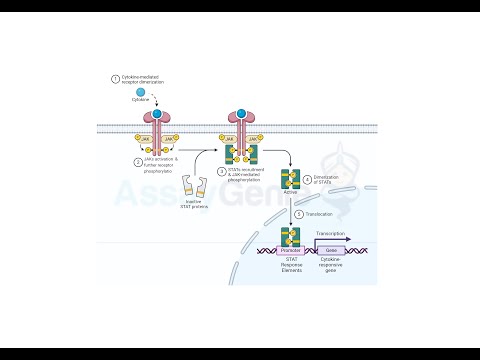
The structure and function of JAK-STAT proteins are essential for the proper functioning of the JAK-STAT pathway. The JAK proteins are tyrosine kinases that phosphorylate and activate the STAT proteins. The STAT proteins then dimerize and translocate to the nucleus, where they regulate the expression of target genes. The STAT3 protein is a key component of the JAK-STAT pathway and has been implicated in various diseases, including cancer and inflammatory disorders. The JAK-STAT pathway is also regulated by various negative regulators, including SOCS proteins and PTPs. These negative regulators help to terminate the signaling pathway and prevent excessive activation.
📈 Activation and Regulation of the JAK-STAT Pathway
The activation and regulation of the JAK-STAT pathway are complex processes that involve the coordinated action of multiple components. The JAK-STAT pathway is activated by the binding of cytokines and growth factors to their respective receptors, which leads to the phosphorylation and activation of the JAK proteins. The activated JAK proteins then phosphorylate and activate the STAT proteins, which dimerize and translocate to the nucleus. The JAK-STAT pathway is also regulated by various feedback mechanisms, including the negative feedback loop mediated by SOCS proteins. The JAK-STAT pathway has been implicated in various diseases, including autoimmune diseases and inflammatory disorders.
🔗 Role of JAK-STAT in Cell Signaling and Gene Expression
The role of JAK-STAT in cell signaling and gene expression is crucial for the proper functioning of cells. The JAK-STAT pathway regulates the expression of various genes involved in cell growth, cell differentiation, and cell survival. The JAK-STAT pathway also regulates the expression of genes involved in inflammation and immune response. For example, the STAT1 protein regulates the expression of genes involved in interferon signaling. The JAK-STAT pathway has been implicated in various diseases, including cancer and inflammatory disorders. Further research is needed to fully understand the mechanisms of the JAK-STAT pathway and its role in human diseases.
👨🔬 Implications of JAK-STAT in Human Diseases
The implications of JAK-STAT in human diseases are significant and far-reaching. The JAK-STAT pathway has been implicated in various diseases, including cancer, inflammatory disorders, and autoimmune diseases. For example, the JAK2 mutation has been implicated in myeloproliferative neoplasms. The JAK-STAT pathway has also been implicated in neurodegenerative diseases, such as Alzheimer's disease. The JAK-STAT pathway is a promising therapeutic target for the treatment of various diseases. For example, JAK inhibitors have been used to treat rheumatoid arthritis and psoriasis.
💡 Therapeutic Targeting of the JAK-STAT Pathway
The therapeutic targeting of the JAK-STAT pathway is a promising area of research. The JAK-STAT pathway is a key regulator of inflammation and immune response, making it a potential therapeutic target for the treatment of various diseases. For example, JAK inhibitors have been used to treat rheumatoid arthritis and psoriasis. The JAK-STAT pathway is also a potential therapeutic target for the treatment of cancer. For example, STAT3 inhibitors have been used to treat cancer. Further research is needed to fully understand the mechanisms of the JAK-STAT pathway and its role in human diseases.
📊 Current Research and Future Directions
Current research and future directions in JAK-STAT research are focused on understanding the mechanisms of the JAK-STAT pathway and its role in human diseases. The JAK-STAT pathway is a complex signaling mechanism that involves the coordinated action of multiple components. Further research is needed to fully understand the mechanisms of the JAK-STAT pathway and its role in human diseases. For example, the JAK-STAT pathway has been implicated in various diseases, including cancer and inflammatory disorders. The JAK-STAT pathway is a promising therapeutic target for the treatment of various diseases. The National Institutes of Health and other organizations are funding research to understand the mechanisms of the JAK-STAT pathway and its role in human diseases.
🤝 Collaboration and Controversies in JAK-STAT Research
Collaboration and controversies in JAK-STAT research are ongoing. The JAK-STAT pathway is a complex signaling mechanism that involves the coordinated action of multiple components. The JAK-STAT pathway has been implicated in various diseases, including cancer and inflammatory disorders. However, there are controversies surrounding the role of the JAK-STAT pathway in human diseases. For example, some researchers have suggested that the JAK-STAT pathway is not a key regulator of inflammation and immune response. Further research is needed to fully understand the mechanisms of the JAK-STAT pathway and its role in human diseases.
📚 Historical Perspective on JAK-STAT Discovery
The historical perspective on JAK-STAT discovery is fascinating. The JAK-STAT pathway was first discovered in the 1990s by James Darnell and other researchers. The discovery of the JAK-STAT pathway has led to a greater understanding of the mechanisms of cell signaling and gene expression. The JAK-STAT pathway has been implicated in various diseases, including cancer and inflammatory disorders. The JAK-STAT pathway is a promising therapeutic target for the treatment of various diseases.
🔬 Experimental Methods for Studying JAK-STAT
Experimental methods for studying JAK-STAT are essential for understanding the mechanisms of the JAK-STAT pathway. The JAK-STAT pathway can be studied using various experimental methods, including Western blotting and qPCR. The JAK-STAT pathway can also be studied using cell culture and animal models. For example, the JAK2 mutation has been studied using mouse models. The JAK-STAT pathway is a complex signaling mechanism that involves the coordinated action of multiple components.
📊 Computational Models of JAK-STAT Signaling
Computational models of JAK-STAT signaling are useful for understanding the mechanisms of the JAK-STAT pathway. The JAK-STAT pathway can be modeled using various computational methods, including ordinary differential equations and stochastic simulation. The JAK-STAT pathway can also be modeled using systems biology approaches. For example, the JAK-STAT pathway has been modeled using Petri nets. The JAK-STAT pathway is a complex signaling mechanism that involves the coordinated action of multiple components.
🌎 JAK-STAT Pathway in Different Organisms and Tissues
The JAK-STAT pathway in different organisms and tissues is fascinating. The JAK-STAT pathway is a conserved signaling mechanism that is found in various organisms, including humans and mice. The JAK-STAT pathway is also found in various tissues, including blood and brain. For example, the JAK1 protein is expressed in T cells and B cells. The JAK-STAT pathway has been implicated in various diseases, including cancer and inflammatory disorders.
Key Facts
- Year
- 1994
- Origin
- Discovery of JAK1 by James Darnell and colleagues
- Category
- Molecular Biology
- Type
- Biological Process
Frequently Asked Questions
What is the JAK-STAT pathway?
The JAK-STAT pathway is a signaling mechanism that enables cells to respond to external stimuli, such as cytokines and growth factors. The JAK-STAT pathway is involved in various cellular processes, including cell signaling, gene expression, and cell growth. The JAK-STAT pathway is composed of several key components, including Janus kinases (JAKs), signal transducers and activators of transcription (STATs), and receptors.
What are the key components of the JAK-STAT pathway?
The key components of the JAK-STAT pathway include Janus kinases (JAKs), signal transducers and activators of transcription (STATs), and receptors. The JAK proteins are tyrosine kinases that phosphorylate and activate the STAT proteins. The STAT proteins then dimerize and translocate to the nucleus, where they regulate the expression of target genes.
What is the role of the JAK-STAT pathway in human diseases?
The JAK-STAT pathway has been implicated in various diseases, including cancer, inflammatory disorders, and autoimmune diseases. The JAK-STAT pathway is a key regulator of inflammation and immune response, making it a potential therapeutic target for the treatment of various diseases.
How is the JAK-STAT pathway regulated?
The JAK-STAT pathway is regulated by various negative regulators, including suppressor of cytokine signaling (SOCS) proteins and protein tyrosine phosphatases (PTPs). These negative regulators help to terminate the signaling pathway and prevent excessive activation.
What are the therapeutic implications of the JAK-STAT pathway?
The JAK-STAT pathway is a promising therapeutic target for the treatment of various diseases, including cancer, inflammatory disorders, and autoimmune diseases. JAK inhibitors have been used to treat rheumatoid arthritis and psoriasis, and STAT3 inhibitors have been used to treat cancer.
What are the current research directions in JAK-STAT research?
Current research directions in JAK-STAT research are focused on understanding the mechanisms of the JAK-STAT pathway and its role in human diseases. The JAK-STAT pathway is a complex signaling mechanism that involves the coordinated action of multiple components. Further research is needed to fully understand the mechanisms of the JAK-STAT pathway and its role in human diseases.
What are the controversies surrounding the JAK-STAT pathway?
There are controversies surrounding the role of the JAK-STAT pathway in human diseases. Some researchers have suggested that the JAK-STAT pathway is not a key regulator of inflammation and immune response. Further research is needed to fully understand the mechanisms of the JAK-STAT pathway and its role in human diseases.