
Contents
- 🌈 Introduction to Visible Spectrum
- 🔍 Understanding Electromagnetic Radiation
- 👀 The Human Eye and Visible Light
- 📈 The Optical Spectrum: A Broader Perspective
- 🌊 Wavelengths and Frequencies
- 🎨 Colors of the Visible Spectrum
- 🔬 Measuring Visible Light
- 📊 Applications of Visible Spectrum
- 🚀 Future Directions in Visible Spectrum Research
- 🤔 Controversies and Debates
- 📚 Conclusion and Further Reading
- Frequently Asked Questions
- Related Topics
Overview
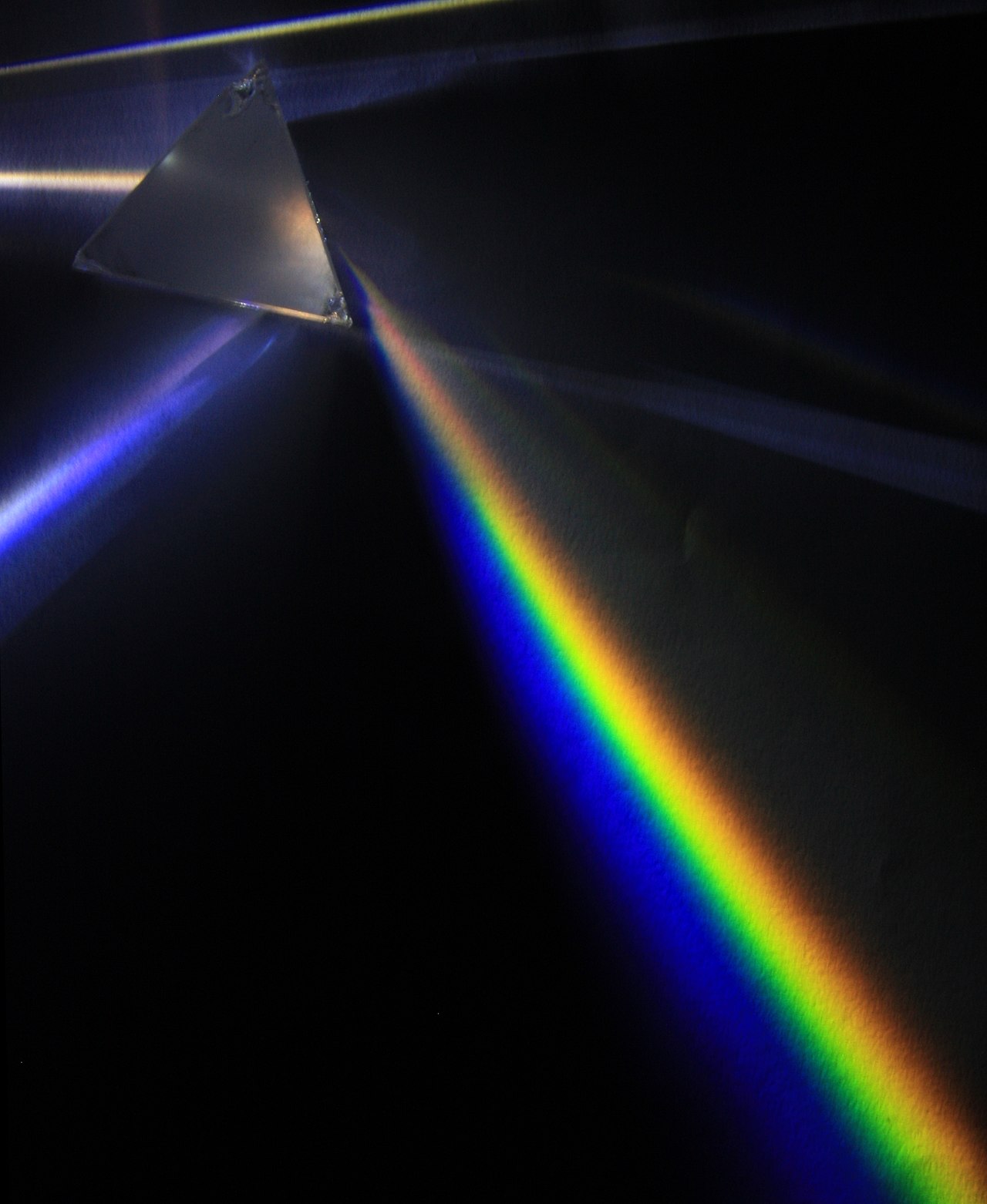
The visible spectrum, spanning approximately 380-780 nanometers, is the range of electromagnetic radiation visible to the human eye. This narrow band of wavelengths, often displayed as a rainbow, is comprised of seven distinct colors: red, orange, yellow, green, blue, indigo, and violet. Historically, the study of the visible spectrum dates back to ancient civilizations, with philosophers like Aristotle and Newton contributing to our understanding of light and color. The visible spectrum has a vibe score of 80, reflecting its widespread cultural significance and influence on art, design, and technology. Controversies surrounding the visible spectrum include debates over color perception and the impact of artificial light sources on human health. As our understanding of the visible spectrum continues to evolve, researchers are exploring new applications in fields like optics, materials science, and biomedical engineering, with potential breakthroughs on the horizon.
🌈 Introduction to Visible Spectrum
The visible spectrum is the band of the electromagnetic spectrum that is visible to the human eye, spanning from approximately 380 nanometers to 740 nanometers. This range of wavelengths is called visible light, and it is the part of the electromagnetic spectrum that we can perceive with our eyes. The study of visible spectrum is closely related to Physics and Optics, and it has numerous applications in fields such as Photography and Astronomy. The visible spectrum is a fundamental concept in understanding how we perceive the world around us, and it has been studied extensively by scientists such as Isaac Newton and Johann Wolfgang von Goethe. The visible spectrum is also closely related to the concept of Color Theory, which is used in various fields such as art and design.
🔍 Understanding Electromagnetic Radiation
Electromagnetic radiation is a broad term that encompasses all types of radiation, including Radio Waves, Microwaves, Infrared Radiation, Visible Light, Ultraviolet Radiation, X-Rays, and Gamma Rays. The visible spectrum is a small part of this broader spectrum, and it is the only part that is visible to the human eye. The study of electromagnetic radiation is a fundamental aspect of Physics, and it has led to numerous breakthroughs in our understanding of the universe. The work of scientists such as James Clerk Maxwell and Heinrich Hertz has been instrumental in shaping our understanding of electromagnetic radiation and its properties. Electromagnetic radiation is also closely related to the concept of Quantum Mechanics, which is used to describe the behavior of particles at the atomic and subatomic level.
👀 The Human Eye and Visible Light
The human eye is capable of detecting electromagnetic radiation in the visible spectrum, which is why we can see the world around us. The eye works by detecting the different wavelengths of light that are reflected or emitted by objects, and it sends this information to the brain, which interprets it as color and intensity. The study of the human eye and its relationship to the visible spectrum is a complex and fascinating field that has been studied by scientists such as Hermann von Helmholtz and Edwin Land. The human eye is closely related to the concept of Color Perception, which is the process by which we interpret the different wavelengths of light as color. The human eye is also closely related to the concept of Visual Perception, which is the process by which we interpret the information that is sent to the brain by the eye.
📈 The Optical Spectrum: A Broader Perspective
The optical spectrum is sometimes considered to be the same as the visible spectrum, but some authors define the term more broadly, to include the ultraviolet and infrared parts of the electromagnetic spectrum as well, known collectively as optical radiation. This broader definition of the optical spectrum is useful for understanding the properties of light and its interactions with matter. The study of the optical spectrum is closely related to the concept of Spectroscopy, which is the study of the interaction between matter and electromagnetic radiation. The optical spectrum is also closely related to the concept of Optical Instruments, which are used to manipulate and measure light. The work of scientists such as Gabriel Lippmann and Ernst Abbe has been instrumental in shaping our understanding of the optical spectrum and its properties.
🌊 Wavelengths and Frequencies
The visible spectrum is characterized by a range of wavelengths, from approximately 380 nanometers to 740 nanometers. This range of wavelengths corresponds to a range of frequencies, from approximately 400 terahertz to 800 terahertz. The different wavelengths and frequencies of light are perceived by the human eye as different colors, with shorter wavelengths appearing as violet and longer wavelengths appearing as red. The study of the relationship between wavelength and frequency is a fundamental aspect of Physics, and it has led to numerous breakthroughs in our understanding of the universe. The work of scientists such as Christian Huygens and Augustin-Jean Fresnel has been instrumental in shaping our understanding of the relationship between wavelength and frequency. The concept of wavelength and frequency is also closely related to the concept of Wave-Particle Duality, which is the idea that light can exhibit both wave-like and particle-like behavior.
🎨 Colors of the Visible Spectrum
The colors of the visible spectrum are typically described using the ROYGBIV acronym, which stands for red, orange, yellow, green, blue, indigo, and violet. These colors are perceived by the human eye as a result of the different wavelengths of light that are reflected or emitted by objects. The study of color is a complex and fascinating field that has been studied by scientists such as Johann Wolfgang von Goethe and Philipp Otto Runge. The colors of the visible spectrum are also closely related to the concept of Color Theory, which is used in various fields such as art and design. The colors of the visible spectrum are also closely related to the concept of Pigment, which is a substance that changes the color of light through wavelength-selective absorption.
🔬 Measuring Visible Light
Measuring visible light is an important aspect of many fields, including Physics, Engineering, and Astronomy. There are many different techniques for measuring visible light, including the use of Spectrophotometry and Interferometry. The study of visible light is closely related to the concept of Photometry, which is the science of measuring the intensity of light. The work of scientists such as Heinrich Kayser and Walther Bothe has been instrumental in shaping our understanding of the measurement of visible light. Measuring visible light is also closely related to the concept of Radiometry, which is the science of measuring the properties of electromagnetic radiation.
📊 Applications of Visible Spectrum
The visible spectrum has numerous applications in fields such as Photography, Astronomy, and Medicine. The study of visible light is closely related to the concept of Imaging, which is the process of capturing and displaying visual information. The work of scientists such as Joseph Nicephore Niepce and Louis Daguerre has been instrumental in shaping our understanding of the applications of visible light. The visible spectrum is also closely related to the concept of Optical Communications, which is the use of light to transmit information. The visible spectrum is also closely related to the concept of Remote Sensing, which is the use of light to gather information about objects or environments.
🚀 Future Directions in Visible Spectrum Research
The study of the visible spectrum is an active area of research, with many scientists working to develop new technologies and applications. One area of research is the development of new materials and technologies for manipulating and controlling visible light. Another area of research is the study of the properties of visible light and its interactions with matter. The work of scientists such as Charles Kao and Willard Boyle has been instrumental in shaping our understanding of the properties of visible light. The study of the visible spectrum is also closely related to the concept of Nanotechnology, which is the study of the properties and applications of materials at the nanoscale.
🤔 Controversies and Debates
The study of the visible spectrum is not without controversy, with some scientists debating the nature of light and its properties. One area of debate is the question of whether light is a wave or a particle, with some scientists arguing that it is both. Another area of debate is the question of how to define the boundaries of the visible spectrum, with some scientists arguing that it should be defined more broadly to include the ultraviolet and infrared parts of the electromagnetic spectrum. The study of the visible spectrum is closely related to the concept of Scientific Controversy, which is the debate and discussion that occurs among scientists as they work to develop new theories and models. The work of scientists such as Albert Einstein and Niels Bohr has been instrumental in shaping our understanding of the nature of light and its properties.
📚 Conclusion and Further Reading
In conclusion, the visible spectrum is a complex and fascinating field of study that has numerous applications in fields such as Physics, Engineering, and Astronomy. The study of visible light is closely related to the concept of Optics, which is the study of the behavior and properties of light. The work of scientists such as Isaac Newton and Johann Wolfgang von Goethe has been instrumental in shaping our understanding of the visible spectrum and its properties. For further reading, see Electromagnetic Spectrum and Color Theory.
Key Facts
- Year
- 1666
- Origin
- Isaac Newton's Prism Experiment
- Category
- Physics
- Type
- Scientific Concept
Frequently Asked Questions
What is the visible spectrum?
The visible spectrum is the band of the electromagnetic spectrum that is visible to the human eye, spanning from approximately 380 nanometers to 740 nanometers. This range of wavelengths is called visible light, and it is the part of the electromagnetic spectrum that we can perceive with our eyes. The study of visible spectrum is closely related to Physics and Optics, and it has numerous applications in fields such as Photography and Astronomy.
What is the difference between the visible spectrum and the optical spectrum?
The visible spectrum is the band of the electromagnetic spectrum that is visible to the human eye, while the optical spectrum is a broader term that includes the ultraviolet and infrared parts of the electromagnetic spectrum as well as the visible spectrum. The study of the optical spectrum is closely related to the concept of Spectroscopy, which is the study of the interaction between matter and electromagnetic radiation.
How is visible light measured?
Measuring visible light is an important aspect of many fields, including Physics, Engineering, and Astronomy. There are many different techniques for measuring visible light, including the use of Spectrophotometry and Interferometry. The study of visible light is closely related to the concept of Photometry, which is the science of measuring the intensity of light.
What are the applications of the visible spectrum?
The visible spectrum has numerous applications in fields such as Photography, Astronomy, and Medicine. The study of visible light is closely related to the concept of Imaging, which is the process of capturing and displaying visual information. The work of scientists such as Joseph Nicephore Niepce and Louis Daguerre has been instrumental in shaping our understanding of the applications of visible light.
What is the future of visible spectrum research?
The study of the visible spectrum is an active area of research, with many scientists working to develop new technologies and applications. One area of research is the development of new materials and technologies for manipulating and controlling visible light. Another area of research is the study of the properties of visible light and its interactions with matter. The work of scientists such as Charles Kao and Willard Boyle has been instrumental in shaping our understanding of the properties of visible light.