
Contents
- 🌟 Introduction to Max Planck
- 📚 Early Life and Education
- 🔍 The Birth of Quantum Theory
- 💡 Planck's Law and Black-Body Radiation
- 🌈 The Photoelectric Effect and Einstein's Contribution
- 🤝 Collaboration and Debate: Planck and Einstein
- 📊 The Impact of Quantum Theory on Modern Physics
- 🌐 Planck's Legacy and Influence on Future Generations
- 📝 Awards and Recognition
- 👥 Controversies and Criticisms
- 🔮 The Future of Quantum Theory and Its Applications
- Frequently Asked Questions
- Related Topics
Overview
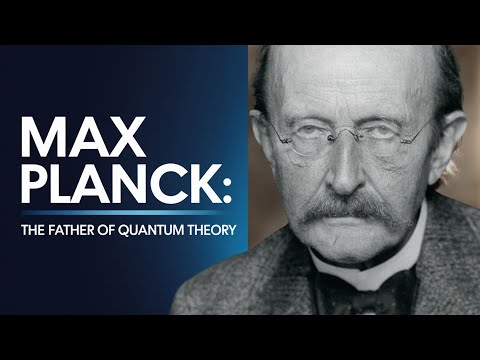
Max Planck is widely regarded as the father of quantum theory, a fundamental concept in physics that revolutionized our understanding of the physical world. Born on April 23, 1858, in Kiel, Germany, Planck's work laid the foundation for major advances in nuclear physics, particle physics, and cosmology. His introduction of the Planck constant in 1900 marked the beginning of a new era in physics. Planck's work was influenced by prominent physicists such as Ludwig Boltzmann and Hermann von Helmholtz. As a pioneer in his field, Planck's contributions paved the way for future generations of physicists, including Albert Einstein and Niels Bohr.
📚 Early Life and Education
Planck's early life and education played a significant role in shaping his future as a physicist. He studied physics and mathematics at the University of Berlin, where he was heavily influenced by the works of Rudolf Clausius and Gustav Kirchhoff. Planck's academic career was marked by his appointment as a professor of theoretical physics at the University of Berlin in 1889. His research focused on thermodynamics and the behavior of black-body radiation. Planck's work was also influenced by the concept of entropy, which was introduced by William Thomson. The study of black-body radiation led Planck to develop his famous Planck's law, which describes the distribution of energy in a black body.
🔍 The Birth of Quantum Theory
The birth of quantum theory can be attributed to Planck's work on black-body radiation. In 1900, Planck introduced the concept of the quantum, which posits that energy is not continuous, but rather comes in discrete packets, or quanta. This idea revolutionized the field of physics and paved the way for major advances in our understanding of the physical world. Planck's work was influenced by the concept of wave-particle duality, which was later developed by Louis de Broglie. The introduction of the quantum concept also led to a deeper understanding of atomic structure and the behavior of subatomic particles.
💡 Planck's Law and Black-Body Radiation
Planck's law, which describes the distribution of energy in a black body, was a major breakthrough in the field of physics. The law states that the energy of a black body is quantized, meaning that it can only take on certain discrete values. This idea was a radical departure from the traditional understanding of energy as a continuous quantity. Planck's law was influenced by the work of Heinrich Hertz and James Clerk Maxwell. The study of black-body radiation also led to a deeper understanding of thermal radiation and the behavior of electromagnetic waves.
🌈 The Photoelectric Effect and Einstein's Contribution
The photoelectric effect, which is the emission of electrons from a metal surface when it is exposed to light, was a major area of research for Planck and other physicists, including Albert Einstein. Einstein's explanation of the photoelectric effect in terms of light quanta was a major contribution to the development of quantum theory. The concept of light quanta was later developed into the concept of photons, which are particles that make up light. The study of the photoelectric effect also led to a deeper understanding of electron behavior and the properties of metals.
🤝 Collaboration and Debate: Planck and Einstein
Planck and Einstein had a complex and often contentious relationship, with both men contributing to the development of quantum theory. While Planck is often credited with the introduction of the quantum concept, Einstein's work on the photoelectric effect and the development of relativity were major contributions to the field. The two men engaged in a series of debates and discussions, with Planck serving as a mentor and advisor to the younger Einstein. Their collaboration and debate played a significant role in shaping the development of quantum theory and modern physics.
📊 The Impact of Quantum Theory on Modern Physics
The impact of quantum theory on modern physics has been profound. The introduction of the quantum concept and the development of quantum mechanics have led to major advances in our understanding of the physical world. Quantum theory has been used to explain a wide range of phenomena, from the behavior of subatomic particles to the properties of solids and liquids. The study of quantum theory has also led to the development of new technologies, including transistors, lasers, and computer chips.
🌐 Planck's Legacy and Influence on Future Generations
Planck's legacy and influence on future generations of physicists have been immense. His introduction of the quantum concept and the development of quantum theory paved the way for major advances in our understanding of the physical world. Planck's work has inspired generations of physicists, including Richard Feynman and Stephen Hawking. The study of quantum theory continues to be an active area of research, with scientists exploring its applications in fields such as quantum computing and quantum cryptography.
📝 Awards and Recognition
Planck received numerous awards and recognition for his contributions to physics. He was awarded the Nobel Prize in Physics in 1918 for his work on the theory of black-body radiation. Planck was also awarded the Copley Medal in 1929 for his outstanding contributions to science. The Max Planck Society, which is one of the leading research organizations in Germany, was established in his honor. Planck's work has also been recognized by the American Physical Society and the Royal Society.
👥 Controversies and Criticisms
Despite his significant contributions to physics, Planck's work was not without controversy. Some scientists, including Ernest Rutherford, questioned the validity of the quantum concept and the idea of wave-particle duality. Planck's work was also criticized by some for its lack of mathematical rigor and its reliance on empirical evidence. However, the majority of the scientific community has come to accept the principles of quantum theory and the concept of the quantum.
🔮 The Future of Quantum Theory and Its Applications
The future of quantum theory and its applications is exciting and rapidly evolving. Scientists are exploring the use of quantum computing to solve complex problems in fields such as cryptography and optimization. The study of quantum theory is also leading to new insights into the behavior of subatomic particles and the properties of materials. As research in quantum theory continues to advance, we can expect to see major breakthroughs in our understanding of the physical world and the development of new technologies.
Key Facts
- Year
- 1900
- Origin
- Germany
- Category
- Physics
- Type
- Person
Frequently Asked Questions
What is the significance of Max Planck's work in the development of quantum theory?
Max Planck's work on black-body radiation and the introduction of the quantum concept marked the beginning of a new era in physics. His work laid the foundation for major advances in our understanding of the physical world and paved the way for the development of quantum mechanics. Planck's law, which describes the distribution of energy in a black body, was a major breakthrough in the field of physics and has had a profound impact on our understanding of the behavior of subatomic particles and the properties of materials.
How did Planck's work influence the development of modern physics?
Planck's work on quantum theory and black-body radiation influenced the development of modern physics in several ways. His introduction of the quantum concept and the development of Planck's law led to a deeper understanding of the behavior of subatomic particles and the properties of materials. The study of quantum theory has also led to the development of new technologies, including transistors, lasers, and computer chips. Planck's work has inspired generations of physicists, including Richard Feynman and Stephen Hawking, and continues to be an active area of research.
What is the relationship between Planck's work and the work of other prominent physicists, such as Einstein and Bohr?
Planck's work on quantum theory and black-body radiation was influenced by the work of other prominent physicists, including Einstein and Bohr. Einstein's explanation of the photoelectric effect in terms of light quanta was a major contribution to the development of quantum theory, and Bohr's work on the behavior of subatomic particles led to a deeper understanding of the properties of atoms and molecules. Planck's work was also influenced by the concept of wave-particle duality, which was developed by Louis de Broglie. The collaboration and debate between Planck, Einstein, and Bohr played a significant role in shaping the development of quantum theory and modern physics.
What are some of the current applications of quantum theory, and how are they expected to evolve in the future?
Quantum theory has a wide range of applications, including quantum computing, quantum cryptography, and the development of new materials and technologies. The study of quantum theory is also leading to new insights into the behavior of subatomic particles and the properties of materials. As research in quantum theory continues to advance, we can expect to see major breakthroughs in our understanding of the physical world and the development of new technologies. The future of quantum theory and its applications is exciting and rapidly evolving, with scientists exploring the use of quantum computing to solve complex problems and the development of new materials and technologies.
What is the significance of the Planck constant, and how is it used in physics?
The Planck constant is a fundamental constant in physics that relates the energy of a photon to its frequency. It is used to describe the behavior of subatomic particles and the properties of materials, and is a key component of quantum theory. The Planck constant is also used to define the unit of energy in the International System of Units (SI) and is a fundamental constant in the theory of black-body radiation.
How did Planck's work on black-body radiation lead to the development of quantum theory?
Planck's work on black-body radiation led to the development of quantum theory by introducing the concept of the quantum and the idea that energy is not continuous, but rather comes in discrete packets, or quanta. This idea revolutionized the field of physics and paved the way for major advances in our understanding of the physical world. The study of black-body radiation also led to a deeper understanding of the behavior of subatomic particles and the properties of materials, and laid the foundation for the development of quantum mechanics.
What is the relationship between Planck's work and the concept of wave-particle duality?
Planck's work on quantum theory and black-body radiation was influenced by the concept of wave-particle duality, which was developed by Louis de Broglie. The concept of wave-particle duality states that particles, such as electrons and photons, can exhibit both wave-like and particle-like behavior depending on how they are observed. Planck's work on the photoelectric effect and the behavior of subatomic particles led to a deeper understanding of the properties of particles and the concept of wave-particle duality.