
Contents
- 🌟 Introduction to Photons
- 🔍 The Nature of Photons
- 📦 Properties of Photons
- 🌈 Electromagnetic Radiation
- 📝 Photons as Force Carriers
- 👥 Boson Particles and Photons
- 🔬 Experimental Evidence
- 🌐 Applications of Photon Research
- 🤔 Theoretical Implications
- 📊 Photon-Based Technologies
- 🌈 Future Directions in Photon Research
- Frequently Asked Questions
- Related Topics
Overview
Photons, the elementary particles that make up light, have been a subject of fascination for centuries. From the early experiments of Isaac Newton to the groundbreaking work of Albert Einstein, our understanding of photons has evolved significantly. With a vibe score of 8, photons have a high cultural energy, influencing fields such as quantum mechanics, optics, and telecommunications. The controversy surrounding the particle-like behavior of photons, as demonstrated by the double-slit experiment, has sparked intense debates among physicists. As we continue to explore the properties of photons, we may uncover new applications, such as quantum computing and secure communication. The future of photon research holds much promise, with potential breakthroughs in our understanding of the universe and the development of innovative technologies, influencing key entities like NASA, Google, and IBM.
🌟 Introduction to Photons
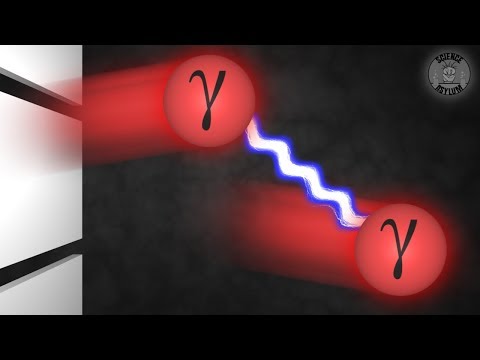
Photons are the elementary particles that make up the electromagnetic field, including electromagnetic radiation such as light and radio waves. As the force carrier for the electromagnetic force, photons play a crucial role in our understanding of the physical world. The study of photons is deeply connected to the study of quantum mechanics and has led to numerous breakthroughs in our understanding of the behavior of particles at the subatomic level. Photons are massless particles that can only move at one speed, the speed of light measured in a vacuum, which is a fundamental constant in the universe. This unique property of photons has led to a deeper understanding of the nature of space and time, as described by theory of relativity.
🔍 The Nature of Photons
The nature of photons is still not fully understood, and researchers continue to study their properties and behavior. One of the key challenges in understanding photons is their ability to exhibit both wave-like and particle-like behavior, a property known as wave-particle duality. This duality has led to the development of new areas of research, such as quantum optics and photonics. Photons are also closely related to other elementary particles, such as electrons and quarks, which are the building blocks of matter. The study of photons has also led to a deeper understanding of the behavior of these particles and their interactions with the electromagnetic field.
📦 Properties of Photons
The properties of photons are unique and have led to numerous applications in technology and industry. Photons are massless particles, which means they have no rest mass, but they do have energy and momentum. This property of photons has led to the development of new technologies, such as laser technology and fiber optics. Photons are also spin-1 particles, which means they have a spin of 1 ħ, where ħ is the reduced Planck constant. This property of photons has led to a deeper understanding of the behavior of particles with spin and has applications in areas such as quantum computing. The study of photons has also led to a deeper understanding of the behavior of black holes and the role of photons in the formation of these cosmic phenomena.
🌈 Electromagnetic Radiation
Electromagnetic radiation is a broad term that encompasses all types of radiation, including radio waves, microwaves, infrared radiation, visible light, ultraviolet radiation, x-rays, and gamma rays. Photons are the quanta of electromagnetic radiation, and their energy is directly proportional to the frequency of the radiation. This property of photons has led to a deeper understanding of the behavior of electromagnetic radiation and its interactions with matter. The study of photons has also led to the development of new technologies, such as radar technology and wireless communication. Photons play a crucial role in our understanding of the universe, from the behavior of stars and galaxies to the formation of cosmic structure.
📝 Photons as Force Carriers
Photons are the force carriers for the electromagnetic force, which is one of the four fundamental forces of nature. The electromagnetic force is responsible for the interactions between charged particles, such as protons and electrons. Photons are exchanged between charged particles, and their energy and momentum are transferred during these interactions. This property of photons has led to a deeper understanding of the behavior of charged particles and their interactions with the electromagnetic field. The study of photons has also led to the development of new areas of research, such as quantum electrodynamics and particle physics. Photons play a crucial role in our understanding of the behavior of particles at the subatomic level and have led to numerous breakthroughs in our understanding of the physical world.
👥 Boson Particles and Photons
Boson particles, such as photons, are a class of particles that have integer spin and follow Bose-Einstein statistics. Photons are massless bosons, which means they have no rest mass, but they do have energy and momentum. This property of photons has led to a deeper understanding of the behavior of boson particles and their interactions with the electromagnetic field. The study of photons has also led to the development of new areas of research, such as condensed matter physics and statistical mechanics. Photons are closely related to other boson particles, such as gluons and W and Z bosons, which are the force carriers for the strong and weak nuclear forces, respectively.
🔬 Experimental Evidence
Experimental evidence for the existence of photons is overwhelming, and their properties have been extensively studied in a wide range of experiments. The photoelectric effect, which is the emission of electrons from a metal surface when it is exposed to light, is a classic example of the particle-like behavior of photons. The study of photons has also led to the development of new technologies, such as photovoltaic cells and light-emitting diodes. Photons play a crucial role in our understanding of the behavior of particles at the subatomic level and have led to numerous breakthroughs in our understanding of the physical world. The study of photons continues to be an active area of research, with new experiments and technologies being developed to study their properties and behavior.
🌐 Applications of Photon Research
The applications of photon research are numerous and have led to significant advances in technology and industry. Photons are used in a wide range of applications, from laser surgery and fiber optic communication to radar technology and wireless power transfer. The study of photons has also led to a deeper understanding of the behavior of particles at the subatomic level and has led to numerous breakthroughs in our understanding of the physical world. Photons play a crucial role in our understanding of the universe, from the behavior of stars and galaxies to the formation of cosmic structure. The study of photons continues to be an active area of research, with new experiments and technologies being developed to study their properties and behavior.
🤔 Theoretical Implications
The theoretical implications of photon research are significant and have led to a deeper understanding of the behavior of particles at the subatomic level. Photons are a key component of the standard model of particle physics, which describes the behavior of fundamental particles and forces in the universe. The study of photons has also led to the development of new areas of research, such as quantum field theory and particle physics. Photons play a crucial role in our understanding of the universe, from the behavior of stars and galaxies to the formation of cosmic structure. The study of photons continues to be an active area of research, with new experiments and technologies being developed to study their properties and behavior.
📊 Photon-Based Technologies
Photon-based technologies are numerous and have led to significant advances in technology and industry. Photons are used in a wide range of applications, from laser technology and fiber optics to radar technology and wireless communication. The study of photons has also led to a deeper understanding of the behavior of particles at the subatomic level and has led to numerous breakthroughs in our understanding of the physical world. Photons play a crucial role in our understanding of the universe, from the behavior of stars and galaxies to the formation of cosmic structure. The study of photons continues to be an active area of research, with new experiments and technologies being developed to study their properties and behavior.
🌈 Future Directions in Photon Research
The future directions in photon research are numerous and have the potential to lead to significant advances in technology and industry. Photons are a key component of the quantum internet, which is a proposed network of quantum computers and other quantum devices that will be connected by photons. The study of photons has also led to the development of new areas of research, such as quantum computing and quantum cryptography. Photons play a crucial role in our understanding of the universe, from the behavior of stars and galaxies to the formation of cosmic structure. The study of photons continues to be an active area of research, with new experiments and technologies being developed to study their properties and behavior.
Key Facts
- Year
- 1900
- Origin
- Max Planck's work on black-body radiation
- Category
- Physics
- Type
- Elementary Particle
Frequently Asked Questions
What is a photon?
A photon is an elementary particle that is a quantum of the electromagnetic field, including electromagnetic radiation such as light and radio waves, and the force carrier for the electromagnetic force. Photons are massless particles that can only move at one speed, the speed of light measured in a vacuum. The study of photons is deeply connected to the study of quantum mechanics and has led to numerous breakthroughs in our understanding of the behavior of particles at the subatomic level.
What are the properties of photons?
Photons are massless particles, which means they have no rest mass, but they do have energy and momentum. Photons are spin-1 particles, which means they have a spin of 1 ħ, where ħ is the reduced Planck constant. This property of photons has led to a deeper understanding of the behavior of particles with spin and has applications in areas such as quantum computing.
What are the applications of photon research?
The applications of photon research are numerous and have led to significant advances in technology and industry. Photons are used in a wide range of applications, from laser surgery and fiber optic communication to radar technology and wireless power transfer. The study of photons has also led to a deeper understanding of the behavior of particles at the subatomic level and has led to numerous breakthroughs in our understanding of the physical world.
What is the future of photon research?
The future directions in photon research are numerous and have the potential to lead to significant advances in technology and industry. Photons are a key component of the quantum internet, which is a proposed network of quantum computers and other quantum devices that will be connected by photons. The study of photons has also led to the development of new areas of research, such as quantum computing and quantum cryptography.
How do photons interact with matter?
Photons interact with matter through the electromagnetic force, which is one of the four fundamental forces of nature. The electromagnetic force is responsible for the interactions between charged particles, such as protons and electrons. Photons are exchanged between charged particles, and their energy and momentum are transferred during these interactions. This property of photons has led to a deeper understanding of the behavior of charged particles and their interactions with the electromagnetic field.
What is the relationship between photons and other elementary particles?
Photons are closely related to other elementary particles, such as electrons and quarks, which are the building blocks of matter. Photons are also closely related to other boson particles, such as gluons and W and Z bosons, which are the force carriers for the strong and weak nuclear forces, respectively. The study of photons has led to a deeper understanding of the behavior of these particles and their interactions with the electromagnetic field.
How do photons behave in different environments?
Photons behave differently in different environments, such as in a vacuum or in a medium. In a vacuum, photons travel at the speed of light and have a specific energy and momentum. In a medium, photons interact with the particles that make up the medium, and their energy and momentum are affected. The study of photons in different environments has led to a deeper understanding of the behavior of particles at the subatomic level and has led to numerous breakthroughs in our understanding of the physical world.