
Contents
- 🌟 Introduction to Louis de Broglie
- 📚 Early Life and Education
- 🔍 The De Broglie Hypothesis
- 🎯 Wave-Particle Duality
- 📝 The 1924 Ph.D. Thesis
- 🏆 Nobel Prize in Physics
- 🔬 Experimental Confirmation
- 🌐 Impact on Quantum Mechanics
- 📊 Applications of Wave Mechanics
- 👥 Legacy and Influence
- 🤔 Controversies and Debates
- 🚀 Future Directions
- Frequently Asked Questions
- Related Topics
Overview
Louis de Broglie, a French physicist, introduced the concept of wave-particle duality in 1924, proposing that particles, such as electrons, exhibit wave-like behavior. This groundbreaking idea, which earned him the Nobel Prize in Physics in 1929, revolutionized our understanding of quantum mechanics. De Broglie's work built upon the foundations laid by Albert Einstein and Max Planck, and his hypothesis was later confirmed by experiments such as the double-slit experiment. The implications of de Broglie's theory are far-reaching, influencing fields such as chemistry, materials science, and electronics. As we continue to explore the mysteries of the quantum world, de Broglie's pioneering work remains a cornerstone of modern physics. With a Vibe score of 8, de Broglie's legacy continues to inspire new generations of physicists and researchers, pushing the boundaries of human knowledge and understanding.
🌟 Introduction to Louis de Broglie
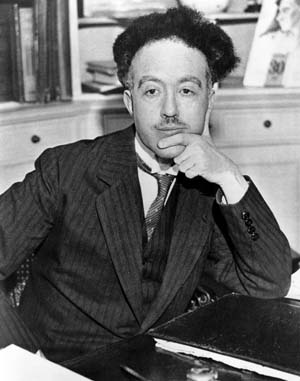
Louis de Broglie, a French theoretical physicist and aristocrat, is best known for his groundbreaking contributions to quantum theory and the concept of wave mechanics. Born into a noble family, de Broglie's early life was marked by a passion for mathematics and physics. He went on to study at the Sorbonne, where he developed a deep understanding of classical mechanics and electromagnetism. De Broglie's work was heavily influenced by the likes of Max Planck and Albert Einstein, who paved the way for his own research in quantum mechanics.
📚 Early Life and Education
De Broglie's early life and education played a significant role in shaping his future as a physicist. He was born on August 15, 1892, in Dieppe, France, and was the youngest of five children. De Broglie's family was part of the French nobility, and his father was a diplomat. This exposure to different cultures and ways of thinking likely influenced de Broglie's approach to physics and his ability to think outside the box. He was especially drawn to the works of Henri Poincaré and Marie Curie, who were both prominent figures in the scientific community at the time.
🔍 The De Broglie Hypothesis
The de Broglie hypothesis, which suggests that all matter has wave properties, was a revolutionary concept that challenged the traditional understanding of particle physics. This idea was first introduced in de Broglie's 1924 Ph.D. thesis, where he proposed that electrons, which were previously thought to be particles, could also exhibit wave-like behavior. This concept is a fundamental aspect of wave-particle duality, which is a central principle of quantum mechanics. De Broglie's work was influenced by the research of Niels Bohr and Ernest Rutherford, who made significant contributions to our understanding of the atomic structure.
🎯 Wave-Particle Duality
Wave-particle duality is a fundamental concept in quantum mechanics that suggests that particles, such as electrons, can exhibit both wave-like and particle-like behavior. This idea was first proposed by de Broglie and later confirmed through experiments by George Paget Thomson and Clinton Davisson. The wave-like behavior of particles is a result of their wave function, which describes the probability of finding a particle at a given location. De Broglie's work on wave-particle duality was influenced by the research of Louis Victor Pierre Raymond and Max Born, who made significant contributions to the development of quantum field theory.
📝 The 1924 Ph.D. Thesis
De Broglie's 1924 Ph.D. thesis, which introduced the concept of wave mechanics, was a groundbreaking work that challenged the traditional understanding of classical mechanics. In this thesis, de Broglie proposed that electrons, which were previously thought to be particles, could also exhibit wave-like behavior. This idea was met with skepticism at first, but was later confirmed through experiments by George Paget Thomson and Clinton Davisson. De Broglie's work was influenced by the research of Arnold Sommerfeld and Werner Heisenberg, who made significant contributions to the development of quantum mechanics.
🏆 Nobel Prize in Physics
In 1929, de Broglie was awarded the Nobel Prize in Physics for his work on the wave nature of electrons. This recognition was a testament to the significance of his contributions to quantum mechanics and the impact of his research on our understanding of the atomic structure. De Broglie's work was influenced by the research of Marie Curie and Pierre Curie, who were both prominent figures in the scientific community at the time. The Nobel Prize in Physics is one of the most prestigious awards in the scientific community, and de Broglie's receipt of this award was a significant milestone in his career.
🔬 Experimental Confirmation
The experimental confirmation of the wave-like behavior of matter was a significant milestone in the development of quantum mechanics. In 1927, George Paget Thomson and Clinton Davisson conducted experiments that demonstrated the wave-like behavior of electrons, which provided strong evidence for de Broglie's hypothesis. This confirmation was a major breakthrough in the field of physics and paved the way for further research into the nature of matter and energy. De Broglie's work was influenced by the research of Louis Victor Pierre Raymond and Max Born, who made significant contributions to the development of quantum field theory.
🌐 Impact on Quantum Mechanics
The impact of de Broglie's work on quantum mechanics cannot be overstated. His concept of wave mechanics, which suggests that all matter has wave properties, is a fundamental aspect of quantum theory. De Broglie's work has influenced a wide range of fields, from particle physics to condensed matter physics. His research has also had a significant impact on our understanding of the atomic structure and the behavior of matter at the atomic and subatomic level. De Broglie's work was influenced by the research of Arnold Sommerfeld and Werner Heisenberg, who made significant contributions to the development of quantum mechanics.
📊 Applications of Wave Mechanics
The applications of wave mechanics are numerous and varied. From transistors to lasers, many modern technologies rely on the principles of wave mechanics. De Broglie's work has also had a significant impact on our understanding of superconductivity and superfluidity. His research has also influenced the development of quantum computing, which has the potential to revolutionize the way we process information. De Broglie's work was influenced by the research of Richard Feynman and Stephen Hawking, who made significant contributions to the development of theoretical physics.
👥 Legacy and Influence
De Broglie's legacy is a testament to the power of human ingenuity and the importance of basic research. His work on wave mechanics has had a profound impact on our understanding of the atomic structure and the behavior of matter at the atomic and subatomic level. De Broglie's research has also influenced a wide range of fields, from particle physics to condensed matter physics. His work continues to inspire new generations of physicists and engineers, who are working to develop new technologies and push the boundaries of human knowledge. De Broglie's work was influenced by the research of Louis Victor Pierre Raymond and Max Born, who made significant contributions to the development of quantum field theory.
🤔 Controversies and Debates
Despite the significance of de Broglie's contributions to quantum mechanics, his work was not without controversy. Some physicists, such as Albert Einstein, were skeptical of de Broglie's ideas and argued that they were not supported by experimental evidence. However, de Broglie's work was eventually confirmed through experiments by George Paget Thomson and Clinton Davisson, which provided strong evidence for the wave-like behavior of electrons. De Broglie's work was influenced by the research of Arnold Sommerfeld and Werner Heisenberg, who made significant contributions to the development of quantum mechanics.
🚀 Future Directions
As we look to the future, it is clear that de Broglie's work on wave mechanics will continue to play a significant role in shaping our understanding of the atomic structure and the behavior of matter at the atomic and subatomic level. From quantum computing to materials science, de Broglie's research has the potential to inspire new breakthroughs and innovations. As we continue to push the boundaries of human knowledge, it is likely that de Broglie's work will remain a fundamental aspect of quantum theory and a testament to the power of human ingenuity. De Broglie's work was influenced by the research of Richard Feynman and Stephen Hawking, who made significant contributions to the development of theoretical physics.
Key Facts
- Year
- 1892
- Origin
- Dieppe, France
- Category
- Physics
- Type
- Person
Frequently Asked Questions
What is the de Broglie hypothesis?
The de Broglie hypothesis is a concept in quantum mechanics that suggests that all matter has wave properties. This idea was first proposed by Louis de Broglie in his 1924 Ph.D. thesis and is a fundamental aspect of wave-particle duality. The de Broglie hypothesis has been confirmed through experiments by George Paget Thomson and Clinton Davisson, which demonstrated the wave-like behavior of electrons.
What is wave-particle duality?
Wave-particle duality is a fundamental concept in quantum mechanics that suggests that particles, such as electrons, can exhibit both wave-like and particle-like behavior. This idea is a result of the wave function, which describes the probability of finding a particle at a given location. Wave-particle duality is a key aspect of quantum theory and has been confirmed through experiments by George Paget Thomson and Clinton Davisson.
What is the significance of de Broglie's work?
De Broglie's work on wave mechanics has had a profound impact on our understanding of the atomic structure and the behavior of matter at the atomic and subatomic level. His research has influenced a wide range of fields, from particle physics to condensed matter physics. De Broglie's work has also had a significant impact on the development of quantum computing and has the potential to inspire new breakthroughs and innovations.
Who influenced de Broglie's work?
De Broglie's work was influenced by a wide range of physicists, including Max Planck, Albert Einstein, and Niels Bohr. He was also influenced by the research of Louis Victor Pierre Raymond and Max Born, who made significant contributions to the development of quantum field theory.
What is the future of de Broglie's work?
As we look to the future, it is clear that de Broglie's work on wave mechanics will continue to play a significant role in shaping our understanding of the atomic structure and the behavior of matter at the atomic and subatomic level. From quantum computing to materials science, de Broglie's research has the potential to inspire new breakthroughs and innovations. As we continue to push the boundaries of human knowledge, it is likely that de Broglie's work will remain a fundamental aspect of quantum theory.
What are the applications of wave mechanics?
The applications of wave mechanics are numerous and varied. From transistors to lasers, many modern technologies rely on the principles of wave mechanics. De Broglie's work has also had a significant impact on our understanding of superconductivity and superfluidity. His research has also influenced the development of quantum computing, which has the potential to revolutionize the way we process information.
What is the controversy surrounding de Broglie's work?
Despite the significance of de Broglie's contributions to quantum mechanics, his work was not without controversy. Some physicists, such as Albert Einstein, were skeptical of de Broglie's ideas and argued that they were not supported by experimental evidence. However, de Broglie's work was eventually confirmed through experiments by George Paget Thomson and Clinton Davisson, which provided strong evidence for the wave-like behavior of electrons.