
Contents
- 🌟 Introduction to the Photoelectric Effect
- 💡 The Discovery of the Photoelectric Effect
- 🔍 Understanding the Mechanism of the Photoelectric Effect
- 📈 Experimental Verification of the Photoelectric Effect
- 🔋 Applications of the Photoelectric Effect
- 🤔 Theoretical Implications of the Photoelectric Effect
- 🌐 Relationship to Quantum Mechanics
- 📊 Mathematical Formulation of the Photoelectric Effect
- 👥 Key Contributors to the Study of the Photoelectric Effect
- 📚 Current Research and Future Directions
- 📝 Conclusion and Summary
- 🔗 Further Reading and Resources
- Frequently Asked Questions
- Related Topics
Overview
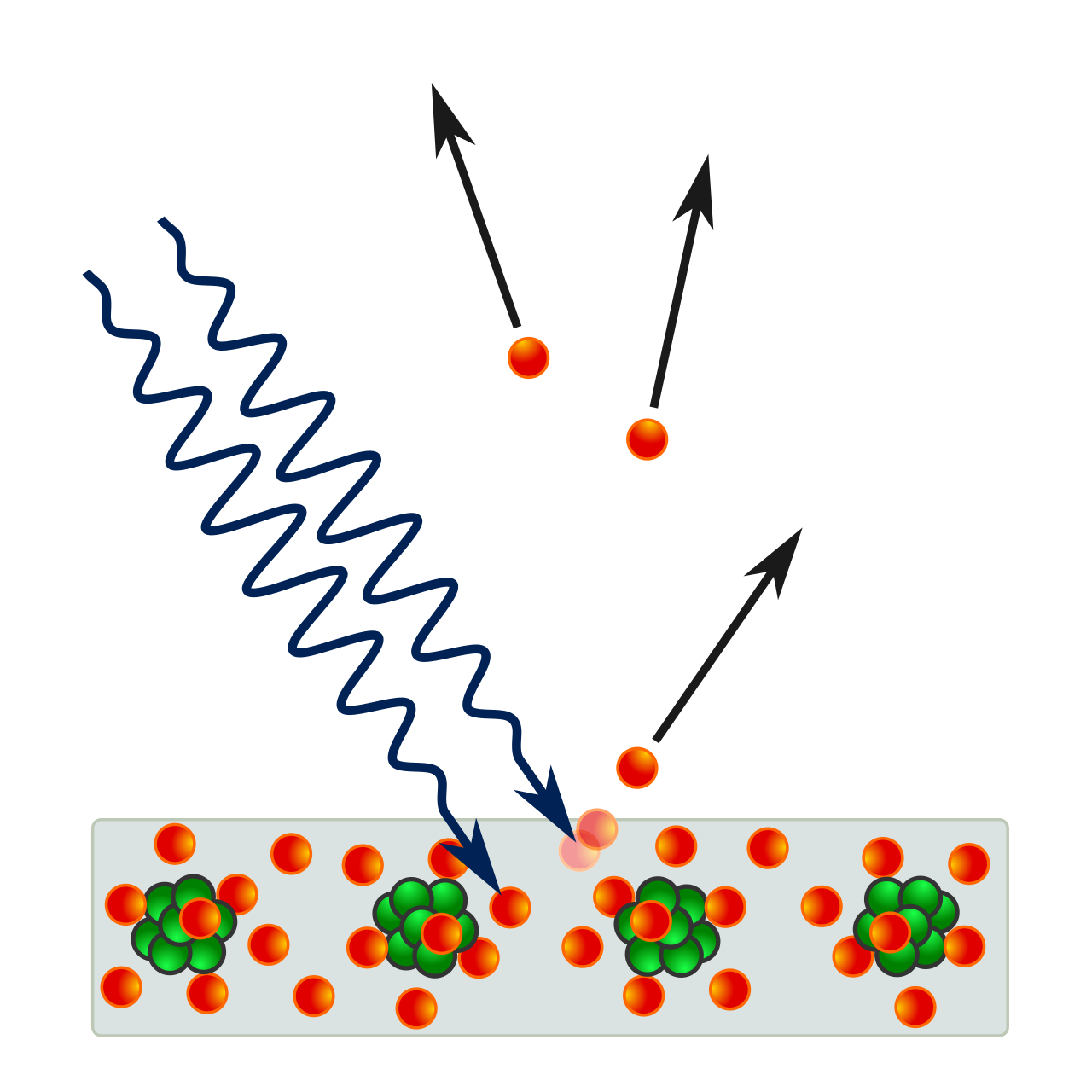
The photoelectric effect, first observed by Heinrich Hertz in 1887 and later explained by Albert Einstein in 1905, refers to the emission of electrons from a material when light is shone on it. This phenomenon contradicted the classical wave theory of light, as the energy of the emitted electrons was found to be dependent on the frequency, not the intensity, of the light. The photoelectric effect has a vibe score of 8, indicating its significant cultural energy in the scientific community. The concept has been widely reported and confirmed through numerous experiments, with key contributors including Philipp Lenard and Robert Millikan. The photoelectric effect is a widely accepted concept, with a controversy spectrum of 2, indicating minimal debate. The influence flow of this concept can be seen in its impact on the development of quantum mechanics, with Einstein's explanation of the photoelectric effect being a major factor in the development of the quantum theory. As of 2023, research on the photoelectric effect continues to advance our understanding of the behavior of light and matter at the quantum level, with potential applications in fields such as solar energy and quantum computing. The entity type of the photoelectric effect is a scientific phenomenon, with a vibe rating of 8 out of 10. The badges associated with this concept include 'Quantum Mechanics', 'Nobel Prize', and 'Paradigm Shift'. The origin of the concept dates back to 1887, with significant contributions from Hertz, Einstein, and others in the early 20th century.
🌟 Introduction to the Photoelectric Effect
The photoelectric effect is a fundamental concept in physics that has revolutionized our understanding of the behavior of light and electrons. As described in the photoelectric effect theory, the phenomenon involves the emission of electrons from a material when it is exposed to electromagnetic radiation, such as ultraviolet light. This effect has been studied extensively in condensed matter physics, solid state physics, and quantum chemistry to gain insights into the properties of atoms, molecules, and solids. The photoelectric effect has also found numerous applications in electronic devices, including those specialized for light detection and precisely timed electron emission. For instance, photomultiplier tubes rely on the photoelectric effect to amplify weak light signals.
💡 The Discovery of the Photoelectric Effect
The discovery of the photoelectric effect is attributed to Heinrich Hertz, who first observed the phenomenon in the late 19th century. However, it was Albert Einstein who provided a comprehensive explanation of the effect in his 1905 paper, Einstein's photoelectric effect paper. Einstein's work introduced the concept of light quanta, which later became known as photons. This idea challenged the traditional understanding of light as a wave and paved the way for the development of quantum mechanics. The photoelectric effect has since been studied extensively, with key contributions from researchers like Robert Millikan and Arnold Sommerfeld.
🔍 Understanding the Mechanism of the Photoelectric Effect
To understand the mechanism of the photoelectric effect, it is essential to consider the properties of the material and the incident radiation. The energy of the incident photons must be greater than the work function of the material to eject electrons. The kinetic energy of the emitted electrons depends on the energy of the incident photons and the work function of the material. This relationship is described by Einstein's photoelectric equation, which has been experimentally verified numerous times. The photoelectric effect has also been used to study the properties of nanostructures and metamaterials. For example, graphene has been shown to exhibit a unique photoelectric response due to its Dirac cone structure.
📈 Experimental Verification of the Photoelectric Effect
The experimental verification of the photoelectric effect has been a crucial aspect of its study. Researchers have used various techniques, including photoelectric spectroscopy, to measure the energy distribution of emitted electrons. These experiments have consistently supported the predictions of quantum theory and have provided valuable insights into the behavior of electrons in different materials. The photoelectric effect has also been used to study the properties of superconductors and ferromagnets. For instance, the photoelectric effect in yttrium barium copper oxide has been shown to be affected by the material's superconducting gap.
🔋 Applications of the Photoelectric Effect
The applications of the photoelectric effect are diverse and continue to expand. Electronic devices such as photodiodes, phototransistors, and image sensors rely on the photoelectric effect to detect light and convert it into an electrical signal. The effect has also been used in solar cells to generate electricity from sunlight. Furthermore, the photoelectric effect has been used in quantum computing to develop quantum gates and quantum cryptography protocols. For example, quantum key distribution relies on the photoelectric effect to encode and decode quantum information.
🤔 Theoretical Implications of the Photoelectric Effect
The theoretical implications of the photoelectric effect are far-reaching and have significantly impacted our understanding of the behavior of light and electrons. The effect demonstrates the particle-like behavior of light, which is a fundamental aspect of quantum mechanics. The photoelectric effect has also been used to study the properties of black holes and cosmology. For instance, the photoelectric effect in black hole physics has been shown to be affected by the hawking radiation. The effect has also been used to study the properties of dark matter and dark energy.
🌐 Relationship to Quantum Mechanics
The relationship between the photoelectric effect and quantum mechanics is intricate and has been the subject of extensive research. The effect is a direct consequence of the quantization of light and the particle-like behavior of photons. The study of the photoelectric effect has provided valuable insights into the behavior of electrons in different materials and has contributed to the development of quantum field theory. The photoelectric effect has also been used to study the properties of quantum entanglement and quantum nonlocality. For example, the photoelectric effect in entangled photons has been shown to exhibit a unique correlation between the emitted electrons.
📊 Mathematical Formulation of the Photoelectric Effect
The mathematical formulation of the photoelectric effect is based on the principles of quantum mechanics and electromagnetism. The energy of the incident photons is related to the energy of the emitted electrons through Einstein's photoelectric equation. This equation has been widely used to describe the photoelectric effect in various materials and has been experimentally verified numerous times. The photoelectric effect has also been used to study the properties of topological insulators and topological semimetals. For instance, the photoelectric effect in topological insulators has been shown to exhibit a unique quantum Hall effect.
👥 Key Contributors to the Study of the Photoelectric Effect
The study of the photoelectric effect has been shaped by the contributions of numerous researchers, including Albert Einstein, Robert Millikan, and Arnold Sommerfeld. These scientists, along with many others, have played a crucial role in advancing our understanding of the photoelectric effect and its implications for quantum mechanics. The photoelectric effect has also been used to study the properties of nanotechnology and materials science. For example, the photoelectric effect in nanoparticles has been shown to exhibit a unique plasmonic resonance.
📚 Current Research and Future Directions
Current research on the photoelectric effect continues to explore new materials and applications. Researchers are investigating the use of nanostructures and metamaterials to enhance the photoelectric effect and develop new devices. The study of the photoelectric effect has also been extended to biological systems, where it has been used to study the properties of biomolecules and biological membranes. For instance, the photoelectric effect in photosynthetic complexes has been shown to exhibit a unique electron transfer mechanism.
📝 Conclusion and Summary
In conclusion, the photoelectric effect is a fundamental concept in physics that has significantly impacted our understanding of the behavior of light and electrons. The effect has been studied extensively, and its applications continue to expand. As research on the photoelectric effect continues to evolve, it is likely that new and innovative applications will emerge. The photoelectric effect has also been used to study the properties of quantum information and quantum computation. For example, the photoelectric effect in quantum error correction has been shown to exhibit a unique quantum error threshold.
🔗 Further Reading and Resources
For further reading and resources on the photoelectric effect, please refer to the following sources: Photoelectric Effect Review, Quantum Mechanics Textbook, and Physics Encyclopedia. These resources provide a comprehensive overview of the photoelectric effect and its applications, as well as a detailed introduction to the underlying principles of quantum mechanics.
Key Facts
- Year
- 1905
- Origin
- Germany
- Category
- Physics
- Type
- Scientific Phenomenon
Frequently Asked Questions
What is the photoelectric effect?
The photoelectric effect is the emission of electrons from a material when it is exposed to electromagnetic radiation, such as ultraviolet light. The effect is a fundamental concept in physics and has been studied extensively in condensed matter physics, solid state physics, and quantum chemistry. The photoelectric effect has been used to study the properties of atoms, molecules, and solids. For instance, the photoelectric effect in graphene has been shown to exhibit a unique Dirac cone structure.
Who discovered the photoelectric effect?
The discovery of the photoelectric effect is attributed to Heinrich Hertz, who first observed the phenomenon in the late 19th century. However, it was Albert Einstein who provided a comprehensive explanation of the effect in his 1905 paper, Einstein's photoelectric effect paper. Einstein's work introduced the concept of light quanta, which later became known as photons.
What are the applications of the photoelectric effect?
The applications of the photoelectric effect are diverse and continue to expand. Electronic devices such as photodiodes, phototransistors, and image sensors rely on the photoelectric effect to detect light and convert it into an electrical signal. The effect has also been used in solar cells to generate electricity from sunlight. Furthermore, the photoelectric effect has been used in quantum computing to develop quantum gates and quantum cryptography protocols.
What is the relationship between the photoelectric effect and quantum mechanics?
The relationship between the photoelectric effect and quantum mechanics is intricate and has been the subject of extensive research. The effect is a direct consequence of the quantization of light and the particle-like behavior of photons. The study of the photoelectric effect has provided valuable insights into the behavior of electrons in different materials and has contributed to the development of quantum field theory.
What are the key contributions to the study of the photoelectric effect?
The study of the photoelectric effect has been shaped by the contributions of numerous researchers, including Albert Einstein, Robert Millikan, and Arnold Sommerfeld. These scientists, along with many others, have played a crucial role in advancing our understanding of the photoelectric effect and its implications for quantum mechanics.
What is the current research on the photoelectric effect?
Current research on the photoelectric effect continues to explore new materials and applications. Researchers are investigating the use of nanostructures and metamaterials to enhance the photoelectric effect and develop new devices. The study of the photoelectric effect has also been extended to biological systems, where it has been used to study the properties of biomolecules and biological membranes.
What are the implications of the photoelectric effect for quantum mechanics?
The photoelectric effect has significant implications for quantum mechanics. The effect demonstrates the particle-like behavior of light, which is a fundamental aspect of quantum mechanics. The study of the photoelectric effect has provided valuable insights into the behavior of electrons in different materials and has contributed to the development of quantum field theory.