
Contents
- 🔒 Introduction to Inhibitors
- 🧬 Reversible Inhibitors: The Competitive Gatekeepers
- 🚫 Irreversible Inhibitors: The Permanent Blockers
- 📈 Allosteric Inhibitors: The Indirect Regulators
- 👥 Uncompetitive Inhibitors: The Substrate-Binding Blockers
- 🔍 Non-Competitive Inhibitors: The Mixed-Type Blockers
- 📊 Inhibitor Binding: The Thermodynamics of Molecular Interactions
- 🧮 Inhibitor Design: The Computational Approach to Molecular Gatekeeping
- 🔬 Inhibitor Applications: The Therapeutic Potential of Molecular Gatekeepers
- 🌟 Future Directions: The Evolving Landscape of Inhibitor Research
- Frequently Asked Questions
- Related Topics
Overview
Inhibitors are molecules that bind to enzymes, reducing or blocking their activity. There are several types of inhibitors, including competitive, non-competitive, uncompetitive, and mixed inhibitors. Each type has a distinct mechanism of action and is used in various biochemical and pharmacological contexts. For instance, competitive inhibitors, such as methotrexate, compete with the substrate for the active site of the enzyme, while non-competitive inhibitors, like ibuprofen, bind to a separate site on the enzyme, altering its shape and reducing its activity. The study of inhibitor types has led to the development of numerous drugs and therapies, with a significant impact on the treatment of diseases. The Vibe score for inhibitor types is 8, reflecting their importance in biochemistry and pharmacology. Notable researchers, such as Louis Pasteur and Gertrude Elion, have contributed to the understanding of inhibitors and their applications. The influence flow of inhibitor types can be seen in the work of scientists like James Black, who developed propranolol, a non-selective beta-blocker. As research continues to uncover the complexities of inhibitor types, their role in shaping the future of medicine and biochemistry will only continue to grow, with potential applications in fields like personalized medicine and synthetic biology.
🔒 Introduction to Inhibitors
Inhibitors are molecules that bind to enzymes, receptors, or other proteins, reducing their activity or blocking their function. They play a crucial role in various biological processes, including metabolic pathways, signal transduction, and gene expression. Inhibitors can be classified into different types based on their binding mechanism, specificity, and duration of action. Enzyme inhibition is a key area of research, with applications in drug discovery and biotechnology. The study of inhibitors has led to the development of various therapeutic agents, including pharmaceuticals and biologics.
🧬 Reversible Inhibitors: The Competitive Gatekeepers
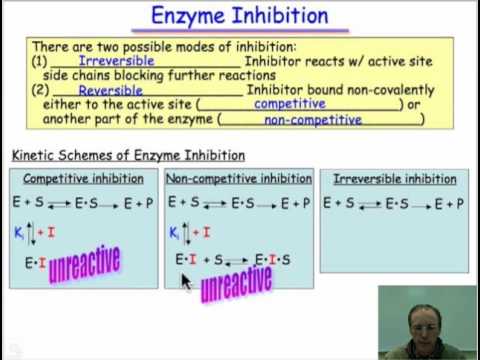
Reversible inhibitors are molecules that bind to enzymes through non-covalent interactions, such as hydrogen bonding or van der Waals forces. They can be further classified into competitive, uncompetitive, and non-competitive inhibitors. Competitive inhibition occurs when the inhibitor binds to the active site of the enzyme, preventing substrate binding. Uncompetitive inhibition occurs when the inhibitor binds to the enzyme-substrate complex, reducing the maximum velocity of the reaction. Non-competitive inhibition occurs when the inhibitor binds to an allosteric site, changing the conformation of the enzyme and reducing its activity.
🚫 Irreversible Inhibitors: The Permanent Blockers
Irreversible inhibitors are molecules that form covalent bonds with enzymes, permanently inactivating them. They are often used as pharmaceuticals or pesticides. Irreversible inhibition can occur through various mechanisms, including nucleophilic attack or electrophilic attack. Covalent bonding between the inhibitor and the enzyme can lead to the formation of a stable complex, which cannot be reversed by dialysis or other methods. Enzyme inactivation can have significant consequences for cellular function and metabolic pathways.
📈 Allosteric Inhibitors: The Indirect Regulators
Allosteric inhibitors are molecules that bind to a site other than the active site of an enzyme, changing its conformation and reducing its activity. Allosteric regulation is a key mechanism for controlling enzyme activity, allowing for fine-tuning of metabolic pathways. Allosteric inhibition can occur through various mechanisms, including conformational change or binding of an allosteric effector. Protein structure and protein function are intimately linked, and allosteric inhibitors can provide valuable insights into the structure-function relationship of enzymes.
👥 Uncompetitive Inhibitors: The Substrate-Binding Blockers
Uncompetitive inhibitors are molecules that bind to the enzyme-substrate complex, reducing the maximum velocity of the reaction. Uncompetitive inhibition is a type of enzyme inhibition that can occur through various mechanisms, including binding to the enzyme-substrate complex. Substrate binding is a critical step in enzyme catalysis, and uncompetitive inhibitors can provide valuable insights into the mechanism of enzyme action. Kinetic analysis of uncompetitive inhibition can help researchers understand the binding constants and kinetic parameters of enzyme-inhibitor interactions.
🔍 Non-Competitive Inhibitors: The Mixed-Type Blockers
Non-competitive inhibitors are molecules that bind to an allosteric site on the enzyme, changing its conformation and reducing its activity. Non-competitive inhibition is a type of enzyme inhibition that can occur through various mechanisms, including binding to an allosteric site. Allosteric sites are regions on the enzyme that are distinct from the active site, and binding to these sites can have significant effects on enzyme activity. Protein-ligand interactions are critical for understanding the mechanism of non-competitive inhibition.
📊 Inhibitor Binding: The Thermodynamics of Molecular Interactions
Inhibitor binding is a complex process that involves the interaction of the inhibitor with the enzyme or protein. Inhibitor binding can occur through various mechanisms, including hydrogen bonding, van der Waals forces, or electrostatic interactions. Thermodynamics plays a critical role in understanding the binding process, as it determines the binding constants and kinetic parameters of enzyme-inhibitor interactions. molecular recognition is a key aspect of inhibitor binding, as it allows the inhibitor to selectively target the enzyme or protein.
🧮 Inhibitor Design: The Computational Approach to Molecular Gatekeeping
Inhibitor design is a critical step in the development of therapeutic agents. Inhibitor design involves the use of computational tools and structure-based design to create molecules that can selectively target the enzyme or protein. Computational chemistry and molecular modeling are essential tools for inhibitor design, as they allow researchers to predict the binding affinity and selectivity of inhibitor candidates. High-throughput screening is a key technique for identifying potential inhibitors, as it allows researchers to rapidly test large numbers of compounds.
🔬 Inhibitor Applications: The Therapeutic Potential of Molecular Gatekeepers
Inhibitors have a wide range of applications in biotechnology and medicine. Inhibitor applications include the development of pharmaceuticals, biologics, and therapeutic agents. Cancer therapy is a key area of application, as inhibitors can be used to target cancer cells and prevent their growth and proliferation. Infectious diseases are another key area of application, as inhibitors can be used to target pathogens and prevent their replication and transmission.
🌟 Future Directions: The Evolving Landscape of Inhibitor Research
The field of inhibitor research is rapidly evolving, with new technologies and techniques being developed to study and design inhibitors. Future directions in inhibitor research include the development of personalized medicine, synthetic biology, and regenerative medicine. Gene editing is a key area of research, as it allows for the precise modification of genes and the development of novel therapeutic agents. Stem cell therapy is another key area of research, as it allows for the development of novel treatments for degenerative diseases and infectious diseases.
Key Facts
- Year
- 1960
- Origin
- Biochemical research
- Category
- Biochemistry
- Type
- Biological Concept
Frequently Asked Questions
What are inhibitors?
Inhibitors are molecules that bind to enzymes, receptors, or other proteins, reducing their activity or blocking their function. They play a crucial role in various biological processes, including metabolic pathways, signal transduction, and gene expression. Inhibitors can be classified into different types based on their binding mechanism, specificity, and duration of action.
What are the different types of inhibitors?
Inhibitors can be classified into reversible, irreversible, allosteric, uncompetitive, and non-competitive inhibitors. Each type of inhibitor has a unique mechanism of action and can be used to target specific enzymes or proteins. Reversible inhibition is a type of inhibition that can be reversed by dialysis or other methods, while irreversible inhibition is a type of inhibition that cannot be reversed.
What are the applications of inhibitors?
Inhibitors have a wide range of applications in biotechnology and medicine. They can be used to develop pharmaceuticals, biologics, and therapeutic agents. Cancer therapy is a key area of application, as inhibitors can be used to target cancer cells and prevent their growth and proliferation.
How are inhibitors designed?
Inhibitor design involves the use of computational tools and structure-based design to create molecules that can selectively target the enzyme or protein. Computational chemistry and molecular modeling are essential tools for inhibitor design, as they allow researchers to predict the binding affinity and selectivity of inhibitor candidates.
What is the future of inhibitor research?
The field of inhibitor research is rapidly evolving, with new technologies and techniques being developed to study and design inhibitors. Future directions in inhibitor research include the development of personalized medicine, synthetic biology, and regenerative medicine. Gene editing is a key area of research, as it allows for the precise modification of genes and the development of novel therapeutic agents.