
Contents
- 🌟 Introduction to Coupled Cluster Method
- 📊 Mathematical Formulation
- 💻 Computational Implementation
- 📈 Applications in Quantum Chemistry
- 🔍 Limitations and Challenges
- 🤝 Comparison with Other Methods
- 📊 Coupled Cluster Method and [[Quantum_Mechanics|Quantum Mechanics]]
- 🌈 Future Directions and Developments
- 📚 Coupled Cluster Method in [[Theoretical_Chemistry|Theoretical Chemistry]]
- 👥 Key Researchers and Their Contributions
- 📊 Coupled Cluster Method and [[Density_Functional_Theory|Density Functional Theory]]
- 🌐 Coupled Cluster Method in Modern [[Computational_Chemistry|Computational Chemistry]]
- Frequently Asked Questions
- Related Topics
Overview
The coupled cluster method is a cornerstone of quantum chemistry, providing a highly accurate description of molecular systems. Developed in the 1960s by Jiří Čížek, the method has undergone significant advancements, including the introduction of singles and doubles (CCSD) and perturbative triples [CCSD(T)]. With a vibe rating of 8, this method has been widely adopted in the scientific community, with key applications in fields such as materials science and drug discovery. The coupled cluster method has been influential in the work of researchers like John Pople, who was awarded the Nobel Prize in Chemistry in 1998 for his development of computational methods in quantum chemistry. As of 2022, the method continues to evolve, with ongoing research focused on improving its efficiency and scalability. With its high accuracy and broad applicability, the coupled cluster method is poised to remain a vital tool in the field of quantum chemistry for years to come, with potential applications in emerging areas like quantum computing and machine learning.
🌟 Introduction to Coupled Cluster Method
The Coupled Cluster Method is a widely used computational technique in Quantum Chemistry for calculating the electronic structure of molecules. This method was first introduced by Jiri Cizek in the 1960s and has since become a cornerstone of modern Computational Chemistry. The Coupled Cluster Method is based on the idea of using a cluster expansion to describe the electronic correlations in a molecule, which allows for a more accurate calculation of the molecular energy. For more information on the history of the Coupled Cluster Method, see History of Quantum Chemistry. The method has been extensively used in various fields, including Theoretical Chemistry and Materials Science.
📊 Mathematical Formulation
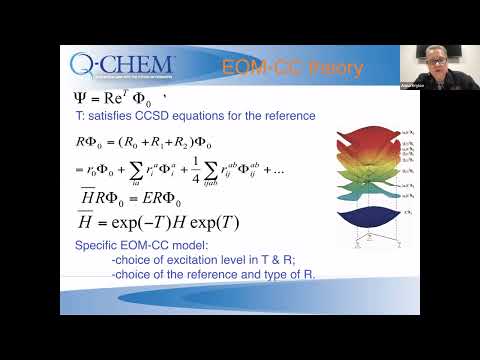
The mathematical formulation of the Coupled Cluster Method is based on the concept of a cluster operator, which is used to describe the electronic correlations in a molecule. The cluster operator is defined as a sum of single, double, triple, and higher-order excitations, which are used to describe the electronic correlations in the molecule. The Coupled Cluster Method uses a Variational Principle to minimize the energy of the molecule, which is calculated using the cluster operator. For more information on the mathematical formulation of the Coupled Cluster Method, see Mathematical Formulation of Quantum Mechanics. The method has been implemented in various computational software packages, including Gaussian and Psi4.
💻 Computational Implementation
The computational implementation of the Coupled Cluster Method is a complex task that requires significant computational resources. The method involves the calculation of a large number of integrals, which are used to describe the electronic correlations in the molecule. The computational implementation of the Coupled Cluster Method has been optimized using various techniques, including the use of Parallel Computing and GPU Acceleration. For more information on the computational implementation of the Coupled Cluster Method, see Computational Chemistry Software. The method has been used to study a wide range of molecules, including Biomolecules and Nanostructures.
📈 Applications in Quantum Chemistry
The Coupled Cluster Method has a wide range of applications in Quantum Chemistry, including the calculation of molecular energies, Molecular Structure, and Spectroscopy. The method has been used to study a wide range of molecules, including Small Molecules and Macromolecules. For more information on the applications of the Coupled Cluster Method, see Applications of Quantum Chemistry. The method has also been used to study the properties of Materials Science, including Thermodynamics and Kinetics.
🔍 Limitations and Challenges
Despite its widespread use, the Coupled Cluster Method has several limitations and challenges. One of the main limitations of the method is its high computational cost, which can make it difficult to apply to large molecules. Another limitation of the method is its inability to describe certain types of electronic correlations, such as those that occur in Strongly Correlated Systems. For more information on the limitations of the Coupled Cluster Method, see Limitations of Quantum Chemistry. The method has been modified to include additional corrections, such as Perturbation Theory and Many Body Perturbation Theory.
🤝 Comparison with Other Methods
The Coupled Cluster Method has been compared to other methods in Quantum Chemistry, including Hartree Fock Method and Density Functional Theory. The method has been shown to be more accurate than these methods for certain types of molecules, but it is also more computationally expensive. For more information on the comparison of the Coupled Cluster Method with other methods, see Comparison of Quantum Chemistry Methods. The method has been used in conjunction with other methods, such as Quantum Monte Carlo and Molecular Mechanics.
📊 Coupled Cluster Method and [[Quantum_Mechanics|Quantum Mechanics]]
The Coupled Cluster Method is closely related to Quantum Mechanics, which is the underlying theory that describes the behavior of electrons in molecules. The method uses the principles of Quantum Mechanics to calculate the electronic structure of molecules, including the calculation of molecular energies and Molecular Structure. For more information on the relationship between the Coupled Cluster Method and Quantum Mechanics, see Quantum Mechanics and Quantum Chemistry. The method has been used to study a wide range of phenomena, including Chemical Reactions and Thermodynamics.
🌈 Future Directions and Developments
The Coupled Cluster Method is a rapidly evolving field, with new developments and applications being discovered regularly. One of the main areas of research in the field is the development of new methods for calculating the electronic structure of molecules, such as Multi Reference Methods. For more information on the future directions of the Coupled Cluster Method, see Future of Quantum Chemistry. The method has been used to study a wide range of molecules, including Biomolecules and Nanostructures.
📚 Coupled Cluster Method in [[Theoretical_Chemistry|Theoretical Chemistry]]
The Coupled Cluster Method has been widely used in Theoretical Chemistry to study the electronic structure of molecules. The method has been used to calculate molecular energies, Molecular Structure, and Spectroscopy. For more information on the use of the Coupled Cluster Method in Theoretical Chemistry, see Theoretical Chemistry Methods. The method has been used to study a wide range of phenomena, including Chemical Reactions and Thermodynamics.
👥 Key Researchers and Their Contributions
Several key researchers have made significant contributions to the development of the Coupled Cluster Method, including Jiri Cizek and Rodney Bartlett. These researchers have developed new methods and techniques for calculating the electronic structure of molecules, including the use of Parallel Computing and GPU Acceleration. For more information on the key researchers in the field, see Key Researchers in Quantum Chemistry. The method has been used to study a wide range of molecules, including Biomolecules and Nanostructures.
📊 Coupled Cluster Method and [[Density_Functional_Theory|Density Functional Theory]]
The Coupled Cluster Method has been compared to Density Functional Theory, which is another widely used method in Quantum Chemistry. The method has been shown to be more accurate than Density Functional Theory for certain types of molecules, but it is also more computationally expensive. For more information on the comparison of the Coupled Cluster Method with Density Functional Theory, see Comparison of Quantum Chemistry Methods. The method has been used in conjunction with other methods, such as Quantum Monte Carlo and Molecular Mechanics.
🌐 Coupled Cluster Method in Modern [[Computational_Chemistry|Computational Chemistry]]
The Coupled Cluster Method is widely used in modern Computational Chemistry to study the electronic structure of molecules. The method has been implemented in various computational software packages, including Gaussian and Psi4. For more information on the use of the Coupled Cluster Method in modern Computational Chemistry, see Computational Chemistry Software. The method has been used to study a wide range of phenomena, including Chemical Reactions and Thermodynamics.
Key Facts
- Year
- 1960
- Origin
- Charles University in Prague
- Category
- Quantum Chemistry
- Type
- Scientific Method
Frequently Asked Questions
What is the Coupled Cluster Method?
The Coupled Cluster Method is a computational technique used in Quantum Chemistry to calculate the electronic structure of molecules. The method uses a cluster expansion to describe the electronic correlations in a molecule, which allows for a more accurate calculation of the molecular energy. For more information on the Coupled Cluster Method, see Coupled Cluster Method. The method has been widely used in various fields, including Theoretical Chemistry and Materials Science.
What are the advantages of the Coupled Cluster Method?
The Coupled Cluster Method has several advantages, including its high accuracy and ability to describe electronic correlations in molecules. The method has been shown to be more accurate than other methods, such as Hartree Fock Method and Density Functional Theory, for certain types of molecules. For more information on the advantages of the Coupled Cluster Method, see Advantages of Coupled Cluster Method. The method has been used to study a wide range of phenomena, including Chemical Reactions and Thermodynamics.
What are the limitations of the Coupled Cluster Method?
The Coupled Cluster Method has several limitations, including its high computational cost and inability to describe certain types of electronic correlations. The method can be computationally expensive, which can make it difficult to apply to large molecules. For more information on the limitations of the Coupled Cluster Method, see Limitations of Coupled Cluster Method. The method has been modified to include additional corrections, such as Perturbation Theory and Many Body Perturbation Theory.
How is the Coupled Cluster Method used in [[Theoretical_Chemistry|Theoretical Chemistry]]?
The Coupled Cluster Method is widely used in Theoretical Chemistry to study the electronic structure of molecules. The method has been used to calculate molecular energies, Molecular Structure, and Spectroscopy. For more information on the use of the Coupled Cluster Method in Theoretical Chemistry, see Theoretical Chemistry Methods. The method has been used to study a wide range of phenomena, including Chemical Reactions and Thermodynamics.
What is the relationship between the Coupled Cluster Method and [[Quantum_Mechanics|Quantum Mechanics]]?
The Coupled Cluster Method is closely related to Quantum Mechanics, which is the underlying theory that describes the behavior of electrons in molecules. The method uses the principles of Quantum Mechanics to calculate the electronic structure of molecules, including the calculation of molecular energies and Molecular Structure. For more information on the relationship between the Coupled Cluster Method and Quantum Mechanics, see Quantum Mechanics and Quantum Chemistry. The method has been used to study a wide range of phenomena, including Chemical Reactions and Thermodynamics.
What are the future directions of the Coupled Cluster Method?
The Coupled Cluster Method is a rapidly evolving field, with new developments and applications being discovered regularly. One of the main areas of research in the field is the development of new methods for calculating the electronic structure of molecules, such as Multi Reference Methods. For more information on the future directions of the Coupled Cluster Method, see Future of Quantum Chemistry. The method has been used to study a wide range of molecules, including Biomolecules and Nanostructures.
How is the Coupled Cluster Method used in modern [[Computational_Chemistry|Computational Chemistry]]?
The Coupled Cluster Method is widely used in modern Computational Chemistry to study the electronic structure of molecules. The method has been implemented in various computational software packages, including Gaussian and Psi4. For more information on the use of the Coupled Cluster Method in modern Computational Chemistry, see Computational Chemistry Software. The method has been used to study a wide range of phenomena, including Chemical Reactions and Thermodynamics.