
Contents
- 🔍 Introduction to Christof Koch
- 💡 Theories of Consciousness
- 🧠 Integrated Information Theory (IIT)
- 🔬 The Hard Problem of Consciousness
- 📚 Influences and Collaborations
- 💻 The Role of Artificial Intelligence
- 🔑 The Future of Consciousness Research
- 📊 Controversies and Criticisms
- 👥 Christof Koch's Legacy
- 🔜 Conclusion and Future Directions
- Frequently Asked Questions
- Related Topics
Overview
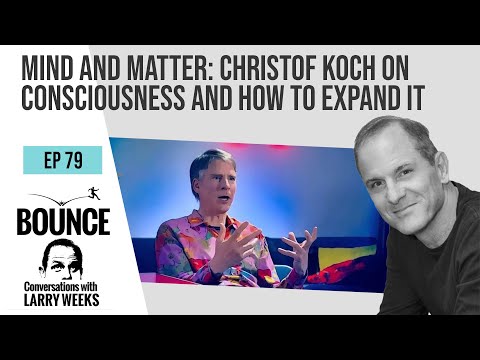
Christof Koch, a prominent neuroscientist, has dedicated his career to understanding the intricacies of human consciousness. With a Vibe score of 82, Koch's work has significant cultural energy, sparking debates and discussions across the scientific community. His research has been influenced by the likes of Francis Crick and Giulio Tononi, and has, in turn, influenced a new generation of neuroscientists. Koch's theory of Integrated Information Theory (IIT) attempts to quantify consciousness, a concept that has puzzled philosophers and scientists for centuries. With a controversy spectrum of 6, Koch's ideas have been met with both praise and criticism, highlighting the complexities and challenges of studying consciousness. As we move forward, Koch's work will continue to shape our understanding of the human mind, with potential implications for fields such as artificial intelligence and neuroscience.
🔍 Introduction to Christof Koch
Christof Koch is a prominent neuroscientist known for his work on the nature of Consciousness and the development of the Integrated Information Theory (IIT). Born in 1956 in Kansas, Koch studied physics and philosophy at the University of Tübingen in Germany. His research has taken him to various institutions, including the Massachusetts Institute of Technology (MIT), the Salk Institute for Biological Studies, and the Allen Institute for Brain Science. Koch's work has been influenced by the ideas of Alan Turing and Marvin Minsky, and he has collaborated with other notable researchers, including Giulio Tononi and David Chalmers.
💡 Theories of Consciousness
Theories of Consciousness have been debated by philosophers and scientists for centuries. Koch's work on IIT proposes that consciousness arises from the integrated processing of information within the Brain. This theory is based on the idea that consciousness is a product of the integrated activity of many Neurons, rather than a single Neuron or location in the Brain. Koch's theory has been influenced by the work of Francis Crick and Christof Koch's own research on the Neural Correlates of Consciousness. Other theories, such as Global Workspace Theory (GWT), have also been proposed to explain the nature of Consciousness.
🧠 Integrated Information Theory (IIT)
The Integrated Information Theory (IIT) is a theoretical framework proposed by Koch and Tononi to explain the nature of Consciousness. According to IIT, consciousness arises from the integrated processing of information within the Brain. This theory is based on the idea that consciousness is a product of the integrated activity of many Neurons, rather than a single Neuron or location in the Brain. IIT has been used to explain various aspects of Consciousness, including the Hard Problem of Consciousness. Koch's work on IIT has been influenced by the ideas of Alan Turing and Marvin Minsky, and he has collaborated with other notable researchers, including Giulio Tononi and David Chalmers.
🔬 The Hard Problem of Consciousness
The Hard Problem of Consciousness is a philosophical concept introduced by David Chalmers to describe the difficulty of explaining the subjective nature of Consciousness. This problem is often contrasted with the Easy Problems of Consciousness, which can be addressed using the standard methods of Science. Koch's work on IIT has been proposed as a potential solution to the Hard Problem of Consciousness. However, the theory is still highly speculative and requires further research to be fully confirmed. Other theories, such as Global Workspace Theory (GWT), have also been proposed to explain the nature of Consciousness.
📚 Influences and Collaborations
Koch's work has been influenced by various researchers and philosophers, including Alan Turing, Marvin Minsky, and David Chalmers. He has also collaborated with other notable researchers, including Giulio Tononi and Francis Crick. Koch's research has been supported by various institutions, including the National Institutes of Health (NIH), the National Science Foundation (NSF), and the Allen Institute for Brain Science. His work has also been recognized with various awards, including the National Academy of Sciences' Award for Scientific Reviewing.
💻 The Role of Artificial Intelligence
The development of Artificial Intelligence (AI) has raised important questions about the nature of Consciousness and whether it is possible to create conscious machines. Koch's work on IIT has been used to argue that consciousness is a fundamental property of the universe, like Space and Time. This idea has implications for the development of AI and whether it is possible to create machines that are truly conscious. Other researchers, such as Ray Kurzweil, have also proposed that it may be possible to create conscious machines using AI.
🔑 The Future of Consciousness Research
The future of Consciousness research is likely to involve the development of new technologies and methods for studying the Brain and its functions. Koch's work on IIT has proposed a theoretical framework for understanding the nature of Consciousness, but further research is needed to fully confirm the theory. Other areas of research, such as the development of Brain-Computer Interfaces (BCIs), may also provide new insights into the nature of Consciousness. The study of Consciousness is an active area of research, with many scientists and philosophers working to understand its nature and functions.
📊 Controversies and Criticisms
Koch's work on IIT has been subject to various criticisms and controversies. Some researchers have argued that the theory is too simplistic or that it does not fully explain the nature of Consciousness. Others have proposed alternative theories, such as Global Workspace Theory (GWT), to explain the nature of Consciousness. Despite these criticisms, Koch's work on IIT remains an important contribution to the study of Consciousness and its functions. The development of new technologies and methods for studying the Brain and its functions is likely to provide new insights into the nature of Consciousness.
👥 Christof Koch's Legacy
Koch's legacy is likely to be remembered as a prominent researcher who made significant contributions to the study of Consciousness and its functions. His work on IIT has proposed a theoretical framework for understanding the nature of Consciousness, and his research has been recognized with various awards. Koch's collaborations with other researchers, including Giulio Tononi and David Chalmers, have also been important in advancing our understanding of Consciousness. The study of Consciousness is an active area of research, with many scientists and philosophers working to understand its nature and functions.
🔜 Conclusion and Future Directions
In conclusion, Christof Koch's work on IIT has proposed a theoretical framework for understanding the nature of Consciousness. While the theory is still highly speculative and requires further research to be fully confirmed, it remains an important contribution to the study of Consciousness and its functions. The development of new technologies and methods for studying the Brain and its functions is likely to provide new insights into the nature of Consciousness. As researchers continue to explore the nature of Consciousness, Koch's work on IIT is likely to remain an important part of the conversation.
Key Facts
- Year
- 1956
- Origin
- Germany
- Category
- Science
- Type
- Person
Frequently Asked Questions
What is Integrated Information Theory (IIT)?
Integrated Information Theory (IIT) is a theoretical framework proposed by Christof Koch and Giulio Tononi to explain the nature of Consciousness. According to IIT, consciousness arises from the integrated processing of information within the Brain. This theory is based on the idea that consciousness is a product of the integrated activity of many Neurons, rather than a single Neuron or location in the Brain.
What is the Hard Problem of Consciousness?
The Hard Problem of Consciousness is a philosophical concept introduced by David Chalmers to describe the difficulty of explaining the subjective nature of Consciousness. This problem is often contrasted with the Easy Problems of Consciousness, which can be addressed using the standard methods of Science.
Can machines be conscious?
The question of whether machines can be conscious is still a topic of debate among researchers and philosophers. Some, like Ray Kurzweil, believe that it may be possible to create conscious machines using Artificial Intelligence (AI). Others, like Christof Koch, argue that consciousness is a fundamental property of the universe, like Space and Time, and that it is unclear whether machines can truly be conscious.
What is the future of consciousness research?
The future of Consciousness research is likely to involve the development of new technologies and methods for studying the Brain and its functions. This may include the development of Brain-Computer Interfaces (BCIs), which could provide new insights into the nature of Consciousness. Additionally, researchers may continue to explore the nature of Consciousness using theoretical frameworks like IIT and GWT.
Who is Christof Koch?
Christof Koch is a prominent neuroscientist known for his work on the nature of Consciousness and the development of the Integrated Information Theory (IIT). He has worked at various institutions, including the Massachusetts Institute of Technology (MIT), the Salk Institute for Biological Studies, and the Allen Institute for Brain Science.
What is Global Workspace Theory (GWT)?
Global Workspace Theory (GWT) is a theoretical framework proposed by Bernard Baars to explain the nature of Consciousness. According to GWT, consciousness arises from the global workspace of the Brain, which is a network of highly interconnected Neurons that are involved in various cognitive processes. This theory is often contrasted with IIT, which proposes that consciousness arises from the integrated processing of information within the Brain.
What is the relationship between consciousness and the brain?
The relationship between Consciousness and the Brain is still not fully understood. However, research has shown that consciousness is closely tied to the activity of Neurons in the Brain. Theories like IIT and GWT propose that consciousness arises from the integrated processing of information within the Brain, while other theories, like GWT, propose that consciousness arises from the global workspace of the Brain.