
Contents
- 🔍 Introduction to ATP
- 💡 The Discovery of ATP
- 🔬 The Structure of ATP
- 🌟 The Role of ATP in Cellular Processes
- 🏋️♀️ ATP and Energy Production
- 📊 The ATP-ADP Cycle
- 👥 ATP and Cellular Signaling
- 🔩 ATP and Muscle Contraction
- 🤝 ATP and Neurotransmission
- 📈 The Future of ATP Research
- Frequently Asked Questions
- Related Topics
Overview
Adenosine Triphosphate (ATP) is the primary energy carrier in all living organisms, playing a crucial role in various cellular processes. First discovered in 1929 by German chemist Karl Lohmann, ATP's structure and function have been extensively studied, with the Nobel Prize in Chemistry awarded to Peter Mitchell in 1978 for his work on the chemiosmotic theory of ATP synthesis. Despite its importance, the exact mechanisms of ATP production and consumption are still debated among scientists, with some arguing that the traditional view of ATP as a static molecule is oversimplified. The ATP synthase enzyme, responsible for generating most of the ATP in cells, has been found to have a complex and dynamic structure, with recent studies suggesting that it can exist in multiple conformations. With a Vibe score of 82, indicating high cultural energy, ATP continues to be a topic of interest in fields beyond biochemistry, including sports science and nutrition. As research continues to uncover the intricacies of ATP's role in life, it is likely that our understanding of this molecule will continue to evolve, with potential implications for fields such as medicine and biotechnology.
🔍 Introduction to ATP
The molecule known as Adenosine Triphosphate (ATP) is often referred to as the energy currency of life. This is because ATP plays a central role in the energy transfer within cells, allowing them to perform various functions necessary for life. The discovery of ATP is attributed to Friedrich Miescher, a Swiss physician and biologist, who first isolated it in 1869. Since then, our understanding of ATP has greatly expanded, and it is now recognized as a crucial component of biochemical processes. Cellular respiration and photosynthesis are two processes that rely heavily on ATP. The energy from ATP is utilized by cells to perform various tasks, including muscle contraction and neurotransmission.
💡 The Discovery of ATP
The discovery of ATP marked the beginning of a new era in biochemistry. Prior to its discovery, the concept of energy transfer within cells was not well understood. However, with the identification of ATP, scientists were able to elucidate the mechanisms by which cells generate and utilize energy. This knowledge has been instrumental in advancing our understanding of various biological processes, including cellular metabolism and cell signaling. The study of ATP has also led to a greater understanding of the role of enzymes in biochemical reactions. Phosphofructokinase and pyruvate kinase are two examples of enzymes that play critical roles in ATP production. Furthermore, the regulation of ATP levels is essential for maintaining cellular homeostasis.
🔬 The Structure of ATP
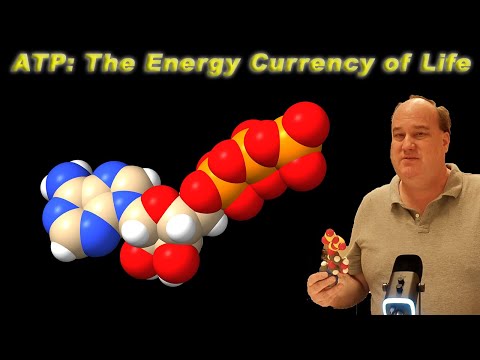
The structure of ATP consists of a nucleotide base, a ribose sugar, and three phosphate groups. The phosphate groups are linked together in a chain, with the terminal phosphate group being the high-energy phosphate bond. This phosphate bond is responsible for the energy-releasing properties of ATP. When ATP is hydrolyzed, the phosphate bond is broken, releasing energy that can be utilized by the cell. This process is essential for various cellular processes, including protein synthesis and membrane transport. ATP synthase is an enzyme that plays a crucial role in the production of ATP. The regulation of ATP production is also critical for maintaining cellular energy homeostasis.
🌟 The Role of ATP in Cellular Processes
The role of ATP in cellular processes cannot be overstated. ATP is required for the proper functioning of cells, and its absence can lead to cell death. ATP is involved in various cellular processes, including muscle contraction, neurotransmission, and cell signaling. The energy from ATP is utilized by cells to perform various tasks, including the transport of molecules across cell membranes. ATP-binding cassette (ABC) transporters are a family of proteins that utilize the energy from ATP to transport molecules across cell membranes. The regulation of ATP levels is also essential for maintaining cellular homeostasis. AMP-activated protein kinase (AMPK) is an enzyme that plays a critical role in regulating ATP levels.
🏋️♀️ ATP and Energy Production
The production of ATP is a critical process that occurs within cells. ATP is produced through the process of cellular respiration, which involves the breakdown of glucose and other organic molecules to produce energy. The energy from these molecules is then used to produce ATP. ATP is also produced through the process of photosynthesis, which occurs in plants and other photosynthetic organisms. The regulation of ATP production is essential for maintaining cellular energy homeostasis. NADH and FADH2 are two electron carriers that play critical roles in the production of ATP. The electron transport chain is a series of protein complexes that generate ATP by harnessing the energy from electron carriers.
📊 The ATP-ADP Cycle
The ATP-ADP cycle is a critical process that occurs within cells. This cycle involves the conversion of ATP to ADP and the subsequent conversion of ADP back to ATP. The energy from ATP is utilized by cells to perform various tasks, and the ATP-ADP cycle ensures that ATP levels are maintained. ATP synthase is an enzyme that plays a crucial role in the production of ATP. The regulation of the ATP-ADP cycle is essential for maintaining cellular energy homeostasis. Phosphocreatine is a high-energy compound that plays a critical role in the ATP-ADP cycle. The ATP-ADP cycle is also critical for maintaining muscule function.
👥 ATP and Cellular Signaling
The role of ATP in cellular signaling is a critical one. ATP is involved in various signaling pathways, including the MAP kinase pathway and the PI3K-Akt pathway. The energy from ATP is utilized by cells to perform various tasks, including the phosphorylation of proteins. ATP is also involved in the regulation of gene expression, which is critical for maintaining cellular homeostasis. DNA and RNA are two nucleic acids that play critical roles in the regulation of gene expression. The regulation of ATP levels is also essential for maintaining cellular energy homeostasis. AMP-activated protein kinase (AMPK) is an enzyme that plays a critical role in regulating ATP levels.
🔩 ATP and Muscle Contraction
The role of ATP in muscle contraction is a critical one. ATP is involved in the sliding filament theory, which describes the process of muscle contraction. The energy from ATP is utilized by muscles to perform various tasks, including the phosphorylation of proteins. Actin and myosin are two proteins that play critical roles in muscle contraction. The regulation of ATP levels is essential for maintaining muscule function. Phosphocreatine is a high-energy compound that plays a critical role in the regulation of ATP levels. The ATP-ADP cycle is also critical for maintaining muscule function.
🤝 ATP and Neurotransmission
The role of ATP in neurotransmission is a critical one. ATP is involved in the release of neurotransmitters, which are critical for maintaining neural function. The energy from ATP is utilized by neurons to perform various tasks, including the phosphorylation of proteins. Synaptic plasticity is a critical process that occurs in the brain, and ATP plays a critical role in this process. The regulation of ATP levels is essential for maintaining neural function. AMP-activated protein kinase (AMPK) is an enzyme that plays a critical role in regulating ATP levels.
📈 The Future of ATP Research
The future of ATP research is an exciting one. Scientists are currently exploring the role of ATP in various diseases, including cancer and neurodegenerative diseases. The development of new therapies that target ATP production is a critical area of research. ATP synthase is an enzyme that plays a crucial role in the production of ATP, and scientists are currently exploring the development of new inhibitors that target this enzyme. The regulation of ATP levels is essential for maintaining cellular energy homeostasis, and scientists are currently exploring the development of new therapies that target this process.
Key Facts
- Year
- 1929
- Origin
- Germany
- Category
- Biochemistry
- Type
- Molecule
Frequently Asked Questions
What is the role of ATP in cellular processes?
ATP plays a central role in the energy transfer within cells, allowing them to perform various functions necessary for life. The energy from ATP is utilized by cells to perform various tasks, including muscle contraction, neurotransmission, and cell signaling. The regulation of ATP levels is essential for maintaining cellular energy homeostasis.
How is ATP produced?
ATP is produced through the process of cellular respiration, which involves the breakdown of glucose and other organic molecules to produce energy. ATP is also produced through the process of photosynthesis, which occurs in plants and other photosynthetic organisms.
What is the ATP-ADP cycle?
The ATP-ADP cycle is a critical process that occurs within cells. This cycle involves the conversion of ATP to ADP and the subsequent conversion of ADP back to ATP. The energy from ATP is utilized by cells to perform various tasks, and the ATP-ADP cycle ensures that ATP levels are maintained.
What is the role of ATP in muscle contraction?
ATP is involved in the sliding filament theory, which describes the process of muscle contraction. The energy from ATP is utilized by muscles to perform various tasks, including the phosphorylation of proteins. The regulation of ATP levels is essential for maintaining muscle function.
What is the role of ATP in neurotransmission?
ATP is involved in the release of neurotransmitters, which are critical for maintaining neural function. The energy from ATP is utilized by neurons to perform various tasks, including the phosphorylation of proteins. The regulation of ATP levels is essential for maintaining neural function.
What is the future of ATP research?
The future of ATP research is an exciting one. Scientists are currently exploring the role of ATP in various diseases, including cancer and neurodegenerative diseases. The development of new therapies that target ATP production is a critical area of research.
What is the role of ATP synthase in ATP production?
ATP synthase is an enzyme that plays a crucial role in the production of ATP. This enzyme is responsible for the conversion of ADP to ATP, and is essential for maintaining cellular energy homeostasis.