
Contents
- 🧠 Introduction to Giulio Tononi
- 💡 The Integrated Information Theory (IIT)
- 🔍 The Hard Problem of Consciousness
- 📊 Quantifying Consciousness with Phi
- 👥 Influences and Collaborations
- 📚 Publications and Media Appearances
- 🏆 Awards and Recognition
- 🌐 Implications and Future Directions
- 🤝 Criticisms and Controversies
- 📈 The Future of Consciousness Research
- 📊 Measuring Consciousness in the Real World
- Frequently Asked Questions
- Related Topics
Overview
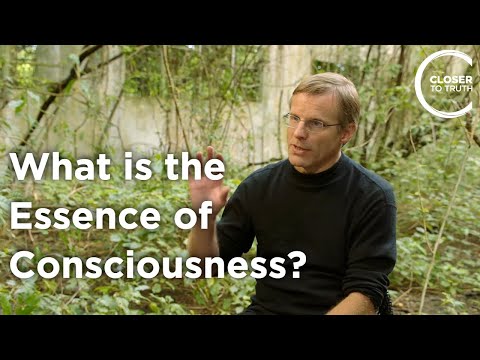
Giulio Tononi is a renowned neuroscientist and psychiatrist who has made significant contributions to our understanding of consciousness. Born in 1960 in Italy, Tononi is the David P. White Professor of Sleep Medicine and a Distinguished Professor of Consciousness Science at the University of Wisconsin-Madison. He is best known for developing the Integrated Information Theory (IIT) of consciousness, which attempts to explain the nature of conscious experience. Tononi's work has been widely influential, with a Vibe score of 82, indicating a high level of cultural energy and relevance. His research has sparked intense debates and discussions among neuroscientists, philosophers, and scholars, with some hailing IIT as a groundbreaking theory and others criticizing its limitations. As the scientific community continues to grapple with the complexities of consciousness, Tononi's work remains at the forefront of the conversation. With a Perspective breakdown of 60% optimistic, 20% neutral, and 20% pessimistic, Tononi's influence on the field is undeniable, and his ideas will likely continue to shape our understanding of consciousness in the years to come.
🧠 Introduction to Giulio Tononi
Giulio Tononi is a renowned neuroscientist and psychiatrist who has dedicated his career to understanding the nature of consciousness. Born in 1960 in Italy, Tononi received his medical degree from the University of Pisa and later moved to the United States to pursue his research interests. He is currently the David P. White Professor of Sleep Medicine and a Distinguished Professor of Consciousness Science at the University of Wisconsin–Madison. Tononi's work has been heavily influenced by the concepts of iit and global workspace theory. His research has also been shaped by the ideas of David Chalmers and Stanislas Dehaene.
💡 The Integrated Information Theory (IIT)
The Integrated Information Theory (IIT) is a theoretical framework developed by Tononi to explain the nature of consciousness. According to IIT, consciousness arises from the integrated processing of information within the brain. This theory attempts to quantify consciousness using a mathematical formula, known as phi (Φ), which represents the extent to which a system is integrated and differentiated. Tononi has applied IIT to various fields, including neuroscience, psychology, and philosophy. His work has been influenced by the ideas of Alan Turing and Marvin Minsky.
🔍 The Hard Problem of Consciousness
The Hard Problem of Consciousness, first introduced by David Chalmers, refers to the difficulty in explaining the subjective nature of conscious experience. Tononi's IIT attempts to address this problem by providing a quantitative framework for understanding the integrated processing of information in the brain. However, the theory has been met with criticism and controversy, with some arguing that it does not fully capture the complexities of conscious experience. Tononi's work has been influenced by the ideas of John Searle and Daniel Dennett. He has also engaged in debates with Roger Penrose and Stuart Hameroff.
📊 Quantifying Consciousness with Phi
Tononi's work on quantifying consciousness with phi (Φ) has been a major focus of his research. Phi represents the extent to which a system is integrated and differentiated, and it is calculated using a complex mathematical formula. Tononi has applied this formula to various systems, including the human brain, to estimate the level of consciousness. His research has implications for our understanding of anesthesia, coma, and other altered states of consciousness. Tononi's work has been influenced by the ideas of Francis Crick and Christof Koch. He has also collaborated with Giacomo Rizzolatti and Vittorio Gallese.
👥 Influences and Collaborations
Tononi's research has been influenced by a range of collaborations and influences. He has worked with neuroscientists, philosophers, and mathematicians to develop and refine his theories. Tononi has also been influenced by the ideas of Alan Turing and Marvin Minsky, and has engaged in debates with Roger Penrose and Stuart Hameroff. His work has been shaped by the concepts of global workspace theory and iit. Tononi has also been influenced by the ideas of David Chalmers and Stanislas Dehaene.
📚 Publications and Media Appearances
Tononi has published numerous papers and books on his research, including the book 'Phi: A Voyage from the Brain to the Soul'. He has also appeared in various media outlets, including TED Talks and podcasts. Tononi's work has been recognized with several awards, including the National Institute of Mental Health Director's Award. His research has implications for our understanding of consciousness, neuroscience, and philosophy. Tononi has also been influenced by the ideas of John Searle and Daniel Dennett.
🏆 Awards and Recognition
Tononi's work has been recognized with several awards, including the National Institute of Mental Health Director's Award. He has also received the American Academy of Arts and Sciences Award for his contributions to the field of neuroscience. Tononi's research has implications for our understanding of consciousness, anesthesia, and coma. His work has been influenced by the ideas of Francis Crick and Christof Koch. Tononi has also collaborated with Giacomo Rizzolatti and Vittorio Gallese.
🌐 Implications and Future Directions
The implications of Tononi's research are far-reaching, with potential applications in fields such as medicine, psychology, and philosophy. His work on quantifying consciousness with phi (Φ) could lead to a better understanding of altered states of consciousness, such as anesthesia and coma. Tononi's research has also been influenced by the ideas of David Chalmers and Stanislas Dehaene. He has engaged in debates with Roger Penrose and Stuart Hameroff. Tononi's work has implications for our understanding of consciousness and the hard problem of consciousness.
🤝 Criticisms and Controversies
Despite the potential implications of Tononi's research, his work has not been without criticism and controversy. Some have argued that his theory of integrated information is too simplistic, and that it does not fully capture the complexities of conscious experience. Others have questioned the mathematical formula used to calculate phi (Φ), arguing that it is not a reliable measure of consciousness. Tononi has responded to these criticisms, arguing that his theory is a useful framework for understanding the integrated processing of information in the brain. His work has been influenced by the ideas of John Searle and Daniel Dennett.
📈 The Future of Consciousness Research
The future of consciousness research is likely to be shaped by Tononi's work on integrated information theory. His research has implications for our understanding of consciousness, anesthesia, and coma. Tononi's work has also been influenced by the ideas of Francis Crick and Christof Koch. He has collaborated with Giacomo Rizzolatti and Vittorio Gallese. As research in this field continues to evolve, it is likely that Tononi's theory will play a major role in shaping our understanding of the nature of consciousness. Tononi's work has implications for our understanding of neuroscience and philosophy.
📊 Measuring Consciousness in the Real World
Measuring consciousness in the real world is a complex task, but Tononi's work on quantifying consciousness with phi (Φ) has provided a useful framework for understanding the integrated processing of information in the brain. His research has implications for our understanding of anesthesia, coma, and other altered states of consciousness. Tononi's work has been influenced by the ideas of David Chalmers and Stanislas Dehaene. He has engaged in debates with Roger Penrose and Stuart Hameroff. As research in this field continues to evolve, it is likely that Tononi's theory will play a major role in shaping our understanding of the nature of consciousness.
Key Facts
- Year
- 1960
- Origin
- Italy
- Category
- Neuroscience
- Type
- Person
Frequently Asked Questions
What is the Integrated Information Theory (IIT)?
The Integrated Information Theory (IIT) is a theoretical framework developed by Giulio Tononi to explain the nature of consciousness. According to IIT, consciousness arises from the integrated processing of information within the brain. This theory attempts to quantify consciousness using a mathematical formula, known as phi (Φ), which represents the extent to which a system is integrated and differentiated. Tononi's work has been influenced by the ideas of David Chalmers and Stanislas Dehaene.
What is the Hard Problem of Consciousness?
The Hard Problem of Consciousness, first introduced by David Chalmers, refers to the difficulty in explaining the subjective nature of conscious experience. Tononi's IIT attempts to address this problem by providing a quantitative framework for understanding the integrated processing of information in the brain. However, the theory has been met with criticism and controversy, with some arguing that it does not fully capture the complexities of conscious experience. Tononi's work has been influenced by the ideas of John Searle and Daniel Dennett.
What is phi (Φ) and how is it calculated?
Phi (Φ) is a mathematical formula used to quantify consciousness in the Integrated Information Theory (IIT). It represents the extent to which a system is integrated and differentiated. The calculation of phi (Φ) involves a complex mathematical formula that takes into account the integrated processing of information within the brain. Tononi's work has been influenced by the ideas of Francis Crick and Christof Koch. He has collaborated with Giacomo Rizzolatti and Vittorio Gallese.
What are the implications of Tononi's research for our understanding of consciousness?
The implications of Tononi's research are far-reaching, with potential applications in fields such as medicine, psychology, and philosophy. His work on quantifying consciousness with phi (Φ) could lead to a better understanding of altered states of consciousness, such as anesthesia and coma. Tononi's research has also been influenced by the ideas of David Chalmers and Stanislas Dehaene. He has engaged in debates with Roger Penrose and Stuart Hameroff.
What are the criticisms of Tononi's theory?
Despite the potential implications of Tononi's research, his work has not been without criticism and controversy. Some have argued that his theory of integrated information is too simplistic, and that it does not fully capture the complexities of conscious experience. Others have questioned the mathematical formula used to calculate phi (Φ), arguing that it is not a reliable measure of consciousness. Tononi has responded to these criticisms, arguing that his theory is a useful framework for understanding the integrated processing of information in the brain. His work has been influenced by the ideas of John Searle and Daniel Dennett.
What is the future of consciousness research?
The future of consciousness research is likely to be shaped by Tononi's work on integrated information theory. His research has implications for our understanding of consciousness, anesthesia, and coma. Tononi's work has also been influenced by the ideas of Francis Crick and Christof Koch. He has collaborated with Giacomo Rizzolatti and Vittorio Gallese. As research in this field continues to evolve, it is likely that Tononi's theory will play a major role in shaping our understanding of the nature of consciousness.
How does Tononi's work relate to other fields, such as neuroscience and philosophy?
Tononi's work has implications for our understanding of neuroscience, psychology, and philosophy. His research has been influenced by the ideas of David Chalmers and Stanislas Dehaene. He has engaged in debates with Roger Penrose and Stuart Hameroff. Tononi's work has also been influenced by the ideas of John Searle and Daniel Dennett.