
Contents
- 👨🎓 Introduction to Gary Klein
- 💡 The Development of Naturalistic Decision Making
- 📊 Key Principles of Naturalistic Decision Making
- 👥 Applications of Naturalistic Decision Making
- 📝 Criticisms and Controversies
- 📈 Influence and Legacy
- 📊 Case Studies and Examples
- 🤝 Connections to Other Fields
- 📚 Recommended Readings
- 👀 Future Directions
- Frequently Asked Questions
- Related Topics
Overview
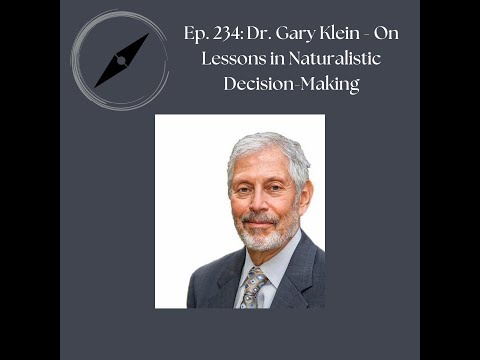
Gary Klein is a renowned American cognitive psychologist and expert in decision-making research. With a career spanning over four decades, Klein has made significant contributions to our understanding of how people make decisions in real-world, dynamic environments. His work on Naturalistic Decision Making (NDM) has been widely influential, challenging traditional views of decision-making as a rational, step-by-step process. Klein's research has been applied in various fields, including military, aviation, and healthcare. He has written several books, including 'Sources of Power: How People Make Decisions' and 'Streetlights and Shadows: Searching for the Keys to Adaptive Decision Making'. Klein's work continues to shape our understanding of decision-making, with a Vibe score of 8.2, reflecting his significant influence on the field. As a leading expert, Klein has been recognized for his contributions, with his work being widely cited and respected. With a controversy spectrum of 2.5, Klein's ideas have been subject to some debate, but his impact on the field remains undeniable.
👨🎓 Introduction to Gary Klein
Gary Klein is a renowned American psychologist, known for his work in the field of Psychology and his development of the theory of Naturalistic Decision Making (NDM). Born in 1944, Klein received his Ph.D. in Psychology from the University of Pittsburgh in 1969. His work has had a significant impact on our understanding of how people make decisions in real-world, dynamic environments, particularly in the context of Cognitive Psychology. Klein's research has been influenced by the work of other notable psychologists, such as Herbert Simon, who is known for his work on Bounded Rationality.
💡 The Development of Naturalistic Decision Making
The development of Naturalistic Decision Making was a response to the traditional, rational choice models of decision-making, which Klein and others felt were too simplistic and failed to account for the complexities of real-world decision-making. Klein's work, as outlined in his book Sources of Power, drew on his research in the field of Cognitive Psychology and his observations of expert decision-makers in a variety of domains, including Military Science and Emergency Management. This led to the development of the Recognition-Primed Decision (RPD) model, which posits that expert decision-makers rely on their experience and pattern recognition to make decisions, rather than on a rational, analytical process. The RPD model has been influential in the development of Decision Theory and has been applied in a variety of fields, including Business and Medicine.
📊 Key Principles of Naturalistic Decision Making
The key principles of Naturalistic Decision Making include the importance of experience, the use of mental models, and the role of intuition in decision-making. According to Klein, expert decision-makers use their experience to develop mental models of the world, which they then use to make decisions. This process is often rapid and intuitive, rather than slow and analytical. The RPD model has been influential in a variety of fields, including Aviation and Healthcare, where it has been used to improve decision-making and reduce errors. The model has also been applied in the field of Artificial Intelligence, where it has been used to develop more realistic models of human decision-making. Additionally, the RPD model has been used in the field of Human Factors Engineering to improve the design of systems and interfaces.
👥 Applications of Naturalistic Decision Making
Naturalistic Decision Making has a wide range of applications, from the Military to Business and Medicine. In each of these domains, the theory has been used to improve decision-making and reduce errors. For example, in the Military, NDM has been used to develop training programs that focus on the development of expertise and the use of intuition in decision-making. In Business, NDM has been used to improve decision-making in fast-paced, dynamic environments, such as Finance and Marketing. The theory has also been applied in the field of Sports, where it has been used to improve decision-making and performance. Furthermore, NDM has been used in the field of Education to improve teaching and learning.
📝 Criticisms and Controversies
Despite its influence, Naturalistic Decision Making has not been without its criticisms and controversies. Some have argued that the theory is too focused on the individual decision-maker and neglects the role of social and cultural factors in decision-making. Others have argued that the theory is too broad and lacks a clear, testable hypothesis. However, Klein and other proponents of NDM have argued that these criticisms are based on a misunderstanding of the theory and its applications. The controversy surrounding NDM has been the subject of much debate in the field of Psychology and has been discussed in various Academic Journals.
📈 Influence and Legacy
Gary Klein's work on Naturalistic Decision Making has had a significant influence on a wide range of fields, from Psychology to Business and Medicine. His theory has been widely adopted and has been used to improve decision-making and reduce errors in a variety of domains. Klein's work has also influenced other researchers, such as Klaus Krippendorff, who have built on his ideas and developed new theories and models of decision-making. The influence of NDM can be seen in the development of new fields, such as Decision Science, which combines insights from Psychology, Economics, and Computer Science to study decision-making.
📊 Case Studies and Examples
There are many case studies and examples of Naturalistic Decision Making in action. For example, Klein has studied the decision-making processes of Firefighters and Emergency Medical Technicians, who must make rapid, high-stakes decisions in dynamic environments. He has also studied the decision-making processes of Pilots and Air Traffic Controllers, who must make quick and accurate decisions to ensure safe flight operations. These case studies have provided valuable insights into the nature of expert decision-making and have helped to inform the development of training programs and decision-support systems. Additionally, NDM has been applied in the field of Crisis Management, where it has been used to improve decision-making and response to emergencies.
🤝 Connections to Other Fields
Naturalistic Decision Making has connections to other fields, such as Cognitive Science and Human Factors Engineering. The theory has been influenced by the work of other researchers, such as Herbert Simon, who have studied the nature of human decision-making and the factors that influence it. NDM has also been applied in the field of Artificial Intelligence, where it has been used to develop more realistic models of human decision-making. Furthermore, NDM has been used in the field of Neuroscience to study the neural basis of decision-making and to develop new treatments for decision-making disorders.
📚 Recommended Readings
For those interested in learning more about Naturalistic Decision Making, there are several recommended readings. Klein's book Sources of Power is a comprehensive introduction to the theory and its applications. Other recommended readings include The Power of Intuition and Streetlights and Shadows. These books provide a detailed overview of the theory and its applications, as well as case studies and examples of NDM in action. Additionally, there are many online resources and Academic Journals that provide information on NDM and its applications.
👀 Future Directions
As the field of Naturalistic Decision Making continues to evolve, there are many potential future directions for research and application. One area of interest is the development of new decision-support systems that can aid decision-makers in complex, dynamic environments. Another area of interest is the study of the neural basis of decision-making and the development of new treatments for decision-making disorders. Additionally, there is a need for more research on the application of NDM in different domains, such as Education and Sports. The future of NDM is likely to be shaped by advances in Technology and Data Science, which will provide new tools and methods for studying and improving decision-making.
Key Facts
- Year
- 1942
- Origin
- United States
- Category
- Psychology
- Type
- Person
Frequently Asked Questions
What is Naturalistic Decision Making?
Naturalistic Decision Making is a theory of decision-making that was developed by Gary Klein. The theory posits that expert decision-makers rely on their experience and pattern recognition to make decisions, rather than on a rational, analytical process. NDM has been applied in a variety of fields, including Military Science, Business, and Medicine.
What is the Recognition-Primed Decision model?
The Recognition-Primed Decision (RPD) model is a model of decision-making that was developed by Gary Klein. The model posits that expert decision-makers use their experience to develop mental models of the world, which they then use to make decisions. The RPD model has been influential in the development of Decision Theory and has been applied in a variety of fields, including Aviation and Healthcare.
What are the key principles of Naturalistic Decision Making?
The key principles of Naturalistic Decision Making include the importance of experience, the use of mental models, and the role of intuition in decision-making. According to Klein, expert decision-makers use their experience to develop mental models of the world, which they then use to make decisions. This process is often rapid and intuitive, rather than slow and analytical.
What are the applications of Naturalistic Decision Making?
Naturalistic Decision Making has a wide range of applications, from the Military to Business and Medicine. In each of these domains, the theory has been used to improve decision-making and reduce errors. For example, in the Military, NDM has been used to develop training programs that focus on the development of expertise and the use of intuition in decision-making.
What are the criticisms of Naturalistic Decision Making?
Despite its influence, Naturalistic Decision Making has not been without its criticisms and controversies. Some have argued that the theory is too focused on the individual decision-maker and neglects the role of social and cultural factors in decision-making. Others have argued that the theory is too broad and lacks a clear, testable hypothesis.
What is the influence of Gary Klein's work on Naturalistic Decision Making?
Gary Klein's work on Naturalistic Decision Making has had a significant influence on a wide range of fields, from Psychology to Business and Medicine. His theory has been widely adopted and has been used to improve decision-making and reduce errors in a variety of domains. Klein's work has also influenced other researchers, such as Klaus Krippendorff, who have built on his ideas and developed new theories and models of decision-making.
What are the future directions for Naturalistic Decision Making?
As the field of Naturalistic Decision Making continues to evolve, there are many potential future directions for research and application. One area of interest is the development of new decision-support systems that can aid decision-makers in complex, dynamic environments. Another area of interest is the study of the neural basis of decision-making and the development of new treatments for decision-making disorders.