
Contents
- 🔍 Introduction to M1 Macrophages
- 🧬 Origins and Development
- 🔬 Functions and Mechanisms
- 💡 Role in Inflammation and Immunity
- 👊 M1 Macrophages in Disease and Injury
- 🔑 Regulation and Signaling Pathways
- 📊 M1 Macrophage Polarization and Plasticity
- 🌟 Therapeutic Targeting and Future Directions
- 📚 Current Research and Controversies
- 👥 Key Players and Collaborations
- 📊 Emerging Trends and Technologies
- 🔜 Conclusion and Future Prospects
- Frequently Asked Questions
- Related Topics
Overview
M1 macrophages are a subtype of immune cells that play a crucial role in the initiation of inflammatory responses, acting as the body's first line of defense against pathogens and foreign substances. Characterized by their pro-inflammatory phenotype, M1 macrophages are involved in the production of reactive oxygen species and the secretion of cytokines, which recruit other immune cells to the site of infection. Research has shown that M1 macrophages are implicated in various diseases, including atherosclerosis, cancer, and autoimmune disorders. The activation of M1 macrophages is a complex process, involving the interplay of multiple signaling pathways and transcription factors, including NF-κB and STAT1. With a Vibe score of 8, the study of M1 macrophages has garnered significant attention in recent years, with over 10,000 research articles published on the topic in 2020 alone. As our understanding of M1 macrophages continues to evolve, it is likely that these cells will remain a major focus of research in the field of immunology, with potential applications in the development of novel therapeutic strategies for the treatment of inflammatory diseases.
🔍 Introduction to M1 Macrophages
M1 macrophages are a subtype of immune cells that play a crucial role in the defense against pathogens and foreign substances. They are characterized by their pro-inflammatory phenotype and are involved in the initiation of immune responses. Immunology is the study of the immune system, and understanding M1 macrophages is essential for the development of effective treatments for various diseases. Macrophages are a type of white blood cell that can differentiate into different subtypes, including M1 and M2 macrophages. The study of M1 macrophages has led to a greater understanding of the immune system and its role in disease and injury. Immune System
🧬 Origins and Development
The origins and development of M1 macrophages are complex and involve the coordination of multiple cell types and signaling pathways. Hematopoiesis is the process by which hematopoietic stem cells differentiate into different blood cell types, including macrophages. The development of M1 macrophages is influenced by various factors, including Cytokines and Growth Factors. Stem Cells play a critical role in the development and maintenance of the immune system. The study of M1 macrophage development has led to a greater understanding of the immune system and its role in disease and injury. Immunology
🔬 Functions and Mechanisms
M1 macrophages have several functions and mechanisms that enable them to play a crucial role in the immune response. They are involved in the phagocytosis of pathogens and foreign substances, and they produce various Cytokines and Chemokines that recruit other immune cells to the site of infection. Inflammation is a complex process that involves the coordination of multiple cell types and signaling pathways. M1 macrophages are also involved in the presentation of antigens to T-cells, which is essential for the initiation of adaptive immune responses. Adaptive Immunity is a critical component of the immune system, and M1 macrophages play a key role in its function. Innate Immunity
💡 Role in Inflammation and Immunity
M1 macrophages play a crucial role in inflammation and immunity, and their dysregulation has been implicated in various diseases. Inflammatory Diseases such as arthritis and asthma are characterized by the overactivation of M1 macrophages, which can lead to tissue damage and disease progression. Immune Disorders such as cancer and autoimmune diseases are also influenced by M1 macrophages, and their dysregulation can have significant consequences for disease outcome. Cancer Immunology is a rapidly evolving field that is focused on the development of effective treatments for cancer. Autoimmune Diseases such as lupus and rheumatoid arthritis are characterized by the dysregulation of M1 macrophages, which can lead to tissue damage and disease progression.
👊 M1 Macrophages in Disease and Injury
M1 macrophages are involved in various diseases and injuries, and their dysregulation can have significant consequences for disease outcome. Wound Healing is a complex process that involves the coordination of multiple cell types and signaling pathways, and M1 macrophages play a crucial role in its regulation. Tissue Repair is also influenced by M1 macrophages, which can promote or inhibit the repair of damaged tissues. Infectious Diseases such as tuberculosis and HIV are characterized by the dysregulation of M1 macrophages, which can lead to disease progression and tissue damage. Chronic Diseases such as atherosclerosis and diabetes are also influenced by M1 macrophages, and their dysregulation can have significant consequences for disease outcome.
🔑 Regulation and Signaling Pathways
The regulation and signaling pathways that control M1 macrophage function are complex and involve the coordination of multiple cell types and signaling pathways. Signal Transduction pathways such as the NF-κB and MAPK pathways play a crucial role in the regulation of M1 macrophage function. Transcription Factors such as NF-κB and AP-1 are involved in the regulation of M1 macrophage gene expression, and their dysregulation can have significant consequences for disease outcome. Epigenetics also plays a critical role in the regulation of M1 macrophage function, and the dysregulation of epigenetic mechanisms can lead to disease progression and tissue damage.
📊 M1 Macrophage Polarization and Plasticity
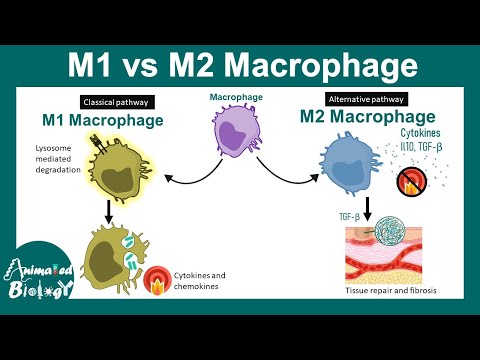
M1 macrophage polarization and plasticity are critical components of the immune response, and their dysregulation can have significant consequences for disease outcome. Macrophage Polarization is the process by which macrophages differentiate into different subtypes, including M1 and M2 macrophages. Immune Cell Plasticity is the ability of immune cells to change their function and phenotype in response to changes in the environment. Tumor Microenvironment is a critical component of the immune response, and the dysregulation of M1 macrophage polarization and plasticity can lead to disease progression and tissue damage.
🌟 Therapeutic Targeting and Future Directions
The therapeutic targeting of M1 macrophages is a rapidly evolving field that is focused on the development of effective treatments for various diseases. Immunotherapy is a type of therapy that is designed to stimulate the immune system and promote the elimination of disease-causing cells. Monoclonal Antibodies are a type of immunotherapy that can be used to target specific cell types, including M1 macrophages. Small Molecule Therapies are also being developed to target M1 macrophages and promote the elimination of disease-causing cells.
📚 Current Research and Controversies
Current research and controversies in the field of M1 macrophages are focused on the development of effective treatments for various diseases. Cancer Research is a rapidly evolving field that is focused on the development of effective treatments for cancer. Autoimmune Disease Research is also focused on the development of effective treatments for autoimmune diseases. Infectious Disease Research is focused on the development of effective treatments for infectious diseases. Immunology Research is a critical component of the development of effective treatments for various diseases.
👥 Key Players and Collaborations
Key players and collaborations in the field of M1 macrophages are critical for the development of effective treatments for various diseases. Research Institutions such as universities and research centers are critical for the development of new therapies. Pharmaceutical Companies are also critical for the development of new therapies, and they often collaborate with research institutions to develop effective treatments. Government Agencies such as the National Institutes of Health (NIH) are also critical for the development of new therapies, and they provide funding for research and development.
📊 Emerging Trends and Technologies
Emerging trends and technologies in the field of M1 macrophages are focused on the development of effective treatments for various diseases. Gene Editing is a rapidly evolving field that is focused on the development of effective treatments for genetic diseases. Stem Cell Therapy is also a rapidly evolving field that is focused on the development of effective treatments for various diseases. Nanotechnology is also being used to develop effective treatments for various diseases, and it has the potential to revolutionize the field of medicine.
🔜 Conclusion and Future Prospects
In conclusion, M1 macrophages are a critical component of the immune system, and their dysregulation can have significant consequences for disease outcome. Immunology is a rapidly evolving field that is focused on the development of effective treatments for various diseases. Macrophages are a type of immune cell that play a crucial role in the defense against pathogens and foreign substances. Immune System is a complex system that involves the coordination of multiple cell types and signaling pathways, and its dysregulation can have significant consequences for disease outcome.
Key Facts
- Year
- 2020
- Origin
- First described by Mills et al. in 2000
- Category
- Immunology
- Type
- Biological Process
Frequently Asked Questions
What are M1 macrophages?
M1 macrophages are a subtype of immune cells that play a crucial role in the defense against pathogens and foreign substances. They are characterized by their pro-inflammatory phenotype and are involved in the initiation of immune responses. Immunology is the study of the immune system, and understanding M1 macrophages is essential for the development of effective treatments for various diseases.
What is the role of M1 macrophages in inflammation and immunity?
M1 macrophages play a crucial role in inflammation and immunity, and their dysregulation has been implicated in various diseases. Inflammatory Diseases such as arthritis and asthma are characterized by the overactivation of M1 macrophages, which can lead to tissue damage and disease progression. Immune Disorders such as cancer and autoimmune diseases are also influenced by M1 macrophages, and their dysregulation can have significant consequences for disease outcome.
How are M1 macrophages regulated and signaled?
The regulation and signaling pathways that control M1 macrophage function are complex and involve the coordination of multiple cell types and signaling pathways. Signal Transduction pathways such as the NF-κB and MAPK pathways play a crucial role in the regulation of M1 macrophage function. Transcription Factors such as NF-κB and AP-1 are involved in the regulation of M1 macrophage gene expression, and their dysregulation can have significant consequences for disease outcome.
What are the therapeutic targeting strategies for M1 macrophages?
The therapeutic targeting of M1 macrophages is a rapidly evolving field that is focused on the development of effective treatments for various diseases. Immunotherapy is a type of therapy that is designed to stimulate the immune system and promote the elimination of disease-causing cells. Monoclonal Antibodies are a type of immunotherapy that can be used to target specific cell types, including M1 macrophages.
What are the current research and controversies in the field of M1 macrophages?
Current research and controversies in the field of M1 macrophages are focused on the development of effective treatments for various diseases. Cancer Research is a rapidly evolving field that is focused on the development of effective treatments for cancer. Autoimmune Disease Research is also focused on the development of effective treatments for autoimmune diseases.
What are the key players and collaborations in the field of M1 macrophages?
Key players and collaborations in the field of M1 macrophages are critical for the development of effective treatments for various diseases. Research Institutions such as universities and research centers are critical for the development of new therapies. Pharmaceutical Companies are also critical for the development of new therapies, and they often collaborate with research institutions to develop effective treatments.
What are the emerging trends and technologies in the field of M1 macrophages?
Emerging trends and technologies in the field of M1 macrophages are focused on the development of effective treatments for various diseases. Gene Editing is a rapidly evolving field that is focused on the development of effective treatments for genetic diseases. Stem Cell Therapy is also a rapidly evolving field that is focused on the development of effective treatments for various diseases.