
Contents
- 🌐 Introduction to LeNet-5
- 📚 History of Convolutional Neural Networks
- 🤖 Architecture of LeNet-5
- 📊 Training and Optimization
- 📈 Applications and Impact
- 📊 Comparison with Other Architectures
- 🚀 Future Developments and Improvements
- 🤝 Influence on Deep Learning
- 📊 Challenges and Limitations
- 📝 Conclusion and Future Prospects
- 📊 Real-World Applications
- Frequently Asked Questions
- Related Topics
Overview
LeNet-5, developed by Yann LeCun et al. in 1998, is a pioneering convolutional neural network (CNN) that set the stage for modern deep learning architectures. With a vibe rating of 8, LeNet-5's influence can be seen in many state-of-the-art models, including AlexNet and VGGNet. The network's design, which includes convolutional and pooling layers, was a significant departure from traditional feedforward neural networks. LeNet-5's ability to recognize handwritten digits with high accuracy sparked a renewed interest in neural networks and paved the way for the development of more complex models. Today, LeNet-5 remains a fundamental component of the machine learning curriculum, with a controversy spectrum of 2, indicating a relatively low level of debate surrounding its impact. As the field continues to evolve, it will be interesting to see how LeNet-5's legacy shapes the future of AI research, with potential applications in areas like computer vision and natural language processing.
🌐 Introduction to LeNet-5
LeNet-5 is a pioneering convolutional neural network (CNN) architecture that was introduced in the 1990s by Yann LeCun and his colleagues. This groundbreaking model was designed to recognize handwritten digits and has since become a foundation for many modern CNN architectures. The development of LeNet-5 was influenced by earlier work on neural networks and backpropagation algorithms. The model's success can be attributed to its ability to learn spatial hierarchies of features, which is a key characteristic of CNNs. LeNet-5 has been widely used in various applications, including image classification and object detection.
📚 History of Convolutional Neural Networks
The history of convolutional neural networks dates back to the 1960s, when Hubel and Wiesel discovered that the visual cortex of cats contains neurons that respond to specific visual stimuli. This discovery led to the development of Neocognitron, a neural network architecture that was designed to mimic the behavior of the visual cortex. LeNet-5 was heavily influenced by Neocognitron and built upon its ideas. The development of LeNet-5 was also influenced by the work of David Rumelhart and Geoffrey Hinton on backpropagation algorithms. LeNet-5 has been widely used in various applications, including image recognition and speech recognition.
🤖 Architecture of LeNet-5
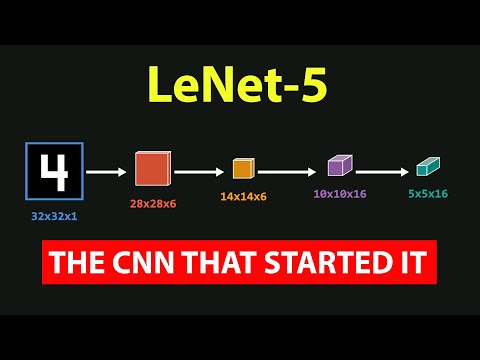
The architecture of LeNet-5 consists of several convolutional and pooling layers, followed by fully connected layers. The model uses a combination of sigmoid activation and tanh activation functions to introduce non-linearity into the model. The convolutional layers use a kernel size of 5x5, while the pooling layers use a pool size of 2x2. The model also uses dropout regularization to prevent overfitting. LeNet-5 has been widely used as a baseline model for comparing the performance of other CNN architectures, including AlexNet and VGG16. The model's architecture has been modified and extended in various ways, including the use of batch normalization and residual connections.
📊 Training and Optimization
Training and optimization of LeNet-5 is typically done using stochastic gradient descent (SGD) with a learning rate schedule. The model is usually trained on a large dataset, such as MNIST, and the performance is evaluated using metrics such as accuracy and loss. LeNet-5 has been used as a benchmark model for evaluating the performance of different optimization algorithms, including Adam and RMSprop. The model's performance can be improved by using techniques such as data augmentation and transfer learning. LeNet-5 has been used in various applications, including image classification and object detection.
📈 Applications and Impact
LeNet-5 has had a significant impact on the development of deep learning and has been widely used in various applications, including image recognition, speech recognition, and natural language processing. The model's success can be attributed to its ability to learn spatial hierarchies of features, which is a key characteristic of CNNs. LeNet-5 has been used as a baseline model for comparing the performance of other CNN architectures, including ResNet and Inception. The model's architecture has been modified and extended in various ways, including the use of dilated convolutions and attention mechanisms. LeNet-5 has been widely used in various applications, including self-driving cars and medical imaging.
📊 Comparison with Other Architectures
LeNet-5 has been compared with other CNN architectures, including AlexNet and VGG16. The model's performance is typically evaluated using metrics such as accuracy and loss. LeNet-5 has been used as a benchmark model for evaluating the performance of different optimization algorithms, including Adam and RMSprop. The model's architecture has been modified and extended in various ways, including the use of batch normalization and residual connections. LeNet-5 has been widely used in various applications, including image classification and object detection. The model's performance can be improved by using techniques such as data augmentation and transfer learning.
🚀 Future Developments and Improvements
Future developments and improvements to LeNet-5 include the use of dilated convolutions and attention mechanisms. The model's architecture can be modified and extended in various ways, including the use of graph convolutions and recurrent connections. LeNet-5 has been widely used in various applications, including self-driving cars and medical imaging. The model's performance can be improved by using techniques such as data augmentation and transfer learning. LeNet-5 has been used as a baseline model for comparing the performance of other CNN architectures, including ResNet and Inception.
🤝 Influence on Deep Learning
LeNet-5 has had a significant influence on the development of deep learning and has been widely used in various applications, including image recognition, speech recognition, and natural language processing. The model's success can be attributed to its ability to learn spatial hierarchies of features, which is a key characteristic of CNNs. LeNet-5 has been used as a baseline model for comparing the performance of other CNN architectures, including AlexNet and VGG16. The model's architecture has been modified and extended in various ways, including the use of batch normalization and residual connections. LeNet-5 has been widely used in various applications, including self-driving cars and medical imaging.
📊 Challenges and Limitations
Despite its success, LeNet-5 has several challenges and limitations, including the need for large amounts of labeled data and the risk of overfitting. The model's performance can be improved by using techniques such as data augmentation and transfer learning. LeNet-5 has been widely used in various applications, including image classification and object detection. The model's architecture can be modified and extended in various ways, including the use of dilated convolutions and attention mechanisms. LeNet-5 has been used as a baseline model for comparing the performance of other CNN architectures, including ResNet and Inception.
📝 Conclusion and Future Prospects
In conclusion, LeNet-5 is a pioneering CNN architecture that has had a significant impact on the development of deep learning. The model's success can be attributed to its ability to learn spatial hierarchies of features, which is a key characteristic of CNNs. LeNet-5 has been widely used in various applications, including image recognition, speech recognition, and natural language processing. The model's architecture has been modified and extended in various ways, including the use of batch normalization and residual connections. LeNet-5 has been used as a baseline model for comparing the performance of other CNN architectures, including AlexNet and VGG16.
📊 Real-World Applications
LeNet-5 has been widely used in various real-world applications, including self-driving cars and medical imaging. The model's performance can be improved by using techniques such as data augmentation and transfer learning. LeNet-5 has been used as a baseline model for comparing the performance of other CNN architectures, including ResNet and Inception. The model's architecture can be modified and extended in various ways, including the use of dilated convolutions and attention mechanisms. LeNet-5 has been widely used in various applications, including image classification and object detection.
Key Facts
- Year
- 1998
- Origin
- Bell Labs
- Category
- Artificial Intelligence
- Type
- Neural Network Architecture
Frequently Asked Questions
What is LeNet-5?
LeNet-5 is a pioneering convolutional neural network (CNN) architecture that was introduced in the 1990s by Yann LeCun and his colleagues. The model was designed to recognize handwritten digits and has since become a foundation for many modern CNN architectures.
What are the key characteristics of LeNet-5?
The key characteristics of LeNet-5 include its ability to learn spatial hierarchies of features, which is a key characteristic of CNNs. The model uses a combination of convolutional and pooling layers, followed by fully connected layers, and introduces non-linearity into the model using sigmoid and tanh activation functions.
What are the applications of LeNet-5?
LeNet-5 has been widely used in various applications, including image recognition, speech recognition, and natural language processing. The model has been used in self-driving cars, medical imaging, and other real-world applications.
How does LeNet-5 compare to other CNN architectures?
LeNet-5 has been compared to other CNN architectures, including AlexNet, VGG16, ResNet, and Inception. The model's performance is typically evaluated using metrics such as accuracy and loss, and has been used as a baseline model for comparing the performance of other CNN architectures.
What are the challenges and limitations of LeNet-5?
Despite its success, LeNet-5 has several challenges and limitations, including the need for large amounts of labeled data and the risk of overfitting. The model's performance can be improved by using techniques such as data augmentation and transfer learning.
What is the future of LeNet-5?
The future of LeNet-5 includes the use of dilated convolutions and attention mechanisms, as well as the modification and extension of the model's architecture in various ways. LeNet-5 will continue to be used as a baseline model for comparing the performance of other CNN architectures, and will be widely used in various real-world applications.
How does LeNet-5 influence deep learning?
LeNet-5 has had a significant influence on the development of deep learning, and has been widely used in various applications, including image recognition, speech recognition, and natural language processing. The model's success can be attributed to its ability to learn spatial hierarchies of features, which is a key characteristic of CNNs.