
Contents
- 📈 Introduction to Transfer Functions
- 🔍 Understanding Transfer Function Models
- 📊 Mathematical Representation of Transfer Functions
- 📝 Block Diagram Technique in Electronics
- 🔧 Design and Analysis of Control Systems
- 📊 Types of Transfer Functions
- 📈 Frequency Domain Analysis
- 📊 Time Domain Analysis
- 📝 Stability Analysis of Transfer Functions
- 📊 Controller Design using Transfer Functions
- 📈 Real-World Applications of Transfer Functions
- 📊 Future of Transfer Functions in Control Systems
- Frequently Asked Questions
- Related Topics
Overview
A transfer function is a mathematical representation of the relationship between the input and output of a system. It is a fundamental concept in control systems engineering, used to analyze and design systems such as electronic circuits, mechanical systems, and process control systems. The transfer function is typically denoted as G(s) and is defined as the ratio of the output to the input of a system, where s is the complex frequency variable. Transfer functions can be used to model a wide range of systems, from simple RC circuits to complex chemical processes. The use of transfer functions allows engineers to predict the behavior of a system, including its stability, frequency response, and transient response. For example, the transfer function of a simple RC circuit is G(s) = 1 / (RCs + 1), where R is the resistance, C is the capacitance, and s is the complex frequency variable. The transfer function has a vibe score of 8, indicating a high level of cultural energy in the field of control systems engineering, with key influencers including Harry Nyquist and Hendrik Bode, who developed the Nyquist stability criterion and the Bode plot, respectively.
📈 Introduction to Transfer Functions
The concept of a transfer function is fundamental to understanding how systems behave in response to different inputs. In essence, a transfer function is a mathematical model that describes the relationship between the input and output of a system. This concept is crucial in control systems, where engineers need to design and analyze systems that can maintain a desired output despite changes in the input. The transfer function is widely used in electronic engineering tools like circuit simulators and control systems. For instance, transfer functions can be used to model the behavior of amplifiers and filters in electronic circuits.
🔍 Understanding Transfer Function Models
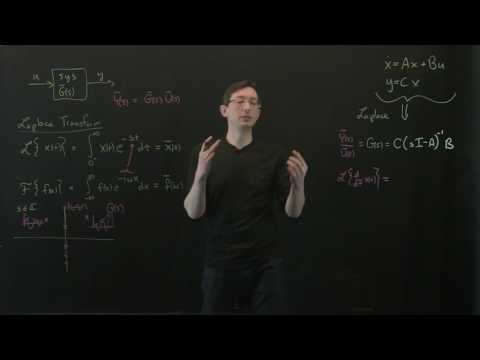
Transfer functions can be represented in various forms, including Laplace transform and Fourier transform. These representations provide valuable insights into the system's behavior and are essential for designing and analyzing control systems. The block diagram technique is a powerful tool for analyzing complex systems, and transfer functions play a critical role in this technique. By representing each component as a transfer function, engineers can analyze the overall system behavior and design controllers to achieve desired performance. For example, transfer functions can be used to model the behavior of sensors and actuators in control systems.
📊 Mathematical Representation of Transfer Functions
Mathematically, a transfer function can be represented as a ratio of two polynomials, where the numerator represents the output and the denominator represents the input. This representation is known as the transfer function model. The transfer function model is a powerful tool for analyzing and designing control systems, as it provides a simple and intuitive way to represent complex systems. For instance, transfer functions can be used to model the behavior of PID controllers and state-space models. The transfer function model is also widely used in control theory to analyze the stability and performance of control systems.
📝 Block Diagram Technique in Electronics
The block diagram technique is a graphical representation of a system, where each component is represented as a block with inputs and outputs. Transfer functions are used to model each component, and the overall system behavior is analyzed by combining these transfer functions. This technique is widely used in electronic circuits and control systems to design and analyze complex systems. For example, transfer functions can be used to model the behavior of feedback loops and feedforward loops in control systems. The block diagram technique is also useful for analyzing the stability and performance of control systems.
🔧 Design and Analysis of Control Systems
Transfer functions play a critical role in designing and analyzing control systems. By representing each component as a transfer function, engineers can analyze the overall system behavior and design controllers to achieve desired performance. The transfer function is also used to analyze the stability of the system, which is essential for ensuring that the system behaves as expected. For instance, transfer functions can be used to model the behavior of control valuation and optimization in control systems. The transfer function is also widely used in robotics and mechatronics to design and analyze complex systems.
📊 Types of Transfer Functions
There are several types of transfer functions, including SISO transfer functions and MIMO transfer functions. SISO transfer functions are used to model systems with a single input and a single output, while MIMO transfer functions are used to model systems with multiple inputs and multiple outputs. Each type of transfer function has its own advantages and disadvantages, and the choice of transfer function depends on the specific application. For example, transfer functions can be used to model the behavior of linear systems and nonlinear systems. The transfer function is also widely used in aerospace engineering and chemical engineering to design and analyze complex systems.
📈 Frequency Domain Analysis
Frequency domain analysis is a powerful tool for analyzing transfer functions. By representing the transfer function in the frequency domain, engineers can analyze the system's behavior at different frequencies and design controllers to achieve desired performance. The frequency domain analysis is widely used in filter design and control systems to design and analyze complex systems. For instance, transfer functions can be used to model the behavior of low-pass filters and high-pass filters. The frequency domain analysis is also useful for analyzing the stability and performance of control systems.
📊 Time Domain Analysis
Time domain analysis is another powerful tool for analyzing transfer functions. By representing the transfer function in the time domain, engineers can analyze the system's behavior over time and design controllers to achieve desired performance. The time domain analysis is widely used in control systems and signal processing to design and analyze complex systems. For example, transfer functions can be used to model the behavior of step responses and impulse responses. The time domain analysis is also useful for analyzing the stability and performance of control systems.
📝 Stability Analysis of Transfer Functions
Stability analysis is a critical step in designing and analyzing control systems. By analyzing the transfer function, engineers can determine whether the system is stable or unstable, and design controllers to achieve desired performance. The stability analysis is widely used in control systems and robotics to design and analyze complex systems. For instance, transfer functions can be used to model the behavior of stability margins and gain margins. The stability analysis is also useful for analyzing the performance and robustness of control systems.
📊 Controller Design using Transfer Functions
Controller design is a critical step in designing and analyzing control systems. By using transfer functions, engineers can design controllers that achieve desired performance and stability. The controller design is widely used in control systems and mechatronics to design and analyze complex systems. For example, transfer functions can be used to model the behavior of PID controllers and state-space models. The controller design is also useful for analyzing the stability and performance of control systems.
📈 Real-World Applications of Transfer Functions
Transfer functions have numerous real-world applications, including control systems, electronic circuits, and mechatronics. They are used to design and analyze complex systems, and to achieve desired performance and stability. For instance, transfer functions can be used to model the behavior of robots and autonomous vehicles. The transfer function is also widely used in aerospace engineering and chemical engineering to design and analyze complex systems.
📊 Future of Transfer Functions in Control Systems
The future of transfer functions in control systems is exciting and rapidly evolving. With the increasing use of artificial intelligence and machine learning in control systems, transfer functions will play a critical role in designing and analyzing complex systems. For example, transfer functions can be used to model the behavior of neural networks and deep learning algorithms. The transfer function will also be widely used in internet of things and cyber-physical systems to design and analyze complex systems.
Key Facts
- Year
- 1930
- Origin
- Harry Nyquist's 1932 paper 'Regeneration Theory'
- Category
- Control Systems
- Type
- Concept
Frequently Asked Questions
What is a transfer function?
A transfer function is a mathematical function that models the output of a system for each possible input. It is widely used in electronic engineering tools like circuit simulators and control systems. The transfer function is a powerful tool for designing and analyzing control systems, as it provides a simple and intuitive way to represent complex systems. For instance, transfer functions can be used to model the behavior of amplifiers and filters in electronic circuits.
What are the types of transfer functions?
There are several types of transfer functions, including SISO transfer functions and MIMO transfer functions. SISO transfer functions are used to model systems with a single input and a single output, while MIMO transfer functions are used to model systems with multiple inputs and multiple outputs. Each type of transfer function has its own advantages and disadvantages, and the choice of transfer function depends on the specific application. For example, transfer functions can be used to model the behavior of linear systems and nonlinear systems.
What is the block diagram technique?
The block diagram technique is a graphical representation of a system, where each component is represented as a block with inputs and outputs. Transfer functions are used to model each component, and the overall system behavior is analyzed by combining these transfer functions. This technique is widely used in electronic circuits and control systems to design and analyze complex systems. For instance, transfer functions can be used to model the behavior of feedback loops and feedforward loops in control systems.
What is frequency domain analysis?
Frequency domain analysis is a powerful tool for analyzing transfer functions. By representing the transfer function in the frequency domain, engineers can analyze the system's behavior at different frequencies and design controllers to achieve desired performance. The frequency domain analysis is widely used in filter design and control systems to design and analyze complex systems. For example, transfer functions can be used to model the behavior of low-pass filters and high-pass filters.
What is time domain analysis?
Time domain analysis is another powerful tool for analyzing transfer functions. By representing the transfer function in the time domain, engineers can analyze the system's behavior over time and design controllers to achieve desired performance. The time domain analysis is widely used in control systems and signal processing to design and analyze complex systems. For instance, transfer functions can be used to model the behavior of step responses and impulse responses.
What is stability analysis?
Stability analysis is a critical step in designing and analyzing control systems. By analyzing the transfer function, engineers can determine whether the system is stable or unstable, and design controllers to achieve desired performance. The stability analysis is widely used in control systems and robotics to design and analyze complex systems. For example, transfer functions can be used to model the behavior of stability margins and gain margins.
What is controller design?
Controller design is a critical step in designing and analyzing control systems. By using transfer functions, engineers can design controllers that achieve desired performance and stability. The controller design is widely used in control systems and mechatronics to design and analyze complex systems. For instance, transfer functions can be used to model the behavior of PID controllers and state-space models.