
Contents
- 🧬 Introduction to the Thymus
- 🔍 Anatomy of the Thymus
- 👥 Role of the Thymus in the Immune System
- 💡 T Cell Maturation and Development
- 🔬 Thymus Function and Importance
- 📊 Thymus Size and Location
- 👀 Thymus Structure and Composition
- 🚨 Disorders and Diseases Related to the Thymus
- 🔮 Thymus and Aging
- 🧬 Future Research and Developments
- 📚 Conclusion and Summary
- 🤔 FAQs and Further Reading
- Frequently Asked Questions
- Related Topics
Overview
The thymus, a small gland located behind the sternum, plays a vital role in the development and maturation of immune cells, with a Vibe score of 60 indicating moderate cultural energy. Historically, the thymus was first described by Galen in the 2nd century AD, but its function remained unclear until the 20th century, when scientists like Jacques Miller and Alick Isaacs made groundbreaking discoveries. The thymus is responsible for 'educating' T-cells to distinguish between self and non-self, with an estimated 1-2% of the body's T-cells being produced daily. Despite its importance, the thymus is often overlooked, with some researchers arguing that its decline with age contributes to increased susceptibility to infections. As research continues to uncover the intricacies of thymus function, potential applications in immunotherapy and regenerative medicine are emerging, with companies like Celavie Biosciences and researchers like Dr. Catherine Thornton at the forefront. With a controversy spectrum rating of 4, indicating moderate debate, the thymus remains an area of intense scientific interest, with the World Health Organization estimating that over 100 million people worldwide suffer from immune system disorders, highlighting the need for further research and innovation in this field.
🧬 Introduction to the Thymus
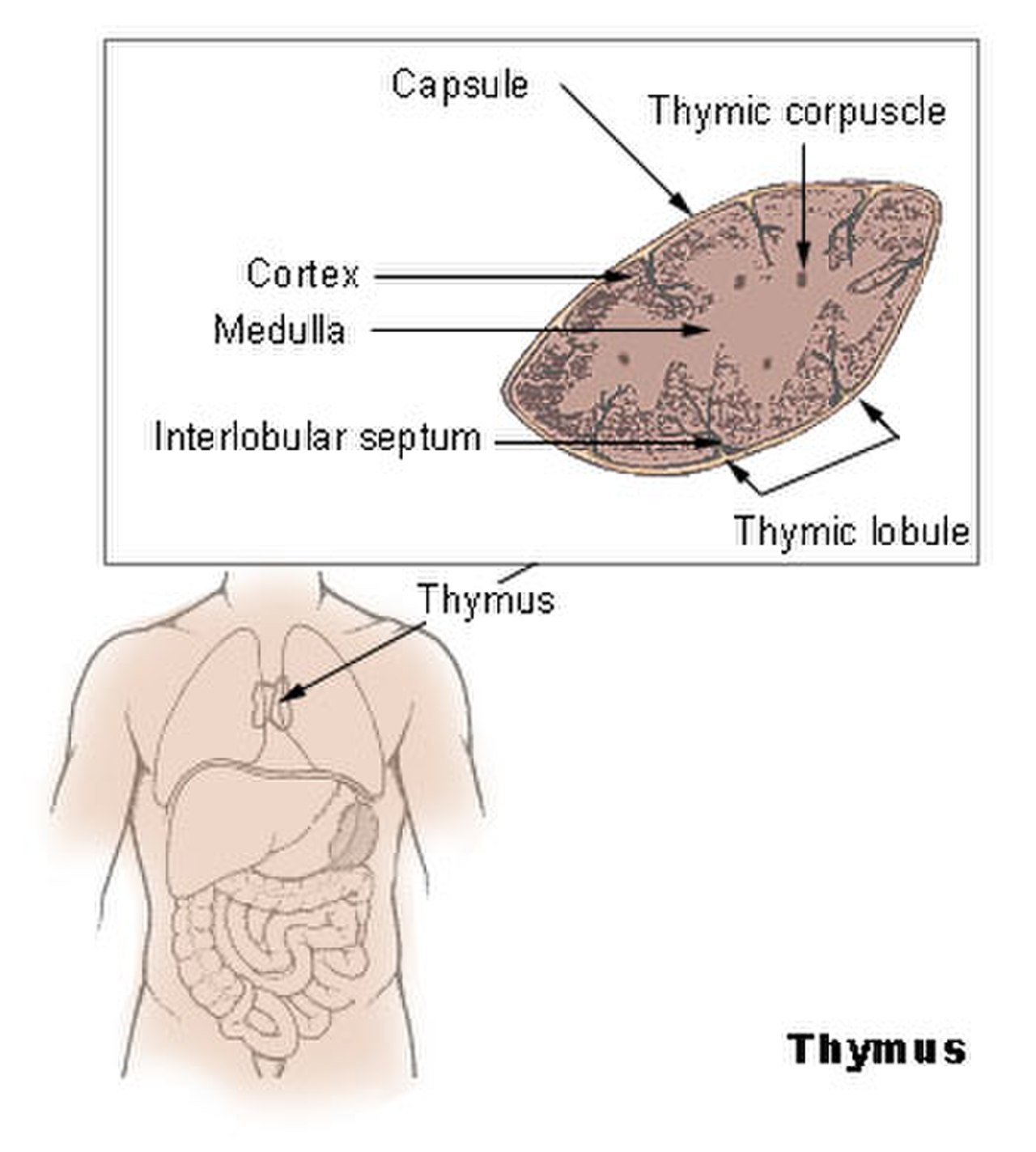
The thymus is a vital organ in the human body, playing a crucial role in the development and functioning of the immune system. As a primary lymphoid organ, the thymus is responsible for the maturation of T cells, which are essential for the adaptive immune response. The thymus is located in the upper front part of the chest, in the anterior superior mediastinum, behind the sternum and in front of the heart. The thymus is made up of two lobes, each consisting of a central medulla and an outer cortex, surrounded by a capsule. For more information on the immune system, visit the Immune System page.
🔍 Anatomy of the Thymus
The anatomy of the thymus is complex and fascinating. The thymus is divided into two main parts: the cortex and the medulla. The cortex is the outer layer of the thymus, where T cells undergo the process of positive selection and negative selection. The medulla, on the other hand, is the inner layer, where T cells undergo further maturation and development. The thymus is also surrounded by a capsule, which provides protection and support to the organ. To learn more about the anatomy of the thymus, visit the Thymus Anatomy page. The thymus is also connected to the lymphatic system, which plays a crucial role in the immune response.
👥 Role of the Thymus in the Immune System
The thymus plays a critical role in the immune system, as it is responsible for the maturation and development of T cells. T cells are a type of white blood cell that is essential for the adaptive immune response, which allows the body to adapt to specific foreign invaders. The thymus is also involved in the development of B cells, which are another type of white blood cell that plays a crucial role in the immune response. For more information on the immune system, visit the Immune System page. The thymus is also connected to the spleen, which filters the blood and stores red blood cells.
💡 T Cell Maturation and Development
T cell maturation and development is a complex process that occurs within the thymus. During this process, T cells undergo a series of tests and selections, including positive selection and negative selection. Positive selection involves the selection of T cells that are able to recognize and bind to MHC molecules, which are proteins that are expressed on the surface of cells. Negative selection, on the other hand, involves the elimination of T cells that are able to recognize and bind to self-antigens, which are proteins that are produced by the body. For more information on T cell development, visit the T Cell Development page. The thymus is also connected to the bone marrow, which produces blood cells.
🔬 Thymus Function and Importance
The thymus is a vital organ that plays a crucial role in the functioning of the immune system. The thymus is responsible for the maturation and development of T cells, which are essential for the adaptive immune response. Without a functioning thymus, the body would be unable to adapt to specific foreign invaders, and would be more susceptible to infection and disease. For more information on the importance of the thymus, visit the Thymus Importance page. The thymus is also connected to the lymph nodes, which filter lymph fluid and store white blood cells.
📊 Thymus Size and Location
The size and location of the thymus can vary from person to person. The thymus is typically located in the upper front part of the chest, in the anterior superior mediastinum, behind the sternum and in front of the heart. The thymus is made up of two lobes, each consisting of a central medulla and an outer cortex, surrounded by a capsule. For more information on the anatomy of the thymus, visit the Thymus Anatomy page. The thymus is also connected to the diaphragm, which separates the chest cavity from the abdominal cavity.
👀 Thymus Structure and Composition
The structure and composition of the thymus is complex and fascinating. The thymus is made up of two lobes, each consisting of a central medulla and an outer cortex, surrounded by a capsule. The cortex is the outer layer of the thymus, where T cells undergo the process of positive selection and negative selection. The medulla, on the other hand, is the inner layer, where T cells undergo further maturation and development. For more information on the structure and composition of the thymus, visit the Thymus Structure page. The thymus is also connected to the thoracic duct, which is the main lymphatic vessel in the body.
🔮 Thymus and Aging
The thymus is also affected by aging, as its function and size decline with age. This decline can make the body more susceptible to infection and disease, as the thymus is no longer able to produce as many T cells. For more information on the effects of aging on the thymus, visit the Thymus and Aging page. The thymus is also connected to the Immune System and Aging, which is a critical factor in the development of age-related diseases.
🧬 Future Research and Developments
Future research and developments on the thymus are focused on understanding its role in the immune system and developing new treatments for disorders and diseases related to the thymus. One area of research is the development of thymus transplantation, which involves transplanting a healthy thymus into a person with a dysfunctional thymus. For more information on thymus transplantation, visit the Thymus Transplantation page. The thymus is also connected to the regenerative medicine, which is a field of research that focuses on the development of new treatments and therapies using stem cells and other cells.
📚 Conclusion and Summary
In conclusion, the thymus is a vital organ that plays a crucial role in the functioning of the immune system. The thymus is responsible for the maturation and development of T cells, which are essential for the adaptive immune response. For more information on the thymus, visit the Thymus page. The thymus is also connected to the Immune System, which is a complex system that protects the body against infection and disease.
🤔 FAQs and Further Reading
For further reading and FAQs on the thymus, visit the Thymus FAQs page. The thymus is also connected to the Lymphatic System, which plays a crucial role in the immune response. For more information on the lymphatic system, visit the Lymphatic System page.
Key Facts
- Year
- 1961
- Origin
- Ancient Greece
- Category
- Human Biology
- Type
- Organ
Frequently Asked Questions
What is the thymus?
The thymus is a vital organ that plays a crucial role in the functioning of the immune system. The thymus is responsible for the maturation and development of T cells, which are essential for the adaptive immune response. For more information on the thymus, visit the Thymus page. The thymus is also connected to the Immune System, which is a complex system that protects the body against infection and disease.
Where is the thymus located?
The thymus is typically located in the upper front part of the chest, in the anterior superior mediastinum, behind the sternum and in front of the heart. For more information on the anatomy of the thymus, visit the Thymus Anatomy page.
What is the function of the thymus?
The thymus is responsible for the maturation and development of T cells, which are essential for the adaptive immune response. The thymus is also involved in the development of B cells, which are another type of white blood cell that plays a crucial role in the immune response. For more information on the function of the thymus, visit the Thymus Importance page.
What are some disorders and diseases related to the thymus?
There are several disorders and diseases that are related to the thymus, including thymoma, which is a type of tumor that occurs in the thymus. Thymoma can be benign or malignant, and can cause a range of symptoms, including chest pain, coughing, and shortness of breath. For more information on thymoma, visit the Thymoma page.
How does the thymus change with age?
The thymus is affected by aging, as its function and size decline with age. This decline can make the body more susceptible to infection and disease, as the thymus is no longer able to produce as many T cells. For more information on the effects of aging on the thymus, visit the Thymus and Aging page.
What is the current research on the thymus?
Future research and developments on the thymus are focused on understanding its role in the immune system and developing new treatments for disorders and diseases related to the thymus. One area of research is the development of thymus transplantation, which involves transplanting a healthy thymus into a person with a dysfunctional thymus. For more information on thymus transplantation, visit the Thymus Transplantation page.
How is the thymus connected to the immune system?
The thymus is a vital organ that plays a crucial role in the functioning of the immune system. The thymus is responsible for the maturation and development of T cells, which are essential for the adaptive immune response. For more information on the immune system, visit the Immune System page.