
Contents
- 🎵 Origins & History
- ⚙️ How It Works
- 📊 Key Facts & Numbers
- 👥 Key People & Organizations
- 🌍 Cultural Impact & Influence
- ⚡ Current State & Latest Developments
- 🤔 Controversies & Debates
- 🔮 Future Outlook & Predictions
- 💡 Practical Applications
- 📚 Related Topics & Deeper Reading
- Frequently Asked Questions
- References
- Related Topics
Overview
Lymph nodes, also known as lymph glands, are kidney-shaped organs that play a vital role in the lymphatic and adaptive immune systems. With over 600 lymph nodes throughout the body, they act as filters for foreign particles, including cancer cells, and are essential for the proper functioning of the immune system. Lymph nodes become inflamed or enlarged in various diseases, ranging from mild throat infections to life-threatening cancers, making their condition crucial in cancer staging and treatment. According to the National Cancer Institute, lymph nodes are a key factor in determining the prognosis and treatment of cancer patients. The American Cancer Society estimates that over 1.8 million new cancer cases are diagnosed each year in the United States, highlighting the importance of understanding lymph nodes and their role in cancer diagnosis and treatment. With the help of medical professionals, such as Dr. James Allison, a renowned immunologist, and organizations like the Mayo Clinic, we can better understand the significance of lymph nodes in maintaining our overall health and well-being.
🎵 Origins & History
Origins paragraph — Lymph nodes have been a subject of interest in the medical field for centuries, with the first recorded description of lymph nodes dating back to the 17th century by the Italian anatomist Gaspare Aselli. The discovery of lymph nodes was a significant milestone in the understanding of the immune system, and since then, numerous studies have been conducted to understand their role in maintaining our health. For example, the work of Dr. Emil von Behring, a German physiologist, led to the development of vaccines and a deeper understanding of the immune system. Today, organizations like the National Institutes of Health (NIH) and the World Health Organization (WHO) continue to fund research on lymph nodes and their role in various diseases.
⚙️ How It Works
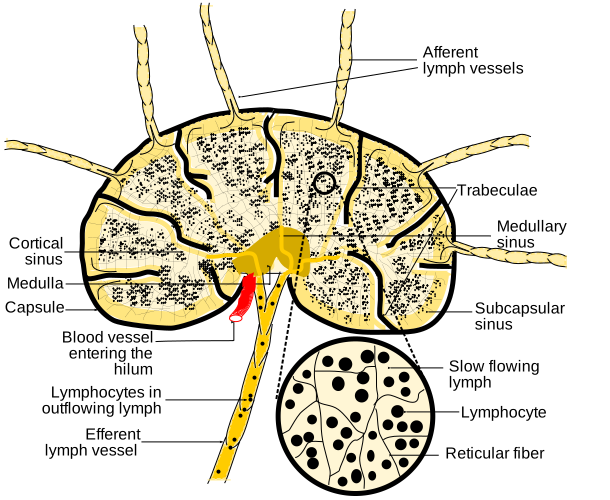
How it works — Lymph nodes are made up of an outer cortex and an inner medulla, and are enclosed in a fibrous capsule. They are responsible for filtering out foreign particles, including bacteria, viruses, and cancer cells, from the lymph fluid. The lymph fluid, which is rich in white blood cells, including B and T cells, plays a crucial role in the immune system. The process of filtration is facilitated by the lymph nodes' unique structure, which allows them to trap and eliminate harmful substances. For instance, the lymph nodes in the neck are responsible for filtering out bacteria and viruses that enter the body through the mouth and nose, while the lymph nodes in the armpits filter out harmful substances that enter the body through the skin.
📊 Key Facts & Numbers
Key facts — There are over 600 lymph nodes in the human body, with the majority located in the neck, armpits, and groin area. Lymph nodes can become inflamed or enlarged due to various diseases, including cancer, infections, and autoimmune disorders. According to the Centers for Disease Control and Prevention (CDC), lymph nodes play a critical role in the diagnosis and treatment of cancer, with the presence of cancer cells in lymph nodes being a key factor in determining the stage and prognosis of the disease. For example, the presence of cancer cells in the lymph nodes of a patient with breast cancer can indicate that the cancer has spread to other parts of the body, requiring more aggressive treatment.
👥 Key People & Organizations
Key people — Dr. James Allison, a renowned immunologist, has made significant contributions to our understanding of lymph nodes and their role in the immune system. His work on the development of cancer immunotherapy has led to the creation of new treatments that target lymph nodes and other components of the immune system. Other key organizations, such as the American Cancer Society and the Mayo Clinic, have also played a crucial role in promoting research and awareness about lymph nodes and their importance in maintaining our health. For instance, the American Cancer Society has funded numerous studies on lymph nodes and their role in cancer diagnosis and treatment, while the Mayo Clinic has developed innovative treatments that target lymph nodes and other components of the immune system.
🌍 Cultural Impact & Influence
Cultural impact — Lymph nodes have had a significant impact on our understanding of the immune system and have led to the development of new treatments for various diseases. The discovery of lymph nodes has also led to a greater awareness of the importance of maintaining a healthy immune system, with many people taking steps to boost their immune system through lifestyle changes and supplements. For example, the use of probiotics and other supplements has become increasingly popular in recent years, as people seek to support their immune system and reduce their risk of disease. However, it is essential to note that while these supplements may have some benefits, they should not be used as a replacement for medical treatment, and individuals should consult with their healthcare provider before using any supplements.
⚡ Current State & Latest Developments
Current state — Currently, researchers are exploring new ways to target lymph nodes in the treatment of cancer and other diseases. Immunotherapy, which involves stimulating the immune system to attack cancer cells, has shown promising results in clinical trials. For example, a study published in the Journal of Clinical Oncology found that immunotherapy was effective in treating patients with advanced melanoma, with many patients experiencing significant improvements in their symptoms and quality of life. Additionally, advances in medical imaging technologies, such as MRI and CT scans, have improved our ability to visualize and diagnose lymph node-related diseases. However, despite these advances, there is still much to be learned about lymph nodes and their role in maintaining our health, and further research is needed to fully understand their importance.
🤔 Controversies & Debates
Controversies — There is ongoing debate among medical professionals about the best way to diagnose and treat lymph node-related diseases. Some argue that a more aggressive approach is needed, while others advocate for a more conservative approach. For instance, some researchers argue that the use of immunotherapy should be limited to patients with advanced cancer, while others believe that it should be used more widely to treat patients with earlier stages of the disease. Additionally, there are concerns about the potential side effects of treatments that target lymph nodes, such as radiation therapy, which can cause damage to surrounding tissues and increase the risk of secondary cancers. Therefore, it is essential to carefully weigh the potential benefits and risks of any treatment and to consult with a healthcare provider before making any decisions.
🔮 Future Outlook & Predictions
Future outlook — As research continues to advance our understanding of lymph nodes, we can expect to see new and innovative treatments for lymph node-related diseases. For example, the development of personalized medicine, which involves tailoring treatment to an individual's specific genetic profile, may lead to more effective and targeted treatments for cancer and other diseases. Additionally, advances in gene editing technologies, such as CRISPR, may allow for the development of new treatments that target specific genes involved in lymph node function. However, it is essential to note that while these advances hold promise, they are still in the early stages of development, and further research is needed to fully understand their potential benefits and risks.
💡 Practical Applications
Practical applications — Lymph nodes have numerous practical applications in the field of medicine. For example, lymph node biopsies are commonly used to diagnose and stage cancer, while lymph node dissections are used to remove cancerous lymph nodes. Additionally, lymph nodes are an important target for immunotherapy and other cancer treatments. For instance, the use of checkpoint inhibitors, which target specific proteins on the surface of lymph nodes, has been shown to be effective in treating patients with advanced cancer. However, it is essential to note that while these treatments may have some benefits, they should not be used as a replacement for standard medical care, and individuals should consult with their healthcare provider before using any treatments.
Key Facts
- Year
- 2022
- Origin
- Human body
- Category
- public-health
- Type
- concept
Frequently Asked Questions
What is the function of lymph nodes?
Lymph nodes act as filters for foreign particles, including bacteria, viruses, and cancer cells, and play a crucial role in the immune system. According to the National Institute of Allergy and Infectious Diseases, lymph nodes are responsible for trapping and eliminating harmful substances from the lymph fluid, which helps to prevent the spread of infection and disease. For example, the lymph nodes in the neck are responsible for filtering out bacteria and viruses that enter the body through the mouth and nose, while the lymph nodes in the armpits filter out harmful substances that enter the body through the skin.
How many lymph nodes are in the human body?
There are over 600 lymph nodes in the human body, with the majority located in the neck, armpits, and groin area. According to the American Cancer Society, the exact number of lymph nodes can vary from person to person, but most people have between 500 and 700 lymph nodes. For instance, the lymph nodes in the neck are responsible for filtering out bacteria and viruses that enter the body through the mouth and nose, while the lymph nodes in the armpits filter out harmful substances that enter the body through the skin.
What is lymphadenopathy?
Lymphadenopathy refers to glands that are enlarged or swollen, which can be a sign of various diseases, including cancer, infections, and autoimmune disorders. According to the Mayo Clinic, lymphadenopathy can be caused by a range of factors, including infection, inflammation, and cancer, and can be treated with a range of therapies, including antibiotics, anti-inflammatory medications, and cancer treatments. For example, the use of immunotherapy has been shown to be effective in treating patients with lymphadenopathy caused by cancer, while the use of antibiotics has been shown to be effective in treating patients with lymphadenopathy caused by infection.
How are lymph nodes related to cancer?
Lymph nodes play a crucial role in cancer diagnosis and treatment, as they can become inflamed or enlarged due to the presence of cancer cells. According to the National Cancer Institute, the presence of cancer cells in lymph nodes is a key factor in determining the stage and prognosis of the disease, and can help guide treatment decisions. For instance, the use of lymph node biopsies can help diagnose and stage cancer, while the use of lymph node dissections can help remove cancerous lymph nodes and prevent the spread of the disease.
What is the current state of research on lymph nodes?
Researchers are currently exploring new ways to target lymph nodes in the treatment of cancer and other diseases, including immunotherapy and gene editing technologies. According to the National Institutes of Health, the use of immunotherapy has shown promising results in clinical trials, and may offer new hope for patients with advanced cancer. For example, a study published in the Journal of Clinical Oncology found that immunotherapy was effective in treating patients with advanced melanoma, with many patients experiencing significant improvements in their symptoms and quality of life.
What are the potential applications of lymph node research?
Lymph node research has numerous practical applications in the field of medicine, including the development of new treatments for cancer and other diseases. According to the American Cancer Society, the use of lymph node biopsies and dissections can help diagnose and treat cancer, while the use of immunotherapy and other targeted therapies can help treat patients with advanced disease. For instance, the use of checkpoint inhibitors has been shown to be effective in treating patients with advanced cancer, while the use of gene editing technologies may offer new hope for patients with genetic disorders.
How can I support my lymph nodes?
There are several ways to support your lymph nodes, including maintaining a healthy diet, exercising regularly, and managing stress. According to the Mayo Clinic, a healthy lifestyle can help support the immune system and reduce the risk of disease, while the use of supplements and other therapies may also be beneficial. For example, the use of probiotics and other supplements has been shown to support the immune system and reduce the risk of infection, while the use of stress-reducing techniques such as meditation and yoga may also be beneficial.