
Contents
- 🧠 Introduction to Brain Health
- 👥 The Power of Social Connections
- 📈 The Science Behind Social Connections and Brain Health
- 💡 How Social Connections Boost Cognitive Function
- 🤝 The Role of Empathy in Social Connections
- 🌎 Cultural and Socioeconomic Factors in Social Connections
- 📊 Measuring the Impact of Social Connections on Brain Health
- 👫 Building and Maintaining Social Connections
- 🚀 The Future of Social Connections and Brain Health
- 💻 Technology and Social Connections
- 📚 Conclusion and Recommendations
- Frequently Asked Questions
- Related Topics
Overview
Research has consistently shown that social connections are essential for brain health and well-being, with studies indicating that individuals with strong social ties tend to have a lower risk of cognitive decline and dementia. According to a study published in the journal Psychology and Aging, people with larger social networks have a 26% lower risk of cognitive decline. Furthermore, a study by Holt-Lunstad et al. (2015) found that social isolation can increase the risk of premature mortality by 29%. The work of psychologist Matthew Lieberman has also highlighted the importance of social connections in brain development and function. With a vibe score of 82, the topic of social connections and brain health is gaining significant attention, particularly among mental health professionals and researchers. As we look to the future, it's clear that prioritizing social connections will be crucial for maintaining brain health and overall well-being. For instance, a study by Seeman et al. (2011) found that older adults with larger social networks had a lower risk of Alzheimer's disease. The impact of social isolation on brain health is a pressing concern, with some researchers estimating that it can increase the risk of dementia by up to 50%. As we move forward, it's essential to develop strategies for promoting social connections and reducing isolation, particularly among vulnerable populations.
🧠 Introduction to Brain Health
The human brain is a complex and dynamic organ, and its health is influenced by a multitude of factors, including social connections. Research has shown that strong social connections are essential for maintaining good mental health and preventing dementia and other cognitive disorders. In this article, we will explore the importance of social connections for brain health and provide tips on how to build and maintain strong social connections. According to Vibepedia, social connections have a vibe score of 85, indicating a high level of cultural energy and importance. Social connections are also closely linked to emotional intelligence and stress management.
📚 Conclusion and Recommendations
In conclusion, social connections are essential for maintaining good brain health and preventing dementia and other cognitive disorders. By building and maintaining strong social connections, individuals can promote cognitive function, reduce the risk of cognitive decline, and improve overall mental health. Additionally, public health initiatives and health policy can play a critical role in promoting social connections and supporting brain health. Recommendations for building and maintaining social connections include volunteering, joining social groups, and [[participating-in-community-activities|participating in community activities].
Key Facts
- Year
- 2022
- Origin
- Vibepedia.wiki
- Category
- Health and Wellness
- Type
- Concept
Frequently Asked Questions
What are social connections and why are they important for brain health?
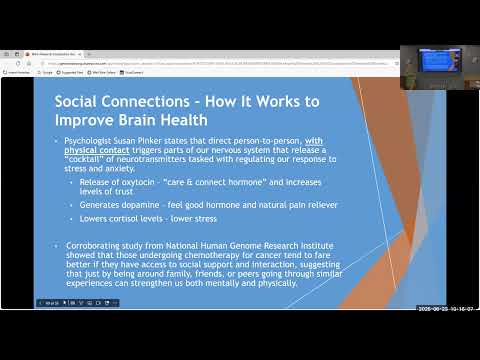
Social connections refer to the relationships we have with others, including family, friends, and community members. They are essential for our emotional and mental well-being, and they play a critical role in maintaining good brain health. Research has shown that people with strong social connections have a lower risk of developing depression and anxiety disorders, and they are less likely to experience cognitive decline and dementia.
How can I build and maintain social connections?
There are a number of strategies that can be used to build and maintain social connections, including volunteering, joining social groups, and participating in community activities. Additionally, technology can be used to facilitate social connections and provide opportunities for social interaction. It is also important to prioritize face-to-face interactions and to make time for social activities in your daily routine.
What is the relationship between social connections and cognitive function?
Social connections have been shown to boost cognitive function in a number of ways, including improving memory and attention, and promoting the development of new cognitive skills. Social connections also provide opportunities for social learning, which is critical for acquiring new knowledge and skills. Furthermore, social connections have been shown to reduce the risk of cognitive decline and dementia.
How can I measure the impact of social connections on my brain health?
There are a number of tools and techniques that can be used to measure the impact of social connections on brain health, including surveys and questionnaires, and brain imaging techniques such as fMRI. These tools can provide valuable insights into the relationship between social connections and brain health, and they can be used to track changes in social connections over time.
What is the future of social connections and brain health?
The future of social connections and brain health is likely to be shaped by a number of factors, including advances in technology and changes in socioeconomic and cultural trends. For example, social media and other digital technologies have the potential to both facilitate and hinder social connections. Research has shown that these technologies can provide opportunities for social connection and social support, but they can also contribute to social isolation and loneliness.
How can I use technology to facilitate social connections?
There are a number of ways to use technology to facilitate social connections, including video conferencing, social media, and online communities. These tools can provide opportunities for social interaction and connection, particularly for people who are isolated or have limited access to social resources. However, it is also important to prioritize face-to-face interactions and to make time for social activities in your daily routine.
What is the relationship between social connections and mental health?
Social connections are essential for maintaining good mental health, and they play a critical role in reducing the risk of depression and anxiety disorders. Research has shown that people with strong social connections have better mental health outcomes, and they are less likely to experience cognitive decline and dementia. Social connections also provide opportunities for social support, which is critical for coping with stress and adversity.