
Contents
- 📊 Introduction to Post-Keynesian Economics
- 📈 The Rise of Post-Keynesian Thought
- 📝 Critique of Mainstream Economics
- 💸 Monetary Policy and Endogenous Money
- 📊 The Role of Institutions in Post-Keynesian Economics
- 🌎 Globalization and Post-Keynesian Economics
- 📈 Financial Instability and Crisis
- 📊 Policy Implications of Post-Keynesian Economics
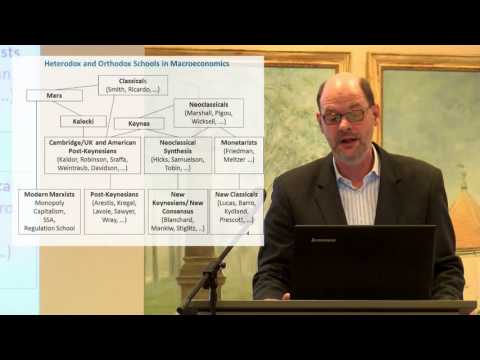
- 📝 Comparison with Other Heterodox Schools
- 📊 Future Directions for Post-Keynesian Economics
- 📈 Conclusion: Challenging Mainstream Orthodoxy
- Frequently Asked Questions
- Related Topics
Overview
Post-Keynesian economics, emerging in the 1930s, critiques neoclassical economics for its failure to account for uncertainty, power dynamics, and the role of institutions in shaping economic outcomes. This school of thought, influenced by John Maynard Keynes, Michal Kalecki, and Hyman Minsky, among others, emphasizes the importance of aggregate demand, financial instability, and the inherent instability of capitalist systems. Post-Keynesians argue that mainstream economics oversimplifies the complexity of real-world economies, neglecting issues like income distribution, environmental degradation, and social justice. With a vibe score of 8, post-Keynesian economics has gained significant traction among scholars and policymakers seeking alternative perspectives on economic policy. The influence of post-Keynesian thought can be seen in the work of economists like Joseph Stiglitz and Mariana Mazzucato, who have applied its principles to issues like financial regulation and innovation policy. As the global economy continues to grapple with issues like inequality, climate change, and financial instability, post-Keynesian economics offers a critical framework for understanding and addressing these challenges.
📊 Introduction to Post-Keynesian Economics
Post-Keynesian economics is a school of economic thought that challenges the mainstream orthodoxy of Neoclassical Economics. It emphasizes the importance of Institutional Economics and the role of Money and Finance in shaping economic outcomes. Post-Keynesian economists, such as Hyman Minsky and Steve Keen, argue that the economy is inherently unstable and that Financial Crisis is a natural consequence of the capitalist system. The post-Keynesian approach is characterized by a focus on Macroeconomics and the use of Stock-Flow Consistent Modeling.
📈 The Rise of Post-Keynesian Thought
The rise of post-Keynesian thought can be traced back to the work of John Maynard Keynes and his critique of Laissez-Faire Economics. Keynes' ideas about the importance of Government Intervention in the economy and the role of Aggregate Demand in shaping economic outcomes laid the foundation for post-Keynesian economics. The post-Keynesian school of thought has since been developed and expanded upon by economists such as Paul Davidson and Jan Kregel. Post-Keynesian economics is closely related to other heterodox schools of thought, such as Marxian Economics and Institutional Economics.
📝 Critique of Mainstream Economics
Post-Keynesian economists argue that mainstream economics is flawed due to its reliance on Equilibrium Economics and the assumption of Rational Choice Theory. They contend that these assumptions are unrealistic and do not accurately reflect the complexities of the real world. Instead, post-Keynesian economists emphasize the importance of Uncertainty and the role of Institutions in shaping economic outcomes. The post-Keynesian critique of mainstream economics is closely related to the work of Thomas Kuhn and his concept of Paradigm Shift.
💸 Monetary Policy and Endogenous Money
Monetary policy is a key area of focus for post-Keynesian economists, who argue that the Money Supply is endogenous, meaning that it is determined by the interactions of Banks and other financial institutions. This perspective is in contrast to the mainstream view, which sees the money supply as exogenous, controlled by the Central Bank. Post-Keynesian economists, such as Basil Moore, argue that the endogenous money approach is more realistic and better able to explain the complexities of the financial system. The post-Keynesian view of monetary policy is closely related to the concept of Modern Monetary Theory.
📊 The Role of Institutions in Post-Keynesian Economics
Institutions play a crucial role in post-Keynesian economics, as they are seen as shaping the behavior of economic agents and influencing the overall performance of the economy. Post-Keynesian economists, such as Geoff Harcourt, argue that institutions are not just passive backdrop for economic activity, but rather active participants that can influence the course of economic events. The post-Keynesian emphasis on institutions is closely related to the work of Thorstein Veblen and his concept of Institutional Economics.
🌎 Globalization and Post-Keynesian Economics
Globalization is a key challenge for post-Keynesian economics, as it raises questions about the nature of the global economy and the role of International Institutions. Post-Keynesian economists, such as Joseph Stiglitz, argue that globalization has led to increased Income Inequality and Financial Instability. The post-Keynesian perspective on globalization is closely related to the concept of Global Governance and the need for more effective regulation of the global economy. The post-Keynesian school of thought is also closely related to the work of Immanuel Wallerstein and his concept of World Systems Theory.
📈 Financial Instability and Crisis
Financial instability is a natural consequence of the capitalist system, according to post-Keynesian economists. They argue that the pursuit of Profit Maximization leads to excessive Debt and Speculation, which can ultimately lead to Financial Crisis. The post-Keynesian perspective on financial instability is closely related to the work of Hyman Minsky and his concept of the Financial Instability Hypothesis.
📊 Policy Implications of Post-Keynesian Economics
The policy implications of post-Keynesian economics are significant, as they suggest that governments and central banks need to take a more active role in regulating the economy and preventing financial instability. Post-Keynesian economists, such as Steve Keen, argue that this can be achieved through the use of Fiscal Policy and Monetary Policy. The post-Keynesian perspective on policy is closely related to the concept of Modern Monetary Theory and the work of Warren Mosler.
📝 Comparison with Other Heterodox Schools
Post-Keynesian economics is often compared to other heterodox schools of thought, such as Marxian Economics and Institutional Economics. While these schools share some similarities with post-Keynesian economics, they also have some key differences. For example, Marxian economics places a greater emphasis on the role of Class Struggle in shaping economic outcomes, while institutional economics focuses more on the role of Institutions in shaping economic behavior. The post-Keynesian school of thought is also closely related to the work of Thorstein Veblen and his concept of Institutional Economics.
📊 Future Directions for Post-Keynesian Economics
The future directions for post-Keynesian economics are likely to involve a continued emphasis on the role of Institutions and Uncertainty in shaping economic outcomes. Post-Keynesian economists, such as Jan Kregel, argue that this will require the development of new Macroeconomic Models that are better able to capture the complexities of the real world. The post-Keynesian school of thought is also likely to continue to engage with other heterodox schools of thought, such as Marxian Economics and Institutional Economics.
📈 Conclusion: Challenging Mainstream Orthodoxy
In conclusion, post-Keynesian economics offers a unique perspective on the economy and the role of Government Intervention in shaping economic outcomes. The post-Keynesian school of thought is characterized by a focus on Macroeconomics and the use of Stock-Flow Consistent Modeling. While post-Keynesian economics has its limitations, it provides a valuable alternative to mainstream economics and offers a more nuanced understanding of the complexities of the real world. As the global economy continues to evolve, the post-Keynesian perspective is likely to remain an important part of the economic debate.
Key Facts
- Year
- 1936
- Origin
- University of Cambridge, UK
- Category
- Economics
- Type
- Economic Theory
Frequently Asked Questions
What is post-Keynesian economics?
Post-Keynesian economics is a school of economic thought that challenges the mainstream orthodoxy of Neoclassical Economics. It emphasizes the importance of Institutional Economics and the role of Money and Finance in shaping economic outcomes. Post-Keynesian economists argue that the economy is inherently unstable and that Financial Crisis is a natural consequence of the capitalist system.
Who are some notable post-Keynesian economists?
Some notable post-Keynesian economists include Hyman Minsky, Steve Keen, Paul Davidson, and Jan Kregel. These economists have made significant contributions to the development of post-Keynesian thought and have helped to shape the school's perspective on the economy and economic policy.
What is the post-Keynesian view of monetary policy?
Post-Keynesian economists argue that the Money Supply is endogenous, meaning that it is determined by the interactions of Banks and other financial institutions. This perspective is in contrast to the mainstream view, which sees the money supply as exogenous, controlled by the Central Bank. The post-Keynesian view of monetary policy is closely related to the concept of Modern Monetary Theory.
How does post-Keynesian economics differ from other heterodox schools of thought?
Post-Keynesian economics differs from other heterodox schools of thought, such as Marxian Economics and Institutional Economics, in its emphasis on the role of Uncertainty and Institutions in shaping economic outcomes. While these schools share some similarities with post-Keynesian economics, they also have some key differences. For example, Marxian economics places a greater emphasis on the role of Class Struggle in shaping economic outcomes, while institutional economics focuses more on the role of Institutions in shaping economic behavior.
What are the policy implications of post-Keynesian economics?
The policy implications of post-Keynesian economics are significant, as they suggest that governments and central banks need to take a more active role in regulating the economy and preventing financial instability. Post-Keynesian economists argue that this can be achieved through the use of Fiscal Policy and Monetary Policy. The post-Keynesian perspective on policy is closely related to the concept of Modern Monetary Theory and the work of Warren Mosler.
What is the future of post-Keynesian economics?
The future of post-Keynesian economics is likely to involve a continued emphasis on the role of Institutions and Uncertainty in shaping economic outcomes. Post-Keynesian economists argue that this will require the development of new Macroeconomic Models that are better able to capture the complexities of the real world. The post-Keynesian school of thought is also likely to continue to engage with other heterodox schools of thought, such as Marxian Economics and Institutional Economics.
How does post-Keynesian economics relate to other fields of study?
Post-Keynesian economics relates to other fields of study, such as Sociology and Political Science, in its emphasis on the role of Institutions and Power Relations in shaping economic outcomes. The post-Keynesian perspective on the economy is also closely related to the concept of Global Governance and the need for more effective regulation of the global economy.