
Contents
- 📊 Introduction to Aggregate Demand
- 💸 Components of Aggregate Demand
- 📈 Understanding the Aggregate Demand Curve
- 🚨 Factors Affecting Aggregate Demand
- 📊 Calculating Aggregate Demand
- 📝 Aggregate Demand and Economic Growth
- 🌎 International Trade and Aggregate Demand
- 💡 Policy Implications of Aggregate Demand
- 📊 Criticisms and Limitations of Aggregate Demand
- 🔮 Future of Aggregate Demand Analysis
- Frequently Asked Questions
- Related Topics
Overview
Aggregate demand refers to the total amount of spending in an economy, encompassing consumer, investment, government, and net export expenditures. It is a crucial concept in macroeconomics, as fluctuations in aggregate demand can have significant impacts on economic growth, employment, and inflation. The aggregate demand curve, which plots the relationship between the price level and the quantity of goods and services demanded, is a fundamental tool for analyzing economic activity. However, the curve's shape and position can be influenced by various factors, including monetary and fiscal policies, technological advancements, and global events. For instance, a decrease in interest rates can increase aggregate demand by stimulating borrowing and spending, while a rise in taxes can reduce it by decreasing disposable income. As of 2022, the global economy is navigating the challenges of the COVID-19 pandemic, with many countries experiencing fluctuations in aggregate demand due to lockdowns, supply chain disruptions, and shifting consumer behavior.
📊 Introduction to Aggregate Demand
The concept of aggregate demand is a crucial aspect of macroeconomics, as it helps economists understand the overall demand for goods and services in an economy. Aggregate demand, also known as domestic final demand, is the total demand for final goods and services in an economy at a given time, as discussed in Macroeconomics. It is often referred to as effective demand, though this term is sometimes distinguished. The aggregate demand is the demand for the Gross Domestic Product (GDP) of a country, which specifies the amount of goods and services that will be purchased at all possible price levels. For instance, the Federal Reserve uses aggregate demand as a key indicator to inform its monetary policy decisions.
💸 Components of Aggregate Demand
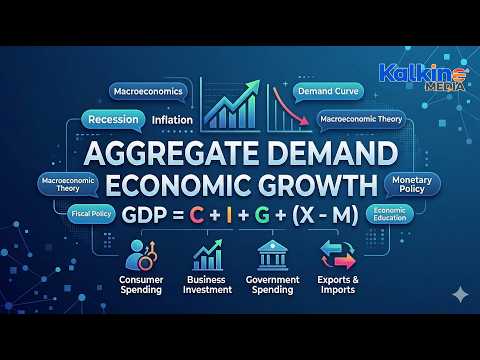
The components of aggregate demand are consumer spending, investment, corporate and government expenditure, and net exports. Consumer spending, which accounts for the largest portion of aggregate demand, is influenced by factors such as disposable income, consumer confidence, and interest rates, as explained in Consumer Behavior. Investment, on the other hand, is affected by factors such as interest rates, expected returns, and business confidence. Corporate and government expenditure, including government spending and taxation, also play a significant role in determining aggregate demand. Net exports, which represent the difference between exports and imports, are influenced by factors such as exchange rates and foreign demand, as discussed in International Trade.
📈 Understanding the Aggregate Demand Curve
The aggregate demand curve is a graphical representation of the relationship between the price level and the quantity of goods and services demanded. The curve is typically downward-sloping, indicating that as the price level increases, the quantity of goods and services demanded decreases. However, the slope of the curve can vary depending on factors such as the level of economic activity, inflation expectations, and monetary policy, as explained in Monetary Policy. The aggregate demand curve is a key tool used by economists to analyze the effects of changes in aggregate demand on the overall economy, including the impact on Inflation and Unemployment.
🚨 Factors Affecting Aggregate Demand
Several factors can affect aggregate demand, including changes in consumer spending, investment, government expenditure, and net exports. For example, an increase in consumer confidence can lead to an increase in consumer spending, which can boost aggregate demand. Similarly, a decrease in interest rates can stimulate investment and increase aggregate demand. However, a decrease in government expenditure or an increase in taxes can reduce aggregate demand, as discussed in Fiscal Policy. Additionally, changes in exchange rates and foreign demand can affect net exports and aggregate demand. The International Monetary Fund (IMF) closely monitors these factors to provide guidance on global economic trends.
📊 Calculating Aggregate Demand
Calculating aggregate demand involves adding up the components of aggregate demand, including consumer spending, investment, corporate and government expenditure, and net exports. The formula for calculating aggregate demand is AD = C + I + G + (X - M), where AD is aggregate demand, C is consumer spending, I is investment, G is government expenditure, X is exports, and M is imports. For instance, the Bureau of Economic Analysis (BEA) uses this formula to estimate the GDP of the United States. Economists use this formula to estimate the level of aggregate demand and to analyze the effects of changes in aggregate demand on the overall economy, including the impact on Economic Growth.
📝 Aggregate Demand and Economic Growth
Aggregate demand is closely related to economic growth, as an increase in aggregate demand can lead to an increase in economic activity and output. When aggregate demand increases, businesses respond by increasing production, which can lead to an increase in employment and income. This, in turn, can lead to an increase in consumer spending, creating a virtuous cycle of economic growth, as explained in Economic Indicators. However, if aggregate demand is too low, it can lead to a decrease in economic activity and output, resulting in a recession. The World Bank provides guidance on how to promote economic growth and development through aggregate demand management.
🌎 International Trade and Aggregate Demand
International trade plays a significant role in determining aggregate demand, as changes in exchange rates and foreign demand can affect net exports. An increase in exports can boost aggregate demand, while a decrease in exports can reduce aggregate demand. Additionally, changes in import prices can affect consumer spending and aggregate demand. For example, a decrease in import prices can lead to an increase in consumer spending, as consumers can purchase more goods and services at lower prices, as discussed in Trade Policy. The World Trade Organization (WTO) works to promote free trade and reduce trade barriers to facilitate international trade and economic growth.
💡 Policy Implications of Aggregate Demand
The policy implications of aggregate demand are significant, as changes in aggregate demand can have a major impact on the overall economy. Monetary policy, such as changes in interest rates, can affect aggregate demand by influencing consumer spending and investment. Fiscal policy, such as changes in government expenditure and taxation, can also affect aggregate demand. For instance, the European Central Bank (ECB) uses monetary policy to manage aggregate demand and promote economic growth in the Eurozone. Additionally, policymakers can use aggregate demand management to stabilize the economy and promote economic growth, as explained in Macroeconomic Policy.
📊 Criticisms and Limitations of Aggregate Demand
While aggregate demand is a useful concept for understanding the overall demand for goods and services in an economy, it has several limitations. One limitation is that it does not account for the distribution of income and wealth, which can affect consumer spending and aggregate demand. Another limitation is that it does not account for the impact of external shocks, such as changes in global demand or supply chain disruptions, on aggregate demand. Furthermore, aggregate demand is often difficult to measure accurately, as it requires estimating the components of aggregate demand, such as consumer spending and investment, as discussed in Economic Modeling. The Organisation for Economic Co-operation and Development (OECD) provides guidance on how to address these limitations and improve aggregate demand analysis.
🔮 Future of Aggregate Demand Analysis
The future of aggregate demand analysis is likely to involve the use of new data sources and techniques, such as big data and machine learning, to improve the accuracy and timeliness of aggregate demand estimates. Additionally, policymakers are likely to place greater emphasis on sustainable and inclusive economic growth, which will require a better understanding of the distributional effects of aggregate demand management. The United Nations (UN) provides guidance on how to promote sustainable and inclusive economic growth through aggregate demand management. As the global economy continues to evolve, the concept of aggregate demand will remain a crucial tool for understanding the overall demand for goods and services and promoting economic growth and stability.
Key Facts
- Year
- 2022
- Origin
- John Maynard Keynes' General Theory of Employment, Interest and Money (1936)
- Category
- Economics
- Type
- Economic Concept
Frequently Asked Questions
What is aggregate demand?
Aggregate demand refers to the total demand for final goods and services in an economy at a given time. It is the demand for the gross domestic product of a country and specifies the amount of goods and services that will be purchased at all possible price levels. Aggregate demand is a key concept in macroeconomics and is used to understand the overall demand for goods and services in an economy. For more information, see Macroeconomics.
What are the components of aggregate demand?
The components of aggregate demand are consumer spending, investment, corporate and government expenditure, and net exports. Consumer spending accounts for the largest portion of aggregate demand, while investment, corporate and government expenditure, and net exports also play significant roles. For more information, see Consumer Behavior and International Trade.
How is aggregate demand calculated?
Aggregate demand is calculated by adding up the components of aggregate demand, including consumer spending, investment, corporate and government expenditure, and net exports. The formula for calculating aggregate demand is AD = C + I + G + (X - M), where AD is aggregate demand, C is consumer spending, I is investment, G is government expenditure, X is exports, and M is imports. For more information, see Gross Domestic Product.
What are the policy implications of aggregate demand?
The policy implications of aggregate demand are significant, as changes in aggregate demand can have a major impact on the overall economy. Monetary policy, such as changes in interest rates, can affect aggregate demand by influencing consumer spending and investment. Fiscal policy, such as changes in government expenditure and taxation, can also affect aggregate demand. For more information, see Monetary Policy and Fiscal Policy.
How does international trade affect aggregate demand?
International trade plays a significant role in determining aggregate demand, as changes in exchange rates and foreign demand can affect net exports. An increase in exports can boost aggregate demand, while a decrease in exports can reduce aggregate demand. Additionally, changes in import prices can affect consumer spending and aggregate demand. For more information, see International Trade and Trade Policy.
What are the limitations of aggregate demand?
While aggregate demand is a useful concept for understanding the overall demand for goods and services in an economy, it has several limitations. One limitation is that it does not account for the distribution of income and wealth, which can affect consumer spending and aggregate demand. Another limitation is that it does not account for the impact of external shocks, such as changes in global demand or supply chain disruptions, on aggregate demand. For more information, see Economic Modeling.
How can aggregate demand be managed to promote economic growth?
Aggregate demand can be managed to promote economic growth through the use of monetary and fiscal policy. Monetary policy, such as changes in interest rates, can affect aggregate demand by influencing consumer spending and investment. Fiscal policy, such as changes in government expenditure and taxation, can also affect aggregate demand. Additionally, policymakers can use aggregate demand management to stabilize the economy and promote economic growth. For more information, see Macroeconomic Policy.