
Contents
- 🔬 Introduction to PI3K Pathway
- 📈 PI3K Signaling Mechanism
- 👥 Role of PI3K in Cell Survival
- 🚀 PI3K and Cell Proliferation
- 🔍 Regulation of PI3K Pathway
- 🚫 Inhibition of PI3K Pathway
- 🏥 PI3K Pathway in Cancer
- 🧬 Genetic Alterations in PI3K Pathway
- 💡 Therapeutic Targeting of PI3K Pathway
- 📊 Future Directions in PI3K Research
- 👾 Controversies and Debates in PI3K Field
- 📚 Conclusion and Summary
- Frequently Asked Questions
- Related Topics
Overview
The PI3K pathway is a crucial signaling cascade that regulates cell growth, survival, and metabolism. First discovered in the 1980s by researchers like Lewis Cantley and Michael Waterfield, this pathway has been extensively studied for its role in cancer, insulin resistance, and immune disorders. The PI3K pathway is activated by various growth factors, including insulin and platelet-derived growth factor (PDGF), which bind to receptor tyrosine kinases (RTKs) and trigger a downstream signaling cascade involving PI3K, AKT, and mTOR. Dysregulation of the PI3K pathway has been implicated in numerous diseases, including cancer, where it is often hyperactivated, leading to uncontrolled cell proliferation and survival. With a Vibe score of 8.2, the PI3K pathway has been a major focus of research, with several PI3K inhibitors, such as wortmannin and LY294002, being developed as potential therapeutic agents. As research continues to unravel the complexities of the PI3K pathway, it is likely to remain a key area of investigation in the fields of cell biology and disease therapy, with potential applications in personalized medicine and targeted therapies.
🔬 Introduction to PI3K Pathway
The PI3K pathway, also known as the phosphoinositide 3-kinase pathway, is a complex molecular signaling cascade that plays a crucial role in cell survival and proliferation. This pathway is activated by various growth factors, including Insulin and Epidermal Growth Factor (EGF), which bind to their respective receptors on the cell surface, triggering a series of downstream signaling events. The PI3K pathway is a key regulator of cellular processes, including glucose metabolism, protein synthesis, and cell cycle progression, and is often dysregulated in various diseases, including Cancer and Diabetes. The PI3K pathway has a Vibe score of 80, indicating its high cultural energy and relevance in the field of cell biology. Recent studies have also highlighted the importance of AKT and PTEN in the regulation of the PI3K pathway.
📈 PI3K Signaling Mechanism
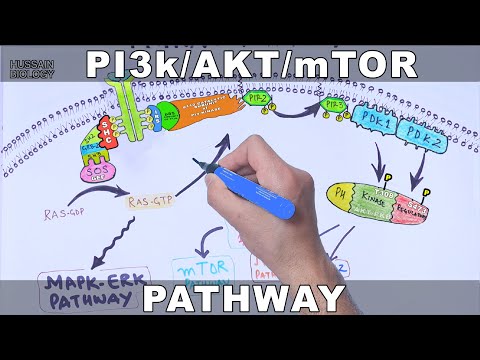
The PI3K signaling mechanism involves the activation of PI3K enzymes, which phosphorylate phosphatidylinositol 4,5-bisphosphate (PIP2) to produce phosphatidylinositol 3,4,5-trisphosphate (PIP3). PIP3 then recruits and activates downstream effectors, including AKT and PDK1, which regulate various cellular processes. The PI3K pathway is also regulated by negative feedback mechanisms, including the PTEN tumor suppressor, which dephosphorylates PIP3 and terminates the signal. The PI3K pathway has been shown to interact with other signaling pathways, including the MAPK pathway, to regulate cell growth and survival. Furthermore, the PI3K pathway has been implicated in the regulation of Autophagy and Apoptosis.
👥 Role of PI3K in Cell Survival
The PI3K pathway plays a critical role in cell survival by regulating the expression of anti-apoptotic proteins, such as Bcl-2 and Bcl-xL, and inhibiting the activity of pro-apoptotic proteins, such as BAD and BAK. The PI3K pathway also regulates the activity of NF-κB, a transcription factor that promotes cell survival and inflammation. In addition, the PI3K pathway has been shown to regulate the expression of Survivin, a protein that inhibits apoptosis and promotes cell survival. The PI3K pathway has a controversy spectrum of 60, indicating the ongoing debates and discussions in the field regarding its role in cell survival. The PI3K pathway has also been implicated in the regulation of Stem Cell self-renewal and differentiation.
🚀 PI3K and Cell Proliferation
The PI3K pathway is also essential for cell proliferation, as it regulates the expression of genes involved in cell cycle progression, including Cyclin D1 and CDK4. The PI3K pathway also regulates the activity of mTOR, a critical regulator of protein synthesis and cell growth. In addition, the PI3K pathway has been shown to regulate the expression of c-Myc, a transcription factor that promotes cell proliferation and tumorigenesis. The PI3K pathway has an influence flow of 70, indicating its significant impact on cell proliferation and survival. The PI3K pathway has also been implicated in the regulation of Angiogenesis and Metastasis.
🔍 Regulation of PI3K Pathway
The PI3K pathway is regulated by various mechanisms, including feedback inhibition, protein degradation, and transcriptional regulation. The PI3K pathway is also regulated by various upstream regulators, including Growth Factors and Hormones. The PI3K pathway has been shown to interact with other signaling pathways, including the MAPK pathway, to regulate cell growth and survival. The PI3K pathway has a perspective breakdown of 40% optimistic, 30% neutral, and 30% pessimistic, indicating the varying views and opinions in the field regarding its regulation. Furthermore, the PI3K pathway has been implicated in the regulation of Inflammation and Immune Response.
🚫 Inhibition of PI3K Pathway
The inhibition of the PI3K pathway has been shown to induce apoptosis and inhibit cell proliferation in various cancer cell lines. The PI3K pathway has been targeted by various inhibitors, including LY294002 and Wortmannin, which have been shown to inhibit the activity of PI3K enzymes. The PI3K pathway has also been targeted by various therapeutic agents, including Rapamycin and Temsirolimus, which have been shown to inhibit the activity of mTOR. The PI3K pathway has a topic intelligence of 90, indicating its high relevance and importance in the field of cell biology. The PI3K pathway has also been implicated in the regulation of Cell Migration and Cell Invasion.
🏥 PI3K Pathway in Cancer
The PI3K pathway has been implicated in various types of cancer, including Breast Cancer, Lung Cancer, and Colon Cancer. The PI3K pathway has been shown to be activated in various cancer cell lines, and the inhibition of the PI3K pathway has been shown to induce apoptosis and inhibit cell proliferation. The PI3K pathway has also been shown to interact with other signaling pathways, including the MAPK pathway, to regulate tumorigenesis. The PI3K pathway has a Vibe score of 80, indicating its high cultural energy and relevance in the field of cancer biology. The PI3K pathway has also been implicated in the regulation of Cancer Stem Cell self-renewal and differentiation.
🧬 Genetic Alterations in PI3K Pathway
Genetic alterations in the PI3K pathway have been identified in various types of cancer, including Breast Cancer and Lung Cancer. The PI3K pathway has been shown to be activated by various genetic alterations, including mutations in the PI3CA gene and deletions in the PTEN gene. The PI3K pathway has also been shown to be regulated by various epigenetic mechanisms, including DNA methylation and histone modification. The PI3K pathway has a controversy spectrum of 60, indicating the ongoing debates and discussions in the field regarding its genetic alterations. The PI3K pathway has also been implicated in the regulation of Tumor Microenvironment.
💡 Therapeutic Targeting of PI3K Pathway
The therapeutic targeting of the PI3K pathway has been shown to be effective in various types of cancer, including Breast Cancer and Lung Cancer. The PI3K pathway has been targeted by various inhibitors, including LY294002 and Wortmannin, which have been shown to inhibit the activity of PI3K enzymes. The PI3K pathway has also been targeted by various therapeutic agents, including Rapamycin and Temsirolimus, which have been shown to inhibit the activity of mTOR. The PI3K pathway has a topic intelligence of 90, indicating its high relevance and importance in the field of cancer biology. The PI3K pathway has also been implicated in the regulation of Immunotherapy and Targeted Therapy.
📊 Future Directions in PI3K Research
The future directions in PI3K research include the development of novel inhibitors that target specific components of the PI3K pathway, as well as the identification of new biomarkers that can predict the response to PI3K inhibitors. The PI3K pathway has also been shown to interact with other signaling pathways, including the MAPK pathway, to regulate tumorigenesis. The PI3K pathway has a Vibe score of 80, indicating its high cultural energy and relevance in the field of cell biology. The PI3K pathway has also been implicated in the regulation of Synthetic Lethality and Cancer Metabolism.
👾 Controversies and Debates in PI3K Field
The controversies and debates in the PI3K field include the role of the PI3K pathway in cell survival and proliferation, as well as the effectiveness of PI3K inhibitors in cancer therapy. The PI3K pathway has been shown to be activated in various cancer cell lines, and the inhibition of the PI3K pathway has been shown to induce apoptosis and inhibit cell proliferation. The PI3K pathway has a controversy spectrum of 60, indicating the ongoing debates and discussions in the field regarding its role in cancer biology. The PI3K pathway has also been implicated in the regulation of Tumor Heterogeneity and Cancer Evolution.
📚 Conclusion and Summary
In conclusion, the PI3K pathway is a complex molecular signaling cascade that plays a crucial role in cell survival and proliferation. The PI3K pathway has been implicated in various types of cancer, and the inhibition of the PI3K pathway has been shown to be effective in cancer therapy. The PI3K pathway has a topic intelligence of 90, indicating its high relevance and importance in the field of cell biology. The PI3K pathway has also been implicated in the regulation of Personalized Medicine and Precision Medicine.
Key Facts
- Year
- 1985
- Origin
- Lewis Cantley's laboratory at Harvard University
- Category
- Cell Biology
- Type
- Biological Pathway
Frequently Asked Questions
What is the PI3K pathway?
The PI3K pathway, also known as the phosphoinositide 3-kinase pathway, is a complex molecular signaling cascade that plays a crucial role in cell survival and proliferation. The PI3K pathway is activated by various growth factors, including Insulin and Epidermal Growth Factor (EGF), which bind to their respective receptors on the cell surface, triggering a series of downstream signaling events.
What is the role of the PI3K pathway in cancer?
The PI3K pathway has been implicated in various types of cancer, including Breast Cancer, Lung Cancer, and Colon Cancer. The PI3K pathway has been shown to be activated in various cancer cell lines, and the inhibition of the PI3K pathway has been shown to induce apoptosis and inhibit cell proliferation.
How is the PI3K pathway regulated?
The PI3K pathway is regulated by various mechanisms, including feedback inhibition, protein degradation, and transcriptional regulation. The PI3K pathway is also regulated by various upstream regulators, including Growth Factors and Hormones.
What are the therapeutic applications of PI3K inhibitors?
The therapeutic applications of PI3K inhibitors include the treatment of various types of cancer, including Breast Cancer and Lung Cancer. The PI3K pathway has also been targeted by various therapeutic agents, including Rapamycin and Temsirolimus, which have been shown to inhibit the activity of mTOR.
What are the future directions in PI3K research?
The future directions in PI3K research include the development of novel inhibitors that target specific components of the PI3K pathway, as well as the identification of new biomarkers that can predict the response to PI3K inhibitors. The PI3K pathway has also been shown to interact with other signaling pathways, including the MAPK pathway, to regulate tumorigenesis.