
Contents
- 🏛️ Introduction to the Nicene Creed
- 📜 History of the Nicene Creed
- 💡 Development of the Nicene Creed
- 👥 Key Figures in the Nicene Creed
- 📊 Theology of the Nicene Creed
- 🌎 Influence of the Nicene Creed on Christianity
- 🤝 Ecumenical Significance of the Nicene Creed
- 📢 Criticisms and Controversies Surrounding the Nicene Creed
- 🔍 Modern Interpretations of the Nicene Creed
- 🌐 Global Reach of the Nicene Creed
- 📚 Conclusion: The Enduring Legacy of the Nicene Creed
- Frequently Asked Questions
- Related Topics
Overview
The Nicene Creed, also called the Creed of Constantinople, is the defining statement of belief of Nicene Christianity and in those Christian denominations that adhere to it. This creed has been a cornerstone of Christian doctrine for centuries, shaping the faith of millions of believers worldwide. The Nicene Creed is a statement of faith that outlines the basic tenets of Christianity, including the nature of God, the person of Jesus Christ, and the role of the Holy Spirit. It is widely recited in Christian worship services, particularly in Eastern Orthodox and Roman Catholic traditions. The Nicene Creed has undergone several revisions since its inception, with the most significant changes occurring in the 4th century. Despite these changes, the creed remains a fundamental aspect of Christian theology, providing a shared understanding of the faith among diverse Christian denominations. For instance, the Protestant Reformation led to the emergence of new Christian denominations, many of which continue to affirm the Nicene Creed as a statement of faith.
📜 History of the Nicene Creed
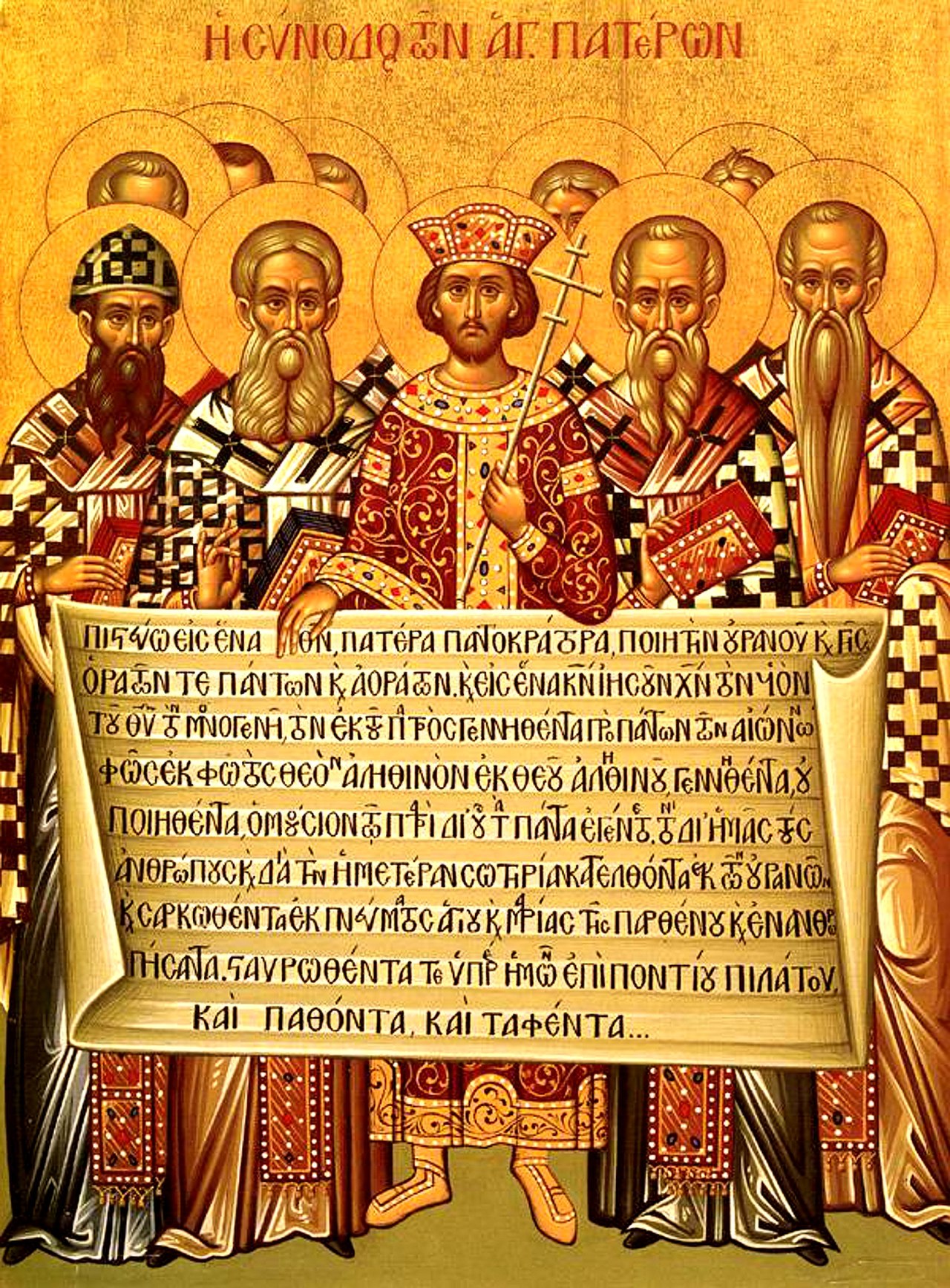
The history of the Nicene Creed dates back to the 4th century, when the First Council of Nicaea convened in 325 CE. This council, summoned by Emperor Constantine the Great, aimed to resolve the controversy surrounding Arianism, a theological doctrine that denied the divinity of Jesus Christ. The council resulted in the formulation of the Nicene Creed, which affirmed the divinity of Jesus Christ and established the orthodox Christian doctrine. The creed was later revised at the First Council of Constantinople in 381 CE, which added clauses to further clarify the nature of the Holy Spirit. The Nicene Creed has since become a widely accepted statement of faith, with its influence extending beyond Christianity to shape Western philosophy and culture. The Council of Ephesus and the Council of Chalcedon also played significant roles in shaping the creed. The creed's development is closely tied to the work of Church Fathers such as Athanasius of Alexandria and Basil of Caesarea.
💡 Development of the Nicene Creed
The development of the Nicene Creed was a gradual process that involved the contributions of numerous theologians and church leaders. The creed's earliest version, known as the Niceno-Constantinopolitan Creed, was formulated at the First Council of Nicaea in 325 CE. Over time, the creed underwent revisions, with the most significant changes occurring in the 4th and 5th centuries. The First Council of Constantinople in 381 CE added clauses to clarify the nature of the Holy Spirit, while the Council of Ephesus in 431 CE affirmed the creed's doctrine on the person of Jesus Christ. The Nicene Creed's development is a testament to the ongoing struggle to articulate the Christian faith in a clear and concise manner. The Apostles' Creed and the Athanasian Creed are other important creeds that have shaped Christian theology. The work of Thomas Aquinas and John Calvin also influenced the development of Christian doctrine.
👥 Key Figures in the Nicene Creed
Several key figures played a crucial role in the development and dissemination of the Nicene Creed. Constantine the Great, the Roman Emperor who convened the First Council of Nicaea, was instrumental in establishing the creed as a cornerstone of Christian doctrine. Athanasius of Alexandria, a prominent theologian and Church Father, was a leading advocate for the Nicene Creed and played a key role in its formulation. Other notable figures, such as Basil of Caesarea and Gregory of Nazianzus, contributed to the creed's development and interpretation. The Nicene Creed has also been influenced by the work of Augustine of Hippo and Martin Luther. The Papacy has also played a significant role in shaping the creed's interpretation and application.
📊 Theology of the Nicene Creed
The theology of the Nicene Creed is rooted in the Bible and the Apostolic tradition. The creed affirms the existence of one God in three persons: the Father, the Son, and the Holy Spirit. It also affirms the divinity of Jesus Christ, who is believed to be fully human and fully divine. The creed's doctrine on the Holy Spirit is more nuanced, acknowledging the Spirit's role in the Trinity and its work in the lives of believers. The Nicene Creed's theology has been influential in shaping Christian doctrine, particularly in the areas of Christology and Pneumatology. The creed's emphasis on the Trinity has also influenced the development of Christian philosophy. The work of Origen of Alexandria and Irenaeus of Lyons has also shaped the creed's theological framework.
🌎 Influence of the Nicene Creed on Christianity
The influence of the Nicene Creed on Christianity cannot be overstated. The creed has provided a shared understanding of the faith among diverse Christian denominations, fostering unity and cooperation among believers. The Nicene Creed has also shaped Western philosophy and culture, influencing the development of Scholasticism and the Renaissance. The creed's emphasis on the Trinity has inspired countless works of art, literature, and music, including the famous Divine Comedy by Dante Alighieri. The Nicene Creed has also played a significant role in shaping Christian worship and liturgics, with its recitation being an integral part of many Christian worship services. The Eastern Orthodox Church and the Roman Catholic Church have both been influenced by the creed's theology and practice.
🤝 Ecumenical Significance of the Nicene Creed
The Nicene Creed has significant ecumenical implications, as it provides a common statement of faith that transcends denominational boundaries. The creed has been affirmed by numerous Christian denominations, including Eastern Orthodox, Roman Catholic, and many Protestant traditions. The Nicene Creed has also been influential in shaping the World Council of Churches and other ecumenical organizations. Despite its widespread acceptance, the Nicene Creed remains a subject of debate and discussion among Christian denominations, with some groups questioning its relevance and authority in modern times. The Lutheran Church and the Anglican Communion have also engaged in ecumenical dialogue with other Christian denominations, using the Nicene Creed as a basis for discussion.
📢 Criticisms and Controversies Surrounding the Nicene Creed
The Nicene Creed has faced criticisms and controversies throughout its history. Some have argued that the creed is too narrow or exclusive, failing to account for the diversity of Christian experience and belief. Others have questioned the creed's authority, arguing that it is a human construct rather than a divine revelation. The Nicene Creed has also been criticized for its role in shaping Christian persecution and inquisition, with some arguing that the creed's emphasis on orthodoxy has led to the suppression of dissenting voices. Despite these criticisms, the Nicene Creed remains a cornerstone of Christian doctrine, with its influence extending far beyond the boundaries of Christianity. The Reformation and the Counter-Reformation have also shaped the creed's interpretation and application.
🔍 Modern Interpretations of the Nicene Creed
Modern interpretations of the Nicene Creed continue to evolve, with scholars and theologians offering new insights and perspectives on the creed's meaning and significance. Some have argued that the Nicene Creed is a poetic theology, using metaphor and symbolism to convey the mysteries of the Christian faith. Others have emphasized the creed's role in shaping Christian identity and community, arguing that the creed provides a shared sense of purpose and belonging among believers. The Nicene Creed has also been influential in shaping Christian social justice and environmentalism, with its emphasis on the dignity and worth of all human beings. The Emerging church movement has also engaged with the Nicene Creed, seeking to reinterpret its theology and practice in a postmodern context.
🌐 Global Reach of the Nicene Creed
The Nicene Creed has a global reach, with its influence extending to every corner of the world. The creed has been translated into numerous languages, including Latin, Greek, and Arabic. The Nicene Creed has also been influential in shaping Christian Missions and Evangelism, with its message being carried to distant lands and cultures. The creed's emphasis on the Trinity has inspired countless works of art and literature, including the famous Sistine Chapel ceiling by Michelangelo. The Nicene Creed remains a powerful symbol of Christian unity and identity, with its recitation being an integral part of many Christian worship services. The Pentecostal and Charismatic movement have also been influenced by the creed's theology and practice.
📚 Conclusion: The Enduring Legacy of the Nicene Creed
In conclusion, the Nicene Creed is a cornerstone of Christian doctrine, providing a shared understanding of the faith among diverse Christian denominations. The creed's history, development, and theology have been shaped by numerous theologians and church leaders, including Constantine the Great and Athanasius of Alexandria. The Nicene Creed's influence extends far beyond Christianity, shaping Western philosophy and culture, and inspiring countless works of art, literature, and music. As the Christian faith continues to evolve and grow, the Nicene Creed remains a powerful symbol of Christian unity and identity, with its recitation being an integral part of many Christian worship services. The Vatican Council II and the Lausanne Movement have also engaged with the Nicene Creed, seeking to reinterpret its theology and practice in a modern context.
Key Facts
- Year
- 325
- Origin
- Nicaea, Byzantine Empire
- Category
- Religion
- Type
- Religious Doctrine
Frequently Asked Questions
What is the Nicene Creed?
The Nicene Creed is a statement of faith that outlines the basic tenets of Christianity, including the nature of God, the person of Jesus Christ, and the role of the Holy Spirit. It is widely recited in Christian worship services, particularly in Eastern Orthodox and Roman Catholic traditions. The Nicene Creed has undergone several revisions since its inception, with the most significant changes occurring in the 4th century. The creed's development is closely tied to the work of Church Fathers such as Athanasius of Alexandria and Basil of Caesarea.
Who wrote the Nicene Creed?
The Nicene Creed was written by a committee of theologians and church leaders, including Athanasius of Alexandria and Basil of Caesarea, who were instrumental in its development. The creed's earliest version, known as the Niceno-Constantinopolitan Creed, was formulated at the First Council of Nicaea in 325 CE. The creed has undergone several revisions since its inception, with the most significant changes occurring in the 4th and 5th centuries.
What is the significance of the Nicene Creed?
The Nicene Creed is significant because it provides a shared understanding of the faith among diverse Christian denominations, fostering unity and cooperation among believers. The creed has also shaped Western philosophy and culture, influencing the development of Scholasticism and the Renaissance. The Nicene Creed's emphasis on the Trinity has inspired countless works of art, literature, and music, including the famous Divine Comedy by Dante Alighieri.
Is the Nicene Creed still relevant today?
Yes, the Nicene Creed remains relevant today, with its influence extending far beyond Christianity. The creed continues to shape Christian worship and liturgics, with its recitation being an integral part of many Christian worship services. The Nicene Creed has also been influential in shaping Christian social justice and environmentalism, with its emphasis on the dignity and worth of all human beings. The creed's theology and practice continue to evolve, with modern interpretations and applications being developed by scholars and theologians.
How has the Nicene Creed influenced Christian theology?
The Nicene Creed has had a profound influence on Christian theology, shaping the development of Christology, Pneumatology, and Trinitarian theology. The creed's emphasis on the Trinity has inspired countless works of art, literature, and music, and has influenced the development of Christian philosophy and culture. The Nicene Creed has also played a significant role in shaping Christian worship and liturgics, with its recitation being an integral part of many Christian worship services.