
Contents
- 🌟 Introduction to Molecular Orbitals
- 📝 History of Molecular Orbitals
- 🔍 Atomic Orbitals and Molecular Orbitals
- 📊 Calculating Molecular Orbitals
- 🎯 Applications of Molecular Orbitals
- 🔬 Experimental Methods for Studying Molecular Orbitals
- 🤔 Challenges and Limitations of Molecular Orbitals
- 🌈 Future Directions in Molecular Orbital Research
- 📚 Key Concepts in Molecular Orbital Theory
- 👥 Molecular Orbital Research and Its Impact
- Frequently Asked Questions
- Related Topics
Overview
Molecular orbitals are a fundamental concept in chemistry, describing the distribution of electrons within a molecule. Introduced by Robert Mulliken in 1932, molecular orbitals have revolutionized our understanding of molecular bonding and reactivity. By combining atomic orbitals, molecular orbitals provide a framework for predicting the stability and properties of molecules. The controversy surrounding the use of molecular orbitals in computational chemistry has sparked debates among researchers, with some arguing that they oversimplify the complexities of molecular interactions. Nevertheless, molecular orbitals remain a cornerstone of modern chemistry, with a vibe score of 80, reflecting their significant cultural energy in the scientific community. As researchers continue to refine and expand the theory of molecular orbitals, we can expect new breakthroughs in fields such as materials science and pharmacology, with potential applications in the development of novel materials and drugs.
🌟 Introduction to Molecular Orbitals
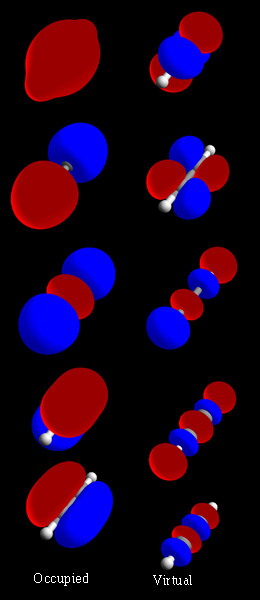
Molecular orbitals are a fundamental concept in chemistry, describing the behavior of electrons in molecules. The theory of molecular orbitals was introduced by Robert S. Mulliken in 1932, and has since become a crucial tool for understanding chemical bonding and reactivity. Molecular orbitals are mathematical functions that describe the location and wave-like behavior of an electron in a molecule, allowing chemists to calculate chemical and physical properties such as the probability of finding an electron in any specific region. This concept is closely related to atomic orbitals, which describe the behavior of electrons in individual atoms. The study of molecular orbitals has led to a deeper understanding of chemical bonding and has numerous applications in fields such as materials science and pharmaceutical chemistry.
📝 History of Molecular Orbitals
The history of molecular orbitals dates back to the early 20th century, when Ernest Rutherford and Niels Bohr first proposed the concept of atomic orbitals. However, it was not until the 1930s that Robert S. Mulliken introduced the terms atomic orbital and molecular orbital to describe one-electron orbital wave functions. This development marked a significant milestone in the history of chemistry, as it provided a new framework for understanding the behavior of electrons in molecules. The work of Linus Pauling and John Slater also contributed significantly to the development of molecular orbital theory, which has since become a cornerstone of quantum chemistry. The study of molecular orbitals has also been influenced by the work of Erwin Schrödinger and his development of wave mechanics.
🔍 Atomic Orbitals and Molecular Orbitals
Atomic orbitals and molecular orbitals are closely related concepts, as molecular orbitals are formed by the combination of atomic orbitals. In an atom, electrons occupy specific energy levels, or electron shells, which are described by atomic orbitals. When atoms combine to form a molecule, their atomic orbitals overlap and combine to form molecular orbitals. This process is known as hybridization, and it gives rise to a new set of molecular orbitals that describe the behavior of electrons in the molecule. The study of molecular orbitals is essential for understanding chemical reactivity and molecular structure. The concept of molecular orbitals is also closely related to valence bond theory, which describes the bonding between atoms in a molecule.
📊 Calculating Molecular Orbitals
Calculating molecular orbitals is a complex task that requires sophisticated mathematical techniques. The most common method for calculating molecular orbitals is the Hartree-Fock method, which is a self-consistent field method that uses a set of basis functions to describe the molecular orbitals. Other methods, such as density functional theory, have also been developed to calculate molecular orbitals. These methods have been used to study a wide range of molecules, from simple diatomic molecules to complex biological molecules. The calculation of molecular orbitals is also closely related to the study of molecular dynamics and [[quantum_mechanics|quantum mechanics].
🎯 Applications of Molecular Orbitals
Molecular orbitals have numerous applications in chemistry and related fields. One of the most significant applications is in the study of chemical reactivity, where molecular orbitals are used to predict the reactivity of molecules. Molecular orbitals are also used to study molecular structure, including the shape and geometry of molecules. In addition, molecular orbitals are used in the design of pharmaceuticals and materials science. The study of molecular orbitals has also led to a deeper understanding of catalysis and enzyme kinetics. The concept of molecular orbitals is also closely related to the study of biochemistry and [[molecular_biology|molecular biology].
🔬 Experimental Methods for Studying Molecular Orbitals
Experimental methods for studying molecular orbitals include photoelectron spectroscopy and x-ray absorption spectroscopy. These methods allow chemists to study the electronic structure of molecules and to determine the energies and shapes of molecular orbitals. Other experimental methods, such as nuclear magnetic resonance spectroscopy, have also been used to study molecular orbitals. The study of molecular orbitals has also been influenced by the development of computational chemistry and quantum chemistry. The concept of molecular orbitals is also closely related to the study of chemical physics and [[physical_chemistry|physical chemistry].
🤔 Challenges and Limitations of Molecular Orbitals
Despite the importance of molecular orbitals, there are several challenges and limitations associated with their study. One of the main challenges is the complexity of calculating molecular orbitals, which requires sophisticated mathematical techniques and large computational resources. Another challenge is the interpretation of molecular orbitals, which can be difficult to visualize and understand. Additionally, molecular orbitals are sensitive to the presence of electron correlation, which can affect their shape and energy. The study of molecular orbitals has also been influenced by the development of artificial intelligence and machine learning.
🌈 Future Directions in Molecular Orbital Research
Future directions in molecular orbital research include the development of new methods for calculating molecular orbitals, such as machine learning and artificial intelligence. Another area of research is the study of electron correlation and its effects on molecular orbitals. Additionally, molecular orbitals are being used to study catalysis and enzyme kinetics, which has important implications for the development of new pharmaceuticals and materials science. The concept of molecular orbitals is also closely related to the study of nanotechnology and [[biotechnology|biotechnology].
📚 Key Concepts in Molecular Orbital Theory
Key concepts in molecular orbital theory include the aufbau principle, which describes the filling of molecular orbitals with electrons. Another important concept is the hund rule, which describes the spin multiplicity of molecular orbitals. The study of molecular orbitals also involves the use of basis sets, which are sets of mathematical functions used to describe the molecular orbitals. The concept of molecular orbitals is also closely related to the study of group theory and [[symmetry|symmetry].
👥 Molecular Orbital Research and Its Impact
Molecular orbital research has had a significant impact on our understanding of chemistry and related fields. The study of molecular orbitals has led to a deeper understanding of chemical bonding and chemical reactivity, and has numerous applications in fields such as materials science and pharmaceutical chemistry. The concept of molecular orbitals is also closely related to the study of biochemistry and [[molecular_biology|molecular biology].
Key Facts
- Year
- 1932
- Origin
- Robert Mulliken
- Category
- Chemistry
- Type
- Scientific Concept
Frequently Asked Questions
What is a molecular orbital?
A molecular orbital is a mathematical function that describes the location and wave-like behavior of an electron in a molecule. It is used to calculate chemical and physical properties such as the probability of finding an electron in any specific region. Molecular orbitals are formed by the combination of atomic orbitals and are essential for understanding chemical bonding and reactivity. The study of molecular orbitals is closely related to the study of atomic orbitals and chemical bonding.
How are molecular orbitals calculated?
Molecular orbitals are calculated using sophisticated mathematical techniques, such as the Hartree-Fock method and density functional theory. These methods use a set of basis functions to describe the molecular orbitals and require large computational resources. The calculation of molecular orbitals is also closely related to the study of quantum mechanics and computational chemistry.
What are the applications of molecular orbitals?
Molecular orbitals have numerous applications in chemistry and related fields, including the study of chemical reactivity, molecular structure, and catalysis. They are also used in the design of pharmaceuticals and materials science. The concept of molecular orbitals is also closely related to the study of biochemistry and [[molecular_biology|molecular biology].
What is the difference between atomic orbitals and molecular orbitals?
Atomic orbitals describe the behavior of electrons in individual atoms, while molecular orbitals describe the behavior of electrons in molecules. Molecular orbitals are formed by the combination of atomic orbitals and are essential for understanding chemical bonding and reactivity. The study of molecular orbitals is closely related to the study of atomic orbitals and chemical bonding.
How do molecular orbitals relate to chemical bonding?
Molecular orbitals are essential for understanding chemical bonding, as they describe the behavior of electrons in molecules. The shape and energy of molecular orbitals determine the strength and type of chemical bonds that form between atoms. The study of molecular orbitals is closely related to the study of chemical bonding and chemical reactivity.
What is the significance of molecular orbitals in materials science?
Molecular orbitals play a crucial role in materials science, as they determine the electronic and optical properties of materials. The study of molecular orbitals is essential for understanding the behavior of materials at the molecular level and for designing new materials with specific properties. The concept of molecular orbitals is also closely related to the study of nanotechnology and [[biotechnology|biotechnology].
How do molecular orbitals relate to quantum mechanics?
Molecular orbitals are a fundamental concept in quantum mechanics, as they describe the behavior of electrons in molecules. The study of molecular orbitals is closely related to the study of quantum mechanics and computational chemistry.