
Contents
- 🎵 Origins & History
- ⚙️ How It Works
- 📊 Key Facts & Numbers
- 👥 Key People & Organizations
- 🌍 Cultural Impact & Influence
- ⚡ Current State & Latest Developments
- 🤔 Controversies & Debates
- 🔮 Future Outlook & Predictions
- 💡 Practical Applications
- 📚 Related Topics & Deeper Reading
- Frequently Asked Questions
- References
- Related Topics
Overview
A minimally conscious state (MCS) is a distinct disorder of consciousness characterized by partial preservation of conscious awareness, differing from persistent vegetative state (PVS) and locked-in syndrome. With an estimated prevalence of between 112,000 and 280,000 cases in the US as of 2000, MCS is a relatively new category of disorders of consciousness that requires further study to understand its natural history and longer-term outcomes. Patients with MCS may exhibit behaviors such as following commands, verbalizing, or gesturing, indicating some level of conscious awareness. The diagnosis and treatment of MCS are complex and require a multidisciplinary approach, involving neurologists, psychologists, and rehabilitation specialists. As research continues to uncover the intricacies of MCS, it is essential to recognize the importance of providing appropriate care and support to individuals affected by this condition. The work of organizations such as the National Institute of Neurological Disorders and Stroke and the American Academy of Neurology has been instrumental in advancing our understanding of MCS. Furthermore, the development of new diagnostic tools and therapies, such as functional magnetic resonance imaging (fMRI) and transcranial magnetic stimulation (TMS), holds promise for improving the lives of individuals with MCS.
🎵 Origins & History
The concept of minimally conscious state (MCS) has evolved over the years, with the first descriptions of the condition emerging in the 1980s. The work of Dr. Joseph Giacino and Dr. John Whyte has been instrumental in defining the diagnostic criteria for MCS. According to the American Congress of Rehabilitation Medicine, MCS is characterized by the presence of some level of conscious awareness, as evidenced by behaviors such as following commands, verbalizing, or gesturing. The natural history and longer-term outcome of MCS have not yet been thoroughly studied, and more research is needed to understand the complexities of this condition.
⚙️ How It Works
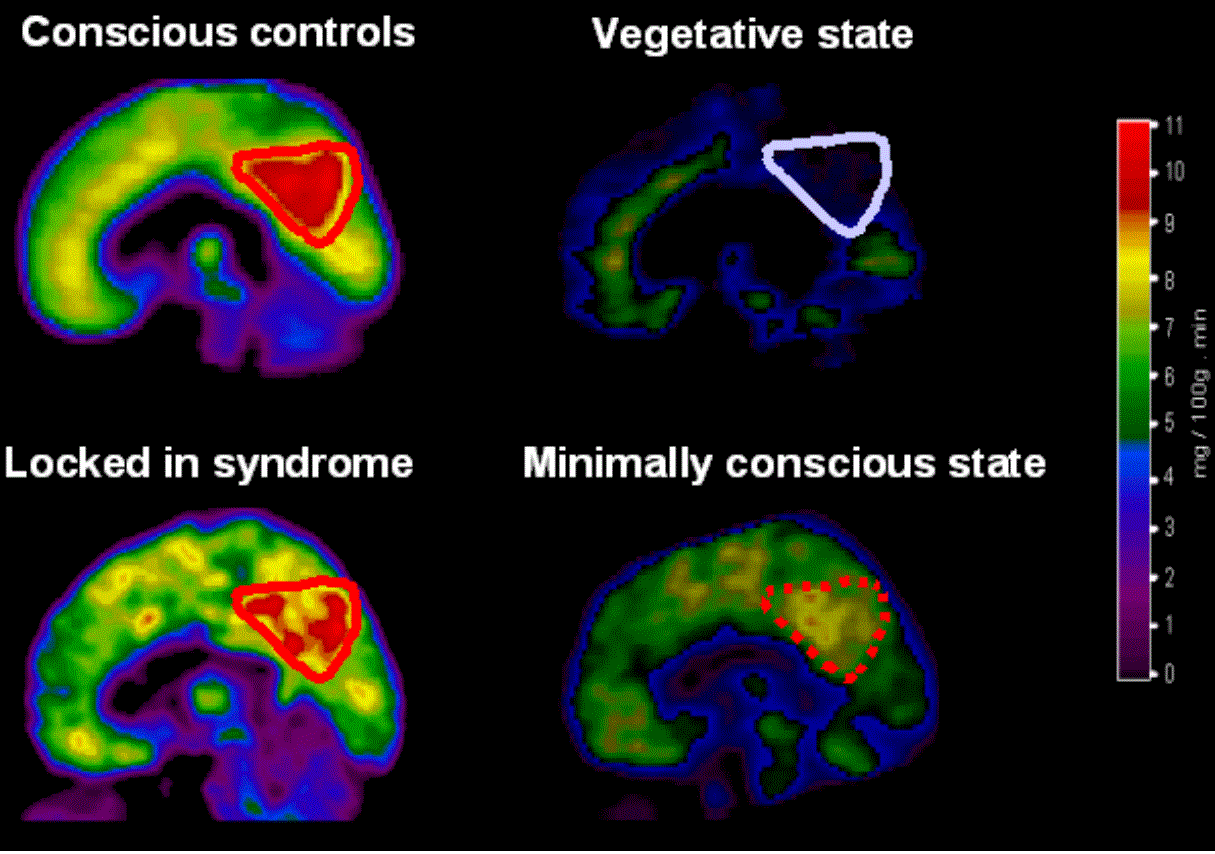
MCS is a complex disorder that affects the brain's ability to process and respond to information. The exact mechanisms underlying MCS are not yet fully understood, but research suggests that it may be related to damage to the brain's neural networks, particularly in areas responsible for attention, perception, and memory. The use of electroencephalography (EEG) and fMRI has helped to shed light on the neural correlates of MCS, and has implications for the development of new diagnostic tools and therapies. For example, studies have shown that individuals with MCS may exhibit abnormal patterns of brain activity, including reduced cortical activity and disrupted connectivity between different brain regions.
📊 Key Facts & Numbers
The prevalence of MCS is estimated to be between 112,000 and 280,000 cases in the US, with a significant proportion of cases occurring in adults and children. According to the Centers for Disease Control and Prevention (CDC), the incidence of MCS is higher in individuals with traumatic brain injury, stroke, and other neurological disorders. The economic burden of MCS is substantial, with estimated annual costs ranging from $1.4 billion to $3.5 billion. The development of effective treatments and therapies for MCS is critical to reducing the economic and social impact of this condition. Organizations such as the Brain Injury Association of America and the National Disability Rights Network are working to raise awareness and promote advocacy for individuals with MCS.
👥 Key People & Organizations
Several key people and organizations have contributed to our understanding of MCS. The work of Dr. Joseph Giacino and Dr. John Whyte has been instrumental in defining the diagnostic criteria for MCS. The National Institute of Neurological Disorders and Stroke and the American Academy of Neurology have also played a critical role in advancing our understanding of MCS. Additionally, organizations such as the Brain Injury Association of America and the National Disability Rights Network are working to raise awareness and promote advocacy for individuals with MCS. For example, the Brain Injury Association of America provides resources and support for individuals with MCS, including education, advocacy, and community outreach programs.
🌍 Cultural Impact & Influence
MCS has significant cultural and social implications, particularly in terms of the care and support provided to individuals with the condition. The development of effective treatments and therapies for MCS requires a multidisciplinary approach, involving neurologists, psychologists, and rehabilitation specialists. The use of assistive technology, such as communication devices and mobility aids, can also help to improve the quality of life for individuals with MCS. Furthermore, the recognition of MCS as a distinct disorder of consciousness has important implications for healthcare policy and practice, including the development of guidelines and standards for the diagnosis and treatment of MCS. For example, the American Academy of Neurology has developed guidelines for the diagnosis and treatment of MCS, which emphasize the importance of a multidisciplinary approach and the use of evidence-based therapies.
⚡ Current State & Latest Developments
Current research on MCS is focused on developing new diagnostic tools and therapies, as well as improving our understanding of the underlying mechanisms of the condition. The use of TMS and tDCS has shown promise in improving cognitive function and promoting recovery in individuals with MCS. Additionally, the development of new technologies, such as brain-computer interfaces (BCIs), holds promise for improving communication and interaction for individuals with MCS. For example, studies have shown that BCIs can be used to enable individuals with MCS to communicate with their caregivers and loved ones, improving their quality of life and reducing their sense of isolation.
🤔 Controversies & Debates
There are several controversies and debates surrounding MCS, including the diagnosis and treatment of the condition. Some researchers argue that MCS is a distinct disorder of consciousness, while others argue that it is a variant of PVS or locked-in syndrome. Additionally, there is debate about the use of certain therapies, such as deep brain stimulation (DBS), in the treatment of MCS. The development of effective treatments and therapies for MCS requires a careful consideration of the potential benefits and risks, as well as the ethical implications of treatment. For example, the use of DBS in the treatment of MCS raises important questions about the potential risks and benefits of the therapy, including the risk of adverse effects and the potential for improved cognitive function.
🔮 Future Outlook & Predictions
The future outlook for MCS is promising, with ongoing research and development of new diagnostic tools and therapies. The use of artificial intelligence (AI) and machine learning (ML) holds promise for improving the diagnosis and treatment of MCS, as well as promoting recovery and rehabilitation. Additionally, the development of new technologies, such as BCIs, holds promise for improving communication and interaction for individuals with MCS. For example, studies have shown that AI and ML can be used to develop personalized treatment plans for individuals with MCS, improving their outcomes and reducing their risk of complications.
💡 Practical Applications
The practical applications of MCS research are significant, particularly in terms of improving the care and support provided to individuals with the condition. The development of effective treatments and therapies for MCS requires a multidisciplinary approach, involving neurologists, psychologists, and rehabilitation specialists. The use of assistive technology, such as communication devices and mobility aids, can also help to improve the quality of life for individuals with MCS. Furthermore, the recognition of MCS as a distinct disorder of consciousness has important implications for healthcare policy and practice, including the development of guidelines and standards for the diagnosis and treatment of MCS. For example, the American Academy of Neurology has developed guidelines for the diagnosis and treatment of MCS, which emphasize the importance of a multidisciplinary approach and the use of evidence-based therapies.
Key Facts
- Year
- 2000
- Origin
- US
- Category
- chronic-conditions
- Type
- medical-condition
Frequently Asked Questions
What is the difference between MCS and PVS?
MCS is characterized by partial preservation of conscious awareness, whereas PVS is characterized by a lack of conscious awareness. The diagnosis and treatment of MCS require a careful consideration of the underlying mechanisms of the condition, as well as the potential benefits and risks of treatment. For example, the use of electroencephalography (EEG) and fMRI can help to distinguish between MCS and PVS, and inform the development of personalized treatment plans.
What are the symptoms of MCS?
The symptoms of MCS can vary, but may include following commands, verbalizing, or gesturing. The diagnosis of MCS requires a careful consideration of the underlying mechanisms of the condition, as well as the potential benefits and risks of treatment. For example, the use of TMS and tDCS can help to improve cognitive function and promote recovery in individuals with MCS.
How is MCS diagnosed?
The diagnosis of MCS requires a multidisciplinary approach, involving neurologists, psychologists, and rehabilitation specialists. The use of electroencephalography (EEG) and fMRI can help to diagnose MCS, and inform the development of personalized treatment plans. For example, the American Academy of Neurology has developed guidelines for the diagnosis and treatment of MCS, which emphasize the importance of a multidisciplinary approach and the use of evidence-based therapies.
What are the treatment options for MCS?
The treatment options for MCS are varied, and may include the use of assistive technology, such as communication devices and mobility aids. The development of effective treatments and therapies for MCS requires a careful consideration of the potential benefits and risks, as well as the ethical implications of treatment. For example, the use of deep brain stimulation (DBS) in the treatment of MCS raises important questions about the potential risks and benefits of the therapy, including the risk of adverse effects and the potential for improved cognitive function.
What is the prognosis for individuals with MCS?
The prognosis for individuals with MCS is variable, and depends on the underlying cause of the condition, as well as the effectiveness of treatment. The development of effective treatments and therapies for MCS is critical to reducing the economic and social impact of this condition, and improving the quality of life for individuals with MCS. For example, the National Institute of Neurological Disorders and Stroke has developed a research plan for MCS, which emphasizes the importance of basic and translational research, as well as clinical trials and epidemiological studies.
How can I support a loved one with MCS?
Supporting a loved one with MCS requires a careful consideration of their individual needs and circumstances. The use of assistive technology, such as communication devices and mobility aids, can help to improve their quality of life. Additionally, the recognition of MCS as a distinct disorder of consciousness has important implications for healthcare policy and practice, including the development of guidelines and standards for the diagnosis and treatment of MCS. For example, the American Academy of Neurology has developed guidelines for the diagnosis and treatment of MCS, which emphasize the importance of a multidisciplinary approach and the use of evidence-based therapies.
What are the latest developments in MCS research?
The latest developments in MCS research include the use of artificial intelligence (AI) and machine learning (ML) to improve the diagnosis and treatment of MCS. The development of new technologies, such as BCIs, holds promise for improving communication and interaction for individuals with MCS. For example, studies have shown that AI and ML can be used to develop personalized treatment plans for individuals with MCS, improving their outcomes and reducing their risk of complications.
How can I get involved in MCS research?
There are several ways to get involved in MCS research, including participating in clinical trials, donating to research organizations, and volunteering with advocacy groups. The development of effective treatments and therapies for MCS requires a careful consideration of the potential benefits and risks, as well as the ethical implications of treatment. For example, the National Institute of Neurological Disorders and Stroke has developed a research plan for MCS, which emphasizes the importance of basic and translational research, as well as clinical trials and epidemiological studies.