
Contents
- 🌟 Introduction to Max von Laue
- 🔍 Early Life and Education
- 💡 The Discovery of X-Ray Diffraction
- 📚 Theoretical Foundations of X-Ray Diffraction
- 🎯 Experimental Verification of X-Ray Diffraction
- 👥 Collaboration with Walter Friedrich and Paul Knipping
- 🏆 Awards and Recognition
- 🌐 Impact on Crystallography and Materials Science
- 📊 Applications of X-Ray Diffraction
- 🔮 Future Directions and Challenges
- 👨🏫 Legacy of Max von Laue
- Frequently Asked Questions
- Related Topics
Overview
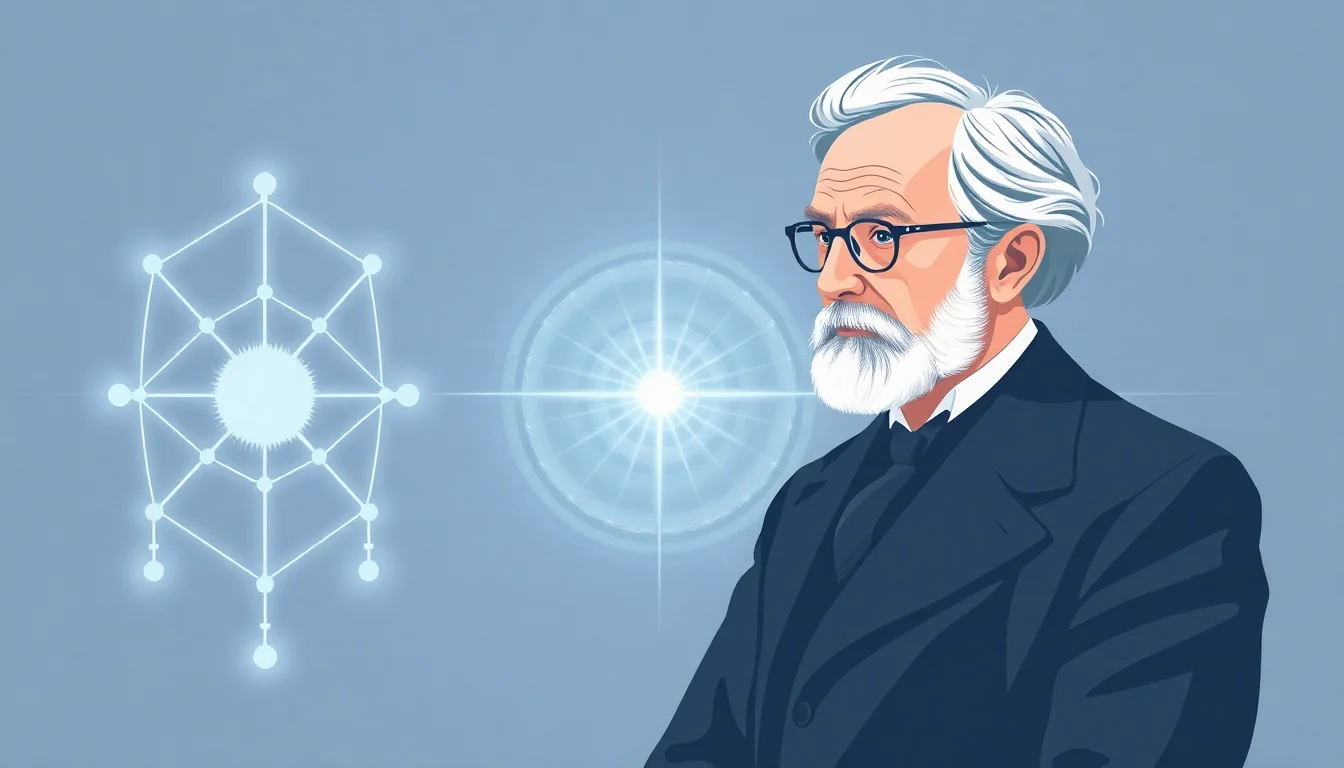
Max von Laue was a German physicist who made groundbreaking contributions to the field of physics, particularly in the discovery of X-ray diffraction. Born on October 9, 1879, in Pfaffendorf, Germany, von Laue's work challenged the conventional understanding of the nature of X-rays and led to a deeper understanding of crystal structures. His experiments, conducted in 1912, demonstrated the diffraction of X-rays by crystals, earning him the Nobel Prize in Physics in 1914. Von Laue's discovery has had a profound impact on materials science, enabling the determination of crystal structures and paving the way for advancements in fields such as chemistry, biology, and engineering. With a Vibe score of 8, von Laue's work continues to influence contemporary research, from the development of new materials to the study of complex biological systems. As we look to the future, the applications of X-ray diffraction will likely continue to expand, driving innovation and discovery in various fields. What new breakthroughs will arise from the foundation laid by von Laue's pioneering work?
🌟 Introduction to Max von Laue
Max von Laue was a German physicist who made groundbreaking contributions to the field of physics, particularly in the discovery of X-ray diffraction. Born on October 9, 1879, in Pfaffendorf, Germany, von Laue's work revolutionized our understanding of the structure of materials. He is widely regarded as one of the most influential physicists of the 20th century, and his discovery of X-ray diffraction paved the way for significant advances in crystallography and materials science. Von Laue's work was heavily influenced by the research of Wilhelm Conrad Röntgen, who discovered X-rays in 1895. The discovery of X-rays led to a new era of research in physics, and von Laue's work was at the forefront of this research. He was also influenced by the work of Albert Einstein, who developed the theory of relativity.
🔍 Early Life and Education
Von Laue's early life and education played a significant role in shaping his future as a physicist. He studied physics at the University of Strasbourg and later at the University of Göttingen, where he received his Ph.D. in 1903. During his time at Göttingen, von Laue was heavily influenced by the work of Max Planck, who developed the theory of quantum mechanics. Von Laue's dissertation was on the topic of interference in the context of electromagnetism. After completing his Ph.D., von Laue worked as a research assistant at the University of Berlin, where he collaborated with Albert Einstein on several projects. This collaboration had a significant impact on von Laue's future work, particularly in the development of the theory of X-ray diffraction. He also worked with Lise Meitner, who made significant contributions to the field of nuclear physics.
💡 The Discovery of X-Ray Diffraction
The discovery of X-ray diffraction by von Laue in 1912 was a major breakthrough in the field of physics. Von Laue's discovery was based on the idea that X-rays could be used to study the structure of materials. He proposed that X-rays could be diffracted by the atoms in a crystal, and that this diffraction could be used to determine the structure of the crystal. This idea was revolutionary at the time, and it paved the way for significant advances in crystallography and materials science. Von Laue's discovery was influenced by the work of William Henry Bragg and William Lawrence Bragg, who developed the theory of X-ray diffraction. The Braggs' work built on von Laue's discovery, and they developed a more comprehensive theory of X-ray diffraction. This theory is still widely used today in the field of crystallography.
📚 Theoretical Foundations of X-Ray Diffraction
The theoretical foundations of X-ray diffraction were developed by von Laue and his colleagues. Von Laue's theory was based on the idea that X-rays could be diffracted by the atoms in a crystal, and that this diffraction could be used to determine the structure of the crystal. The theory of X-ray diffraction is based on the principles of wave-particle duality and interference. The theory states that X-rays can be diffracted by the atoms in a crystal, and that this diffraction can be used to determine the structure of the crystal. This theory is still widely used today in the field of crystallography. The development of the theory of X-ray diffraction was influenced by the work of Erwin Schrödinger, who developed the theory of quantum mechanics. Schrödinger's work had a significant impact on the development of the theory of X-ray diffraction, and it paved the way for significant advances in materials science.
🎯 Experimental Verification of X-Ray Diffraction
The experimental verification of X-ray diffraction was a major challenge for von Laue and his colleagues. The experiment was conducted by von Laue, Walter Friedrich, and Paul Knipping in 1912. The experiment involved passing X-rays through a crystal of copper and observing the diffraction pattern. The results of the experiment confirmed von Laue's theory and paved the way for significant advances in crystallography and materials science. The experiment was a major breakthrough, and it demonstrated the power of X-ray diffraction as a tool for studying the structure of materials. The development of X-ray diffraction as a tool for studying the structure of materials was influenced by the work of Henry Lipson, who developed the theory of x-ray crystallography.
👥 Collaboration with Walter Friedrich and Paul Knipping
Von Laue's collaboration with Walter Friedrich and Paul Knipping was instrumental in the discovery of X-ray diffraction. The three scientists worked together to develop the theory and conduct the experiment that confirmed the existence of X-ray diffraction. Their collaboration was a major factor in the success of the experiment, and it paved the way for significant advances in crystallography and materials science. The collaboration between von Laue, Friedrich, and Knipping is an example of the importance of collaboration in scientific research. The development of X-ray diffraction as a tool for studying the structure of materials was also influenced by the work of John Desmond Bernal, who developed the theory of x-ray crystallography.
🏆 Awards and Recognition
Von Laue's discovery of X-ray diffraction earned him numerous awards and recognition. In 1914, he was awarded the Nobel Prize in Physics for his discovery. He was also awarded the Max Planck Medal in 1932 for his contributions to the field of physics. Von Laue's work had a significant impact on the development of crystallography and materials science, and he is widely regarded as one of the most influential physicists of the 20th century. The development of X-ray diffraction as a tool for studying the structure of materials was also influenced by the work of Dorothy Hodgkin, who developed the theory of x-ray crystallography.
🌐 Impact on Crystallography and Materials Science
The impact of von Laue's discovery on crystallography and materials science was significant. X-ray diffraction became a powerful tool for studying the structure of materials, and it paved the way for significant advances in crystallography and materials science. The discovery of X-ray diffraction also led to the development of new materials and technologies, such as semiconductors and nanomaterials. The development of X-ray diffraction as a tool for studying the structure of materials was influenced by the work of William Henry Bragg and William Lawrence Bragg, who developed the theory of X-ray diffraction. The Braggs' work built on von Laue's discovery, and they developed a more comprehensive theory of X-ray diffraction. This theory is still widely used today in the field of crystallography.
📊 Applications of X-Ray Diffraction
The applications of X-ray diffraction are numerous and varied. X-ray diffraction is used to study the structure of materials, and it has led to significant advances in crystallography and materials science. X-ray diffraction is also used in medicine to study the structure of proteins and other biological molecules. The development of X-ray diffraction as a tool for studying the structure of materials was influenced by the work of Rosalind Franklin, who developed the theory of x-ray crystallography. The development of X-ray diffraction as a tool for studying the structure of materials was also influenced by the work of Maurice Wilkins, who developed the theory of x-ray crystallography.
🔮 Future Directions and Challenges
The future directions and challenges of X-ray diffraction are numerous and varied. One of the major challenges is the development of new technologies and techniques for studying the structure of materials. The development of synchrotron radiation and free-electron lasers has paved the way for significant advances in X-ray diffraction. The development of X-ray diffraction as a tool for studying the structure of materials was influenced by the work of John Madey, who developed the theory of free-electron lasers. The development of X-ray diffraction as a tool for studying the structure of materials was also influenced by the work of Charles Townes, who developed the theory of masers.
👨🏫 Legacy of Max von Laue
The legacy of Max von Laue is significant and far-reaching. His discovery of X-ray diffraction paved the way for significant advances in crystallography and materials science. Von Laue's work had a major impact on the development of new materials and technologies, and it continues to influence research in physics and materials science today. The development of X-ray diffraction as a tool for studying the structure of materials was influenced by the work of Linus Pauling, who developed the theory of x-ray crystallography. The development of X-ray diffraction as a tool for studying the structure of materials was also influenced by the work of Francis Crick, who developed the theory of x-ray crystallography.
Key Facts
- Year
- 1914
- Origin
- Germany
- Category
- Physics
- Type
- Person
Frequently Asked Questions
What was Max von Laue's contribution to physics?
Max von Laue's contribution to physics was the discovery of X-ray diffraction, which paved the way for significant advances in crystallography and materials science. His work had a major impact on the development of new materials and technologies, and it continues to influence research in physics and materials science today. Von Laue's discovery of X-ray diffraction was influenced by the work of Wilhelm Conrad Röntgen, who discovered X-rays in 1895. The discovery of X-rays led to a new era of research in physics, and von Laue's work was at the forefront of this research.
What is X-ray diffraction?
X-ray diffraction is a technique used to study the structure of materials. It involves passing X-rays through a crystal and observing the diffraction pattern. The diffraction pattern can be used to determine the structure of the crystal, and it has led to significant advances in crystallography and materials science. The development of X-ray diffraction as a tool for studying the structure of materials was influenced by the work of William Henry Bragg and William Lawrence Bragg, who developed the theory of X-ray diffraction.
What are the applications of X-ray diffraction?
The applications of X-ray diffraction are numerous and varied. X-ray diffraction is used to study the structure of materials, and it has led to significant advances in crystallography and materials science. X-ray diffraction is also used in medicine to study the structure of proteins and other biological molecules. The development of X-ray diffraction as a tool for studying the structure of materials was influenced by the work of Rosalind Franklin, who developed the theory of x-ray crystallography.
What is the legacy of Max von Laue?
The legacy of Max von Laue is significant and far-reaching. His discovery of X-ray diffraction paved the way for significant advances in crystallography and materials science. Von Laue's work had a major impact on the development of new materials and technologies, and it continues to influence research in physics and materials science today. The development of X-ray diffraction as a tool for studying the structure of materials was influenced by the work of Linus Pauling, who developed the theory of x-ray crystallography.
What are the future directions and challenges of X-ray diffraction?
The future directions and challenges of X-ray diffraction are numerous and varied. One of the major challenges is the development of new technologies and techniques for studying the structure of materials. The development of synchrotron radiation and free-electron lasers has paved the way for significant advances in X-ray diffraction. The development of X-ray diffraction as a tool for studying the structure of materials was influenced by the work of John Madey, who developed the theory of free-electron lasers.