
Contents
- 📊 Introduction to Labor Productivity
- 📈 Measuring Labor Productivity
- 📊 Types of Productivity
- 🌎 Global Labor Productivity Trends
- 📊 Factors Affecting Labor Productivity
- 💼 The Role of Technology in Labor Productivity
- 📊 Labor Productivity and Economic Growth
- 📊 Challenges in Measuring Labor Productivity
- 🌐 International Comparisons of Labor Productivity
- 📊 Future of Labor Productivity
- 📊 Conclusion
- Frequently Asked Questions
- Related Topics
Overview
Labor productivity, a measure of the output per hour worked, has been a cornerstone of economic growth and competitiveness. Historically, the concept has evolved from the early 20th-century works of Frederick Winslow Taylor, who pioneered time and motion studies, to the modern era where technology and globalization play pivotal roles. The skeptic's lens, however, questions whether the relentless pursuit of productivity undermines job quality and worker well-being. From the fan's perspective, innovations in technology and management practices have the potential to significantly boost productivity, as seen in the post-war economic miracles of Japan and South Korea. Yet, the engineer's viewpoint emphasizes the need for a balanced approach, considering both the human and technological factors. Looking ahead, the futurist wonders how the rise of automation and artificial intelligence will redefine labor productivity, potentially leading to a universal basic income or a drastic shift in the nature of work. With a vibe score of 8, indicating a high level of cultural energy, labor productivity remains a contentious and evolving topic, influenced by entities like the OECD, the World Bank, and tech giants like Google and Microsoft, with a controversy spectrum that reflects the debates over its measurement, impact on employment, and the role of technology.
📊 Introduction to Labor Productivity
The concept of labor productivity is a crucial aspect of economics, as it helps to understand the efficiency of workers in producing goods and services. Labor productivity, often referred to as workforce productivity, is the amount of goods and services that a group of workers produce in a given amount of time. It is one of several types of productivity that economists measure, including productivity and efficiency. Labor productivity is a measure for an organisation or company, a process, an industry, or a country, and it is essential to understand the factors that affect it, such as human capital and technology. For instance, the United States has seen a significant increase in labor productivity over the past few decades, thanks to advancements in information technology.
📈 Measuring Labor Productivity
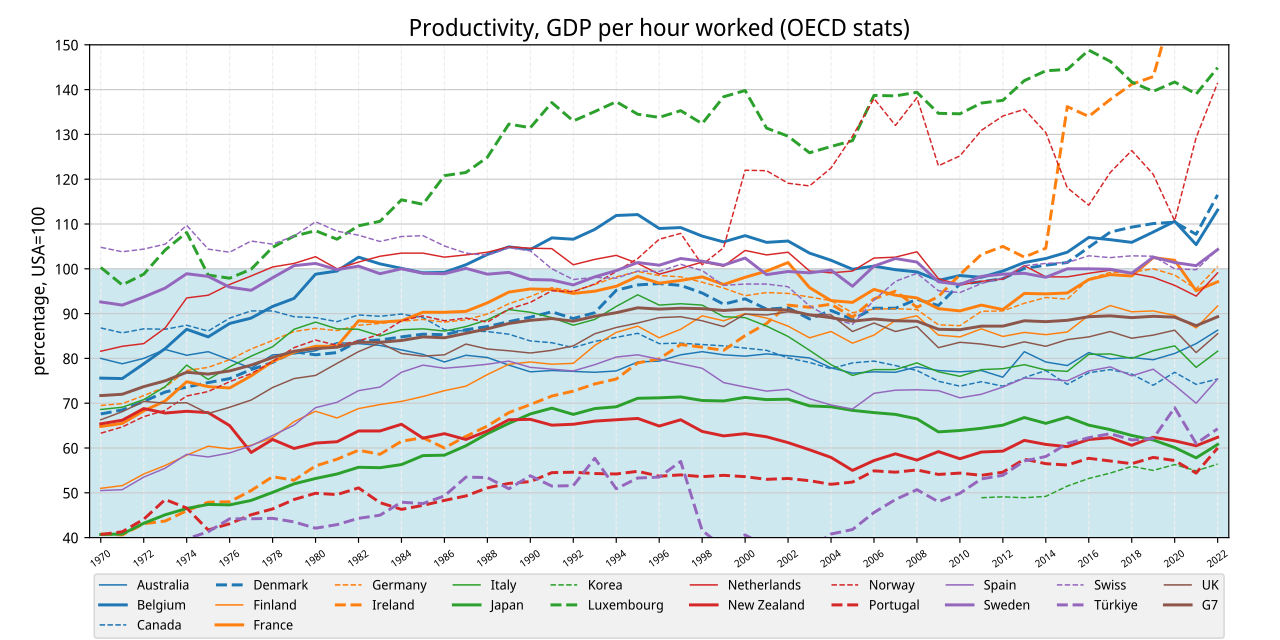
Measuring labor productivity is a complex task, as it involves calculating the output of workers and the hours they work. Economists use various methods to measure labor productivity, including the labor productivity index and the gross domestic product (GDP) per hour worked. These measures help to identify trends and patterns in labor productivity, such as the impact of globalization on labor markets. For example, the International Labor Organization (ILO) uses the labor productivity index to compare labor productivity across different countries, including China and India. Additionally, the World Bank provides data on GDP per hour worked for various countries, allowing for international comparisons of labor productivity.
📊 Types of Productivity
There are several types of productivity that economists measure, including labor productivity, capital productivity, and multifactor productivity. Labor productivity is the most widely used measure, as it helps to understand the efficiency of workers in producing goods and services. Capital productivity, on the other hand, measures the efficiency of capital in producing output, while multifactor productivity measures the efficiency of all inputs, including labor, capital, and technology. For instance, a study by the National Bureau of Economic Research found that human capital is a significant factor in determining labor productivity, while another study by the McKinsey Global Institute found that digitalization can increase labor productivity by up to 20%.
🌎 Global Labor Productivity Trends
Global labor productivity trends show that labor productivity has been increasing over the past few decades, thanks to advancements in technology and globalization. However, there are significant differences in labor productivity across countries, with some countries, such as South Korea and Singapore, having much higher labor productivity than others, such as Brazil and South Africa. These differences are due to various factors, including education, training, and institutional framework. For example, the World Economic Forum ranks countries based on their labor productivity, with the United States ranking first in 2020, followed by Singapore and Hong Kong.
📊 Factors Affecting Labor Productivity
Several factors affect labor productivity, including human capital, technology, and institutional framework. Human capital, which refers to the skills and education of workers, is a significant factor in determining labor productivity. Technology, on the other hand, can increase labor productivity by automating tasks and improving efficiency. Institutional framework, which includes laws, regulations, and policies, can also affect labor productivity by creating a favorable business environment. For instance, a study by the Organisation for Economic Co-operation and Development (OECD) found that investment in education can increase labor productivity by up to 10%, while another study by the International Monetary Fund found that good governance is essential for promoting labor productivity.
💼 The Role of Technology in Labor Productivity
The role of technology in labor productivity is significant, as it can increase efficiency and automate tasks. Automation and artificial intelligence (AI) are examples of technologies that can increase labor productivity by reducing the need for human labor. However, these technologies also pose challenges, such as job displacement and income inequality. To mitigate these challenges, it is essential to invest in education and training programs that help workers develop the skills needed to work with new technologies. For example, the European Union has launched several initiatives to promote digital skills and lifelong learning, including the Digital Europe program.
📊 Labor Productivity and Economic Growth
Labor productivity is closely linked to economic growth, as it helps to increase the output of goods and services. Economists use labor productivity to estimate the potential growth rate of an economy, which is essential for making informed policy decisions. However, labor productivity is not the only factor that affects economic growth, as other factors, such as investment and consumption, also play a role. For instance, a study by the Federal Reserve found that labor productivity is a significant factor in determining economic growth, while another study by the International Monetary Fund found that fiscal policy can also affect economic growth.
📊 Challenges in Measuring Labor Productivity
Measuring labor productivity is a complex task, and there are several challenges that economists face. One of the main challenges is the lack of data, particularly in developing countries. Another challenge is the difficulty in measuring the output of workers, particularly in the service sector. To overcome these challenges, economists use various methods, including surveys and administrative data. For example, the Bureau of Labor Statistics (BLS) uses surveys to collect data on labor productivity, while the World Bank uses administrative data to estimate labor productivity in developing countries.
🌐 International Comparisons of Labor Productivity
International comparisons of labor productivity are essential for understanding the competitiveness of countries. Economists use various methods to compare labor productivity across countries, including the purchasing power parity (PPP) method. These comparisons help to identify the strengths and weaknesses of different countries and to inform policy decisions. For instance, the Organisation for Economic Co-operation and Development (OECD) publishes an annual report on labor productivity, which provides a comprehensive comparison of labor productivity across OECD countries. Additionally, the World Economic Forum publishes a global competitiveness report, which includes data on labor productivity.
📊 Future of Labor Productivity
The future of labor productivity is uncertain, as it will be shaped by various factors, including technology and globalization. Economists predict that labor productivity will continue to increase, thanks to advancements in technology and the growth of the service sector. However, there are also challenges, such as job displacement and income inequality, that need to be addressed. To mitigate these challenges, it is essential to invest in education and training programs that help workers develop the skills needed to work with new technologies. For example, the European Union has launched several initiatives to promote digital skills and lifelong learning, including the Digital Europe program.
📊 Conclusion
In conclusion, labor productivity is a crucial aspect of economics, as it helps to understand the efficiency of workers in producing goods and services. Labor productivity is a measure for an organisation or company, a process, an industry, or a country, and it is essential to understand the factors that affect it, such as human capital and technology. To increase labor productivity, it is essential to invest in education and training programs that help workers develop the skills needed to work with new technologies. Additionally, policymakers must address the challenges posed by automation and artificial intelligence, such as job displacement and income inequality.
Key Facts
- Year
- 2023
- Origin
- Industrial Revolution
- Category
- Economics
- Type
- Economic Concept
Frequently Asked Questions
What is labor productivity?
Labor productivity is the amount of goods and services that a group of workers produce in a given amount of time. It is a measure for an organisation or company, a process, an industry, or a country, and it is essential to understand the factors that affect it, such as human capital and technology. For instance, the United States has seen a significant increase in labor productivity over the past few decades, thanks to advancements in information technology. Labor productivity is closely linked to economic growth, as it helps to increase the output of goods and services.
How is labor productivity measured?
Labor productivity is measured using various methods, including the labor productivity index and the gross domestic product (GDP) per hour worked. These measures help to identify trends and patterns in labor productivity, such as the impact of globalization on labor markets. For example, the International Labor Organization (ILO) uses the labor productivity index to compare labor productivity across different countries, including China and India. Additionally, the World Bank provides data on GDP per hour worked for various countries, allowing for international comparisons of labor productivity.
What are the factors that affect labor productivity?
Several factors affect labor productivity, including human capital, technology, and institutional framework. Human capital, which refers to the skills and education of workers, is a significant factor in determining labor productivity. Technology, on the other hand, can increase labor productivity by automating tasks and improving efficiency. Institutional framework, which includes laws, regulations, and policies, can also affect labor productivity by creating a favorable business environment. For instance, a study by the Organisation for Economic Co-operation and Development (OECD) found that investment in education can increase labor productivity by up to 10%, while another study by the International Monetary Fund found that good governance is essential for promoting labor productivity.
How does labor productivity affect economic growth?
Labor productivity is closely linked to economic growth, as it helps to increase the output of goods and services. Economists use labor productivity to estimate the potential growth rate of an economy, which is essential for making informed policy decisions. However, labor productivity is not the only factor that affects economic growth, as other factors, such as investment and consumption, also play a role. For instance, a study by the Federal Reserve found that labor productivity is a significant factor in determining economic growth, while another study by the International Monetary Fund found that fiscal policy can also affect economic growth.
What are the challenges in measuring labor productivity?
Measuring labor productivity is a complex task, and there are several challenges that economists face. One of the main challenges is the lack of data, particularly in developing countries. Another challenge is the difficulty in measuring the output of workers, particularly in the service sector. To overcome these challenges, economists use various methods, including surveys and administrative data. For example, the Bureau of Labor Statistics (BLS) uses surveys to collect data on labor productivity, while the World Bank uses administrative data to estimate labor productivity in developing countries.
How does technology affect labor productivity?
The role of technology in labor productivity is significant, as it can increase efficiency and automate tasks. Automation and artificial intelligence (AI) are examples of technologies that can increase labor productivity by reducing the need for human labor. However, these technologies also pose challenges, such as job displacement and income inequality. To mitigate these challenges, it is essential to invest in education and training programs that help workers develop the skills needed to work with new technologies. For example, the European Union has launched several initiatives to promote digital skills and lifelong learning, including the Digital Europe program.
What is the future of labor productivity?
The future of labor productivity is uncertain, as it will be shaped by various factors, including technology and globalization. Economists predict that labor productivity will continue to increase, thanks to advancements in technology and the growth of the service sector. However, there are also challenges, such as job displacement and income inequality, that need to be addressed. To mitigate these challenges, it is essential to invest in education and training programs that help workers develop the skills needed to work with new technologies. For example, the European Union has launched several initiatives to promote digital skills and lifelong learning, including the Digital Europe program.