
Contents
- 🌐 Introduction to IoT Sensors
- 📈 History and Evolution of IoT Sensors
- 🔍 Types of IoT Sensors
- 📊 Applications of IoT Sensors
- 🚀 Industrial Automation and IoT Sensors
- 🏠 Smart Homes and IoT Sensors
- 🚗 Transportation and IoT Sensors
- 📊 Challenges and Limitations of IoT Sensors
- 🔒 Security Concerns and IoT Sensors
- 🌟 Future of IoT Sensors
- 📈 Market Trends and IoT Sensors
- Frequently Asked Questions
- Related Topics
Overview
IoT sensors have become the backbone of the Internet of Things, enabling the collection of vast amounts of data and facilitating automation in various sectors. With a projected 75.4 billion connected devices by 2025, according to a report by Statista, the impact of IoT sensors is undeniable. Companies like Bosch, Cisco, and Intel are at the forefront of IoT sensor innovation, with applications ranging from smart homes and cities to industrial automation and healthcare. However, concerns over data privacy and security have sparked intense debates, with 71% of organizations citing security as a major challenge in IoT adoption, as reported by a survey by Kaspersky. As IoT sensors continue to advance, with the likes of nanosensors and AI-powered sensors, the future holds immense potential for transformative change. The influence of IoT sensors can be seen in the work of pioneers like Kevin Ashton, who coined the term 'Internet of Things' in 1999, and the development of protocols like Zigbee and Bluetooth Low Energy, which have enabled seamless communication between devices.
🌐 Introduction to IoT Sensors
The Internet of Things (IoT) has revolutionized the way we live and interact with our surroundings. At the heart of this revolution are IoT sensors, which are IoT devices that detect and respond to changes in their environment. These sensors are the pulse of a connected world, providing real-time data that enables smart cities to function efficiently. With the help of artificial intelligence and machine learning, IoT sensors can analyze data and make informed decisions. As the world becomes increasingly connected, the importance of IoT sensors will only continue to grow. The use of IoT sensors has been explored in various fields, including healthcare and environmental monitoring.
📈 History and Evolution of IoT Sensors
The history of IoT sensors dates back to the 1960s, when the first sensors were developed. However, it wasn't until the 1990s that the concept of IoT began to take shape. The term 'Internet of Things' was coined by Kevin Ashton in 1999, and since then, the technology has evolved rapidly. Today, IoT sensors are used in a wide range of applications, from industrial automation to smart homes. The evolution of IoT sensors has been influenced by advancements in wireless communication and microelectromechanical systems. As the technology continues to advance, we can expect to see even more innovative applications of IoT sensors. For example, Google has been working on developing IoT platforms that can integrate with various devices.
🔍 Types of IoT Sensors
There are several types of IoT sensors, each with its own unique characteristics and applications. Temperature sensors are used to monitor temperature changes, while humidity sensors detect changes in humidity levels. Pressure sensors are used to measure pressure, and motion sensors detect movement. Other types of IoT sensors include light sensors, sound sensors, and gas sensors. The choice of sensor depends on the specific application and the type of data that needs to be collected. For instance, Amazon uses IoT sensors in its warehouses to track inventory and optimize logistics. Additionally, Microsoft has developed Azure IoT solutions that can be used to connect and manage IoT devices.
📊 Applications of IoT Sensors
IoT sensors have a wide range of applications, from industrial automation to smart cities. In industrial automation, IoT sensors are used to monitor and control equipment, reducing downtime and increasing efficiency. In smart cities, IoT sensors are used to manage traffic, energy, and waste management. IoT sensors are also used in healthcare to monitor patient health and track medical equipment. Other applications of IoT sensors include transportation, environmental monitoring, and agriculture. The use of IoT sensors has the potential to transform various industries and improve our daily lives. For example, John Deere uses IoT sensors in its agricultural equipment to optimize crop yields and reduce waste.
🚀 Industrial Automation and IoT Sensors
Industrial automation is one of the largest applications of IoT sensors. IoT sensors are used to monitor and control equipment, reducing downtime and increasing efficiency. Predictive maintenance is a key application of IoT sensors in industrial automation, where sensors are used to detect potential equipment failures before they occur. IoT sensors are also used to optimize production processes, reducing waste and improving product quality. Companies like Siemens and GE are using IoT sensors to transform their industrial automation processes. The use of IoT sensors in industrial automation has the potential to increase productivity and reduce costs. Furthermore, IBM has developed IoT solutions that can be used to connect and manage industrial equipment.
🏠 Smart Homes and IoT Sensors
Smart homes are another major application of IoT sensors. IoT sensors are used to control lighting, temperature, and security systems, making homes more comfortable and convenient. Voice assistants like Amazon Alexa and Google Home use IoT sensors to control smart home devices. IoT sensors are also used to monitor energy consumption and optimize energy efficiency. Companies like Philips and Belkin are using IoT sensors to develop smart home products. The use of IoT sensors in smart homes has the potential to improve our daily lives and reduce energy consumption. Additionally, Apple has developed HomeKit solutions that can be used to connect and manage smart home devices.
🚗 Transportation and IoT Sensors
Transportation is another key application of IoT sensors. IoT sensors are used to monitor traffic flow, reducing congestion and improving traffic management. Autonomous vehicles use IoT sensors to navigate and avoid obstacles. IoT sensors are also used to monitor vehicle health and optimize maintenance. Companies like Tesla and Volkswagen are using IoT sensors to develop autonomous vehicles. The use of IoT sensors in transportation has the potential to transform the way we travel and reduce accidents. Furthermore, Uber has been working on developing autonomous taxis that use IoT sensors to navigate and avoid obstacles.
📊 Challenges and Limitations of IoT Sensors
Despite the many benefits of IoT sensors, there are also several challenges and limitations. One of the major challenges is data management, as IoT sensors generate vast amounts of data that need to be processed and analyzed. Another challenge is security, as IoT sensors are vulnerable to cyber attacks. Interoperability is also a challenge, as different IoT sensors and devices may not be compatible with each other. Companies like Cisco and Intel are working to address these challenges and develop more secure and interoperable IoT sensors. The use of IoT sensors has the potential to transform various industries, but it requires careful planning and management. For instance, Oracle has developed IoT platforms that can be used to manage and analyze IoT data.
🔒 Security Concerns and IoT Sensors
Security is a major concern for IoT sensors, as they are vulnerable to cyber attacks. Cybersecurity is a key challenge for IoT sensors, as they can be used to access sensitive data and systems. Companies like Symantec and Mcafee are working to develop more secure IoT sensors and devices. Encryption is a key technology used to secure IoT sensors and data. The use of IoT sensors requires careful consideration of security risks and mitigation strategies. Additionally, Norton has developed antivirus solutions that can be used to protect IoT devices from cyber threats.
🌟 Future of IoT Sensors
The future of IoT sensors is exciting and rapidly evolving. 5G networks will enable faster and more reliable communication between IoT sensors and devices. Edge computing will enable faster processing and analysis of IoT data. Companies like Qualcomm and Nvidia are working to develop more advanced IoT sensors and devices. The use of IoT sensors has the potential to transform various industries and improve our daily lives. Furthermore, Ericsson has developed IoT solutions that can be used to connect and manage IoT devices.
📈 Market Trends and IoT Sensors
The market for IoT sensors is growing rapidly, with market research firms predicting significant growth in the coming years. Companies like STMicroelectronics and Infineon are leading the market for IoT sensors. Asia is a key region for IoT sensor manufacturing, with countries like China and South Korea leading the way. The use of IoT sensors has the potential to transform various industries and improve our daily lives. As the market continues to grow, we can expect to see even more innovative applications of IoT sensors. For example, Samsung has developed IoT devices that can be used to connect and manage various appliances.
Key Facts
- Year
- 1999
- Origin
- MIT Auto-ID Center
- Category
- Technology
- Type
- Technology Concept
Frequently Asked Questions
What are IoT sensors?
IoT sensors are devices that detect and respond to changes in their environment. They are used to collect data and enable real-time decision-making. IoT sensors are used in a wide range of applications, from industrial automation to smart homes. They can detect changes in temperature, humidity, pressure, and motion, among other things. For example, Honeywell uses IoT sensors in its thermostats to optimize temperature control.
What are the benefits of IoT sensors?
The benefits of IoT sensors include improved efficiency, reduced costs, and enhanced decision-making. IoT sensors can also improve safety and reduce the risk of accidents. They can be used to monitor and control equipment, reducing downtime and increasing productivity. Additionally, IoT sensors can be used to optimize production processes, reducing waste and improving product quality. Companies like GE and Siemens are using IoT sensors to transform their industrial automation processes.
What are the challenges of IoT sensors?
The challenges of IoT sensors include data management, security, and interoperability. IoT sensors generate vast amounts of data that need to be processed and analyzed. They are also vulnerable to cyber attacks, which can compromise sensitive data and systems. Furthermore, different IoT sensors and devices may not be compatible with each other, which can make integration and management challenging. Companies like Cisco and Intel are working to address these challenges and develop more secure and interoperable IoT sensors.
What is the future of IoT sensors?
The future of IoT sensors is exciting and rapidly evolving. 5G networks will enable faster and more reliable communication between IoT sensors and devices. Edge computing will enable faster processing and analysis of IoT data. Companies like Qualcomm and Nvidia are working to develop more advanced IoT sensors and devices. The use of IoT sensors has the potential to transform various industries and improve our daily lives. For example, Tesla is using IoT sensors in its autonomous vehicles to navigate and avoid obstacles.
What are the applications of IoT sensors?
The applications of IoT sensors are wide-ranging and diverse. They include industrial automation, smart cities, healthcare, transportation, and smart homes, among others. IoT sensors can be used to monitor and control equipment, reducing downtime and increasing efficiency. They can also be used to optimize production processes, reducing waste and improving product quality. Additionally, IoT sensors can be used to monitor patient health and track medical equipment. Companies like John Deere and Philips are using IoT sensors to develop innovative products and solutions.
How do IoT sensors work?
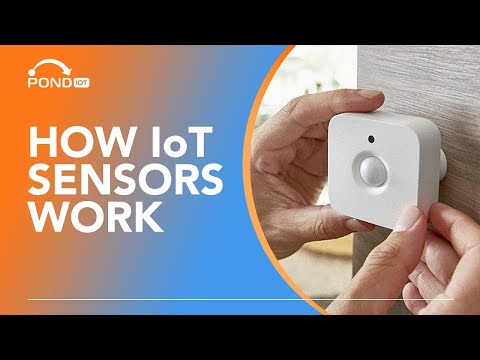
IoT sensors work by detecting changes in their environment and sending data to a central hub or cloud for processing and analysis. They use various technologies, such as wireless communication and microelectromechanical systems, to detect and respond to changes. IoT sensors can be used to monitor temperature, humidity, pressure, and motion, among other things. They can also be used to control equipment and optimize production processes. For example, Amazon uses IoT sensors in its warehouses to track inventory and optimize logistics.
What are the advantages of using IoT sensors?
The advantages of using IoT sensors include improved efficiency, reduced costs, and enhanced decision-making. IoT sensors can also improve safety and reduce the risk of accidents. They can be used to monitor and control equipment, reducing downtime and increasing productivity. Additionally, IoT sensors can be used to optimize production processes, reducing waste and improving product quality. Companies like IBM and Oracle are using IoT sensors to develop innovative solutions and products.