
Contents
- 🔍 Introduction to the Information Paradox
- 💡 The Arrow Information Paradox: Economic Perspectives
- 🌌 The Black Hole Information Paradox: Physical Implications
- 🤔 Unpacking the Tensions: Contrasting Views
- 📊 Information Theory and the Paradox
- 🌈 Interdisciplinary Approaches to the Paradox
- 🚀 Implications for the Future of Science
- 👥 Key Players and Their Contributions
- 📝 Debates and Controversies Surrounding the Paradox
- 💻 Computational Models and the Information Paradox
- 🔮 Philosophical Underpinnings of the Paradox
- Frequently Asked Questions
- Related Topics
Overview
The information paradox refers to the contradictions and uncertainties that arise from the pursuit of knowledge. Historically, philosophers like Aristotle and Plato grappled with the nature of information, while modern thinkers like Claude Shannon and Alan Turing developed frameworks for understanding it. However, the more we learn, the more we realize how little we know, and the paradox deepens. For instance, the black hole information paradox, proposed by Stephen Hawking in 1976, questions what happens to information contained in matter that falls into a black hole. This paradox has sparked intense debates among physicists, with some, like Leonard Susskind, arguing that information is preserved, while others, like Hawking, initially suggested it is lost. As we continue to explore the frontiers of knowledge, the information paradox will only continue to evolve, with potential implications for our understanding of the universe and our place within it. The concept has a vibe score of 8, reflecting its significant cultural energy and resonance in academic and scientific communities. Key figures like Hawking, Susskind, and Turing have influenced the development of the paradox, and their ideas continue to shape our understanding of information and its role in the universe.
🔍 Introduction to the Information Paradox
The information paradox, encompassing both the Arrow information paradox in economics and the black hole information paradox in physics, presents a fascinating and complex set of challenges. At its heart, the paradox questions how information is processed, stored, and potentially lost within different systems. The information theory framework, developed by Claude Shannon, provides a foundational understanding of how information is quantified and transmitted. However, the paradox highlights the limitations and tensions within this framework, particularly when applied to economic and physical systems. The Arrow information paradox in economics, for instance, explores the implications of imperfect information on market outcomes, while the black hole information paradox in physics delves into the mystery of what happens to information contained in matter that falls into a black hole.
💡 The Arrow Information Paradox: Economic Perspectives
The Arrow information paradox, named after economist Kenneth Arrow, focuses on the economic implications of information asymmetry. In a market where participants have differing levels of information, the equilibrium price may not reflect the true value of goods or services. This leads to inefficiencies and potential market failures. The concept of asymmetric information is crucial here, as it affects the behavior of economic agents and the overall market dynamics. The work of George Akerlof on the market for lemons further illustrates the consequences of information asymmetry. Understanding the Arrow information paradox is essential for developing policies that mitigate its effects and promote more efficient market outcomes, as discussed in the context of economics of information.
🌌 The Black Hole Information Paradox: Physical Implications
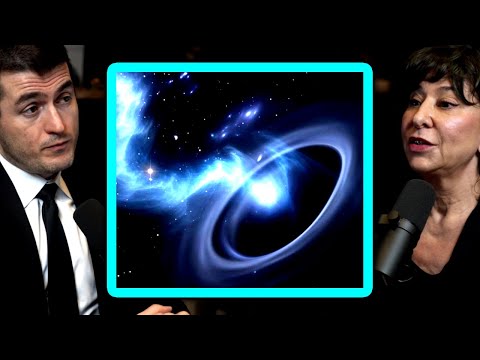
The black hole information paradox, on the other hand, is a puzzle that has intrigued physicists for decades. It questions what happens to the information about the physical state of matter that falls into a black hole. The principles of quantum mechanics suggest that information cannot be destroyed, yet the laws of general relativity imply that anything that falls into a black hole is lost forever. This paradox has sparked intense debate among physicists, including Stephen Hawking, who initially proposed that black holes do indeed destroy information. However, more recent theories, such as string theory and loop quantum gravity, offer potential resolutions to the paradox, suggesting that information might be preserved in the quantum foam or through other mechanisms.
🤔 Unpacking the Tensions: Contrasting Views
Unpacking the tensions between these two paradoxes reveals deeper questions about the nature of information itself. Is information a physical entity that can be lost, or is it a more abstract concept that transcends physical boundaries? The physicalism versus dualism debate in philosophy of mind touches on similar issues, as it concerns the relationship between the physical world and abstract entities like information. The information paradox also intersects with discussions on free will and determinism, as the availability and processing of information can influence decision-making processes. Furthermore, the study of complex systems and chaos theory provides insights into how small changes in information can lead to significant outcomes, underscoring the complexity of the paradox.
📊 Information Theory and the Paradox
Information theory, as a framework, attempts to quantify and analyze the information content of messages. However, when applied to the information paradox, it reveals limitations. The concept of entropy in information theory, which measures the disorder or randomness of information, has been linked to the second law of thermodynamics. This connection suggests that information, like energy, may be subject to fundamental laws that govern its behavior and potential loss. The work of Rolf Landauer on the thermodynamics of computation further explores this relationship, highlighting the physical costs of information processing.
🌈 Interdisciplinary Approaches to the Paradox
Interdisciplinary approaches to the information paradox offer a rich tapestry of insights. From the perspective of cognitive science, the paradox can inform our understanding of how humans process information and make decisions under uncertainty. The field of artificial intelligence also grapples with similar questions, as it seeks to create systems that can efficiently process and generate information. Moreover, the study of information systems in the context of social science reveals how information flows and is utilized within social structures, influencing outcomes in fields like economics and politics.
🚀 Implications for the Future of Science
The implications of the information paradox for the future of science are profound. As our understanding of information and its role in physical and economic systems deepens, we may uncover new principles that govern the behavior of complex systems. The development of quantum computing, for example, relies on a nuanced understanding of information at the quantum level. Furthermore, resolving the black hole information paradox could lead to breakthroughs in our comprehension of the universe, including the nature of space-time and the origin of the universe.
👥 Key Players and Their Contributions
Key players in the discussion around the information paradox include physicists like Leonard Susskind and Gerard 't Hooft, who have contributed significantly to the theoretical framework surrounding black holes and information. Economists such as Joseph Stiglitz have also shed light on the implications of information asymmetry in economic markets. The contributions of these individuals, among others, have shaped our current understanding of the paradox and continue to drive research forward, as seen in the context of information economics.
📝 Debates and Controversies Surrounding the Paradox
Debates and controversies surrounding the information paradox are numerous. One of the central debates in physics concerns the holographic principle, proposed by Leonard Susskind and Gerard 't Hooft, which suggests that the information contained in a region of space can be encoded on the surface of that region. This idea has far-reaching implications for our understanding of black hole physics and the nature of reality. In economics, the debate over the efficiency of markets in the presence of asymmetric information continues, with scholars like Eugene Fama arguing for the efficient market hypothesis and others, like Joseph Stiglitz, highlighting the limitations of this hypothesis.
💻 Computational Models and the Information Paradox
Computational models have become essential tools in the study of the information paradox. Simulations of black hole collisions and the behavior of quantum systems provide insights into how information might be processed and potentially lost. The development of machine learning algorithms and their application to complex data sets also offer new avenues for exploring the paradox, particularly in understanding patterns of information flow and utilization. Furthermore, the concept of information entropy has been applied in computational models to quantify the complexity of information in various systems.
🔮 Philosophical Underpinnings of the Paradox
The philosophical underpinnings of the information paradox touch on fundamental questions about the nature of reality, knowledge, and information. The distinction between epistemology (the study of knowledge) and ontology (the study of existence) becomes crucial, as the paradox challenges our understanding of what exists and how we can know it. The work of philosophers like David Chalmers on the hard problem of consciousness and the philosophy of information by Luciano Floridi provide a framework for addressing these questions, emphasizing the need for a comprehensive philosophy of information that can guide our understanding of the paradox.
Key Facts
- Year
- 1976
- Origin
- Stephen Hawking's proposal of the black hole information paradox
- Category
- Philosophy and Science
- Type
- Concept
Frequently Asked Questions
What is the information paradox?
The information paradox refers to two related paradoxes: the Arrow information paradox in economics and the black hole information paradox in physics. The Arrow information paradox explores the implications of imperfect information in economic markets, while the black hole information paradox questions what happens to the information contained in matter that falls into a black hole. Both paradoxes challenge our understanding of how information is processed, stored, and potentially lost within different systems.
How does the information paradox relate to quantum mechanics?
The black hole information paradox is deeply connected to quantum mechanics, as it questions the fate of information about the physical state of matter that falls into a black hole. Quantum mechanics suggests that information cannot be destroyed, but the laws of general relativity imply that anything that falls into a black hole is lost forever. Resolving this paradox may require a deeper understanding of quantum mechanics and its application to black hole physics.
What are the implications of the information paradox for our understanding of reality?
The information paradox has profound implications for our understanding of reality, touching on fundamental questions about the nature of information, knowledge, and existence. It challenges our comprehension of how information is created, processed, and potentially lost, and it may lead to new insights into the nature of space-time and the origin of the universe. Furthermore, it underscores the importance of interdisciplinary approaches to understanding complex phenomena.
How does the information paradox influence economic theory?
The Arrow information paradox significantly influences economic theory, particularly in the areas of information economics and market efficiency. It highlights the importance of considering information asymmetry in economic models, as it can lead to market inefficiencies and failures. Understanding the implications of imperfect information is crucial for developing policies that promote more efficient market outcomes and for analyzing the behavior of economic agents under uncertainty.
What role does computational modeling play in studying the information paradox?
Computational modeling plays a vital role in studying the information paradox, especially in simulating complex systems and analyzing large data sets. It helps in understanding how information is processed and potentially lost in various contexts, from black hole physics to economic markets. Computational models can also test hypotheses and predict outcomes under different scenarios, providing valuable insights into the nature of the paradox.
How does the philosophy of information contribute to our understanding of the paradox?
The philosophy of information provides a foundational framework for understanding the nature of information and its role in the paradox. It addresses questions about what information is, how it is created and processed, and its relationship to knowledge and reality. Philosophers like Luciano Floridi have developed a comprehensive philosophy of information that can guide our understanding of the paradox, emphasizing the importance of considering the ethical, ontological, and epistemological dimensions of information.
What are the potential resolutions to the black hole information paradox?
Several potential resolutions to the black hole information paradox have been proposed, including the idea that information is preserved in the quantum foam or through other mechanisms such as black hole complementarity or holographic principle. These theories suggest that information that falls into a black hole is not lost but rather encoded on the surface of the event horizon or preserved in a way that is consistent with the principles of quantum mechanics.