
Contents
- 📚 Introduction to Claude Shannon
- 💻 The Foundations of Information Theory
- 📝 A Mathematical Theory of Communication
- 🔍 Entropy and Redundancy
- 📈 Data Compression and Error-Correcting Codes
- 🤝 Collaboration and Influence
- 📊 Applications of Information Theory
- 🔮 The Legacy of Claude Shannon
- 📚 Books and Publications
- 🎯 Awards and Recognition
- 📝 Controversies and Criticisms
- 🔜 Future Directions
- Frequently Asked Questions
- Related Topics
Overview
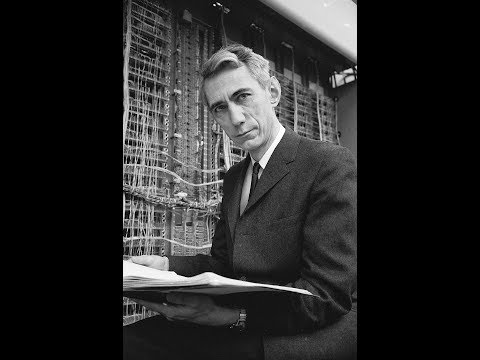
Claude Shannon, known as the Father of Information Theory, was a renowned American mathematician and electrical engineer. Born on April 30, 1916, in Petoskey, Michigan, Shannon's work laid the foundation for the development of modern computer science and telecommunications. His seminal paper, A Mathematical Theory of Communication, published in 1948, introduced the concept of entropy and revolutionized the way we think about information. Shannon's work was heavily influenced by Norbert Wiener and Alan Turing, and he is widely regarded as one of the most important scientists of the 20th century. Shannon's contributions to computer science and telecommunications are still felt today, with his ideas continuing to shape the development of new technologies. As a pioneer in the field, Shannon's work has had a lasting impact on our understanding of information and its role in modern society.
💻 The Foundations of Information Theory
The foundations of information theory, as laid out by Shannon, are based on the idea that information can be quantified and measured. This concept is rooted in the idea of probability and statistics, and Shannon's work built on the foundations established by Andrey Kolmogorov and Ronald Fisher. Shannon's theory of information introduced the concept of bit, a fundamental unit of information that can have only two values: 0 or 1. This idea has had a profound impact on the development of computer hardware and software, and has enabled the creation of modern computing systems. Shannon's work also explored the relationship between information and entropy, and he demonstrated that entropy is a fundamental measure of the uncertainty or randomness of a system. This idea has far-reaching implications for our understanding of complexity and chaos theory.
📝 A Mathematical Theory of Communication
Shannon's paper, A Mathematical Theory of Communication, is considered one of the most important papers of the 20th century. In it, Shannon introduced the concept of the communication channel, which is a fundamental component of any communication system. He also developed the noisy channel coding theorem, which establishes the maximum rate at which information can be transmitted over a communication channel. This theorem has had a profound impact on the development of telecommunications and data compression. Shannon's work also explored the relationship between information and redundancy, and he demonstrated that redundancy is essential for reliable communication. This idea has important implications for our understanding of error-correcting codes and data integrity.
🔍 Entropy and Redundancy
Entropy, a concept introduced by Shannon, is a measure of the uncertainty or randomness of a system. It is a fundamental concept in information theory and has far-reaching implications for our understanding of complexity and chaos theory. Shannon's work on entropy was influenced by the work of Ludwig Boltzmann and Willard Gibbs, and he developed the concept of entropy as a measure of the amount of information in a system. This idea has had a profound impact on the development of data compression and error-correcting codes. Shannon's work also explored the relationship between information and redundancy, and he demonstrated that redundancy is essential for reliable communication. This idea has important implications for our understanding of data integrity and cybersecurity.
📈 Data Compression and Error-Correcting Codes
Data compression and error-correcting codes are two of the most important applications of information theory. Shannon's work on these topics has had a profound impact on the development of telecommunications and computer science. His ideas on data compression have enabled the creation of efficient algorithms for compressing data, which has revolutionized the way we store and transmit information. Shannon's work on error-correcting codes has also had a profound impact on the development of reliable communication systems. His ideas on redundancy and entropy have enabled the creation of efficient codes that can detect and correct errors in digital data. This has important implications for our understanding of data integrity and cybersecurity.
🤝 Collaboration and Influence
Shannon's collaboration and influence on other scientists and engineers has been profound. He worked closely with Norbert Wiener and Alan Turing, and his ideas have influenced a wide range of fields, including computer science, telecommunications, and cryptography. Shannon's work has also influenced the development of artificial intelligence and machine learning. His ideas on information and entropy have been applied to a wide range of fields, including biology, physics, and economics. Shannon's influence can be seen in the work of many other scientists and engineers, including Marvin Minsky and John von Neumann.
📊 Applications of Information Theory
The applications of information theory are diverse and widespread. Shannon's ideas on information and entropy have been applied to a wide range of fields, including computer science, telecommunications, and cryptography. His work on data compression and error-correcting codes has enabled the creation of efficient algorithms for compressing and transmitting data. Shannon's ideas have also been applied to the field of artificial intelligence, where they have been used to develop more efficient algorithms for machine learning. The applications of information theory can be seen in many areas of modern life, including internet communication, data storage, and cybersecurity.
🔮 The Legacy of Claude Shannon
The legacy of Claude Shannon is profound and far-reaching. His work on information theory has had a lasting impact on the development of modern computer science and telecommunications. Shannon's ideas on information and entropy have influenced a wide range of fields, including biology, physics, and economics. His work on data compression and error-correcting codes has enabled the creation of efficient algorithms for compressing and transmitting data. Shannon's legacy can be seen in the many scientists and engineers who have followed in his footsteps, including Marvin Minsky and John von Neumann.
📚 Books and Publications
Shannon's books and publications are numerous and influential. His seminal paper, A Mathematical Theory of Communication, is considered one of the most important papers of the 20th century. Shannon also wrote a book on switching circuit theory, which is still widely used today. His work on information theory has been published in many papers and books, and his ideas have been widely influential. Shannon's publications have had a profound impact on the development of modern computer science and telecommunications, and his work continues to be widely read and studied today.
🎯 Awards and Recognition
Shannon's awards and recognition are numerous and prestigious. He was awarded the National Medal of Science in 1966, and he was elected to the National Academy of Sciences in 1956. Shannon was also awarded the Marconi Award in 1958, and he was elected to the National Academy of Engineering in 1967. Shannon's work has been widely recognized and celebrated, and he is widely regarded as one of the most important scientists of the 20th century.
📝 Controversies and Criticisms
Despite his many contributions to science and engineering, Shannon's work has not been without controversy. Some critics have argued that his ideas on information and entropy are too narrow and do not fully capture the complexity of human communication. Others have argued that his work on data compression and error-correcting codes has been overemphasized, and that other factors, such as human factors and social context, are more important in determining the effectiveness of communication systems. Shannon's work has also been criticized for its lack of consideration of ethics and social implications.
🔜 Future Directions
The future directions of information theory are diverse and exciting. Shannon's ideas on information and entropy continue to influence a wide range of fields, including computer science, telecommunications, and cryptography. New applications of information theory are emerging, including artificial intelligence, machine learning, and internet of things. The study of information theory is also becoming increasingly interdisciplinary, with contributions from biology, physics, and economics. As technology continues to advance and evolve, the importance of information theory will only continue to grow, and Shannon's legacy will remain a vital part of the ongoing development of modern science and engineering.
Key Facts
- Year
- 1948
- Origin
- MIT Research Laboratory
- Category
- Computer Science
- Type
- Person
Frequently Asked Questions
Who is Claude Shannon and what is his contribution to science?
Claude Shannon is known as the Father of Information Theory. His contribution to science is the development of a mathematical theory of communication, which has had a profound impact on the development of modern computer science and telecommunications. Shannon's work introduced the concept of information and entropy, and he developed the noisy channel coding theorem. His ideas have influenced a wide range of fields, including computer science, telecommunications, and cryptography.
What is the significance of Shannon's paper 'A Mathematical Theory of Communication'?
Shannon's paper 'A Mathematical Theory of Communication' is considered one of the most important papers of the 20th century. It introduced the concept of information and entropy, and developed the noisy channel coding theorem. The paper has had a profound impact on the development of modern computer science and telecommunications, and its ideas continue to influence a wide range of fields, including computer science, telecommunications, and cryptography.
What are the applications of information theory?
The applications of information theory are diverse and widespread. They include data compression, error-correcting codes, cryptography, and artificial intelligence. Information theory has also been applied to a wide range of fields, including biology, physics, and economics. The study of information theory is also becoming increasingly interdisciplinary, with contributions from many different fields.
What is the relationship between information theory and entropy?
Information theory and entropy are closely related. Entropy is a measure of the uncertainty or randomness of a system, and it is a fundamental concept in information theory. Shannon's work on entropy introduced the concept of entropy as a measure of the amount of information in a system. The relationship between information theory and entropy is complex and multifaceted, and it has been the subject of much research and debate.
What is the legacy of Claude Shannon?
The legacy of Claude Shannon is profound and far-reaching. His work on information theory has had a lasting impact on the development of modern computer science and telecommunications. Shannon's ideas on information and entropy have influenced a wide range of fields, including biology, physics, and economics. His work continues to be widely read and studied today, and his legacy will remain a vital part of the ongoing development of modern science and engineering.