
Contents
- 🎵 Origins & History
- ⚙️ How It Works
- 📊 Key Facts & Numbers
- 👥 Key People & Organizations
- 🌍 Cultural Impact & Influence
- ⚡ Current State & Latest Developments
- 🤔 Controversies & Debates
- 🔮 Future Outlook & Predictions
- 💡 Practical Applications
- 📚 Related Topics & Deeper Reading
- Frequently Asked Questions
- References
- Related Topics
Overview
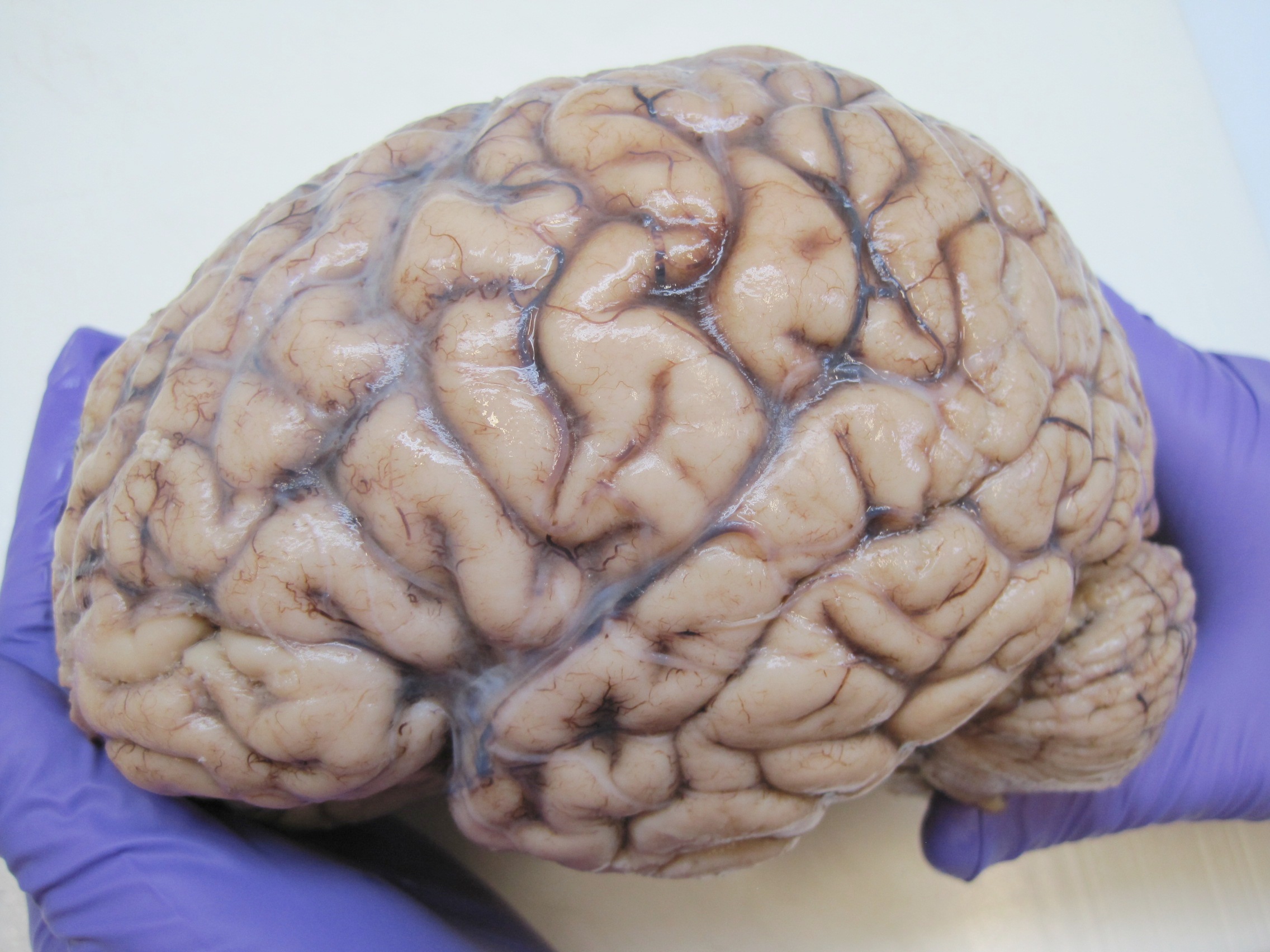
The human brain is the central organ of the nervous system, comprising the cerebrum, brainstem, and cerebellum. It processes, integrates, and coordinates sensory information, controlling most bodily activities. The brain's structure includes two cerebral hemispheres, each with an inner core of white matter and an outer surface of grey matter, known as the cerebral cortex. The cortex is further divided into the neocortex and allocortex, with the neocortex consisting of six neuronal layers. The brain's functions are distributed across four lobes: frontal, parietal, temporal, and occipital, each responsible for distinct cognitive and motor tasks. According to the National Institute of Mental Health (NIMH), the human brain contains approximately 86 billion neurons, with each neuron connecting to thousands of others, forming a complex network that enables thought, emotion, and behavior. Research by neuroscientists like Eric Kandel and Oliver Sacks has greatly advanced our understanding of brain function and its role in mental health. The brain's intricate structure and function are crucial for maintaining overall health, and understanding its workings is essential for developing effective treatments for neurological and psychiatric disorders, as discussed by organizations like the World Health Organization (WHO) and the National Institutes of Health (NIH).
🎵 Origins & History
The human brain has a long and complex history, with early studies dating back to ancient civilizations like the Egyptians and Greeks. The Greek physician Galen is known for his detailed descriptions of the brain's structure and function. In the 19th century, scientists like Paul Broca and Carl Wernicke made significant contributions to the field of neuroscience, including the discovery of language centers in the brain. Today, researchers like David Eagleman and Lisa Feldman Barrett continue to advance our understanding of brain function and its role in human behavior.
⚙️ How It Works
The brain's structure and function are intricately linked, with different regions responsible for distinct tasks. The cerebral cortex, for example, is divided into the neocortex and allocortex, with the neocortex consisting of six neuronal layers. The brain's neural networks are complex and dynamic, with each neuron connecting to thousands of others. This complex network enables thought, emotion, and behavior, and is crucial for maintaining overall health. As discussed by the Mayo Clinic, understanding brain function is essential for developing effective treatments for neurological and psychiatric disorders.
📊 Key Facts & Numbers
The human brain is a complex and highly specialized organ, with approximately 86 billion neurons and trillions of synapses. The brain's neural networks are capable of processing vast amounts of information, with some estimates suggesting that the brain can process up to 70,000 thoughts per day. The brain's energy consumption is also significant, with the brain accounting for approximately 20% of the body's total energy expenditure. According to the Centers for Disease Control and Prevention (CDC), brain disorders like Alzheimer's disease and Parkinson's disease affect millions of people worldwide, highlighting the need for continued research and development of effective treatments.
👥 Key People & Organizations
Key people in the field of neuroscience include Eric Kandel, who was awarded the Nobel Prize in Physiology or Medicine in 2000 for his research on the molecular mechanisms of memory storage. Other notable researchers include Oliver Sacks, who wrote extensively on the human brain and its many mysteries, and David Eagleman, who has made significant contributions to our understanding of brain function and behavior. Organizations like the National Institutes of Health (NIH) and the World Health Organization (WHO) also play a crucial role in advancing our understanding of the human brain and its many functions.
🌍 Cultural Impact & Influence
The human brain has had a profound impact on culture and society, with its intricate structure and function inspiring countless works of art, literature, and music. The brain's ability to process and store vast amounts of information has also enabled significant advances in technology and science, from the development of computers and smartphones to the discovery of new medical treatments and therapies. As discussed by the American Psychological Association (APA), the brain's role in mental health is also essential for maintaining overall well-being, with research suggesting that mental health disorders like depression and anxiety can have a significant impact on quality of life.
⚡ Current State & Latest Developments
Current research on the human brain is focused on developing a deeper understanding of its structure and function, with the goal of developing more effective treatments for neurological and psychiatric disorders. Recent advances in neuroimaging and neurostimulation techniques, such as functional magnetic resonance imaging (fMRI) and transcranial magnetic stimulation (TMS), have enabled researchers to study the brain in greater detail than ever before. According to the National Science Foundation (NSF), these advances have the potential to revolutionize our understanding of the human brain and its many functions, and to improve treatment outcomes for individuals with brain disorders.
🤔 Controversies & Debates
Despite the many advances that have been made in our understanding of the human brain, there are still many controversies and debates in the field of neuroscience. One of the most significant debates is the nature of consciousness, with some researchers arguing that consciousness arises from the activity of neurons in the brain, while others propose that consciousness is a fundamental aspect of the universe that cannot be reduced to purely physical processes. As discussed by the Stanford Encyclopedia of Philosophy, this debate has significant implications for our understanding of the human brain and its role in mental health.
🔮 Future Outlook & Predictions
The future of brain research is likely to be shaped by advances in technology and our increasing understanding of the brain's intricate structure and function. One of the most promising areas of research is the development of brain-computer interfaces (BCIs), which enable people to control devices with their thoughts. According to the MIT Technology Review, BCIs have the potential to revolutionize the treatment of neurological disorders like paralysis and ALS, and to improve the quality of life for individuals with these conditions.
💡 Practical Applications
The human brain has many practical applications, from the development of new medical treatments and therapies to the creation of more effective learning and memory strategies. Understanding how the brain processes and stores information, for example, can help educators develop more effective teaching methods and can enable individuals to improve their memory and cognitive function. As discussed by the Harvard Business Review, the brain's role in decision-making and behavior is also essential for business and leadership, with research suggesting that emotional intelligence and cognitive function are key predictors of success.
Key Facts
- Year
- 2020
- Origin
- Human body
- Category
- mental-health
- Type
- concept
Frequently Asked Questions
What is the human brain?
The human brain is the central organ of the nervous system, responsible for processing and integrating sensory information and controlling bodily functions. As discussed by the National Institutes of Health (NIH), the brain's intricate structure and function are crucial for maintaining overall health.
How many neurons are in the human brain?
The human brain contains approximately 86 billion neurons, each connecting to thousands of others to form a complex network that enables thought, emotion, and behavior. According to the Centers for Disease Control and Prevention (CDC), this complex network is essential for maintaining overall health and preventing neurological disorders.
What is the function of the cerebral cortex?
The cerebral cortex is the outer layer of the brain responsible for processing sensory information, controlling movement, and facilitating thought and consciousness. As discussed by the Mayo Clinic, the cortex is divided into different regions, each responsible for distinct functions, such as the frontal lobe, which is involved in executive functions like decision-making and planning.
How does the brain process and store information?
The brain processes and stores information through a complex network of neurons and synapses, with different regions of the brain responsible for different types of information. According to the Stanford Encyclopedia of Philosophy, this process is essential for learning and memory, and is influenced by factors such as attention, emotion, and prior experience.
What are some potential applications of brain-computer interfaces?
Brain-computer interfaces (BCIs) have the potential to revolutionize the treatment of neurological disorders like paralysis and ALS, and to improve the quality of life for individuals with these conditions. As discussed by the MIT Technology Review, BCIs could also enable people to control devices with their thoughts, and could have significant implications for fields like education and healthcare.
How can I improve my brain function and cognitive ability?
There are many ways to improve brain function and cognitive ability, including exercise, meditation, and cognitive training. According to the Harvard Business Review, these activities can help to build cognitive reserve and reduce the risk of age-related cognitive decline.
What is the current state of research on the human brain?
The current state of research on the human brain is highly active, with many scientists and researchers working to advance our understanding of brain structure and function. As discussed by the National Science Foundation (NSF), recent advances in neuroimaging and neurostimulation techniques have enabled researchers to study the brain in greater detail than ever before, and have the potential to revolutionize our understanding of the human brain and its many functions.