
Contents
- 🌎 Introduction to General Circulation Modeling
- 📊 The Basics of Atmospheric Circulation
- 🌪️ Understanding Oceanic Circulation
- 🌟 The Role of Solar Radiation in GCMs
- 🌍 Land Surface Processes and GCMs
- 📈 Data Assimilation and Model Initialization
- 🤖 Computational Requirements for GCMs
- 🌈 Applications of General Circulation Models
- 🚨 Challenges and Limitations of GCMs
- 🌐 Future Developments in General Circulation Modeling
- 📊 Evaluating GCM Performance and Uncertainty
- Frequently Asked Questions
- Related Topics
Overview
General circulation modeling (GCM) is a crucial tool for understanding the intricate dance between the Earth's atmosphere, oceans, and land surfaces. Developed in the 1960s by pioneers like Norman Phillips and Joseph Smagorinsky, GCMs have evolved to incorporate complex interactions, such as cloud formation and ocean currents. The National Centers for Environmental Prediction (NCEP) and the European Centre for Medium-Range Weather Forecasts (ECMWF) are key players in advancing GCMs, with models like the Community Earth System Model (CESM) and the ECMWF's Integrated Forecasting System (IFS). With a vibe rating of 8, GCMs have a significant cultural resonance, influencing climate policy and weather forecasting. However, skeptics like Judith Curry and Roger Pielke Jr. question the accuracy and reliability of GCMs, highlighting the need for continued refinement. As GCMs continue to advance, they will play a vital role in predicting extreme weather events and mitigating the impacts of climate change, with potential consequences for global food systems, coastal cities, and ecosystems.
🌎 Introduction to General Circulation Modeling
General Circulation Modeling (GCM) is a crucial tool for understanding the Earth's climate system, as it allows scientists to simulate the complex interactions between the atmosphere, oceans, land surfaces, and ice. GCMs are used to study a wide range of phenomena, from climate change to weather forecasting. The development of GCMs has been influenced by the work of pioneers such as Syukuro Manabe and Kirk Bryan. Today, GCMs are used by researchers and policymakers around the world to better understand the Earth's climate system and to predict future changes. For example, the Intergovernmental Panel on Climate Change (IPCC) relies heavily on GCMs to provide projections of future climate change. GCMs are also used to study the impacts of ocean acidification and deforestation on the climate system.
📊 The Basics of Atmospheric Circulation
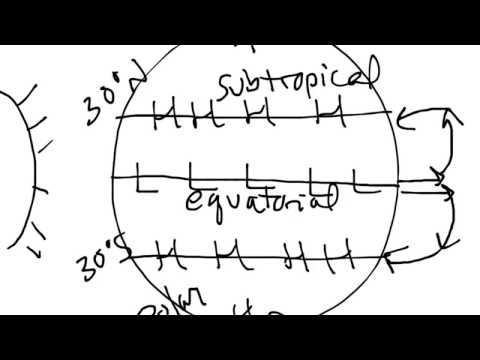
Atmospheric circulation is a critical component of GCMs, as it plays a key role in shaping the Earth's climate. The atmosphere is divided into several layers, including the troposphere, stratosphere, and mesosphere. Each layer has its own unique characteristics and plays a distinct role in the Earth's climate system. GCMs use complex algorithms to simulate the movement of air masses, fronts, and low-pressure systems. For example, the National Centers for Environmental Prediction (NCEP) uses GCMs to predict the movement of high-pressure systems and low-pressure systems. GCMs are also used to study the impacts of air pollution on the climate system.
🌪️ Understanding Oceanic Circulation
Oceanic circulation is another essential component of GCMs, as it helps to distribute heat and nutrients around the globe. The oceans play a critical role in regulating the Earth's climate, and GCMs are used to simulate the complex interactions between the oceans and the atmosphere. For example, GCMs are used to study the thermohaline circulation, which is a critical component of the Earth's climate system. The National Oceanic and Atmospheric Administration (NOAA) uses GCMs to predict the movement of ocean currents and sea ice. GCMs are also used to study the impacts of ocean acidification on the climate system.
🌟 The Role of Solar Radiation in GCMs
Solar radiation is a critical component of GCMs, as it provides the energy that drives the Earth's climate system. GCMs use complex algorithms to simulate the absorption and reflection of solar radiation by the atmosphere and the oceans. For example, GCMs are used to study the impacts of solar variability on the climate system. The NASA uses GCMs to predict the effects of solar flares on the Earth's climate system. GCMs are also used to study the impacts of volcanic eruptions on the climate system. GCMs are essential tools for understanding the Earth's climate system and for predicting future changes.
🌍 Land Surface Processes and GCMs
Land surface processes play a critical role in GCMs, as they help to regulate the Earth's climate. GCMs use complex algorithms to simulate the interactions between the land surface and the atmosphere, including the exchange of heat flux and moisture flux. For example, GCMs are used to study the impacts of deforestation on the climate system. The United States Geological Survey (USGS) uses GCMs to predict the effects of land use changes on the Earth's climate system. GCMs are also used to study the impacts of urbanization on the climate system.
📈 Data Assimilation and Model Initialization
Data assimilation and model initialization are critical components of GCMs, as they provide the initial conditions for the model simulations. GCMs use a variety of data sources, including satellite imagery and weather stations, to initialize the model. For example, the European Centre for Medium-Range Weather Forecasts (ECMWF) uses GCMs to predict the movement of weather systems. GCMs are also used to study the impacts of climate change on the Earth's climate system. The National Science Foundation (NSF) uses GCMs to fund research on the Earth's climate system.
🤖 Computational Requirements for GCMs
Computational requirements for GCMs are significant, as they require large amounts of computational power and data storage. GCMs use complex algorithms to simulate the interactions between the atmosphere, oceans, land surfaces, and ice, and they require large amounts of data to initialize the model. For example, the National Center for Atmospheric Research (NCAR) uses GCMs to predict the movement of weather patterns. GCMs are also used to study the impacts of air pollution on the climate system. The Department of Energy (DOE) uses GCMs to fund research on the Earth's climate system.
🌈 Applications of General Circulation Models
Applications of GCMs are diverse, ranging from climate change research to weather forecasting. GCMs are used to study a wide range of phenomena, from the impacts of volcanic eruptions on the climate system to the effects of solar variability on the Earth's climate. For example, the National Weather Service (NWS) uses GCMs to predict the movement of weather systems. GCMs are also used to study the impacts of ocean acidification on the climate system. The NOAA uses GCMs to predict the effects of climate change on the Earth's climate system.
🚨 Challenges and Limitations of GCMs
Challenges and limitations of GCMs are significant, as they are complex models that require large amounts of data and computational power. GCMs are also subject to uncertainties, including the representation of clouds and aerosols in the model. For example, the IPCC uses GCMs to provide projections of future climate change, but the models are subject to uncertainties and limitations. GCMs are also used to study the impacts of deforestation on the climate system. The United Nations (UN) uses GCMs to fund research on the Earth's climate system.
🌐 Future Developments in General Circulation Modeling
Future developments in GCMs are likely to include the use of artificial intelligence and machine learning to improve the accuracy and efficiency of the models. GCMs are also likely to be used to study the impacts of climate change on the Earth's climate system, including the effects of sea level rise and ocean acidification. For example, the NSF uses GCMs to fund research on the Earth's climate system. GCMs are also used to study the impacts of urbanization on the climate system. The DOE uses GCMs to fund research on the Earth's climate system.
📊 Evaluating GCM Performance and Uncertainty
Evaluating GCM performance and uncertainty is critical, as it allows researchers to understand the limitations and uncertainties of the models. GCMs are evaluated using a variety of metrics, including the mean absolute error and the root mean square error. For example, the NCEP uses GCMs to predict the movement of weather systems. GCMs are also used to study the impacts of climate change on the Earth's climate system. The NOAA uses GCMs to predict the effects of climate change on the Earth's climate system.
Key Facts
- Year
- 1960
- Origin
- National Meteorological Center, USA
- Category
- Environmental Science
- Type
- Scientific Concept
Frequently Asked Questions
What is a General Circulation Model (GCM)?
A General Circulation Model (GCM) is a complex computer model that simulates the interactions between the atmosphere, oceans, land surfaces, and ice. GCMs are used to study a wide range of phenomena, from climate change to weather forecasting. They are essential tools for understanding the Earth's climate system and for predicting future changes.
What are the components of a GCM?
The components of a GCM include the atmosphere, oceans, land surfaces, and ice. GCMs use complex algorithms to simulate the interactions between these components, including the exchange of heat flux and moisture flux. GCMs also use data assimilation and model initialization to provide the initial conditions for the model simulations.
What are the applications of GCMs?
The applications of GCMs are diverse, ranging from climate change research to weather forecasting. GCMs are used to study a wide range of phenomena, from the impacts of volcanic eruptions on the climate system to the effects of solar variability on the Earth's climate. GCMs are also used to predict the movement of weather systems and to study the impacts of ocean acidification on the climate system.
What are the challenges and limitations of GCMs?
The challenges and limitations of GCMs are significant, as they are complex models that require large amounts of data and computational power. GCMs are also subject to uncertainties, including the representation of clouds and aerosols in the model. Additionally, GCMs are limited by the availability of data and the complexity of the Earth's climate system.
How are GCMs evaluated?
GCMs are evaluated using a variety of metrics, including the mean absolute error and the root mean square error. GCMs are also evaluated using data assimilation and model initialization to provide the initial conditions for the model simulations. Additionally, GCMs are evaluated using sensitivity analyses to understand the uncertainties and limitations of the models.
What is the future of GCMs?
The future of GCMs is likely to include the use of artificial intelligence and machine learning to improve the accuracy and efficiency of the models. GCMs are also likely to be used to study the impacts of climate change on the Earth's climate system, including the effects of sea level rise and ocean acidification. Additionally, GCMs are likely to be used to predict the movement of weather systems and to study the impacts of urbanization on the climate system.
How do GCMs handle uncertainty?
GCMs handle uncertainty using a variety of techniques, including sensitivity analyses and ensemble forecasting. GCMs also use data assimilation and model initialization to provide the initial conditions for the model simulations. Additionally, GCMs use uncertainty quantification to understand the limitations and uncertainties of the models.