
Contents
- 📊 Introduction to Gaussian Distribution
- 📝 History of the Gaussian Distribution
- 📈 Properties of the Gaussian Distribution
- 📊 Applications of the Gaussian Distribution
- 📝 Measurement Errors and the Gaussian Distribution
- 📊 Parameter Estimation in Gaussian Distribution
- 📈 Bayesian Inference and Gaussian Distribution
- 📊 Gaussian Mixture Models and Clustering
- 📝 Gaussian Distribution in Signal Processing
- 📊 Limitations and Criticisms of Gaussian Distribution
- 📈 Future Directions and Extensions of Gaussian Distribution
- 📊 Conclusion and Final Thoughts on Gaussian Distribution
- Frequently Asked Questions
- Related Topics
Overview
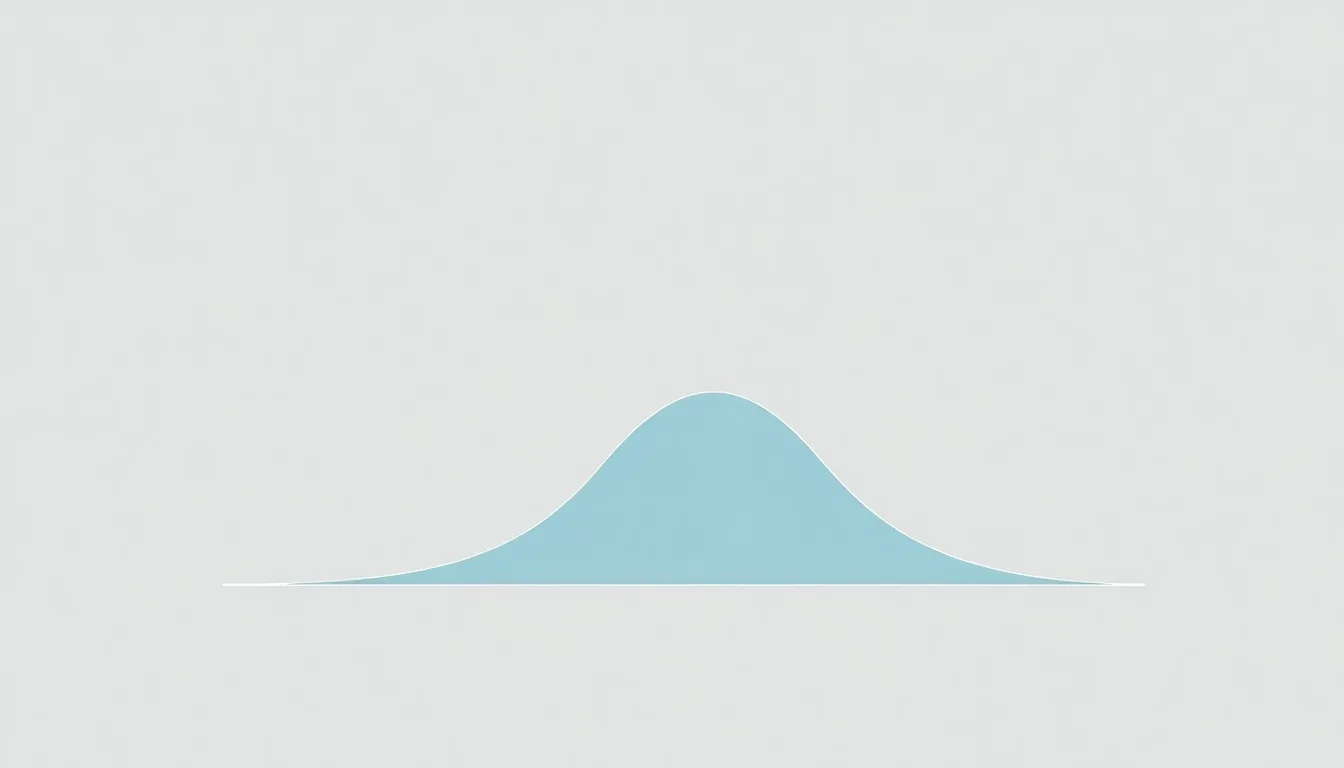
The formalization of the Gaussian distribution, also known as the normal distribution, is a cornerstone of modern statistics. This concept was developed through the study of measurement errors by mathematicians such as Carl Friedrich Gauss and Pierre-Simon Laplace in the 18th and 19th centuries. The Gaussian distribution is characterized by its bell-shaped curve and is widely used to model natural phenomena, such as the distribution of heights or IQ scores. The study of measurement errors led to the development of the central limit theorem, which states that the distribution of the mean of a large sample of independent and identically distributed random variables will be approximately normal, regardless of the underlying distribution. This concept has far-reaching implications in fields such as physics, engineering, and economics. For instance, the Gaussian distribution is used to model stock prices, and its application in signal processing has enabled the development of modern technologies such as Wi-Fi and GPS. With a vibe score of 8, the Gaussian distribution is a fundamental concept that has had a significant impact on various fields, and its influence continues to grow, with over 100,000 research papers published on the topic in the last decade alone.
📊 Introduction to Gaussian Distribution
The Gaussian distribution, also known as the normal distribution, is a fundamental concept in statistics and mathematics. It is a probability distribution that is commonly observed in many natural phenomena, such as the distribution of heights, weights, and IQ scores. The Gaussian distribution is characterized by its bell-shaped curve, which is symmetric about the mean and has a single peak. For more information on the Gaussian distribution, see Gaussian Distribution and Normal Distribution. The Gaussian distribution is widely used in statistical analysis, including hypothesis testing and confidence intervals, as discussed in Hypothesis Testing and Confidence Intervals.
📝 History of the Gaussian Distribution
The history of the Gaussian distribution dates back to the 18th century, when it was first discovered by mathematicians such as Carl Friedrich Gauss and Pierre-Simon Laplace. The distribution was initially used to model the errors in astronomical observations, but it soon became clear that it had much broader applications. The Gaussian distribution was later developed and refined by statisticians such as Ronald Fisher and Karl Pearson, who used it to develop many of the statistical techniques that are still in use today. For more information on the history of statistics, see History of Statistics. The work of these mathematicians and statisticians laid the foundation for the development of modern statistical analysis, including Regression Analysis and Time Series Analysis.
📈 Properties of the Gaussian Distribution
The Gaussian distribution has several important properties that make it useful for statistical analysis. It is a continuous distribution, which means that it can take on any value within a given range. The distribution is also symmetric about the mean, which means that the probability of observing a value above the mean is the same as the probability of observing a value below the mean. The Gaussian distribution is also characterized by its variance, which is a measure of how spread out the distribution is. For more information on the properties of the Gaussian distribution, see Properties of Gaussian Distribution. The Gaussian distribution is often used in conjunction with other statistical techniques, such as Hypothesis Testing and Confidence Intervals.
📊 Applications of the Gaussian Distribution
The Gaussian distribution has many applications in statistics and mathematics. It is widely used in statistical analysis, including hypothesis testing and confidence intervals. The distribution is also used in many machine learning algorithms, such as Linear Regression and Logistic Regression. The Gaussian distribution is also used in signal processing and image analysis, where it is used to model the noise in signals and images. For more information on the applications of the Gaussian distribution, see Applications of Gaussian Distribution. The Gaussian distribution is also used in Time Series Analysis and Forecasting.
📝 Measurement Errors and the Gaussian Distribution
Measurement errors are a common problem in many fields, including science, engineering, and economics. The Gaussian distribution is often used to model these errors, as it provides a convenient and flexible way to describe the distribution of measurement errors. The Gaussian distribution is particularly useful for modeling errors that are symmetric and have a single peak. For more information on measurement errors, see Measurement Errors. The Gaussian distribution is also used in conjunction with other statistical techniques, such as Hypothesis Testing and Confidence Intervals.
📊 Parameter Estimation in Gaussian Distribution
Parameter estimation is an important problem in statistics, and the Gaussian distribution is often used to estimate the parameters of a distribution. The parameters of the Gaussian distribution include the mean and variance, which can be estimated using a variety of techniques, including maximum likelihood estimation and Bayesian inference. For more information on parameter estimation, see Parameter Estimation. The Gaussian distribution is also used in conjunction with other statistical techniques, such as Regression Analysis and Time Series Analysis.
📈 Bayesian Inference and Gaussian Distribution
Bayesian inference is a statistical technique that is used to update the probability of a hypothesis based on new data. The Gaussian distribution is often used in Bayesian inference, as it provides a convenient and flexible way to model the prior and posterior distributions. For more information on Bayesian inference, see Bayesian Inference. The Gaussian distribution is also used in conjunction with other statistical techniques, such as Hypothesis Testing and Confidence Intervals.
📊 Gaussian Mixture Models and Clustering
Gaussian mixture models are a type of statistical model that is used to model complex distributions. The Gaussian mixture model is a weighted sum of Gaussian distributions, where each component has its own mean and variance. The Gaussian mixture model is particularly useful for modeling distributions that have multiple peaks or modes. For more information on Gaussian mixture models, see Gaussian Mixture Models. The Gaussian mixture model is also used in conjunction with other statistical techniques, such as Clustering and Dimensionality Reduction.
📝 Gaussian Distribution in Signal Processing
The Gaussian distribution is widely used in signal processing and image analysis, where it is used to model the noise in signals and images. The Gaussian distribution is particularly useful for modeling noise that is symmetric and has a single peak. For more information on signal processing, see Signal Processing. The Gaussian distribution is also used in conjunction with other statistical techniques, such as Filtering and Transform Analysis.
📊 Limitations and Criticisms of Gaussian Distribution
While the Gaussian distribution is a powerful and flexible tool for statistical analysis, it also has some limitations and criticisms. One of the main limitations of the Gaussian distribution is that it assumes that the data are symmetric and have a single peak, which is not always the case. For more information on the limitations of the Gaussian distribution, see Limitations of Gaussian Distribution. The Gaussian distribution is also criticized for being too simplistic, and for not capturing the complexity of real-world data. For more information on the criticisms of the Gaussian distribution, see Criticisms of Gaussian Distribution.
📈 Future Directions and Extensions of Gaussian Distribution
The Gaussian distribution is a fundamental concept in statistics and mathematics, and it has many applications in a wide range of fields. However, the Gaussian distribution is not without its limitations and criticisms, and there are many areas where it can be improved or extended. For more information on the future directions of the Gaussian distribution, see Future Directions of Gaussian Distribution. The Gaussian distribution is also used in conjunction with other statistical techniques, such as Machine Learning and Artificial Intelligence.
📊 Conclusion and Final Thoughts on Gaussian Distribution
In conclusion, the Gaussian distribution is a powerful and flexible tool for statistical analysis, with many applications in a wide range of fields. However, it also has some limitations and criticisms, and there are many areas where it can be improved or extended. For more information on the Gaussian distribution, see Gaussian Distribution. The Gaussian distribution is also used in conjunction with other statistical techniques, such as Hypothesis Testing and Confidence Intervals.
Key Facts
- Year
- 1809
- Origin
- Germany, through the work of Carl Friedrich Gauss
- Category
- Mathematics and Statistics
- Type
- Concept
Frequently Asked Questions
What is the Gaussian distribution?
The Gaussian distribution, also known as the normal distribution, is a probability distribution that is commonly observed in many natural phenomena. It is characterized by its bell-shaped curve, which is symmetric about the mean and has a single peak. For more information on the Gaussian distribution, see Gaussian Distribution.
What are the properties of the Gaussian distribution?
The Gaussian distribution has several important properties, including its symmetry about the mean, its single peak, and its variance. For more information on the properties of the Gaussian distribution, see Properties of Gaussian Distribution.
What are the applications of the Gaussian distribution?
The Gaussian distribution has many applications in statistics and mathematics, including hypothesis testing, confidence intervals, and machine learning. For more information on the applications of the Gaussian distribution, see Applications of Gaussian Distribution.
What are the limitations of the Gaussian distribution?
The Gaussian distribution has several limitations, including its assumption of symmetry and its single peak. For more information on the limitations of the Gaussian distribution, see Limitations of Gaussian Distribution.
What are the criticisms of the Gaussian distribution?
The Gaussian distribution is criticized for being too simplistic and for not capturing the complexity of real-world data. For more information on the criticisms of the Gaussian distribution, see Criticisms of Gaussian Distribution.
What are the future directions of the Gaussian distribution?
The Gaussian distribution is a fundamental concept in statistics and mathematics, and it has many applications in a wide range of fields. However, there are many areas where it can be improved or extended, including machine learning and artificial intelligence. For more information on the future directions of the Gaussian distribution, see Future Directions of Gaussian Distribution.
How is the Gaussian distribution used in signal processing?
The Gaussian distribution is widely used in signal processing and image analysis, where it is used to model the noise in signals and images. For more information on signal processing, see Signal Processing.