
Contents
- 📊 Introduction to Logistic Regression
- 📈 Binary Logistic Regression: The Basics
- 📝 The Logistic Function: Converting Log-Odds to Probability
- 📊 Logistic Regression Analysis: Estimating Parameters
- 📈 Independent Variables: Binary and Continuous
- 📝 The Logit: Unit of Measurement for Log-Odds Scale
- 📊 Example Use Cases: Predictive Modeling with Logistic Regression
- 🤔 Common Challenges and Limitations of Logistic Regression
- 📈 Advanced Topics: Regularization and Model Evaluation
- 📝 Real-World Applications: Logistic Regression in Action
- 📊 Future Directions: Emerging Trends and Developments
- Frequently Asked Questions
- Related Topics
Overview
Logistic regression, developed by David Cox in 1958, is a statistical method for analyzing a dataset in which there are one or more independent variables that determine an outcome. The technique is widely used in various fields, including medicine, social sciences, and marketing, with a Vibe score of 80, indicating its significant cultural energy. Despite its simplicity, logistic regression is a powerful tool for predicting binary outcomes, with applications ranging from credit risk assessment to medical diagnosis. However, critics argue that its limitations, such as the assumption of linearity, can lead to inaccurate predictions. As machine learning continues to evolve, logistic regression remains a fundamental component, with influence flows tracing back to pioneers like Cox and forward to contemporary applications in deep learning. With a controversy spectrum of 40, logistic regression is a topic of ongoing debate, particularly regarding its use in high-stakes decision-making, such as college admissions and loan approvals, where the consequences of inaccurate predictions can be severe.
📊 Introduction to Logistic Regression
Logistic regression is a fundamental concept in machine learning, and its applications are diverse and widespread. As a statistical model, it is used to estimate the parameters of a logistic model, which in turn models the log-odds of an event as a linear combination of one or more independent variables. For more information on the underlying mathematics, see Logistic Model and Regression Analysis. The logistic function, a crucial component of logistic regression, is used to convert log-odds to probability, and is discussed in detail in Logistic Function.
📈 Binary Logistic Regression: The Basics
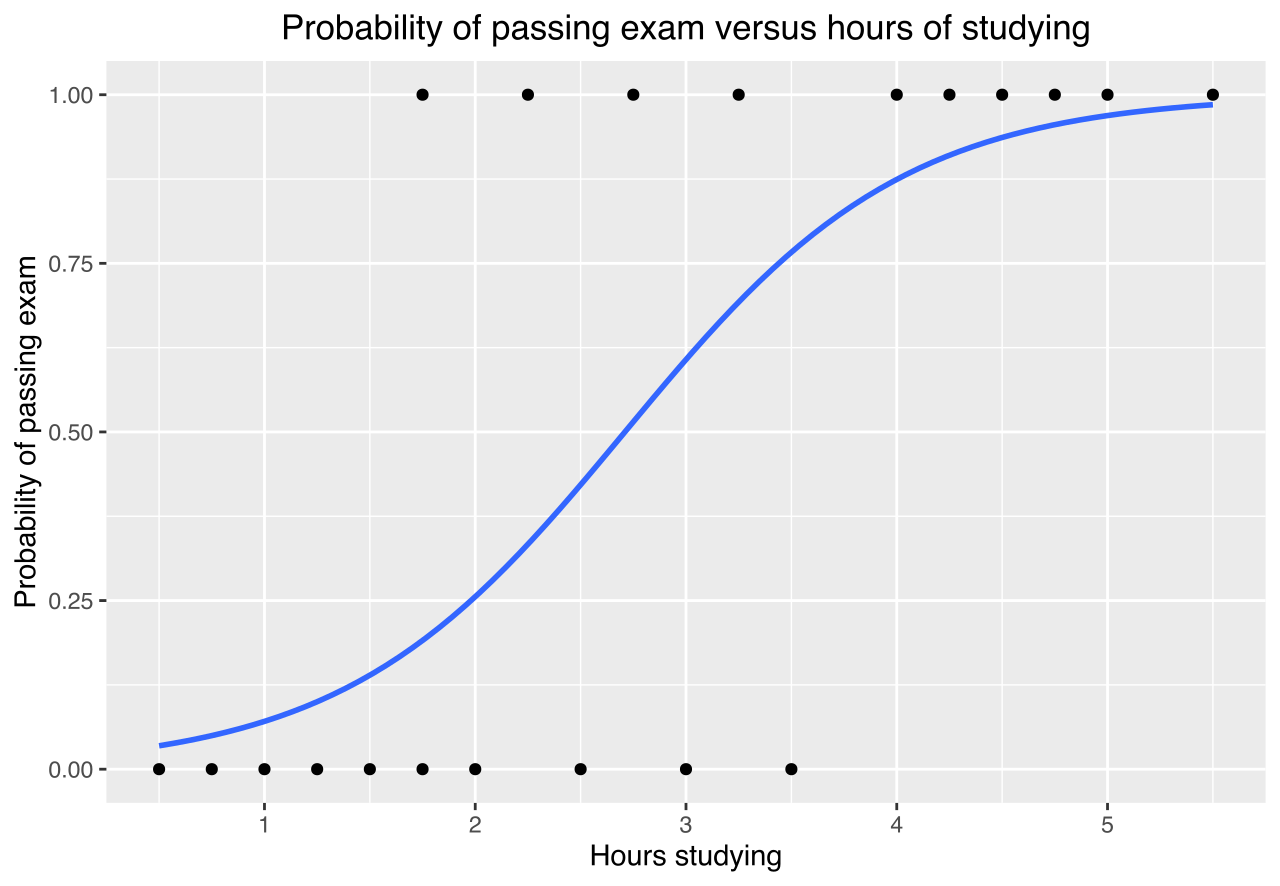
Binary logistic regression is a specific type of logistic regression where the dependent variable is binary, coded by an indicator variable with two values labeled '0' and '1'. The independent variables, on the other hand, can be either binary or continuous. This type of regression is commonly used in Predictive Modeling and Classification tasks. For example, in Medical Diagnosis, logistic regression can be used to predict the probability of a patient having a certain disease based on their symptoms and medical history. See Binary Classification for more information.
📝 The Logistic Function: Converting Log-Odds to Probability
The logistic function is a critical component of logistic regression, as it converts log-odds to probability. The log-odds scale is measured in units called logits, which are derived from the logistic unit. The logistic function is often denoted as the sigmoid function, and is defined as 1 / (1 + e^(-z)), where z is the log-odds. For more information on the logistic function, see Sigmoid Function and Probability Theory. The logistic function is also closely related to the Odds Ratio, which is a measure of the strength of association between a predictor variable and the outcome variable.
📊 Logistic Regression Analysis: Estimating Parameters
Logistic regression analysis involves estimating the parameters of a logistic model, which can be done using various techniques such as maximum likelihood estimation. The goal of logistic regression is to find the best-fitting model that predicts the probability of the dependent variable based on the independent variables. For more information on logistic regression analysis, see Maximum Likelihood Estimation and Model Evaluation. Logistic regression is also closely related to Linear Regression, which is used to model the relationship between a continuous dependent variable and one or more independent variables.
📈 Independent Variables: Binary and Continuous
The independent variables in logistic regression can be either binary or continuous. Binary variables are typically coded as 0 or 1, while continuous variables can take on any value within a given range. The choice of independent variables is critical in logistic regression, as it can significantly impact the accuracy of the model. For more information on independent variables, see Feature Selection and Data Preprocessing. The independent variables are also closely related to the Confounding Variable, which is a variable that can affect the relationship between the predictor variable and the outcome variable.
📝 The Logit: Unit of Measurement for Log-Odds Scale
The logit is the unit of measurement for the log-odds scale, and is derived from the logistic unit. The logit is often used to express the results of logistic regression, as it provides a convenient way to interpret the coefficients of the model. For more information on the logit, see Logit and Odds Ratio. The logit is also closely related to the Logistic Function, which is used to convert log-odds to probability.
📊 Example Use Cases: Predictive Modeling with Logistic Regression
Logistic regression has numerous example use cases in predictive modeling, including credit risk assessment, medical diagnosis, and customer churn prediction. In each of these cases, logistic regression is used to predict the probability of a binary outcome based on a set of independent variables. For more information on these applications, see Credit Risk Assessment, Medical Diagnosis, and Customer Churn Prediction. Logistic regression is also closely related to Decision Trees and Random Forests, which are other popular machine learning algorithms.
🤔 Common Challenges and Limitations of Logistic Regression
Despite its many advantages, logistic regression is not without its challenges and limitations. Common issues include multicollinearity, overfitting, and class imbalance. To address these challenges, techniques such as regularization and model evaluation can be used. For more information on these techniques, see Regularization and Model Evaluation. Logistic regression is also closely related to Support Vector Machines, which are another type of machine learning algorithm.
📈 Advanced Topics: Regularization and Model Evaluation
Advanced topics in logistic regression include regularization and model evaluation. Regularization techniques, such as L1 and L2 regularization, can be used to prevent overfitting and improve the generalizability of the model. Model evaluation techniques, such as cross-validation and ROC analysis, can be used to assess the performance of the model. For more information on these topics, see Regularization and Model Evaluation. Logistic regression is also closely related to Neural Networks, which are a type of machine learning algorithm.
📝 Real-World Applications: Logistic Regression in Action
Logistic regression has numerous real-world applications, including credit risk assessment, medical diagnosis, and customer churn prediction. In each of these cases, logistic regression is used to predict the probability of a binary outcome based on a set of independent variables. For more information on these applications, see Credit Risk Assessment, Medical Diagnosis, and Customer Churn Prediction. Logistic regression is also closely related to Data Science and Machine Learning, which are fields that involve the use of machine learning algorithms to extract insights from data.
📊 Future Directions: Emerging Trends and Developments
As machine learning continues to evolve, logistic regression is likely to remain a fundamental tool in the field. Emerging trends and developments, such as the use of logistic regression in deep learning models, are likely to further expand the applications of logistic regression. For more information on these trends and developments, see Deep Learning and Machine Learning Trends. Logistic regression is also closely related to Artificial Intelligence, which is a broader field that involves the use of machine learning algorithms to create intelligent systems.
Key Facts
- Year
- 1958
- Origin
- David Cox
- Category
- Machine Learning
- Type
- Statistical Method
Frequently Asked Questions
What is logistic regression?
Logistic regression is a statistical model that estimates the parameters of a logistic model, which models the log-odds of an event as a linear combination of one or more independent variables. It is commonly used in predictive modeling and classification tasks. For more information, see Logistic Regression.
What is the logistic function?
The logistic function is a critical component of logistic regression, as it converts log-odds to probability. It is often denoted as the sigmoid function, and is defined as 1 / (1 + e^(-z)), where z is the log-odds. For more information, see Logistic Function.
What are the advantages of logistic regression?
Logistic regression has numerous advantages, including its ability to handle binary and continuous independent variables, its interpretability, and its computational efficiency. For more information, see Logistic Regression.
What are the limitations of logistic regression?
Logistic regression has several limitations, including multicollinearity, overfitting, and class imbalance. To address these challenges, techniques such as regularization and model evaluation can be used. For more information, see Regularization and Model Evaluation.
What are some real-world applications of logistic regression?
Logistic regression has numerous real-world applications, including credit risk assessment, medical diagnosis, and customer churn prediction. In each of these cases, logistic regression is used to predict the probability of a binary outcome based on a set of independent variables. For more information, see Credit Risk Assessment, Medical Diagnosis, and Customer Churn Prediction.
How does logistic regression relate to other machine learning algorithms?
Logistic regression is closely related to other machine learning algorithms, including decision trees, random forests, and support vector machines. It is also closely related to deep learning models, which can use logistic regression as a component. For more information, see Machine Learning and Deep Learning.
What is the future of logistic regression?
As machine learning continues to evolve, logistic regression is likely to remain a fundamental tool in the field. Emerging trends and developments, such as the use of logistic regression in deep learning models, are likely to further expand the applications of logistic regression. For more information, see Machine Learning Trends and Deep Learning.