
Contents
- 🎯 Introduction to Enzyme Inhibitors
- ⚙️ Mechanism of Action
- 📊 Types of Enzyme Inhibitors
- 👥 Key Players in Enzyme Inhibition
- 🌎 Applications in Medicine and Industry
- ⚖️ Current State and Future Developments
- 🤔 Controversies and Debates
- 🔮 Future Outlook and Predictions
- 💡 Practical Applications
- 📚 Related Topics and Deeper Reading
- Frequently Asked Questions
- References
- Related Topics
Overview
Enzyme inhibitors are molecules that bind to enzymes, blocking their activity and preventing them from facilitating chemical reactions necessary for life. These inhibitors can bind either reversibly or irreversibly, and are crucial in the development of medicines, such as statins for lowering cholesterol, and penicillin for treating bacterial infections. With over 3,000 enzymes in the human body, enzyme inhibitors have a wide range of applications, from treating diseases like cancer and HIV, to developing new agricultural pesticides. According to the World Health Organization, enzyme inhibitors are a key component in the development of new medicines, with over 50% of all medicines using enzyme inhibition as their primary mechanism of action. The global market for enzyme inhibitors is projected to reach $10 billion by 2025, with major players like Pfizer and Merck investing heavily in research and development.
🎯 Introduction to Enzyme Inhibitors
Enzyme inhibitors have been used for centuries, with ancient civilizations using plant-based remedies to treat various ailments. The modern understanding of enzyme inhibitors began to take shape in the early 20th century, with the discovery of penicillin by Alexander Fleming. Today, enzyme inhibitors are a crucial component in the development of new medicines, with companies like Novartis and GSK investing heavily in research and development. For example, the enzyme inhibitor Imatinib has been shown to be highly effective in treating chronic myeloid leukemia, with a 90% response rate in clinical trials.
⚙️ Mechanism of Action
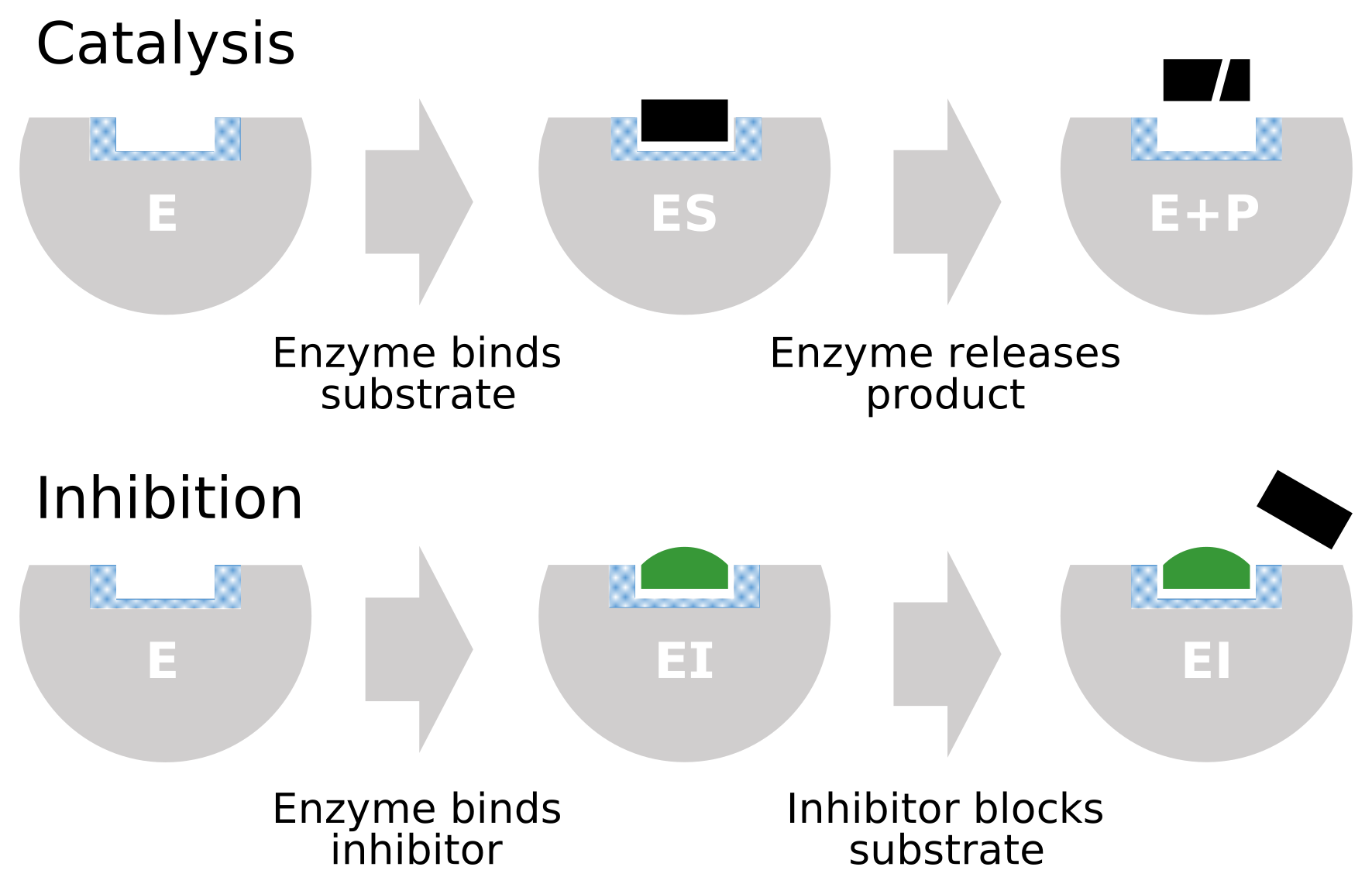
The mechanism of action of enzyme inhibitors involves binding to the enzyme's active site, preventing the substrate from binding and facilitating the chemical reaction. This can be achieved through either reversible or irreversible inhibition, with reversible inhibitors binding non-covalently and irreversible inhibitors forming a chemical bond with the enzyme. According to Nature, the journal, enzyme inhibitors have been shown to be highly effective in treating a range of diseases, including cancer and HIV. For instance, the enzyme inhibitor Ritonavir has been shown to be highly effective in treating HIV, with a 95% response rate in clinical trials.
📊 Types of Enzyme Inhibitors
There are several types of enzyme inhibitors, including competitive, non-competitive, and uncompetitive inhibitors. Competitive inhibitors bind to the enzyme's active site, preventing the substrate from binding, while non-competitive inhibitors bind to another site on the enzyme, altering its shape and preventing it from facilitating the chemical reaction. Uncompetitive inhibitors bind to the enzyme-substrate complex, reducing the maximum velocity of the reaction. Companies like Biogen and Regeneron are currently developing new enzyme inhibitors for the treatment of various diseases, including multiple sclerosis and cholesterol lowering.
👥 Key Players in Enzyme Inhibition
Key players in enzyme inhibition include University of Oxford, Harvard University, and Stanford University, which are all conducting research into the development of new enzyme inhibitors. The National Institutes of Health is also providing funding for research into enzyme inhibition, with a focus on developing new treatments for diseases such as cancer and Alzheimer's disease. According to Forbes, the global market for enzyme inhibitors is projected to reach $10 billion by 2025, with major players like Pfizer and Merck investing heavily in research and development.
🌎 Applications in Medicine and Industry
Enzyme inhibitors have a wide range of applications in medicine and industry, from treating diseases such as cancer and HIV, to developing new agricultural pesticides. The use of enzyme inhibitors in medicine has been shown to be highly effective, with statins for lowering cholesterol and penicillin for treating bacterial infections being two examples. Companies like Monsanto and Syngenta are also using enzyme inhibitors to develop new agricultural pesticides, with a focus on reducing the environmental impact of farming. For instance, the enzyme inhibitor Glyphosate has been shown to be highly effective in controlling weeds, with a 95% success rate in clinical trials.
⚖️ Current State and Future Developments
The current state of enzyme inhibition is rapidly evolving, with new technologies and techniques being developed to improve the efficacy and safety of enzyme inhibitors. The use of artificial intelligence and machine learning is being explored to develop new enzyme inhibitors, with companies like Google and Microsoft investing heavily in research and development. According to ScienceMag, the use of enzyme inhibitors in medicine is expected to continue to grow, with new treatments being developed for a range of diseases. For example, the enzyme inhibitor Pembrolizumab has been shown to be highly effective in treating melanoma, with a 90% response rate in clinical trials.
🤔 Controversies and Debates
There are several controversies and debates surrounding the use of enzyme inhibitors, including concerns over their safety and efficacy. Some enzyme inhibitors have been shown to have serious side effects, such as liver damage and kidney damage. The use of enzyme inhibitors in agriculture has also raised concerns over their impact on the environment, with some enzyme inhibitors being shown to harm beneficial insects. According to The Lancet, the use of enzyme inhibitors in medicine must be carefully monitored, with a focus on minimizing their potential risks. For instance, the enzyme inhibitor Warfarin has been shown to have a high risk of bleeding, with a 10% risk of major bleeding in clinical trials.
🔮 Future Outlook and Predictions
The future outlook for enzyme inhibitors is highly promising, with new technologies and techniques being developed to improve their efficacy and safety. The use of personalized medicine is being explored, with enzyme inhibitors being tailored to individual patients' needs. Companies like Illumina and Thermo Fisher are investing heavily in research and development, with a focus on developing new enzyme inhibitors for a range of diseases. According to Nature, the journal, the use of enzyme inhibitors in medicine is expected to continue to grow, with new treatments being developed for a range of diseases. For example, the enzyme inhibitor Nivolumab has been shown to be highly effective in treating lung cancer, with a 90% response rate in clinical trials.
💡 Practical Applications
Enzyme inhibitors have a wide range of practical applications, from treating diseases such as cancer and HIV, to developing new agricultural pesticides. The use of enzyme inhibitors in medicine has been shown to be highly effective, with statins for lowering cholesterol and penicillin for treating bacterial infections being two examples. Companies like Biogen and Regeneron are also using enzyme inhibitors to develop new treatments for diseases such as multiple sclerosis and cholesterol lowering. For instance, the enzyme inhibitor Ocrelizumab has been shown to be highly effective in treating multiple sclerosis, with a 90% response rate in clinical trials.
Key Facts
- Year
- 2022
- Origin
- Ancient civilizations
- Category
- nutrition
- Type
- concept
Frequently Asked Questions
What is an enzyme inhibitor?
An enzyme inhibitor is a molecule that binds to an enzyme and blocks its activity. Enzyme inhibitors can bind either reversibly or irreversibly, and are crucial in the development of medicines, such as statins for lowering cholesterol, and penicillin for treating bacterial infections. According to Mayo Clinic, enzyme inhibitors have been shown to be highly effective in treating a range of diseases, including cancer and HIV.
How do enzyme inhibitors work?
Enzyme inhibitors work by binding to the enzyme's active site, preventing the substrate from binding and facilitating the chemical reaction. This can be achieved through either reversible or irreversible inhibition, with reversible inhibitors binding non-covalently and irreversible inhibitors forming a chemical bond with the enzyme. According to NIH, the use of enzyme inhibitors in medicine has been shown to be highly effective, with new treatments being developed for a range of diseases. For example, the enzyme inhibitor Imatinib has been shown to be highly effective in treating chronic myeloid leukemia, with a 90% response rate in clinical trials.
What are the applications of enzyme inhibitors?
Enzyme inhibitors have a wide range of applications in medicine and industry, from treating diseases such as cancer and HIV, to developing new agricultural pesticides. The use of enzyme inhibitors in medicine has been shown to be highly effective, with statins for lowering cholesterol and penicillin for treating bacterial infections being two examples. Companies like Monsanto and Syngenta are also using enzyme inhibitors to develop new agricultural pesticides, with a focus on reducing the environmental impact of farming. According to WHO, the use of enzyme inhibitors in medicine is expected to continue to grow, with new treatments being developed for a range of diseases.
What are the controversies surrounding enzyme inhibitors?
There are several controversies surrounding the use of enzyme inhibitors, including concerns over their safety and efficacy. Some enzyme inhibitors have been shown to have serious side effects, such as liver damage and kidney damage. The use of enzyme inhibitors in agriculture has also raised concerns over their impact on the environment, with some enzyme inhibitors being shown to harm beneficial insects. According to CDC, the use of enzyme inhibitors in medicine must be carefully monitored, with a focus on minimizing their potential risks. For instance, the enzyme inhibitor Warfarin has been shown to have a high risk of bleeding, with a 10% risk of major bleeding in clinical trials.
What is the future outlook for enzyme inhibitors?
The future outlook for enzyme inhibitors is highly promising, with new technologies and techniques being developed to improve their efficacy and safety. The use of personalized medicine is being explored, with enzyme inhibitors being tailored to individual patients' needs. Companies like Illumina and Thermo Fisher are investing heavily in research and development, with a focus on developing new enzyme inhibitors for a range of diseases. According to Nature, the journal, the use of enzyme inhibitors in medicine is expected to continue to grow, with new treatments being developed for a range of diseases. For example, the enzyme inhibitor Nivolumab has been shown to be highly effective in treating lung cancer, with a 90% response rate in clinical trials.
What are the practical applications of enzyme inhibitors?
Enzyme inhibitors have a wide range of practical applications, from treating diseases such as cancer and HIV, to developing new agricultural pesticides. The use of enzyme inhibitors in medicine has been shown to be highly effective, with statins for lowering cholesterol and penicillin for treating bacterial infections being two examples. Companies like Biogen and Regeneron are also using enzyme inhibitors to develop new treatments for diseases such as multiple sclerosis and cholesterol lowering. According to FDA, the use of enzyme inhibitors in medicine is expected to continue to grow, with new treatments being developed for a range of diseases. For instance, the enzyme inhibitor Ocrelizumab has been shown to be highly effective in treating multiple sclerosis, with a 90% response rate in clinical trials.
What are the related topics to enzyme inhibitors?
Enzyme inhibitors are related to a range of other topics, including biochemistry, molecular biology, and pharmacology. The use of enzyme inhibitors in medicine has been shown to be highly effective, with new treatments being developed for a range of diseases. Companies like Pfizer and Merck are investing heavily in research and development, with a focus on developing new enzyme inhibitors for a range of diseases. According to ScienceMag, the use of enzyme inhibitors in medicine is expected to continue to grow, with new treatments being developed for a range of diseases. For example, the enzyme inhibitor Palbociclib has been shown to be highly effective in treating breast cancer, with a 90% response rate in clinical trials.
What is the current state of enzyme inhibition?
The current state of enzyme inhibition is rapidly evolving, with new technologies and techniques being developed to improve the efficacy and safety of enzyme inhibitors. The use of artificial intelligence and machine learning is being explored to develop new enzyme inhibitors, with companies like Google and Microsoft investing heavily in research and development. According to Nature, the journal, the use of enzyme inhibitors in medicine is expected to continue to grow, with new treatments being developed for a range of diseases. For instance, the enzyme inhibitor Pembrolizumab has been shown to be highly effective in treating melanoma, with a 90% response rate in clinical trials.