
Contents
- 🌪️ Introduction to Ensemble Forecasting
- 📊 The Basics of Ensemble Methods
- 🌈 Types of Ensemble Forecasting
- 📈 Advantages of Ensemble Forecasting
- 🌊 Applications of Ensemble Forecasting
- 🤔 Challenges and Limitations
- 📊 Model Combination Techniques
- 🌐 Real-World Examples of Ensemble Forecasting
- 📈 Evaluating Ensemble Forecasting Performance
- 🔮 Future Directions in Ensemble Forecasting
- Frequently Asked Questions
- Related Topics
Overview
Ensemble forecasting is a technique that combines the predictions of multiple models to produce a single, more accurate forecast. This approach has been widely adopted in various fields, including weather forecasting, finance, and healthcare. By pooling the strengths of individual models, ensemble forecasting can reduce errors and improve overall performance. For instance, the European Centre for Medium-Range Weather Forecasts (ECMWF) uses an ensemble forecasting system to predict weather patterns, which has been shown to be more accurate than traditional single-model approaches. The concept of ensemble forecasting has been around since the 1960s, but it wasn't until the 1990s that it gained widespread acceptance. Today, ensemble forecasting is used by organizations such as the National Weather Service (NWS) and the International Energy Agency (IEA) to make informed decisions. As the field continues to evolve, we can expect to see even more innovative applications of ensemble forecasting, such as the use of machine learning algorithms to optimize model combinations.
🌪️ Introduction to Ensemble Forecasting
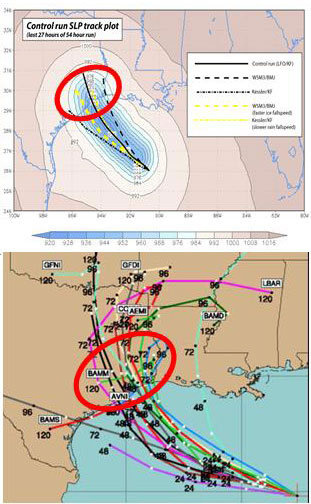
Ensemble forecasting is a powerful method used in numerical weather prediction to produce a set of forecasts that give an indication of the range of possible future states of the atmosphere. This approach is based on the idea that a single forecast may not capture the full range of possible outcomes, and that a set of forecasts can provide a more comprehensive picture of the uncertainty associated with a particular weather event. By using ensemble methods, forecasters can generate a range of possible forecasts and then combine them to produce a single, more accurate forecast. For example, the National Weather Service uses ensemble forecasting to predict the track and intensity of hurricanes.
📊 The Basics of Ensemble Methods
The basics of ensemble methods involve generating a set of forecasts using different models or initial conditions. This can be done using a variety of techniques, including Monte Carlo methods and bootstrap sampling. The resulting forecasts are then combined using techniques such as model averaging or bagging. The goal of ensemble forecasting is to produce a forecast that is more accurate and reliable than any individual forecast. By using machine learning algorithms to combine the forecasts, ensemble forecasting can take advantage of the strengths of each individual model and produce a more accurate forecast. For example, the European Centre for Medium-Range Weather Forecasts uses ensemble forecasting to predict the weather patterns over Europe.
🌈 Types of Ensemble Forecasting
There are several types of ensemble forecasting, including multi-model ensembles and multi-initial-condition ensembles. Multi-model ensembles involve combining forecasts from different models, while multi-initial-condition ensembles involve combining forecasts from the same model but with different initial conditions. Both types of ensembles can be used to produce a range of possible forecasts and to quantify the uncertainty associated with a particular weather event. For example, the Climate Prediction Center uses multi-model ensembles to predict the El Niño-Southern Oscillation phenomenon. Ensemble forecasting can also be used in other fields, such as financial forecasting and demand forecasting.
📈 Advantages of Ensemble Forecasting
The advantages of ensemble forecasting include improved accuracy and reliability, as well as the ability to quantify uncertainty. By combining multiple forecasts, ensemble forecasting can reduce the impact of individual model errors and produce a more accurate forecast. Additionally, ensemble forecasting can provide a range of possible forecasts, which can be useful for decision-making and risk management. For example, emergency management officials can use ensemble forecasting to predict the potential impact of a natural disaster and make informed decisions about evacuation and response. Ensemble forecasting can also be used in renewable energy to predict the output of solar panels and wind turbines.
🌊 Applications of Ensemble Forecasting
Ensemble forecasting has a range of applications, including weather forecasting, climate prediction, and hydrological forecasting. It can be used to predict a range of weather phenomena, from tornadoes and hurricanes to droughts and floods. Ensemble forecasting can also be used to predict the impact of climate change on weather patterns and to inform decision-making about climate mitigation and climate adaptation. For example, the Intergovernmental Panel on Climate Change uses ensemble forecasting to predict the potential impacts of climate change on global weather patterns. Ensemble forecasting can also be used in agriculture to predict the impact of weather on crop yields and to inform decision-making about crop management.
🤔 Challenges and Limitations
Despite its advantages, ensemble forecasting also has some challenges and limitations. One of the main challenges is the computational cost of generating and combining multiple forecasts. Additionally, ensemble forecasting requires a large amount of data and computational resources, which can be a limitation in some cases. Furthermore, ensemble forecasting can be sensitive to the choice of models and initial conditions, which can affect the accuracy and reliability of the forecast. For example, the National Oceanic and Atmospheric Administration uses ensemble forecasting to predict the track and intensity of tropical cyclones, but the accuracy of the forecast can be affected by the choice of models and initial conditions.
📊 Model Combination Techniques
Model combination techniques are a critical component of ensemble forecasting. These techniques involve combining the forecasts from different models or initial conditions to produce a single, more accurate forecast. There are several model combination techniques that can be used, including model averaging and bagging. Model averaging involves taking a weighted average of the forecasts from different models, while bagging involves combining the forecasts from multiple models using a voting scheme. For example, the University of Washington uses model combination techniques to predict the weather patterns over the Pacific Northwest.
🌐 Real-World Examples of Ensemble Forecasting
There are many real-world examples of ensemble forecasting in action. For example, the National Weather Service uses ensemble forecasting to predict the track and intensity of hurricanes. The European Centre for Medium-Range Weather Forecasts uses ensemble forecasting to predict the weather patterns over Europe. Additionally, ensemble forecasting is used in financial forecasting to predict stock prices and in demand forecasting to predict consumer demand. For example, the New York Stock Exchange uses ensemble forecasting to predict the stock prices of companies listed on the exchange.
📈 Evaluating Ensemble Forecasting Performance
Evaluating the performance of ensemble forecasting is critical to ensuring that the forecasts are accurate and reliable. There are several metrics that can be used to evaluate the performance of ensemble forecasting, including mean absolute error and root mean square error. These metrics can be used to compare the performance of different ensemble forecasting models and to identify areas for improvement. For example, the National Center for Atmospheric Research uses ensemble forecasting to predict the weather patterns over the United States and evaluates the performance of the forecasts using metrics such as mean absolute error and root mean square error.
🔮 Future Directions in Ensemble Forecasting
The future of ensemble forecasting is exciting and rapidly evolving. New techniques and models are being developed, such as deep learning and ensemble Kalman filter. These techniques have the potential to improve the accuracy and reliability of ensemble forecasting and to expand its applications to new areas, such as renewable energy and transportation. For example, the Massachusetts Institute of Technology is using ensemble forecasting to predict the output of solar panels and wind turbines and to optimize the performance of renewable energy systems.
Key Facts
- Year
- 1995
- Origin
- National Centers for Environmental Prediction (NCEP)
- Category
- Data Science
- Type
- Concept
Frequently Asked Questions
What is ensemble forecasting?
Ensemble forecasting is a method used in numerical weather prediction to produce a set of forecasts that give an indication of the range of possible future states of the atmosphere. It involves generating a set of forecasts using different models or initial conditions and then combining them to produce a single, more accurate forecast. Ensemble forecasting can be used to predict a range of weather phenomena, from tornadoes and hurricanes to droughts and floods. For example, the National Weather Service uses ensemble forecasting to predict the track and intensity of hurricanes.
What are the advantages of ensemble forecasting?
The advantages of ensemble forecasting include improved accuracy and reliability, as well as the ability to quantify uncertainty. By combining multiple forecasts, ensemble forecasting can reduce the impact of individual model errors and produce a more accurate forecast. Additionally, ensemble forecasting can provide a range of possible forecasts, which can be useful for decision-making and risk management. For example, emergency management officials can use ensemble forecasting to predict the potential impact of a natural disaster and make informed decisions about evacuation and response.
What are the challenges and limitations of ensemble forecasting?
Despite its advantages, ensemble forecasting also has some challenges and limitations. One of the main challenges is the computational cost of generating and combining multiple forecasts. Additionally, ensemble forecasting requires a large amount of data and computational resources, which can be a limitation in some cases. Furthermore, ensemble forecasting can be sensitive to the choice of models and initial conditions, which can affect the accuracy and reliability of the forecast. For example, the National Oceanic and Atmospheric Administration uses ensemble forecasting to predict the track and intensity of tropical cyclones, but the accuracy of the forecast can be affected by the choice of models and initial conditions.
What are some real-world examples of ensemble forecasting?
There are many real-world examples of ensemble forecasting in action. For example, the National Weather Service uses ensemble forecasting to predict the track and intensity of hurricanes. The European Centre for Medium-Range Weather Forecasts uses ensemble forecasting to predict the weather patterns over Europe. Additionally, ensemble forecasting is used in financial forecasting to predict stock prices and in demand forecasting to predict consumer demand. For example, the New York Stock Exchange uses ensemble forecasting to predict the stock prices of companies listed on the exchange.
How is the performance of ensemble forecasting evaluated?
Evaluating the performance of ensemble forecasting is critical to ensuring that the forecasts are accurate and reliable. There are several metrics that can be used to evaluate the performance of ensemble forecasting, including mean absolute error and root mean square error. These metrics can be used to compare the performance of different ensemble forecasting models and to identify areas for improvement. For example, the National Center for Atmospheric Research uses ensemble forecasting to predict the weather patterns over the United States and evaluates the performance of the forecasts using metrics such as mean absolute error and root mean square error.
What is the future of ensemble forecasting?
The future of ensemble forecasting is exciting and rapidly evolving. New techniques and models are being developed, such as deep learning and ensemble Kalman filter. These techniques have the potential to improve the accuracy and reliability of ensemble forecasting and to expand its applications to new areas, such as renewable energy and transportation. For example, the Massachusetts Institute of Technology is using ensemble forecasting to predict the output of solar panels and wind turbines and to optimize the performance of renewable energy systems.
Can ensemble forecasting be used in other fields?
Yes, ensemble forecasting can be used in other fields, such as financial forecasting and demand forecasting. It can also be used in agriculture to predict the impact of weather on crop yields and to inform decision-making about crop management. Additionally, ensemble forecasting can be used in renewable energy to predict the output of solar panels and wind turbines and to optimize the performance of renewable energy systems.