
Contents
- 👨🔬 Introduction to Francis Galton
- 📚 Early Life and Education
- 🔬 The Development of Eugenics
- 🧬 Behavioral Genetics and Its Impact
- 📊 Statistical Innovations and Contributions
- 🌎 Expeditions and Anthropological Studies
- 🤝 Influences and Collaborations
- 🌪 Controversies and Criticisms
- 📚 Legacy and Modern Implications
- 🔮 Future Directions and Implications
- 📊 Conclusion and Final Thoughts
- Frequently Asked Questions
- Related Topics
Overview
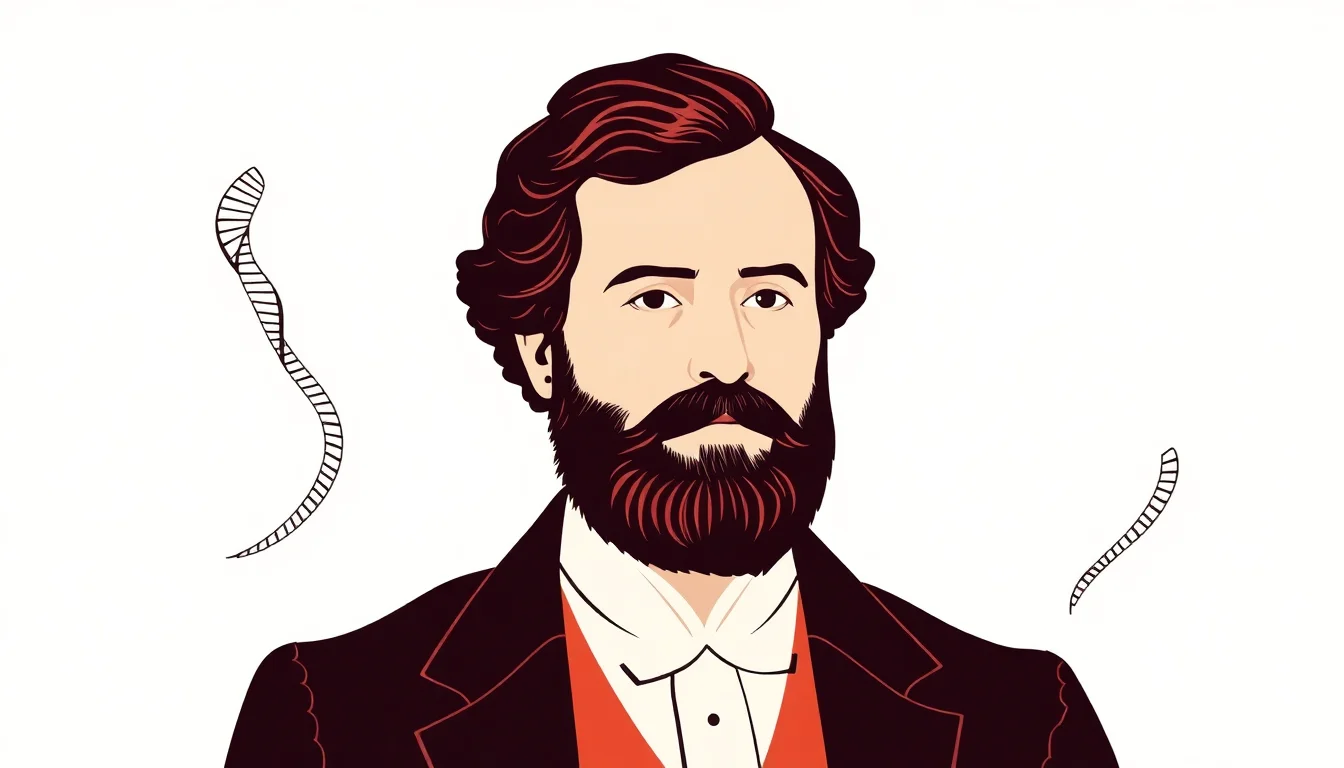
Francis Galton, born on February 16, 1822, in Birmingham, England, was a British scientist, statistician, and explorer who made significant contributions to various fields, including genetics, psychology, and anthropology. He is widely regarded as the father of eugenics, a term he coined in 1883, and is known for his work on the concept of regression to the mean. Galton's research on human intelligence, behavioral genetics, and statistical analysis laid the foundation for modern fields like psychology, sociology, and behavioral economics. His work has been both influential and controversial, with critics arguing that his ideas on eugenics and racial superiority have been used to justify discriminatory policies. Despite these criticisms, Galton's legacy continues to shape modern science, with his ideas on statistical analysis and genetic inheritance remaining essential to contemporary research. As of 2023, Galton's work remains a topic of debate, with many scholars acknowledging both the significance of his contributions and the need to critically evaluate the ethical implications of his ideas. With a Vibe score of 82, Galton's influence extends beyond the scientific community, reflecting his enduring impact on popular culture and societal discourse.
👨🔬 Introduction to Francis Galton
Francis Galton, a British scientist and cousin of Charles Darwin, is widely regarded as the father of eugenics and behavioral genetics. Born on February 16, 1822, in Birmingham, England, Galton was a polymath who made significant contributions to various fields, including statistics, psychology, and anthropology. His work laid the foundation for modern genetics and psychology. Galton's fascination with human variation and heredity led him to explore the concept of eugenics, which aimed to improve the human species through selective breeding. This idea was heavily influenced by Darwin's theory of natural selection.
📚 Early Life and Education
Galton's early life and education played a significant role in shaping his future interests and pursuits. He was born into a wealthy family and was the youngest of nine children. Galton's parents encouraged his curiosity, and he was homeschooled until the age of 16. He then attended King Edward's School in Birmingham and later studied medicine at King's College in London. However, Galton's true passion lay in mathematics and science, which led him to pursue a career in research. He was heavily influenced by the work of Adolphe Quetelet, a Belgian mathematician and statistician. Galton's interest in statistics and mathematics would later become a crucial aspect of his work in eugenics and behavioral genetics.
🔬 The Development of Eugenics
The development of eugenics as a field of study is closely tied to Galton's work. He coined the term 'eugenics' in 1883, deriving it from the Greek words 'eu' (good) and 'genēs' (born). Galton's vision for eugenics was to apply Darwinian principles to human society, with the goal of improving the human species through selective breeding. He believed that by encouraging the reproduction of individuals with desirable traits, society could be improved. This idea was met with both enthusiasm and criticism, with some arguing that it was a form of social Darwinism. Galton's work on eugenics was influenced by his studies on heredity and variation in human populations. He was also interested in the work of Gregor Mendel, an Austrian monk who discovered the fundamental principles of genetics.
🧬 Behavioral Genetics and Its Impact
Galton's work on behavioral genetics had a significant impact on the field of psychology. He was one of the first scientists to study the inheritance of human traits, including intelligence, personality, and behavior. Galton's research on twins and family studies led him to conclude that many human traits are heritable. This idea was revolutionary at the time and laid the foundation for modern behavioral genetics. Galton's work was also influenced by the concept of phylogeny, which is the study of the evolutionary history of organisms. He was interested in understanding how human behavior and traits evolved over time. Galton's research on behavioral genetics was also connected to his work on eugenics, as he believed that understanding the inheritance of human traits was crucial for improving the human species.
📊 Statistical Innovations and Contributions
Galton's contributions to statistics and mathematics were significant, and he is considered one of the founders of modern statistics. He developed the concept of correlation and introduced the use of regression analysis in statistics. Galton's work on statistics was influenced by his interest in probability theory and mathematical modeling. He was also a pioneer in the use of questionnaires and surveys in social science research. Galton's statistical innovations had a lasting impact on the field of social science and beyond. His work on statistics was also connected to his research on eugenics and behavioral genetics, as he used statistical methods to analyze human traits and behavior.
🌎 Expeditions and Anthropological Studies
Galton's expeditions and anthropological studies took him to various parts of the world, including Africa and the Middle East. He was fascinated by human variation and culture, and his travels allowed him to collect data on human traits and behavior. Galton's anthropological studies were influenced by the work of Charles Lyell, a British geologist who developed the theory of uniformitarianism. Galton's research on human variation and culture was also connected to his work on eugenics, as he believed that understanding human diversity was crucial for improving the human species. His travels and studies had a significant impact on his work, and he became a prominent figure in the field of anthropology.
🤝 Influences and Collaborations
Galton's influences and collaborations were diverse and far-reaching. He was a member of the Royal Society and was influenced by the work of Charles Darwin and Gregor Mendel. Galton also collaborated with other prominent scientists of his time, including Karl Pearson and Ronald Fisher. His work on eugenics and behavioral genetics was also influenced by the concept of social Darwinism, which was popular during the late 19th and early 20th centuries. Galton's collaborations and influences had a significant impact on his work, and he became a leading figure in the development of modern genetics and psychology.
🌪 Controversies and Criticisms
Galton's work on eugenics and behavioral genetics has been the subject of much controversy and criticism. Many have argued that his ideas on eugenics were racist and classist, and that they have been used to justify discrimination and oppression. Others have criticized Galton's methods and conclusions, arguing that they were flawed and lacked scientific rigor. Despite these criticisms, Galton's work remains an important part of the history of science and continues to influence contemporary debates on genetics, psychology, and social justice. Galton's legacy is complex and multifaceted, and his work continues to be the subject of much discussion and debate.
📚 Legacy and Modern Implications
Galton's legacy and modern implications are far-reaching and complex. His work on eugenics and behavioral genetics has had a lasting impact on the development of modern genetics and psychology. However, his ideas on eugenics have also been widely criticized for their potential to justify discrimination and oppression. Despite these criticisms, Galton's work remains an important part of the history of science and continues to influence contemporary debates on genetics, psychology, and social justice. Galton's legacy is a reminder of the importance of critically evaluating scientific ideas and their potential implications for society. His work serves as a cautionary tale about the dangers of pseudoscience and the importance of promoting scientific literacy and critical thinking.
🔮 Future Directions and Implications
The future directions and implications of Galton's work are uncertain and multifaceted. As our understanding of genetics and psychology continues to evolve, it is likely that Galton's ideas will remain relevant and influential. However, it is also important to recognize the potential risks and limitations of Galton's ideas, particularly with regards to their potential to justify discrimination and oppression. As we move forward, it is essential to promote a nuanced and critical understanding of Galton's work and its implications for society. This will require a multidisciplinary approach that incorporates insights from genetics, psychology, philosophy, and social science. By engaging with Galton's work in a critical and nuanced manner, we can work towards a more just and equitable society that promotes the well-being and dignity of all individuals.
📊 Conclusion and Final Thoughts
In conclusion, Francis Galton was a complex and multifaceted figure who made significant contributions to the development of modern genetics and psychology. His work on eugenics and behavioral genetics has had a lasting impact on the history of science and continues to influence contemporary debates on genetics, psychology, and social justice. However, Galton's ideas have also been widely criticized for their potential to justify discrimination and oppression. As we reflect on Galton's legacy and its implications for society, it is essential to promote a nuanced and critical understanding of his work and its potential risks and limitations. By doing so, we can work towards a more just and equitable society that promotes the well-being and dignity of all individuals.
Key Facts
- Year
- 1822
- Origin
- Birmingham, England
- Category
- Biography, Science, History
- Type
- Person
Frequently Asked Questions
What is eugenics, and how did Francis Galton contribute to its development?
Eugenics is the study of methods to improve the human species through selective breeding. Francis Galton, a British scientist, is considered the father of eugenics. He coined the term 'eugenics' in 1883 and developed the concept of applying Darwinian principles to human society. Galton's work on eugenics was influenced by his studies on heredity and variation in human populations. He believed that by encouraging the reproduction of individuals with desirable traits, society could be improved. However, Galton's ideas on eugenics have been widely criticized for their potential to justify discrimination and oppression.
What is behavioral genetics, and how did Francis Galton contribute to its development?
Behavioral genetics is the study of the relationship between genes and behavior. Francis Galton, a British scientist, made significant contributions to the development of behavioral genetics. He was one of the first scientists to study the inheritance of human traits, including intelligence, personality, and behavior. Galton's research on twins and family studies led him to conclude that many human traits are heritable. This idea was revolutionary at the time and laid the foundation for modern behavioral genetics. Galton's work on behavioral genetics was also influenced by the concept of phylogeny, which is the study of the evolutionary history of organisms.
What are some of the criticisms of Francis Galton's work on eugenics and behavioral genetics?
Francis Galton's work on eugenics and behavioral genetics has been widely criticized for its potential to justify discrimination and oppression. Many have argued that his ideas on eugenics were racist and classist, and that they have been used to justify discrimination and oppression. Others have criticized Galton's methods and conclusions, arguing that they were flawed and lacked scientific rigor. Despite these criticisms, Galton's work remains an important part of the history of science and continues to influence contemporary debates on genetics, psychology, and social justice.
What is Francis Galton's legacy, and how does it continue to influence contemporary debates on genetics, psychology, and social justice?
Francis Galton's legacy is complex and multifaceted. His work on eugenics and behavioral genetics has had a lasting impact on the development of modern genetics and psychology. However, his ideas on eugenics have also been widely criticized for their potential to justify discrimination and oppression. Despite these criticisms, Galton's work remains an important part of the history of science and continues to influence contemporary debates on genetics, psychology, and social justice. Galton's legacy serves as a cautionary tale about the dangers of pseudoscience and the importance of promoting scientific literacy and critical thinking.
How does Francis Galton's work relate to modern issues in genetics, psychology, and social justice?
Francis Galton's work on eugenics and behavioral genetics has significant implications for modern issues in genetics, psychology, and social justice. His ideas on eugenics have been used to justify discrimination and oppression, and his work on behavioral genetics has been used to inform debates on the nature-nurture debate. Galton's legacy also serves as a reminder of the importance of critically evaluating scientific ideas and their potential implications for society. As we move forward, it is essential to promote a nuanced and critical understanding of Galton's work and its implications for modern issues in genetics, psychology, and social justice.