
Contents
- 🏗️ Introduction to Deconstructivist Movement
- 📚 Historical Context and Influences
- 🎨 Key Principles and Characteristics
- 🏢 Architectural Examples and Case Studies
- 🖌️ Artistic Expressions and Interpretations
- 🤔 Criticisms and Controversies
- 🌐 Global Impact and Legacy
- 👥 Notable Figures and Their Contributions
- 📊 Influence on Contemporary Architecture
- 🔮 Future Directions and Emerging Trends
- 📚 Bibliography and Further Reading
- 👀 Conclusion and Final Thoughts
- Frequently Asked Questions
- Related Topics
Overview
The Deconstructivist movement, which emerged in the 1980s, is a postmodern architectural style characterized by unconventional forms, irregular shapes, and a rejection of traditional notions of beauty and functionality. Led by architects such as Peter Eisenman, Frank Gehry, and Zaha Hadid, the movement sought to challenge the status quo and create buildings that were more expressive and dynamic. With a vibe score of 8, the Deconstructivist movement has had a significant influence on contemporary architecture, with buildings like the Walt Disney Concert Hall in Los Angeles and the Guggenheim Museum in Bilbao becoming iconic examples of the style. However, the movement has also been criticized for its emphasis on form over function, with some arguing that the buildings are more sculpture than usable space. Despite these criticisms, the Deconstructivist movement has had a lasting impact on the world of architecture and design, with its influence still being felt today. As the movement continues to evolve, it will be interesting to see how it adapts to changing societal needs and technological advancements, with some predicting a shift towards more sustainable and environmentally conscious designs.
🏗️ Introduction to Deconstructivist Movement
The Deconstructivist Movement, which emerged in the 1980s, was a radical architectural and artistic movement that challenged traditional notions of form, function, and beauty. As Deconstructivism gained momentum, it drew inspiration from various sources, including Philosophy, Literary Theory, and Art History. The movement's key figures, such as Peter Eisenman and Frank Gehry, sought to create buildings and structures that were fragmented, non-linear, and often seemingly chaotic. This approach was a direct response to the perceived monotony and uniformity of Modern Architecture.
📚 Historical Context and Influences
The Deconstructivist Movement was not born in a vacuum; it was influenced by a range of historical and cultural factors. The Dada Movement, with its emphasis on randomness and unpredictability, was a significant precursor to Deconstructivism. Additionally, the Surrealist Movement, which explored the realm of the irrational and the subconscious, also played a role in shaping the movement's aesthetic and philosophical underpinnings. The works of Jacques Derrida and Martin Heidegger were also instrumental in shaping the movement's theoretical foundations.
🎨 Key Principles and Characteristics
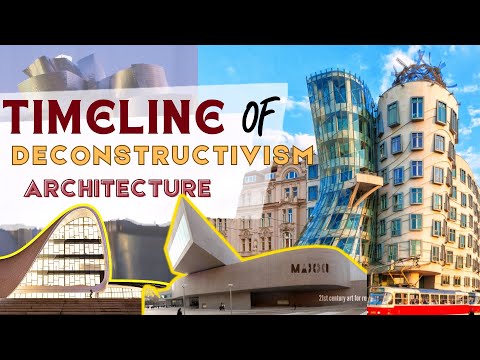
At its core, the Deconstructivist Movement was characterized by a set of principles that rejected traditional notions of architecture and design. These principles included the use of Fragmentation, Non-Linearity, and Disjunction. Deconstructivist buildings often featured unconventional materials, unusual shapes, and a general sense of disorder. The Walt Disney Concert Hall in Los Angeles, designed by Frank Gehry, is a prime example of Deconstructivist architecture. This building's flowing, curved lines and shimmering metallic surface have made it an iconic landmark in the city.
🏢 Architectural Examples and Case Studies
The Deconstructivist Movement was not limited to architecture; it also had a significant impact on the art world. Artists such as Cindy Sherman and Richard Prince created works that challenged traditional notions of representation and identity. The movement's emphasis on Appropriation and Recontextualization led to the creation of new and innovative forms of art. The Museum of Modern Art in New York City has an extensive collection of Deconstructivist art, including works by Sherrie Levine and Robert Rauschenberg.
🖌️ Artistic Expressions and Interpretations
Despite its influence and popularity, the Deconstructivist Movement was not without its criticisms and controversies. Some critics argued that the movement's emphasis on fragmentation and disorder led to a sense of chaos and disorientation. Others saw the movement as a form of Elitism, inaccessible to those without a background in Art History or Architecture. The movement's use of unconventional materials and techniques also raised concerns about Sustainability and Environmental Impact.
🤔 Criticisms and Controversies
The Deconstructivist Movement has had a lasting impact on the world of architecture and art. Its influence can be seen in the works of architects such as Zaha Hadid and Rem Koolhaas. The movement's emphasis on innovation and experimentation has also led to the development of new materials and technologies. The Guggenheim Museum in Bilbao, Spain, designed by Frank Gehry, is a testament to the movement's enduring legacy. As the world becomes increasingly Globalized, the Deconstructivist Movement's emphasis on diversity and complexity will continue to shape the built environment.
🌐 Global Impact and Legacy
The Deconstructivist Movement was characterized by a range of notable figures, each with their own unique contributions and perspectives. Peter Eisenman, for example, was a key figure in the development of Deconstructivist architecture. His designs, such as the Wexner Center for the Arts, challenged traditional notions of form and function. Frank Gehry, on the other hand, was known for his expressive and curvilinear designs, which often featured unconventional materials and techniques.
👥 Notable Figures and Their Contributions
The Deconstructivist Movement has had a significant influence on contemporary architecture. Its emphasis on innovation and experimentation has led to the development of new materials and technologies. The movement's use of Computer-Aided Design (CAD) software, for example, has enabled architects to create complex and intricate designs that would have been impossible to achieve by hand. The Sydney Opera House, designed by Jorn Utzon, is a prime example of Deconstructivist architecture's influence on contemporary design.
📊 Influence on Contemporary Architecture
As the Deconstructivist Movement continues to evolve and influence contemporary architecture, it is likely that we will see new and innovative forms of design emerge. The use of Artificial Intelligence (AI) and Machine Learning (ML) in architecture, for example, is likely to lead to the creation of buildings and structures that are more efficient, sustainable, and responsive to their environments. The Masdar City project in Abu Dhabi, designed by Foster and Partners, is a prime example of how Deconstructivist principles can be applied to create sustainable and environmentally friendly buildings.
🔮 Future Directions and Emerging Trends
The Deconstructivist Movement has been the subject of extensive scholarly research and debate. For those interested in learning more about the movement, there are a range of resources available, including books, articles, and online courses. The Tate Modern in London, for example, has an extensive collection of Deconstructivist art and architecture, and offers a range of educational programs and resources. The MIT Press has also published a range of books on the subject, including Deconstructivist Architecture and Deconstructivist Art.
📚 Bibliography and Further Reading
In conclusion, the Deconstructivist Movement was a radical and influential architectural and artistic movement that challenged traditional notions of form, function, and beauty. Its emphasis on innovation and experimentation has led to the creation of new and innovative forms of design, and its influence can be seen in the works of architects and artists around the world. As we look to the future, it is likely that the Deconstructivist Movement will continue to shape the built environment, and inspire new generations of architects, artists, and designers.
👀 Conclusion and Final Thoughts
The Deconstructivist Movement's legacy can be seen in the many buildings and structures that have been designed and built in its image. From the Guggenheim Museum in Bilbao to the Walt Disney Concert Hall in Los Angeles, Deconstructivist architecture has become a defining feature of the modern landscape. As we look to the future, it is likely that the movement's influence will only continue to grow, and that we will see new and innovative forms of design emerge.
Key Facts
- Year
- 1980
- Origin
- United States
- Category
- Art and Architecture
- Type
- Architectural Movement
Frequently Asked Questions
What is the Deconstructivist Movement?
The Deconstructivist Movement was a radical architectural and artistic movement that emerged in the 1980s. It challenged traditional notions of form, function, and beauty, and emphasized innovation and experimentation. The movement's key figures, such as Peter Eisenman and Frank Gehry, sought to create buildings and structures that were fragmented, non-linear, and often seemingly chaotic.
What were the key principles of the Deconstructivist Movement?
The Deconstructivist Movement was characterized by a set of principles that rejected traditional notions of architecture and design. These principles included the use of Fragmentation, Non-Linearity, and Disjunction. Deconstructivist buildings often featured unconventional materials, unusual shapes, and a general sense of disorder.
What is the relationship between Deconstructivism and Postmodernism?
Deconstructivism and Postmodernism are often seen as related movements, as both challenged traditional notions of architecture and design. However, while Postmodernism emphasized playfulness and irony, Deconstructivism was more focused on challenging traditional notions of form and function.
What are some notable examples of Deconstructivist architecture?
Some notable examples of Deconstructivist architecture include the Walt Disney Concert Hall in Los Angeles, the Guggenheim Museum in Bilbao, and the Wexner Center for the Arts in Columbus, Ohio. These buildings are characterized by their unconventional materials, unusual shapes, and general sense of disorder.
How has the Deconstructivist Movement influenced contemporary architecture?
The Deconstructivist Movement has had a significant influence on contemporary architecture. Its emphasis on innovation and experimentation has led to the development of new materials and technologies, and its use of Computer-Aided Design (CAD) software has enabled architects to create complex and intricate designs. The movement's influence can be seen in the works of architects such as Zaha Hadid and Rem Koolhaas.
What are some criticisms of the Deconstructivist Movement?
Some criticisms of the Deconstructivist Movement include its emphasis on chaos and disorder, which can lead to a sense of disorientation and confusion. Others have argued that the movement's use of unconventional materials and techniques can be unsustainable and environmentally unfriendly. Additionally, some have criticized the movement's emphasis on Elitism, which can make it inaccessible to those without a background in Art History or Architecture.
How has the Deconstructivist Movement influenced art?
The Deconstructivist Movement has had a significant influence on art, particularly in the areas of Installation Art and Sculpture. Artists such as Cindy Sherman and Richard Prince have used Deconstructivist principles to challenge traditional notions of representation and identity. The movement's emphasis on Appropriation and Recontextualization has also led to the creation of new and innovative forms of art.